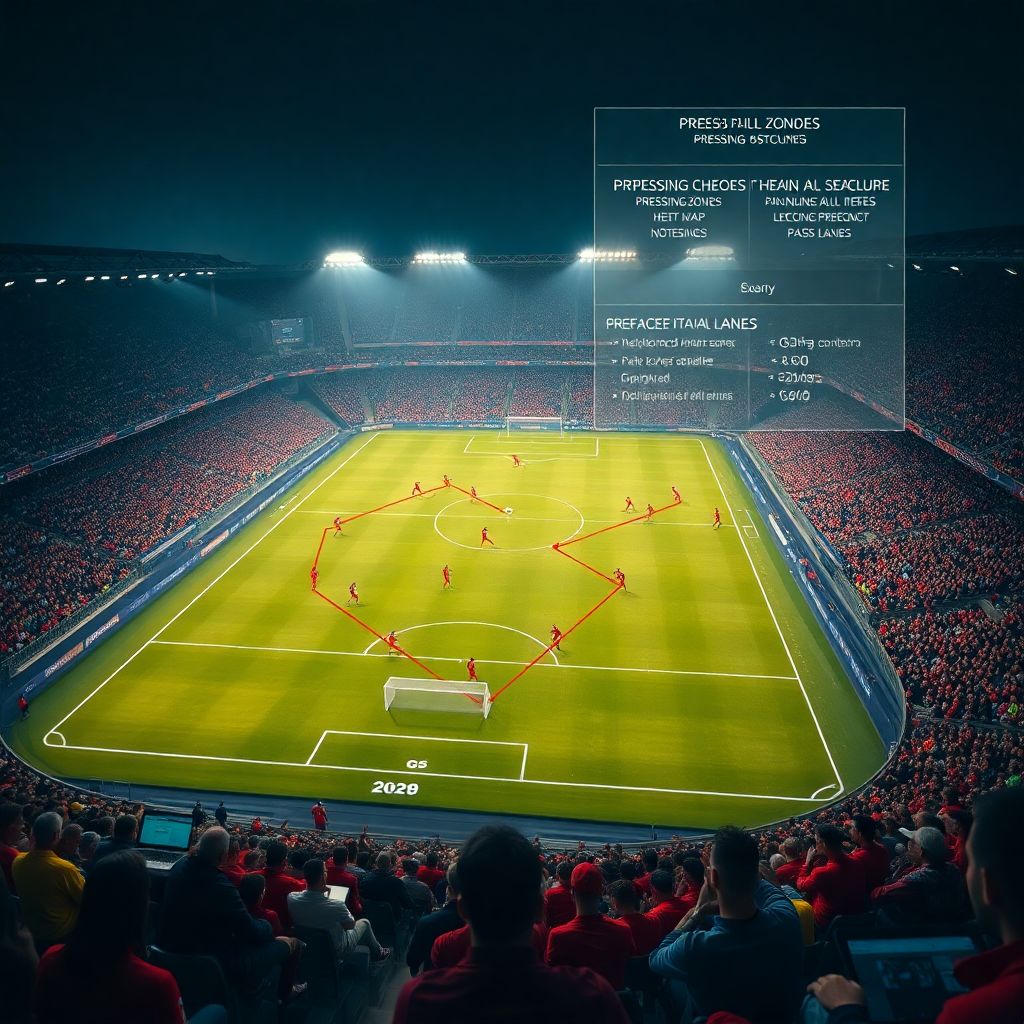
Why pressing is the new currency in the Super Lig
If you watch the Super Lig week in, week out in 2026, you can feel it: the league has shifted from open, chaotic end‑to‑end football toward something far more structured, especially without the ball. Pressing isn’t just a buzzword anymore; it’s the main indicator of whether a Turkish club is serious about playing at European level. The days when teams sat in a mid‑block and hoped for a counter are fading. Now the big question before every top‑six clash is simple: whose pressing shape breaks first?
You see it most clearly against European opposition. Turkish teams that survive in the Europa League or the Champions League qualifying rounds are the ones that compress space aggressively, hunt in packs, and turn recoveries into immediate attacks. That shift didn’t happen by accident. It’s the by‑product of years of Super Lig tactical analysis pressing systems, countless staff additions in performance and data, and a generation of coaches shaped by European football rather than only local traditions.
Necessary tools for modern pressing in Turkey
To copy elite European pressing, Super Lig clubs first had to upgrade their toolbox. This is not just about adding another assistant on the bench; it’s a full ecosystem. Clubs have moved from “coach’s eye and intuition” to a hybrid model that blends data, video, and on‑pitch implementation. Without that ecosystem, even the best tactical idea dies in the gap between theory and execution.
The backbone now is football analytics software for pressing systems that tracks PPDA, high regains, pressing traps, and individual player reaction times. On top of that, most ambitious clubs subscribe to at least one Super Lig match analysis service for clubs, giving them tagged video of every press, counter‑press, and broken press pattern across the league. Add GPS tracking, live physical‑load monitoring, and remote data‑sharing platforms, and you have a technical framework where coaches can adjust pressing intensity almost in real time, not just “after watching the game again on Monday.”
Step-by-step: importing European pressing systems into Super Lig reality
The mistake many clubs made around 2020–2022 was to copy what they saw from Klopp, Guardiola or Nagelsmann almost literally. By 2026 the smarter ones have learned to translate, not imitate. Here’s how the process tends to look when it actually works.
1. Context audit, not powerpoint buzzwords
The first step is brutally honest self‑diagnosis: squad age, aerobic capacity, sprint profiles, decision‑making under pressure, goalkeeper distribution, and even crowd culture. This is where Super Lig tactical analysis pressing systems go beyond “4‑3‑3 or 4‑2‑3‑1” and dive into: who triggers the press, who covers depth, who commands the line? Only then does a club choose whether to build a high press, a mid‑press with aggressive triggers, or a hybrid that shifts by game state.
2. Choosing the reference model
Instead of saying “we play like Liverpool,” technical staff now use specific phase templates: for example, “Leipzig‑style wide pressing traps versus back‑three build‑ups” or “Atalanta‑style man‑oriented press in wide zones.” European pressing systems are broken down into micro‑patterns: jump‑pressing from the 8, full‑back underlaps on regain, goalkeeper as spare man. Those patterns are assembled into a game model that fits Turkish conditions: summer heat, heavy pitches in some stadiums, and highly emotional match rhythms.
3. On‑pitch periodisation and physical fit
A lot of pressing projects died because players simply couldn’t repeat high‑intensity efforts for 70–90 minutes. From 2023 onward, fitness coaches in Turkey started to integrate pressing drills into tactical periodisation: small‑sided games with strict rules on pressing triggers, duration‑controlled high‑intensity intervals, and recovery protocols based on individual fatigue scores. The goal is not just to press hard, but to press predictably — knowing exactly which 15–20 minute windows you’ll overload the opponent.
4. Automating communication
European pressing tactics coaching courses that Turkish coaches now attend, both online and in person, hammer home one point: pressing fails when players hesitate. Clubs invest time in “communication scripts” — pre‑agreed cues like one word that triggers a high jump, a hand signal for shifting from man‑oriented to zonal cover, or a simple shout that tells the back line to hold instead of chasing. These become habits in training so they don’t require thinking on match day.
5. Data‑feedback loop
After each game, analysts run a quick loop: where did the press win the ball, where did it get played through, and which player broke the chain first? This is where football analytics software for pressing systems becomes more than pretty dashboards. Analysts cut sequences, build short video packages for each line (forwards, midfield, defenders), and feed that back within 24 hours. The best coaches then adjust not the principle, but the trigger — for example, shifting the pressing cue from the centre‑back’s first touch to the pass back to the goalkeeper.
6. Opponent‑specific tweaks, not identity shifts
Mature pressing teams in the Super Lig no longer reinvent themselves every week. Instead, they keep a stable core and apply opponent‑specific layers: maybe they press asymmetrically against a left‑footed centre‑back, or they drop into a mid‑block against a team with elite build‑up under pressure. The game model stays; only the pressing traps and starting heights change. That consistency is what separates a one‑season surprise from a sustainable top‑four club.
Modern trends in 2024–2026: what Super Lig is copying – and what it’s inventing
From 2024 to 2026, three big trends have emerged in how Turkish teams press. First, the league has gone strongly toward “press to create chaos, not just to defend.” Recoveries aren’t about slowing the game down; they’re a springboard for 5–7 second bursts aimed straight at goal. You see more teams accepting 1v1 defending at the back in exchange for one extra presser higher up.
Second, there’s a clear fashion for hybrid shapes: teams that defend in a 4‑4‑2 but press in a 4‑3‑3, or build in a 3‑2 structure but immediately jump into a 4‑2‑4 on loss of possession. This fluidity is more than aesthetic. It’s a practical solution to the Super Lig’s unique squad profiles, where you often have attackers who are great in transitions but not built for 90 minutes of pure high press.
Third, and this is very 2026, there’s a surge in AI‑assisted opponent scouting. Clubs are feeding tracking data into models that suggest optimal pressing traps: which full‑back is slow to receive on the back foot, which midfielder panics under cover‑shadow, where the goalkeeper tends to clear blindly. Super Lig tactical analysis pressing systems now routinely include predictive heat maps of “probable panic zones,” building pressing plans that look almost like chess openings.
Troubleshooting: why your pressing collapses after 20 minutes
Even with all the trendy talk, a lot of Super Lig teams still suffer the same problem: they look like a European powerhouse for the first quarter of an hour and then fall apart. The reasons are usually less romantic than fans think.
Sometimes it’s pure physiology. A squad built over years for slow positional play suddenly gets asked to sprint and shuffle like peak Dortmund; muscles and energy systems don’t adapt overnight. But more often, the collapse starts in the brain. When one player misses his trigger or is a second late, the chain reaction exposes gaps, the press is broken, and suddenly the team becomes scared of stepping up at all. Coaches then mistakenly tell players to “run more,” when the real solution is to simplify triggers and reduce the amount of information they have to process at high speed.
The other hidden killer is line disconnection. In many Turkish teams, the front line buys into pressing, but the defensive line doesn’t squeeze up enough. That creates huge vertical gaps where technically gifted No. 10s in the league can turn and punish you. Troubleshooting here isn’t about fancy new drills; it’s about aligning risk tolerance between coaches and defenders, and sometimes about personnel changes — you simply can’t run a high line with centre‑backs who instinctively drop five metres on every long ball.
Where clubs are getting help: data, courses, consultancy

Because pressing has become so central, an entire support industry has grown around it. Clubs that can’t build massive in‑house departments are outsourcing parts of the puzzle. This is where a modern Super Lig match analysis service for clubs earns its money: it doesn’t just cut league‑wide video; it tags specific pressing scenarios, opponent escape patterns, and recurring structural weaknesses in your own block.
On the educational side, more Turkish and foreign assistants are enrolling in European pressing tactics coaching courses. These programmes have shifted too: they’re less about chalkboard arrows and more about integrating data, mental load, and physical metrics. Coaches come back talking about “pressing as load management” or “pressing as a means of chance creation,” not just “closing down.”
For clubs with bigger budgets, there’s another layer: advanced football pressing strategy consultancy. These are small specialist firms or individual experts who parachute in for three to six months, rebuild your defensive game model, design pre‑season micro‑cycles, and then leave the club with a playbook and data templates. In 2026, it’s not unusual for a top‑four Super Lig side to consult someone who also works with a Bundesliga or Serie A club, which accelerates the diffusion of cutting‑edge ideas into Turkey.
Final thoughts: from fashionable trend to club identity
By 2026, pressing in the Super Lig is no longer a cosmetic way to look “modern” on television. It’s becoming a genuine competitive separator, a language that players, coaches, and analysts share. The interesting question now isn’t whether a team presses, but how logically its pressing model connects to recruitment, conditioning, and match preparation.
The clubs that will still be relevant in 2030 are the ones treating pressing as a long‑term identity choice, not a seasonal fashion. They’ll keep refining their data pipelines, investing in education, and blending European concepts with the specific chaos and emotion that make Turkish football unique. The aim is not to be a copy of a Premier League or Bundesliga side, but to create a recognisable Super Lig version of elite pressing — aggressive, clever, and sustainable over a full season, under the pressure that only this league can generate.