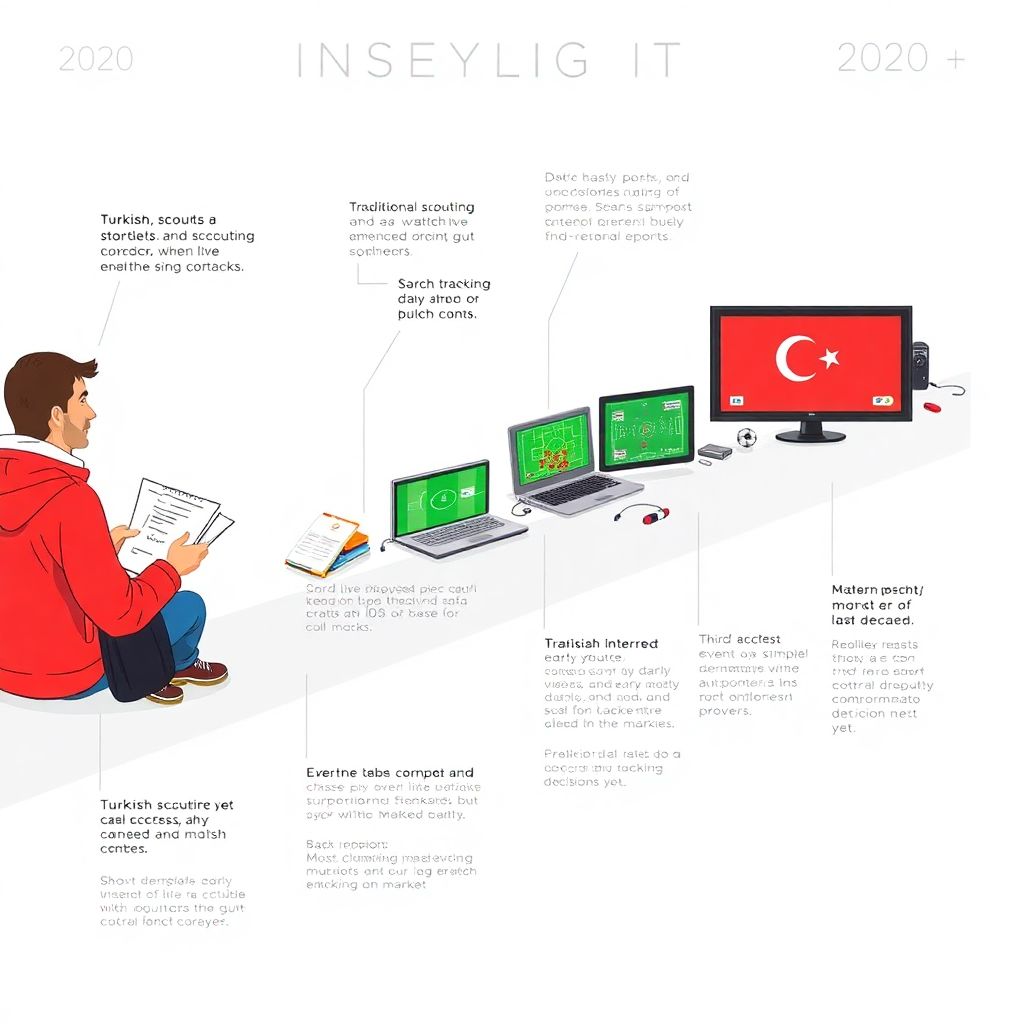
Historical background: from gut feeling to models
At Super Lig clubs the shift from pure instinct to numbers started later than in England or Germany, but the arc is similar. In the 2000s many Turkish scouts relied on contacts, DVDs and short live viewings; reports were mostly qualitative and unstandardized. As tracking providers entered the market and broadband made video cheaper, clubs began collecting structured event data, yet it was used mainly for post‑match reports. Only in the last decade did proper data analytics in football scouting appear, with analysts embedded in recruitment teams and coaches asking for evidence instead of anecdotes.
Super Lig budgets, wage structures and foreign‑player rules pushed this transformation. Clubs realised that copying the transfer strategies of richer European teams was impossible, so they looked for ways to spot undervalued talent earlier and resell at a profit. Early adopters started to treat data as an asset, not as decoration for presentations. They built basic databases, compared leagues using conversion factors and coded their own simple models to predict how a player’s style and output would translate from, say, Croatia or Scandinavia into Istanbul, Trabzon or Izmir contexts, where tempo, climate and tactical norms differ.
Core principles of modern scouting analytics
From highlight reels to repeatable metrics
Modern Super Lig recruitment departments try to replace one‑off impressions with repeatable measurements. Instead of asking “did he play well in this match?”, analysts quantify shot quality, pressing intensity, ball progression and involvement in pre‑assist actions over thousands of minutes. With football data analysis services for clubs now common, raw event streams become features such as expected goals, pressure regains and zone‑14 entries. The key idea is that stable, context‑adjusted metrics predict future contribution better than a spectacular derby performance watched from the stands on a rainy afternoon.
Different approaches: model‑first vs scout‑first
Inside the league you can roughly see two schools. Model‑first clubs use player recruitment analytics software as their main filter: they screen global databases, rank players by statistically defined profiles, then send scouts only to validate top candidates. Scout‑first clubs invert the flow: regional scouts propose names, and analysts check whether the numbers support the live impression. The first approach is efficient and scalable but risks missing late bloomers with noisy data; the second preserves local knowledge but can be biased by relationships and small samples. Most ambitious Super Lig teams are slowly converging on a hybrid.
Context modelling and risk management
Another core principle is context. Raw stats from second‑tier leagues can mislead if you ignore pace, tactical structure and role. Better Super Lig setups use sports analytics solutions for soccer teams that adjust for league strength, team style and age curves. They simulate how an aggressive pressing forward from Austria might perform in a more transition‑heavy Turkish environment. These models feed into risk analysis: instead of asking “is this player good?”, departments ask “what’s the distribution of outcomes over three seasons and resale scenarios?”. It turns transfers into portfolio decisions rather than isolated bets.
Implementation strategies and real‑world examples
In‑house platforms versus external providers
When it comes to tools, you see a clear strategic split. Wealthier Super Lig clubs experiment with building in‑house dashboards that sit on top of purchased data feeds. They want custom models, internal know‑how and independence from vendors. Others lean heavily on the best football scouting platforms for clubs, using prebuilt similarity searches and automated shortlists. The build route offers higher competitive edge but demands long‑term investment and stable staff; the buy route is faster to deploy, yet risks every rival having access to near‑identical insights and chasing the same “hidden gems” identified by generic algorithms.
Case pattern: positional profiles and shortlists
A typical well‑run club starts each window by defining positional profiles with coaches: for example, “left‑back comfortable under high press, above‑average crossing volume, strong defensive duels in wide zones”. Analysts translate this into filters inside data analytics in football scouting platforms, narrowing thousands of players down to a manageable list ranked by statistical fit. Scouts then perform targeted video and live assessments, focusing on behaviours that the data cannot fully capture, such as communication, body language under stress and adaptability. The final report blends quantified indicators with structured narrative, rather than treating them as competing sources.
Regional focus and resale strategies

Another implementation choice is geographic focus. Some Super Lig clubs specialise in specific “feeder” competitions, building deep conversion knowledge for those leagues. Data teams maintain longitudinal datasets, tracking how previous signings from those markets adapted, and refine their models accordingly. Others adopt broader coverage, relying more on external football data analysis services for clubs to maintain global scouting reach. The narrow focus helps identify mispriced assets and increase resale profits, while the broad approach increases the chance of unique finds but may stretch analytical and scouting resources thinner across multiple time zones and styles.
Misconceptions and pitfalls in analytical recruiting
“Data replaces scouts” and other myths
One persistent misconception in Turkey is that analytics threaten traditional scouts. In reality, effective departments show that numbers change the questions, not the profession. Data can signal interesting outliers or warn about regression risks, but it cannot sense a player’s resilience, training habits or cultural fit. Clubs that swing to extremes—either fully ignoring metrics or trusting only spreadsheets—usually pay for it. Short careers of some analytics‑only projects prove that human interpretation remains essential, especially in a league where fan pressure, media intensity and derbies create psychologically unique conditions.
Overfitting to one model or metric
Another trap comes from overconfidence in clever algorithms. Some teams fall in love with a single metric—expected goals, for instance—and optimise recruitment around it without considering tactical flexibility or squad balance. Others adopt an impressive‑looking black‑box model sold by a vendor of sports analytics solutions for soccer teams, but never validate it on their own historical transfers. Robust setups constantly back‑test: would this model have approved past successful signings, and would it have flagged expensive failures? Without that feedback loop, even advanced systems can formalise mistakes instead of correcting them.
Underestimating infrastructure and culture

Finally, there is the belief that signing one analyst or subscribing to player recruitment analytics software automatically modernises a club. In practice, success depends on infrastructure and culture. Analysts need clear access to decision‑makers, stable data pipelines and time to iterate. Coaches must be open to adapting tactics to the roster that the numbers suggest is optimal. When analytics are treated as a box‑ticking exercise, reports arrive too late or are ignored, and the club reverts to short‑term, agent‑driven deals. Where leadership protects long‑term thinking, data and scouting merge into a coherent, repeatable recruitment strategy.