
From Gut Feeling to Data-Driven Decisions in Turkish Football
Why Turkish clubs are turning to numbers

Turkish clubs used to lean heavily on intuition, agents’ networks and highlight reels. Now, especially in the Süper Lig and ambitious 1. Lig sides, recruitment teams are wiring their work around data feeds, tracking systems and video tagged by algorithms. Instead of asking “does he look good?”, sporting directors increasingly ask “how often does he progress the ball under pressure, and what’s his expected impact on our style?”. This shift is not about replacing scouts; it’s about letting them start with a narrowed, data-filtered pool instead of watching hundreds of random matches and hoping to get lucky.
Practical Stack: How Analytics Actually Looks Day to Day
Tools, dashboards and workflows
Inside a modern Turkish club, a normal week in recruitment is built around dashboards rather than spreadsheets sent at midnight. Clubs plug tracking and event data into sports analytics software for football teams, add custom metrics for pressing intensity, contribution to build-up and set-piece value, then visualise everything in scouting views. A typical workflow: analysts define a role profile, generate a short list via filters (age, salary band, playing style), then pass ten to fifteen names to scouts. After live and video scouting, the list shrinks to three or four players, whose injury history, physical data and contract risks are checked before a final move is proposed to the board.
Integrating human scouts with algorithms
The fear that algorithms will kill traditional scouting is largely outdated. The most effective Turkish setups align player recruitment analytics for football clubs with experienced eyes in the stands. Data reduces noise: similar players are clustered, outliers stand out, red flags like sudden one-season spikes are spotted. Scouts then focus on context: mentality, adaptation risk, body language under pressure, communication with teammates. The most progressive clubs even tag subjective impressions in a football scouting platform Turkey uses region-wide, linking comments to concrete numbers like defensive duels or progressive passes to see where perception clashes with hard evidence.
Key Metrics Turkish Clubs Actually Use
Going beyond goals and assists
Instead of stopping at goals and assists, Turkish analysts dissect expected goals (xG), expected assists (xA), field tilt, pressing intensity and contribution to chance creation. For example, a winger who rarely scores may still rank in the top ten percent in the league for deep completions and progressive carries, which matters a lot if your striker lives off service to the box. Defenders are re-evaluated on metrics like successful pressure regains, aerial duel win rate adjusted for opposition strength and how often they break lines with passes. This level of granularity lets mid-table clubs find undervalued profiles before bigger brands move in.
Injury, fatigue and adaptation risk
Turkish schedules can be brutal: domestic league, cups, European qualifiers, long trips and often heavy pitches. Smart football data analytics services go beyond performance and model durability. Analysts track minutes played, high-intensity runs, previous muscular injuries and recovery curves to build a risk score. When two players look equally good on the ball, clubs increasingly choose the one with fewer red flags in his medical and load history. On top of that, data from previous leagues — for example, physical intensity in Scandinavia or tactical complexity in the Netherlands — is used to estimate how quickly a newcomer can adapt to the Süper Lig tempo and tactical demands.
Economics: Making Every Euro Count
Transfer efficiency and wage optimization
Financially, Turkish clubs can’t compete long term with the Premier League or top La Liga sides, so they have to squeeze maximum value from each deal. Data analytics consulting for football clubs is now framed as an investment, not a cost: a few hundred thousand euros per year in data and staff can prevent a multi-million euro mistake on a misfit striker. Analysts benchmark transfer fees against similar profiles in other leagues, calculate fair salary ranges using age curves and performance projections, and quantify expected resale value. This allows sporting directors to set walk-away points in negotiations instead of being dragged into emotional bidding wars.
Building sustainable sell-on models
Many Turkish clubs are pivoting to a buy-develop-sell strategy, targeting players in their early twenties from under-scouted markets. With the right models, a club can forecast when a player’s value will peak and how much extra upside can be created with improved finishing, better set-piece delivery or refined pressing habits. The combination of wearable data, match events and training KPIs helps to justify asking fees aligned with top European benchmarks. When a club can clearly document a player’s development path and performance trajectory over several seasons, negotiations with foreign buyers become more fact-driven and less dependent on reputation or a single standout season.
Infrastructure and Future Outlook in Turkey
Building in-house platforms vs external services
Larger Istanbul clubs tend to develop internal platforms that ingest event data, tracking feeds and medical records into a single environment, effectively acting as a custom football scouting platform Turkey can showcase to the region. Smaller clubs usually combine off‑the‑shelf football data analytics services with light customisation and strong analyst know-how. Over time, we can expect more shared infrastructure across academies and feeder clubs, allowing multi-club groups to centralise models while tailoring dashboards to local coaches. Cloud-based architectures and APIs make it realistic even for modest budgets to run machine learning models that used to be reserved for elite European giants.
What’s coming next: predictions and automation
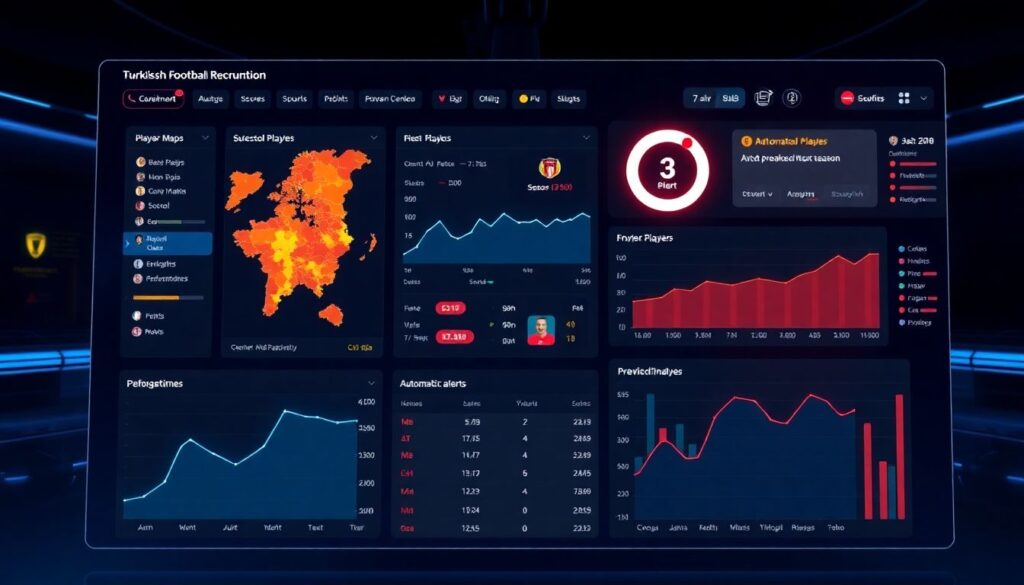
The next wave for Turkish recruitment is predictive modelling and automated alerts. Instead of manually searching databases, algorithms will flag players whose metrics match predefined archetypes or who are projected to break out in the next season based on trend lines. sports analytics software for football teams is already experimenting with similarity scores that show which young midfielder looks most like a current star at the same age. As these tools mature, clubs that move early will lock in competitive edges, while late adopters risk overpaying for players already identified by smarter rivals, both domestically and on the broader European market.