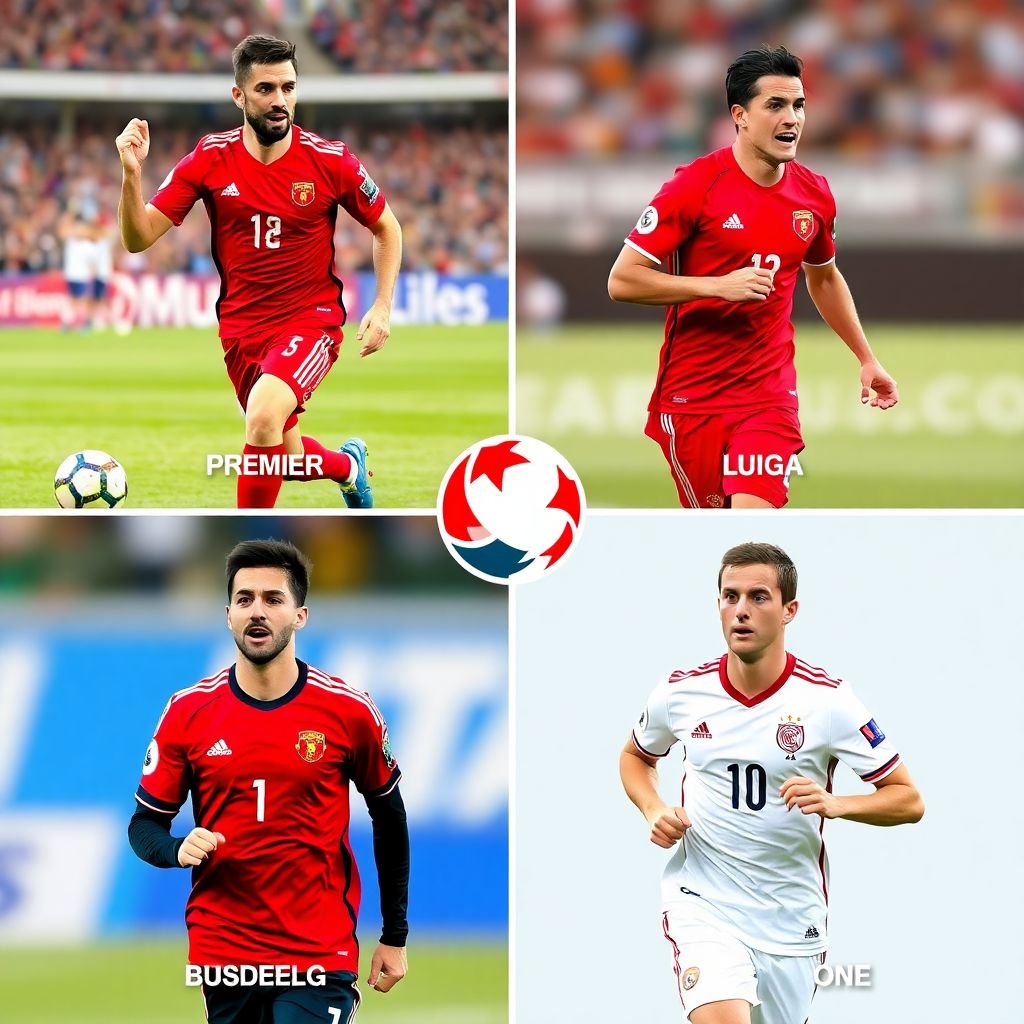
Turkish players in Europe’s top five leagues are no longer rare specialists but consistent contributors across positions, from playmaking eights to aggressive full-backs. This article maps how talent travelled from Anatolia to the Premier League, La Liga, Bundesliga, Serie A and Ligue 1, clarifies tactical roles, and offers a compact checklist for scouts and coaches.
Executive summary of impacts
- Turkish footballers in top European leagues now form a stable presence rather than occasional outliers, with pathways built through Süper Lig academies, diaspora communities and well-targeted loans.
- They tend to excel in hybrid roles: box-to-box midfielders, inverted wingers, attacking full-backs and aggressive ball-playing centre-backs.
- In the context of Turkish players in Premier League 2024 and other elite competitions, impact is often expressed through work-rate, pressing intensity, progressive passing and set-piece quality rather than sheer volume of goals.
- Clubs use them to add tactical flexibility and dressing-room cultural glue, especially where Turkish diaspora communities already exist in Germany, France and parts of the UK.
- Transfer routes usually move from Süper Lig or second-tier European clubs into Bundesliga or Ligue 1 before stepping up to the absolute elite; direct jumps are the exception.
- Persistent myths about poor tactical discipline or limited technical ceilings are increasingly disproven by the best Turkish footballers in top 5 European leagues.
Historical pathways: how Anatolian talent reached Europe’s top five leagues
When we speak about Turkish players in Europe’s top five leagues, we mean footballers who are either Turkish-born or of Turkish descent representing clubs in the Premier League, La Liga, Bundesliga, Serie A and Ligue 1. Historically, the earliest stable bridge formed through the Turkish diaspora in Germany and later expanded westward.
For decades, the Bundesliga acted as the primary destination: German-Turkish players developed inside German academies, while Süper Lig stars rarely moved directly to top clubs. Over time, this created a first, informal “list of Turkish players in Serie A La Liga Bundesliga Ligue 1”, heavily skewed toward Germany, with Italy, Spain and France catching up later.
A second pathway emerged from strong Süper Lig academies (Istanbul giants in particular), which started exporting younger players. These talents often took intermediary steps through mid-table European teams, using loan spells to adapt to intensity, language and tactical demands. Successful cases then opened doors to bigger moves and broadened scouting across Anatolia.
Today, a third hybrid route operates: players with dual nationality move between youth national teams, train in Western European academies, and retain the option of representing Türkiye. This flexible identity has enlarged the pool of stats and profiles of Turkish players in top European leagues, giving clubs more options in multiple positions.
Tactical niches: positions and roles Turkish players excel in across leagues
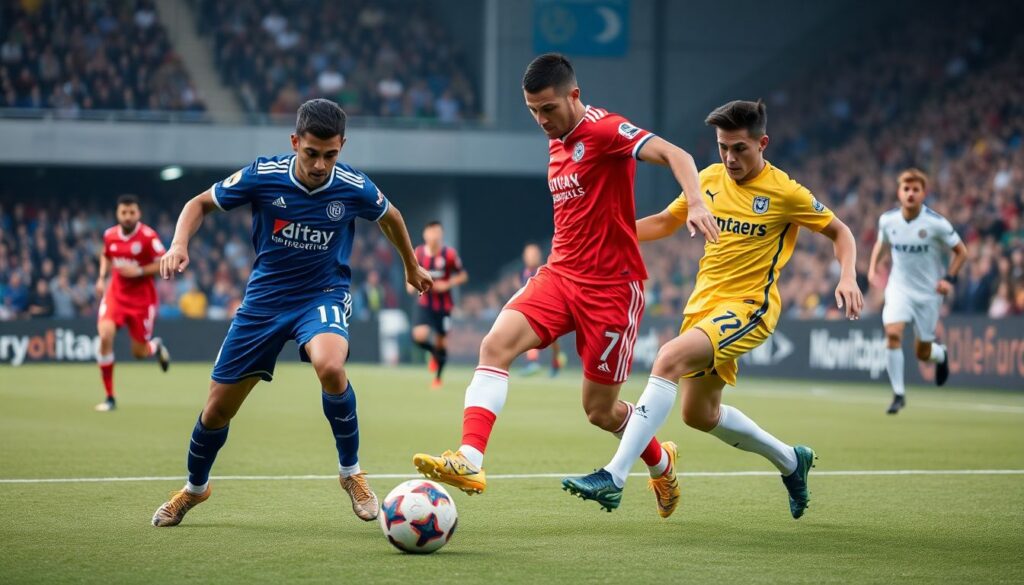
- Box-to-box and hybrid number eights – Energetic midfielders combining pressing, second-ball winning and line-breaking passes. They suit gegenpressing styles in the Bundesliga and high-tempo Premier League games.
- Inverted wide playmakers – Wingers and attacking midfielders who drift inside to overload the half-spaces, link play and shoot from distance. They thrive in La Liga and Serie A systems that favour positional play.
- Attacking full-backs and wing-backs – Full-backs with academy training as wingers, comfortable overlapping, crossing early and counter-pressing immediately after loss. Ligue 1 and some Premier League sides use them to stretch deep blocks.
- Press-resistant deep midfielders – Sixes and double-pivot players who receive under pressure, switch play and initiate fast transitions. Their ability to ride tackles and turn quickly helps in high-intensity leagues.
- Ball-playing centre-backs – Defenders who step into midfield, progress the ball and defend proactively. Bundesliga and Ligue 1 clubs often recruit Turkish centre-backs for aggressive high lines.
- Set-piece specialists – Free-kick and corner takers, often attacking midfielders or full-backs, whose delivery contributes a quiet but crucial share of goals and assists, particularly in lower-scoring Serie A or tight Premier League fixtures.
- Second strikers and roaming forwards – Forwards who drop off the line, combine with midfield and attack space rather than playing as fixed target men; they complement physically dominant number nines in all five leagues.
Measurable contributions: comparative stats and a league-by-league table
Clubs monitoring Turkish footballers use a blend of quantitative data and qualitative scouting notes. Rather than focusing solely on raw goal numbers, they evaluate pressing intensity, progressive actions and how well a player’s strengths fit the team’s tactical model.
In the search for the best Turkish footballers in top 5 European leagues, analysts look at how consistently players start, their contribution to build-up, and their defensive work off the ball. For example, a midfielder who rarely scores can still rate highly if he drives progression and wins back possession in advanced zones.
Because reliable “hard” numbers change every matchday, a practical way to compare is by role and profile: starter vs rotation, creator vs finisher, last-line defender vs front-foot presser. The simplified table below illustrates how a few archetypal profiles might be assessed across leagues without tying them to specific, time-sensitive figures.
| League | Example profile | Typical role | Minutes trend | Offensive impact | Defensive work | Tactical notes |
|---|---|---|---|---|---|---|
| Premier League | Dynamic box-to-box midfielder | Starter in high-pressing side | High, with occasional rotation | Moderate: carries and key passes | High: pressing and counter-pressing | Valued for intensity and vertical runs more than pure creativity. |
| La Liga | Inverted playmaker winger | Starter or key substitute | Medium to high | High: chance creation, final-third entries | Medium: structured pressing in zones | Used between the lines to break compact blocks. |
| Bundesliga | Ball-playing centre-back | Regular starter | High | Low to moderate: progressive passes | High: duels, interceptions, proactive defending | Fits aggressive high lines and vertical build-up patterns. |
| Serie A | Deep-lying midfielder | Starter in possession-heavy team | High | Moderate: switches and late box arrivals | Medium: screening and positional discipline | Relied upon to manage tempo and break opposition pressing. |
| Ligue 1 | Attacking full-back | Starter or rotation option | Medium | Moderate: crosses, cut-backs, secondary assists | High: sprints, recovery runs, tackles in wide areas | Key transition outlet in physically intense matches. |
When reading Turkish footballers transfer news Europe analysts combine such profiles with age, injury record and contract status. Instead of chasing headline signings, they focus on how a player’s statistical tendencies map onto specific tactical tasks in their squad.
Representative case studies: breakout seasons and career trajectories
Case studies help move beyond abstract talk about “impact” and ground the discussion in real careers. Below are typical advantages and limitations seen in Turkish players’ trajectories when moving from Anatolia (or diaspora backgrounds) to Europe’s top five leagues.
Strength patterns frequently observed
- High adaptability to different roles in midfield and wide areas, allowing coaches to change shapes mid-season without heavy recruitment.
- Strong mentality shaped by competitive Süper Lig atmospheres and demanding fan cultures, which translates well to pressure at big European clubs.
- Technical comfort in tight spaces, often developed on smaller urban pitches and futsal-style environments in youth.
- Willingness to accept initial squad-player status in top leagues, using training and cup games to climb the hierarchy.
- Good chemistry with existing Turkish or diaspora players, easing dressing-room integration and off-field life.
Constraints and recurring challenges
- Adjustment to higher tempo and physicality, especially for players coming directly from Süper Lig to Premier League or Bundesliga.
- Language barriers and cultural distance outside Germany and France, which can delay adaptation to coaching instructions.
- Over-reliance on individual flair at the expense of strict positional discipline, particularly for creative attackers.
- Media pressure in Türkiye, where every appearance in top leagues is closely scrutinised, sometimes affecting confidence.
- Inconsistent game time when joining clubs that underestimate the adaptation period and sign multiple players for the same role.
Market mechanics: transfers, scouting routes and valuation trends
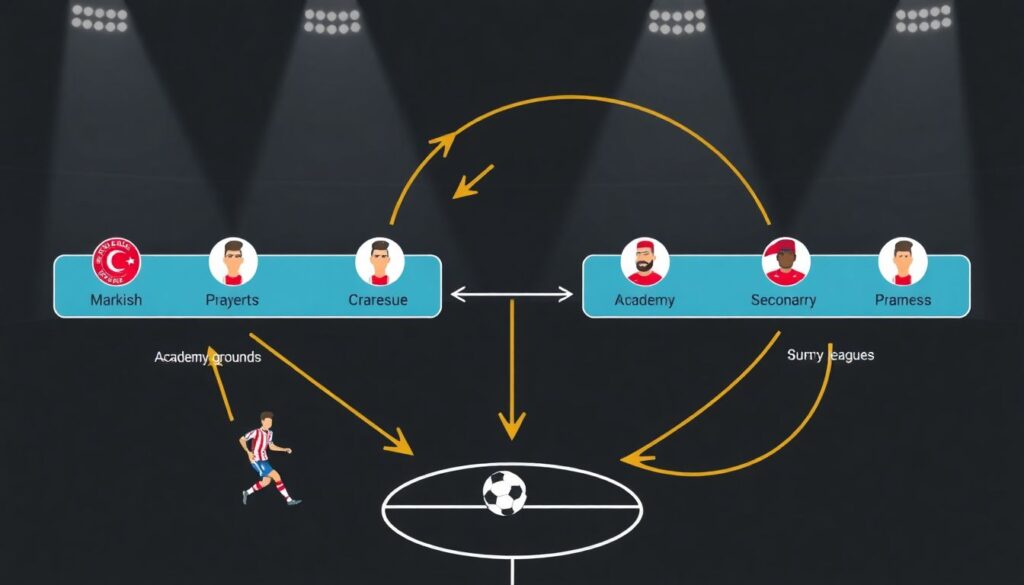
The market for Turkish players in top leagues is shaped by three main flows: domestic Turkish clubs selling up, Western European academies with Turkish heritage players, and secondary leagues acting as stepping stones. Understanding these flows helps interpret headlines and rumours more accurately.
- Mistaking one-high-profile transfer for a trend – A single expensive signing does not mean a permanent shift. Clubs should look at multi-year patterns in Turkish footballers transfer news Europe before redefining their strategies.
- Overvaluing post-tournament spikes – Performances at Euros or World Cups can temporarily inflate valuations of Turkish players; savvy clubs anchor their assessments in club data instead of short international samples.
- Ignoring context of Süper Lig stats – Directly comparing numbers from Türkiye to those in the Premier League or La Liga can mislead. Pace, officiating and tactical styles differ significantly, requiring translation rather than copy-paste evaluation.
- Assuming diaspora players are automatically more “Europeanised” – Some German- or Dutch-developed Turkish players still need tactical and lifestyle adaptation when switching leagues; background alone does not guarantee readiness.
- Underestimating resale potential – Well-scouted Turkish signings in their early twenties often retain or increase value if given minutes. Small and mid-tier clubs can benefit by planning resale routes from the outset.
- Focusing only on star clubs – Valuable profiles also appear in mid-table or relegation-threatened sides; ignoring them narrows the pool unnecessarily.
Player development: academies, loans, dual-nationality and cultural integration
Development paths for Turkish players combine structured academy work with opportunistic moves. Strong Süper Lig academies, notably in Istanbul and some Anatolian cities, provide early technical foundations, while European clubs refine tactical detail and physical conditioning.
Many stats and profiles of Turkish players in top European leagues reveal a pattern: first senior minutes in Türkiye or a smaller European league, then targeted loans, followed by a breakthrough season. Dual-nationality can open doors to elite youth setups, yet cultural and language ties to Türkiye remain influential in career decisions.
A compact “algorithm” clubs in Türkiye and Europe can use to check their process with a promising Turkish player:
- Define role clearly – Specify the exact position and tactical functions you project for the player in two to three years (e.g., inverted winger vs touchline winger).
- Validate environment fit – Check whether the target league’s tempo, physicality and coaching style match the player’s current strengths and development needs.
- Plan minutes realistically – Map expected starts, substitute appearances and cup games for the first two seasons; avoid moves where the path to playing time is blocked.
- Secure support off the pitch – Arrange language lessons, cultural mentoring and, where possible, contact with other Turkish or Turkish-speaking players at the club.
- Review every six months – Reassess role, minutes and adaptation twice per season and be willing to adjust with loans or tactical tweaks.
For scouts and coaches working with a growing list of Turkish players in Serie A La Liga Bundesliga Ligue 1, a lean checklist can guide daily decisions.
- Match player’s dominant traits (pressing, creativity, build-up, defending) to a specific role in your current or planned game model.
- Benchmark against two or three similar players already in your league, focusing on style rather than raw numbers.
- Confirm language and support structures are in place before finalising the transfer, not after problems arise.
- Commit to a minimum period for tactical and cultural adaptation before judging success or failure.
- Log development milestones and setbacks to fine-tune future recruitment from Türkiye and its diaspora.
Practical concerns clubs and players commonly face
How long does adaptation usually take for Turkish players moving into top five leagues?
Most need at least one full season to adapt to tempo, physicality and tactics, especially when jumping directly from Süper Lig. Diaspora players from German or Dutch academies can integrate faster, but clubs should still plan for an adaptation phase rather than instant impact.
Which leagues are generally most welcoming for Turkish players starting abroad?
The Bundesliga and Ligue 1 have historically offered more chances, partly due to existing Turkish communities and similar physical intensity. These leagues can act as gateways before moves to the Premier League or La Liga, where competition for places is typically higher.
Should a young Turkish player aim for a big-name club or a minutes-focused move?
For long-term development, reliable playing time usually outweighs the prestige of a badge. A mid-table club with a clear role and pathway tends to accelerate growth better than a top club where the player is a third or fourth option.
How important is it to follow transfer news specifically about Turkish players?
Tracking news helps understand evolving market perceptions and salary benchmarks, but it should not replace direct scouting and data analysis. Clubs and agents should treat headlines as context, not as the core of decision-making.
Can Turkish players succeed in highly tactical environments like Serie A?
Yes, many adapt well when given time and clear instructions. Their technical base and competitive mentality fit Serie A’s demands, provided coaches support them through the initial learning curve in defensive structures and positional play.
What is a simple way for a club to evaluate if a Turkish signing is on track?
Review every six months: minutes played, role clarity, communication with coaches, and signs of tactical growth. If two or more of these areas stagnate, it may be time to adjust with a loan, role change or additional support.
How can a young Turkish player prepare before moving to a top European league?
They should focus on physical conditioning, learning at least basic language skills of the destination country, and studying that league’s common tactical patterns. Honest feedback from current coaches about strengths and weaknesses is also crucial.