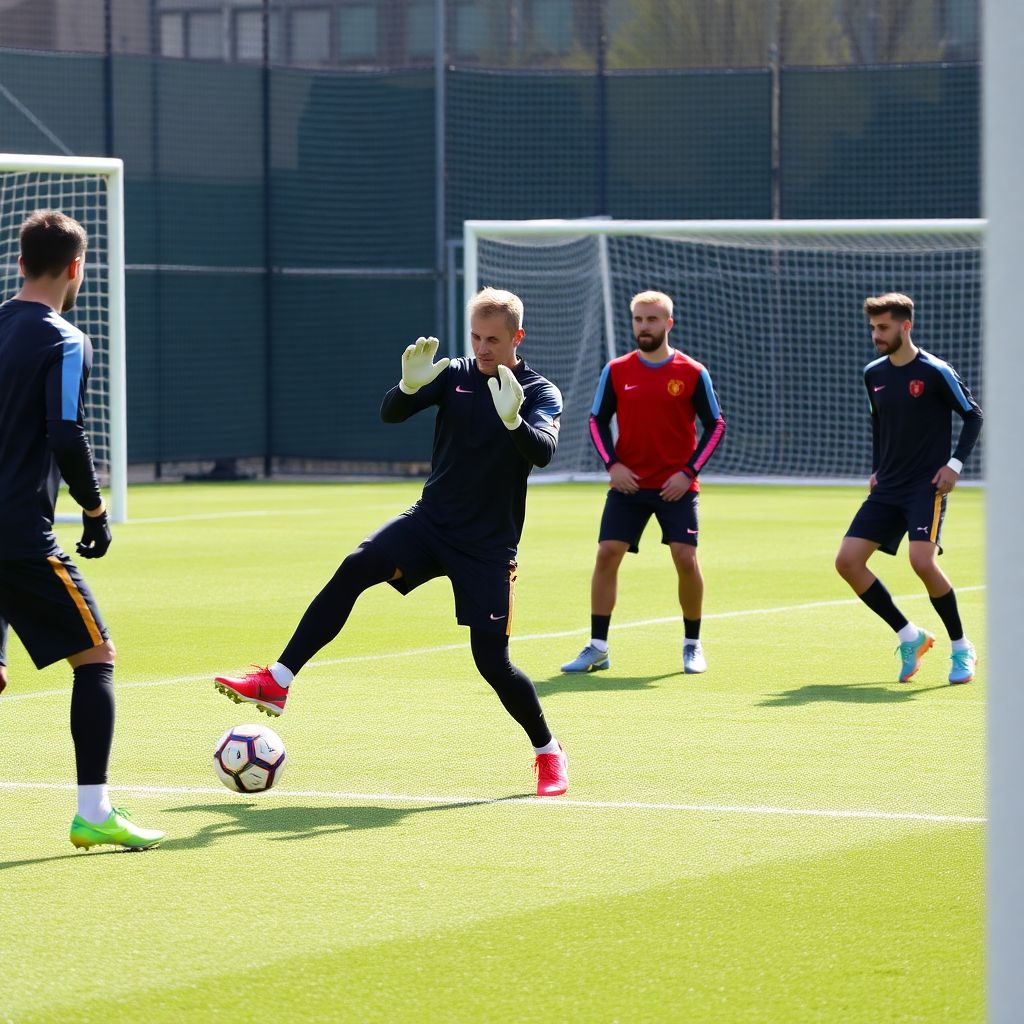
Turkish goalkeepers have risen through a blend of position-specific academies, modern periodization, and tactical training that mirrors elite European standards while respecting local realities. To implement this model, build a structured pathway: technical foundations, safe physical and cognitive loading, clear tactical roles, and an academy system that tracks progression instead of relying on individual talent only.
Coach’s rapid briefing: core takeaways
- Modern Turkish goalkeeping blends traditional shot-stopping strengths with advanced distribution, game reading, and sweeper-keeper responsibilities.
- A clear curriculum is split into technical, physical, cognitive, and tactical blocks, adapted across age groups and competitive levels.
- Safe periodization and progressive overload are essential to prevent overtraining and overuse injuries, especially in growing athletes.
- Academy models focus on tiered progression, data-informed scouting, and continuous coach education rather than one-off talent picks.
- Goalkeepers benefit from exposure to goalkeeper training camps in Turkey and well-structured club environments, not random private sessions.
- Strong communication between goalkeeper coach, head coach, and medical staff is non-negotiable for consistent development.
Evolution of Turkish goalkeeping: trends, role shifts, and performance data
Turkish goalkeeping has shifted from reactive, line-bound shot-stoppers to proactive, ball-playing keepers who manage depth and space. Clubs model their work on elite youth goalkeeper academies Europe-wide while integrating local tactical habits such as aggressive box control and crowd-heavy match atmospheres.
This evolution suits coaches and academies who can commit to a long-term pathway: consistent training blocks, video review, and integrated team sessions. It is less suitable if your environment changes coaches every few months, fields are inconsistent, or match analysis tools are unavailable. In such cases, keep the model but simplify expectations.
Three main role shifts define the rise of Turkish goalkeepers:
- From line to space: greater focus on sweeping behind a high defensive line and defending crosses early.
- From stopper to playmaker: building from the back against high presses, often under intense fan pressure.
- From solo worker to unit member: tight integration with defensive and build-up structures rather than isolated training.
Micro-case: a Super Lig academy in Istanbul redesigned its U14-U19 goalkeeper curriculum around breaking the first line of press with both feet. Within two seasons, most keepers could execute under pressure in full 11v11, improving team build-up success.
Actionable item: define your goalkeeper role profile for each age group (depth of line, distribution responsibilities, communication tasks) before designing any drill or selecting an academy program.
Technical curriculum: footwork, shot-stopping and distribution drills
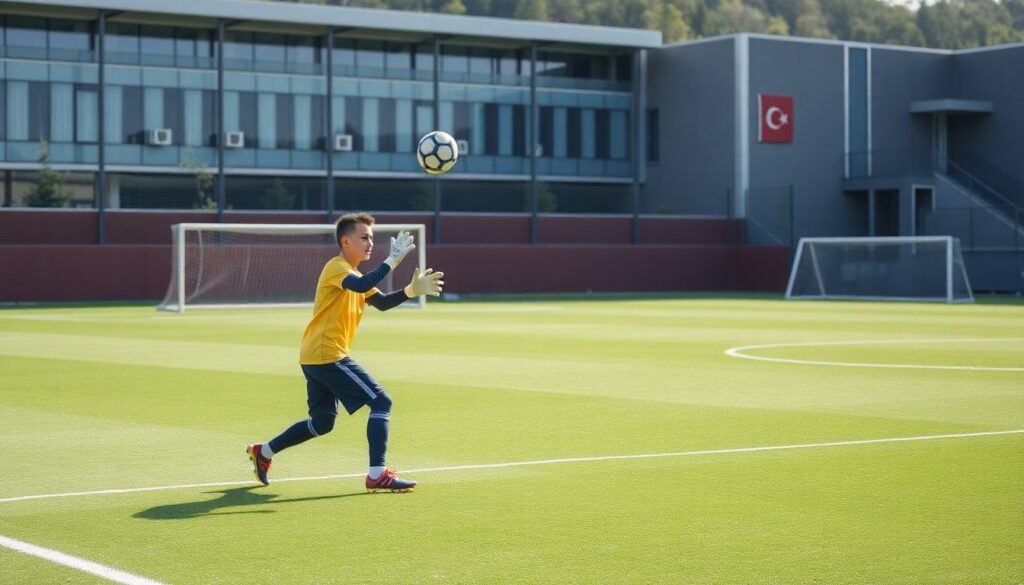
Before copying the best football academies in Turkey for goalkeepers, map the technical requirements of your context: pitch quality, league style, and available training time. The core curriculum should cover stance, footwork, handling, diving, 1v1s, high balls, and distribution with both feet and hands.
To implement this safely and efficiently, you need a small but consistent toolkit:
- Flat cones and small hurdles for footwork and acceleration patterns.
- Different ball types (match, training, slightly softer balls) to control impact on young keepers.
- Portable goals or target gates for distribution accuracy and passing patterns.
- Video recording via phone or simple camera for feedback and self-analysis.
- Access to qualified goalkeeper coaching, ideally through professional goalkeeper coaching programs Turkey clubs or regional centers already run.
Example micro-block for a 75-minute session (U15-U17):
- Activation and mobility (10-15 min): dynamic mobility, light footwork ladders, simple catches.
- Footwork to handling (15-20 min): multi-angle steps into front and collapse catches, low load, high quality.
- Diving and 1v1s (20-25 min): controlled progressions from kneeling to full dive, then slow-speed 1v1 decisions.
- Distribution under light pressure (10-15 min): passes through gates, clip balls to mini-targets, basic throw-ins to moving teammates.
Micro-case: a coastal academy without large budgets built its reputation by standardizing three core distribution drills and repeating them across all age groups. Within a few years, its keepers were consistently scouted into stronger clubs because of their comfort on the ball.
Actionable item: write a simple weekly technical plan with 2-3 recurring drills per category (footwork, handling, distribution) and track completion, not perfection, for at least two months.
Physical and cognitive conditioning: periodization and injury mitigation
Before starting a structured physical and cognitive block, complete this short preparation checklist:
- Confirm medical clearance for all keepers, especially those with past knee, hip, or shoulder issues.
- Check training surfaces for holes, slippery zones, or hard spots that increase landing risk.
- Agree weekly volume with head coach to avoid double loading on the same day.
- Set clear age-appropriate limits on dives, jumps, and sprints per session.
- Prepare simple cognitive tools: colored cones, verbal cues, and basic reaction apps or a stopwatch.
- Establish age-appropriate weekly loading
Define how many goalkeeper-specific sessions and matches each age group will have. For younger keepers, prioritize quality over volume, with at least one lighter technical day to help recovery. - Build a safe warm-up and landing pattern
Create a repeatable warm-up that includes general mobility, core activation, and low-impact footwork and handling. Teach landing mechanics on knees, hips, and shoulders before adding any high dives or repeated jumps. - Introduce progressive strength and power work
Start with bodyweight strength (squats, hip hinges, push variations, core) before introducing external loads. Add low-intensity plyometrics later, such as small hops and controlled bounds, keeping ground contacts reasonable. - Add cognitive and perception drills
Layer decision-making into physical work using color calls, late ball releases, and simple reaction lights or apps. The goal is to increase game realism without sacrificing technical shape or safety. - Monitor fatigue and recovery signals
Use simple check-ins: sleep quality, soreness locations, mood, and training willingness. Adjust session intensity when multiple red flags appear, especially during congested match periods. - Review and adapt each training block
Every 4-6 weeks, review attendance, injuries, and performance notes with staff. Slightly adjust volume, drill selection, or cognitive demands rather than overhauling the entire plan.
Micro-case: a provincial club reduced soft-tissue issues by standardizing a 15-minute landing and mobility warm-up for all keepers. After one full season, they reported far fewer missed sessions and better consistency in competition.
Actionable item: write a one-page periodization overview for your keepers, listing weekly sessions, warm-up routine, and clear rules for reducing load when fatigue signs appear.
Tactical frameworks: playing out from the back, sweeper-keeper tasks and set-piece roles
Tactical clarity has been a major factor in the rise of Turkish goalkeepers, especially those moving into elite youth goalkeeper academies Europe scouts monitor. Your keeper must know exactly when to play short, when to go long, and how far to defend from the line in your system.
Use this checklist to evaluate whether your tactical framework is working in matches and training:
- The goalkeeper can describe in simple terms how your team wants to build up versus low, medium, and high presses.
- There is a clear trigger for switching from short build-up to longer, safer distribution.
- Communication codes (hand signals or calls) are agreed for set-pieces, including near-post and far-post responsibilities.
- The keeper’s starting position adjusts logically with ball location and your defensive line height.
- In match footage, the goalkeeper anticipates through balls rather than only reacting late.
- Set-piece routines are rehearsed with the full team at least once weekly, not just with goalkeepers alone.
- The head coach and goalkeeper coach agree on risk level for playing out from the back in different score and time scenarios.
- Short goal kicks and build-up patterns are tailored to the keeper’s current technical level, not copied from professional models blindly.
- Goalkeeper errors are reviewed calmly in video, focusing on decision quality and positioning rather than only technique.
Actionable item: record one full match and one training game, then review with your goalkeeper to identify three recurring tactical decisions to improve over the next month.
Academy architecture: scouting, tiered progression and coach development models
Strong academy architecture is why goalkeeper training camps in Turkey and club systems have begun producing reliable, modern keepers. The structure you build matters as much as individual coaching sessions: how players enter, progress, and either move up or out of the system.
Common structural mistakes to avoid:
- Relying on one-off trials without long-term observation, leading to missed late developers.
- Skipping clear tiers of progression (U12-U19) and mixing wide age ranges in the same group.
- Ignoring data and video in scouting, basing decisions only on a single match or camp.
- Not budgeting for coach education, even while paying Turkish football academy enrollment fees for players.
- Promoting keepers too quickly to older age groups just because of height, not readiness.
- Lack of written criteria for what a “promotable” goalkeeper looks like at each age.
- Separate, uncoordinated training between club and school, causing overload and conflicting messages.
- Inviting too many goalkeepers into sessions, making quality, individual feedback impossible.
- No transition support when a goalkeeper moves from academy to senior team environments.
Micro-case: a mid-table club created a simple three-tier model (development, performance, elite) for keepers from U12-U19. By clearly defining criteria for moving up, they reduced parent pressure and improved internal fairness and motivation.
Actionable item: map your current goalkeeper pathway on paper, marking entry points, age groups, and criteria for promotion; highlight bottlenecks or overlaps, then adjust group sizes and staffing accordingly.
Practical implementation checklist: building a Turkish-style goalkeeper pathway
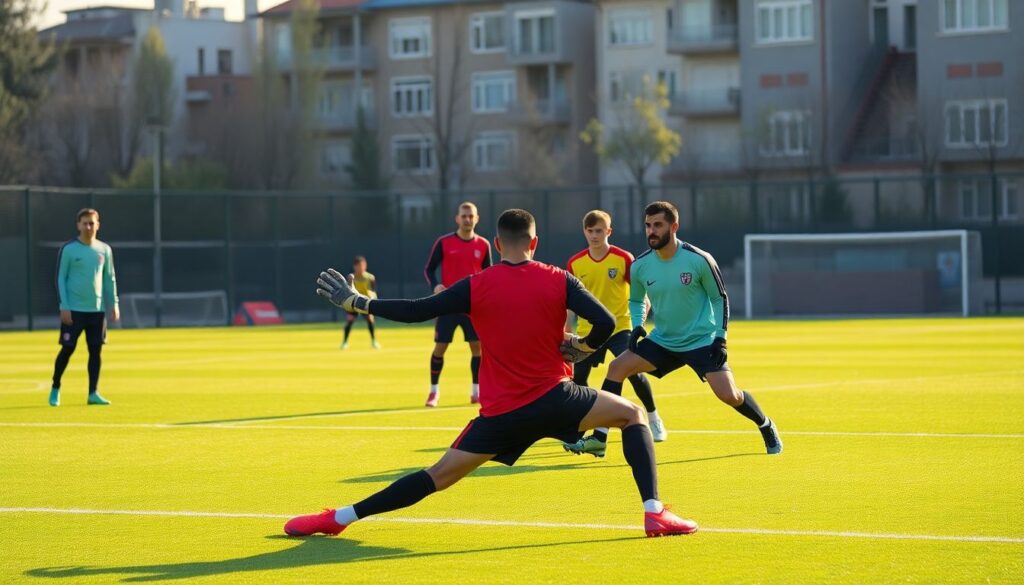
If you cannot fully mirror the best football academies in Turkey for goalkeepers, you can still apply core principles through practical alternatives. Choose the model that best fits your budget, facilities, and staffing level and adapt over time.
Realistic implementation options:
- Club-centered pathway with external support: run two to three structured goalkeeper sessions weekly at your club, then use occasional professional goalkeeper coaching programs Turkey-based (clinics, visiting coaches) to upskill staff and players.
- Regional collaboration model: if your club is small, join or form a regional pool of goalkeepers, sharing one specialist coach and rotating training venues; this mimics larger academies without major new costs.
- Hybrid academy and camp approach: enroll keepers in stable local training plus selected goalkeeper training camps in Turkey during school breaks, focusing on tactical exposure and mental resilience rather than only “showcase” events.
- Online-guided local program: when travel is limited, use online curricula from elite youth goalkeeper academies Europe or Turkish experts and implement them under the supervision of a generalist coach, prioritizing safety and conservative volume.
When evaluating any option, consider logistics, staff education level, and hidden expenses such as travel and equipment as carefully as headline Turkish football academy enrollment fees.
Actionable item: pick one main implementation model and create a six-month calendar combining club training, education for coaches, and two or three targeted events or camps, rather than chasing every new opportunity.
Common implementation hurdles and quick fixes
How can we start a structured goalkeeper program with very limited equipment?
Focus on body positioning, footwork, and decision-making using cones, a few balls, and small target zones. Use walls or fences for rebound work and keep sessions short but frequent. Consistency and clear progressions matter more than buying advanced tools.
What is the safest way to introduce diving to young goalkeepers?
Teach landing mechanics on mats or soft grass, starting from kneeling and sitting positions before moving to low-speed standing dives. Limit repetitions, stop immediately if technique breaks down, and avoid hard surfaces or high balls until basic shapes are solid.
How many goalkeeper-specific sessions per week are appropriate for youth players?
For most youth keepers, two structured position-specific sessions plus team training and match play are sufficient. Increase volume gradually only when technical quality and recovery remain strong, and coordinate with head coaches to avoid duplicate high-intensity days.
What if our head coach and goalkeeper coach disagree on playing out from the back?
Schedule a short meeting to define risk levels by age group, opponent strength, and scoreline. Agree on a few non-negotiable rules for goal kicks and back passes, then adjust drills so they reflect that shared plan, not two competing philosophies.
How can smaller clubs compete with big academies for goalkeeper development?
Offer individualized attention, stable coaching staff, and a clear progression plan instead of promising big names. Collaborate regionally, share video with scouts, and lean on targeted camps or online resources to keep methods modern without overspending.
What signs show that our goalkeeper periodization is too intense?
Watch for constant soreness, reduced explosiveness, irritability, and drops in basic handling quality. If several signs appear, cut volume, simplify drills, increase recovery, and speak with players and medical staff to adjust loads early.
How should we talk about mistakes with young goalkeepers?
Review clips calmly, focusing on decision, starting position, and technique in that order. Highlight one or two changes to apply in the next session rather than reliving the error; this keeps confidence intact while reinforcing learning.