From Terim’s Fire to Today’s Framework
How Fatih Terim Built Controlled Chaos
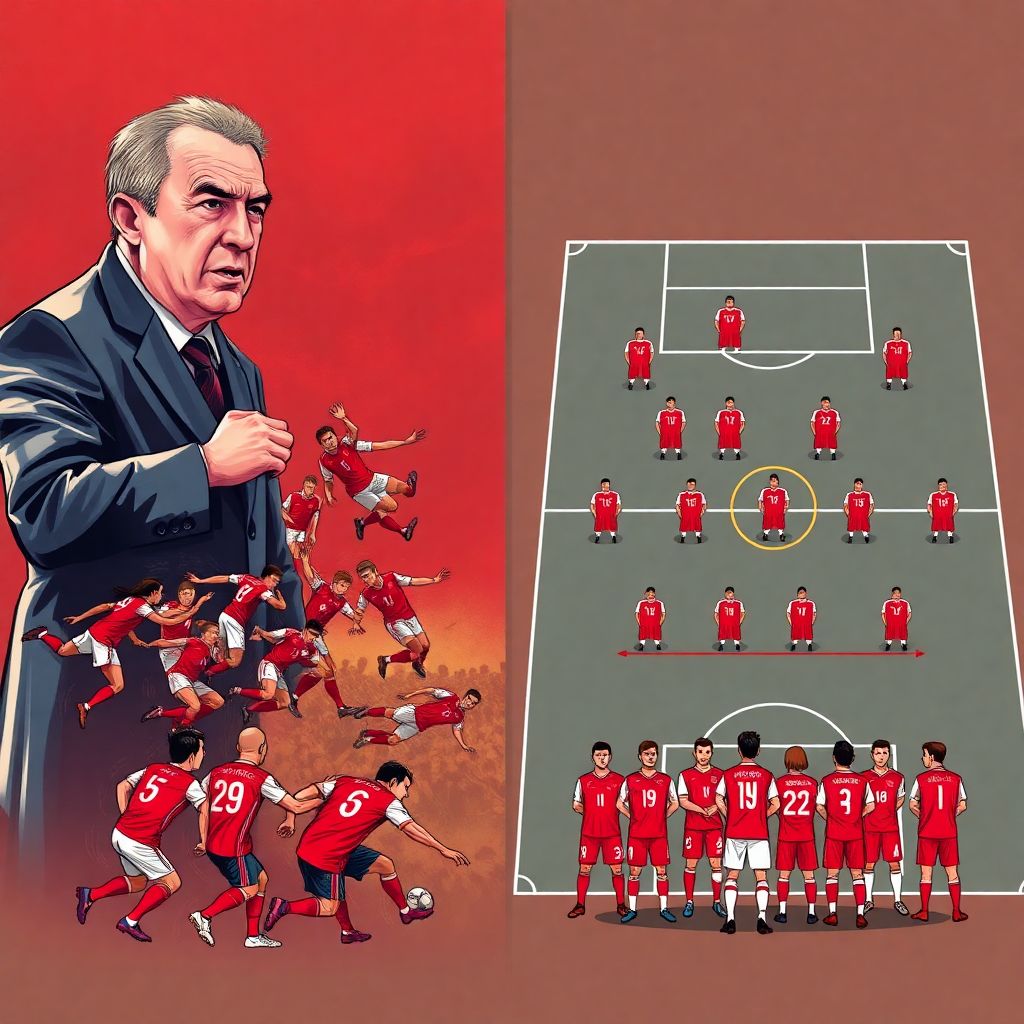
When people talk about the Turkish national team becoming a permanent threat in Europe, they usually start with Fatih Terim. Not because he invented pressing or three-at-the-back, but because he turned raw emotion into a tactical weapon. In the late 90s and early 2000s his Turkey played what I’d call “structured chaos”: nominally a 4‑2‑3‑1 or 4‑3‑1‑2, but in practice it was a swarm. Full-backs bombed forward at the same time, the “10” often became a second striker, and the double pivot had to cover shocking amounts of space. It looked wild, yet there were clear rules: press hard after losing the ball, funnel opponents wide, then overload the second ball. If you ever read a good Fatih Terim biography book, that blend of ego, risk and strict dressing-room hierarchy really jumps off the page.
Modern coaches can’t just copy-paste that idea; pressing distances and athletic demands are brutal now. But the core Terim principle—embrace emotional intensity, then cage it inside repeatable patterns—still underpins how Turkey tries to play.
What Today’s Coaches Took from Terim (and What They Dumped)
From Terim the current setup keeps the aggression and the faith in technically bold midfielders. What’s gone is the constant gamble with both full-backs high and the huge gaps between lines; today’s staff build far more compact blocks and use data to decide when to jump or when to sit.
—
Data, Pressing and the 2021–2023 Numbers
Defensive Shape: From Hero Ball to Collective Work
If you zoom in on the last three calendar years we can actually see the tactical evolution in the numbers. During World Cup 2022 qualifying (mostly 2021), Turkey conceded 16 goals in 10 games—way too high for a team that finished second in Group G. The worst example is that 6:1 loss to the Netherlands, where the back line kept dropping while the midfield pressed late, leaving oceans of space between lines. That was still a “Terim-era hangover”: individuals flying out to press without coordinated cover. By the time we hit the 2022–23 Nations League C campaign, things looked different. Turkey allowed just 5 goals in 6 games, keeping 3 clean sheets and mostly defending 10–15 meters deeper. Their PPDA (passes allowed per defensive action) improved: fewer wild sprints, more designed traps out wide against Luxembourg and Lithuania. The eye test matches the data—less reactive defending, more pre-planned pressing triggers tied to full-back positions and the opponent’s pivot.
The short version: Turkey moved from “we’ll outrun you” to “we’ll steer you where we want, then bite.” Less romantic, more sustainable.
Attacking Output: Quality over Chaos
In the same 2022–23 Nations League, Turkey scored 18 goals in 6 matches. That looks like old-school chaos, but shot profiles tell a calmer story: more cut-backs, more central shots inside the box, fewer hopeless long-range efforts than in euro and World Cup qualifiers. The build-up is more patient, even if the final third still has that classic Turkish volatility.
—
Case Studies: Qualifiers, Nations League and Real Games
World Cup 2022 Qualifying vs Euro 2024 Qualifying
Take two concrete samples. In WC 2022 qualifying (2021), Turkey finished with 27 goals scored and 16 conceded in 10 games. Offensively solid, defensively fragile. They relied heavily on transitional moments—win the ball, play forward early, use the forwards’ movement rather than long positional attacks. Against weaker sides that was enough, but when the pressing broke, the back line was exposed one‑v‑one far too often. Contrast that with Euro 2024 qualifying results up to the end of 2023. In Group D, Turkey finished first with 5 wins, 2 draws, 1 loss and a 14:7 goal difference. Fewer goals scored per game, but also fewer conceded. That’s the trade-off of the modern approach: more control, fewer end‑to‑end spectacles. The staff clearly leaned into a 4‑2‑3‑1 / 4‑3‑3 that could morph situationally. One pivot sat to help the centre-backs build while the other stepped into half-spaces, creating a 3‑2 base in possession—very different from the older “two sixes side by side” look.
The big takeaway for analysts: qualification success didn’t come from suddenly “attacking more,” but from carefully reducing volatility without killing Turkey’s natural verticality.
Nations League 2022–23: Laboratory Phase
That Nations League C group was a tactical lab. Against Lithuania and the Faroe Islands, Turkey tested ultra-high full-backs and inverted wingers, knowing the talent gap gave them a margin for error. The 1:2 loss to the Faroes is a warning shot: when the rest defence isn’t organised, even small teams can punish a high line.
—
Non-Obvious Tactical Twists
Inverted Full-Backs, Hybrid Eights and Role Blending
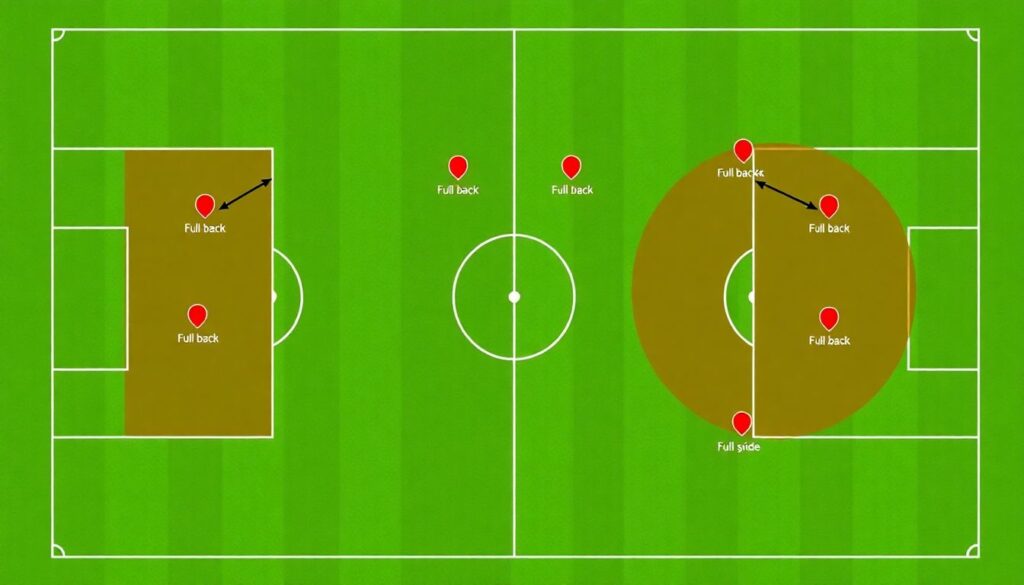
One thing that doesn’t get enough attention is how Turkey have quietly modernised their use of full-backs and eights. Instead of classic Terim-era overlaps from both sides, we now often see one full-back inverting into midfield during build-up while the ball-side winger stays wide. That creates a box midfield (2‑2) and frees the advanced eight to push higher between the lines, turning into a shadow striker in some phases. Watch how Turkey’s right-back will step inside next to the pivot against a 4‑4‑2 press; suddenly you’ve got a spare man in the first line, and the centre-backs can split wider. For three years running, this has been a go-to solution against teams that press high but lack coordination. Statistically, you see the payoff in more controlled entries: fewer long clearances, more sequences of 6+ passes before entering the final third compared to 2021. Another subtle twist is that the “10” often shifts wider during possession, leaving the central lane to a late-arriving eight. That keeps the opponent’s holding midfielder guessing—follow the 10 out and you open the half-space, stay central and you give Turkey’s playmaker time to turn.
It’s a far cry from the old days where roles were labeled “six, eight, ten” and frozen. Now it’s all about corridors and heights on the pitch, not fixed positions.
Micro-Roles Hidden in Jersey Numbers
A small but fun detail: the Turkey national football team jersey numbers often betray micro-roles. The nominal “winger” in the 7 shirt might actually be the inside forward tasked with clogging central channels, while the wide overload is built by the 3 or 5 pushing very high. Reading the jersey like it’s still 4‑4‑2 from the 90s is a quick way to misanalyse what’s going on.
—
Alternative Methods and Pro-Level Hacks
How Pros Actually Study Turkey: Beyond TV Highlights
If you’re a coach or analyst trying to learn from Turkey’s tactical evolution, you need more than match-of-the-day clips. Start with full-match replays from the last three years—especially Euro 2024 qualifiers and the 2022–23 Nations League—then build your own event logs: where the press starts, which side they funnel to, how often the pivot drops between centre-backs. It’s essentially your personal Turkish football tactical analysis course. Surprisingly, even fan resources help; official videos, tactical threads, and long-form breakdowns on social media often highlight pressing triggers or build-up patterns you might have missed live. Another underrated angle: physical context. June fixtures show dips in intensity; you can see line height drop 5–10 meters compared to September or October. When people complain that “they stopped pressing,” that’s usually not a tactical change but conditioning and scheduling. Even commercial stuff can be useful. Promo shoots and behind-the-scenes clips for new kits sometimes show training drills and small-sided games that reveal what the staff is emphasizing that cycle—pressing lanes, rest-defence shapes, or combination patterns near the box.
And if you like narrative context, a well-researched Fatih Terim biography book helps you understand why Turkish football keeps circling back to emotional momentum, even as the numbers guys take over.
Practical Hacks: From Stadium to Laptop
Want a real pro move? If you manage to grab Turkey national team tickets Euro 2024 style for any future tournament, treat the live match as data collection: take seat-high photos of shapes in each phase, note minute-by-minute where the line of engagement is, and later sync that with the broadcast replay. Then use footage, plus clips you can legally buy or download, to build a mini-library. Even grabbing a scarf from a Turkey national team merchandise store isn’t just fan service; it reminds players and staff that they’re being watched and analysed, which is part of why tactical transparency is growing. Just don’t copy Turkey’s schemes blindly. Steal the principles—how they balance fire and structure, how they’ve tightened defensive distances since 2021, how they use hybrids instead of rigid positions—and adapt them to your own squad’s athletic and technical profile. That’s the real evolution: not just for Turkey, but for anyone paying close enough attention to learn.