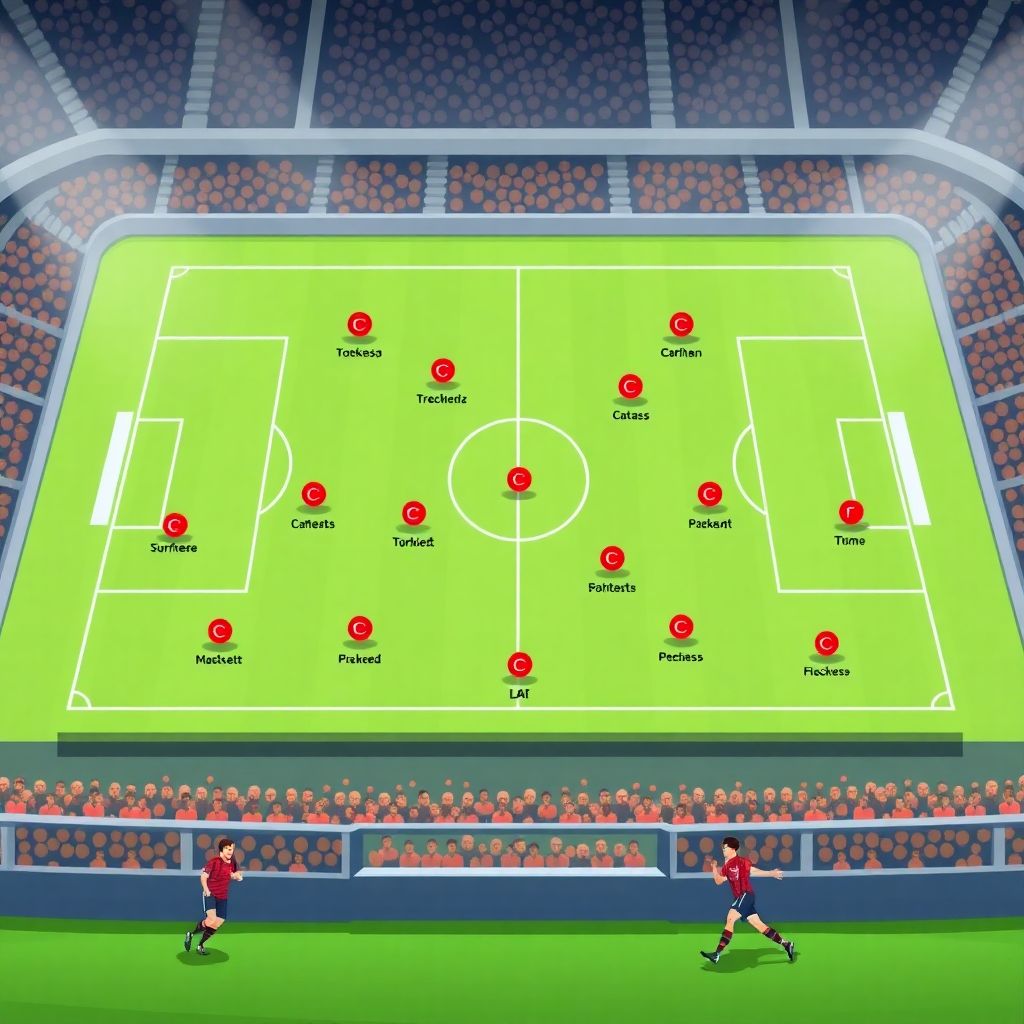
Süper Lig teams can copy Premier League pressing intensity without copying their budgets by simplifying structures, using clear triggers, and recruiting press-ready athletes rather than famous names. Focus on team compactness, synchronised first line pressure, short recovery cycles, and simple video plus event-data to guide weekly tweaks instead of expensive analytics departments.
High-impact lessons for low-budget implementation
- Copy one pressing model at a time (Liverpool-style high press or Guardiola-style mid-block) instead of mixing ideas without structure.
- Prioritise runners, work-rate and decision-making in recruitment; technique is secondary for pressing roles.
- Use three to four clear triggers (bad touch, back pass, sideline trap, closed body shape) and drill them daily.
- Build pressing fitness through ball-based interval games, not isolated running; this matches Premier League pressing tactics analysis constraints to Süper Lig reality.
- Evaluate pressing with simple counts: high turnovers, shots after regaining, and distance between lines, using free or cheap video tools.
- Rotate by role intensity (press leader, cover runner, screen) rather than by position only, protecting your best sprinters.
- Compare super lig tactics vs premier league pressing comparison regularly to refine your model and avoid unrealistic copying.
Adapting Premier League pressing templates on a budget
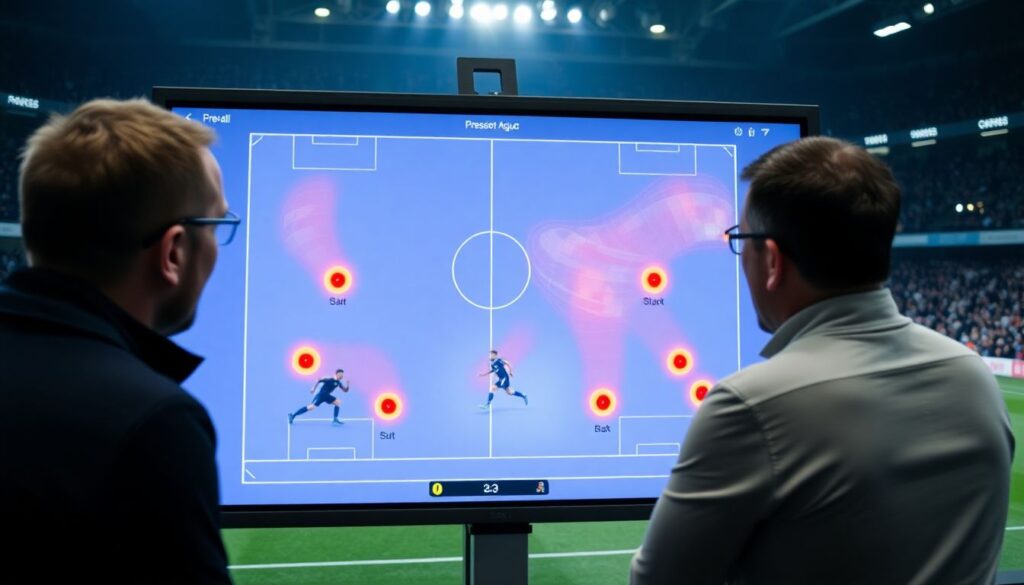
When choosing which Premier League pressing structures to adapt, use clear criteria rather than reputation or favourite club preference.
- Squad athletic profile – Number of players who can sprint repeatedly, recover fast, and stay aggressive for 70+ minutes.
- Defensive line speed – Centre-backs and goalkeeper capacity to defend large spaces behind a high press.
- Coach and staff time – How many weekly sessions you can dedicate to pressing detail and video feedback.
- Stability of starting XI – Whether you can keep a consistent front three and midfield pair to learn automatisms.
- Club transfer model – Access to young, hungry runners versus older stars; this shapes whether you can play a Liverpool-like aggressive press.
- Opponent styles in Süper Lig – Frequency of build-up from the back, direct play, or low-risk long balls that can limit high press opportunities.
- Pitch and climate conditions – Surfaces, weather and travel that affect how long you can maintain top intensity.
- Available data and video – Whether you rely on basic match footage or have some tracking and event data for best tactical analysis of premier league pressing systems adaptation.
- Board patience and identity – How long you have to embed a pressing identity before results are judged harshly.
The comparative overview below translates typical Premier League pressing practice into realistic Süper Lig adaptations.
| Premier League pressing practice | Affordable Süper Lig adaptation (low-cost method) | Expected impact on pressing |
|---|---|---|
| Dedicated pressing coach and large analysis team | One assistant doubles as pressing coordinator, using team-wide WhatsApp clips and short pre-training video huddles | Clear role understanding without heavy staffing costs; slower depth of analysis but enough to correct key behaviours |
| Full-pitch tracking data and complex PPDA dashboards | Use basic event data from public platforms plus manual tagging of high regains and shots after regain | Good picture of pressing effectiveness at a fraction of the cost; limited granularity on individual running loads |
| High press every game with deep rotation and huge squads | Match-specific high press (e.g., at home or vs weak build-up teams) plus compact mid-block in other fixtures | Protects players while still allowing big pressing moments that influence league position |
| Individualised conditioning plans with full sports science staff | Simple GPS or heart rate for 8-10 key players, plus basic RPE (rating of perceived exertion) after pressing drills | Reasonable control of fatigue and sprint volume for core squad without full lab-style infrastructure |
| Daily micro-adjusted pressing schemes per opponent | One core pressing scheme, with two simple game-plan variations (aggressive or conservative) taught to the squad | Faster learning and more reliable execution, in exchange for slightly less tactical specificity per match |
Scouting and recruitment: sourcing press-capable players affordably
To copy how to coach high pressing football like premier league teams, selection of profiles matters more than transfer fees. The table compares low-cost options for Süper Lig clubs.
| Variant | Kому подходит | Плюсы | Минусы | Когда выбирать |
|---|---|---|---|---|
| Academy and U-21 promotion | Clubs with solid youth structure, limited transfer budget, and patience for development | Low cost, high physical capacity, easy to educate in club pressing model, strong resale potential | Lack of experience, possible inconsistency, risk of losing talents early if contracts weak | When building a long-term pressing identity and accepting short-term mistakes |
| Domestic undervalued runners from lower divisions | Clubs needing immediate intensity boost with small fees | Players motivated to step up, used to physical matches, more affordable wages | Technical ceiling may be lower, adaptation to tactical details can take time | When current squad lacks sprinting and work-rate, especially in front three and eights |
| Foreign market bargains from pressing leagues | Clubs with good agents network and some scouting time | Players already used to high pressing systems, can raise training standards quickly | Adaptation to Süper Lig culture and travel, potential language barriers | When needing two to three leaders to set pressing tone for the group |
| Loan deals from big European clubs | Teams with strong relationships to Premier League or top-5 clubs | Access to high-talent young players trained in elite pressing habits | Lack of continuity after loan, limited control over player usage demands | When chasing short-term league improvement or European qualification |
| Repurposing existing squad players | Clubs with limited ability to sign new players this window | No transfer fee, immediate availability, dressing-room leaders can drive standards | Physical profile may not match pressing roles, higher injury risk if overload is poor | When budget is minimal and coaching intervention is your main weapon |
Use simple scoring for each target: sprint volume, repeat sprint ability, tactical discipline, and pressing mindset. This can be done with basic video scouting and low-cost data platforms, similar to a compact football coaching course high press tactics module delivered in-house.
Tactical building blocks: triggers, compactness and role simplification
Effective pressing for Süper Lig clubs comes from a small number of repeatable rules, not from copying every pattern seen in best tactical analysis of premier league pressing systems. Use scenario-based guidelines.
- If your centre-backs are slow, then avoid all-pitch high press. Budget version: press in a mid-block from the halfway line; premium version: sign one fast cover defender and keep your line higher only on chosen matches.
- If opponents build short with a technical goalkeeper, then set a clear trigger: any back pass into the box. Budget version: front three press man-to-man with midfield covering lanes; premium version: add flexible rotations with full-back stepping high and inverted winger covering.
- If your squad fitness is limited, then compress pressing into 10-15 minute waves. Budget version: pick minutes 1-15, 45-60 for full intensity; premium version: with deeper squad, add a third wave around 70-80 minutes with fresh substitutes.
- If your 9 cannot run channels constantly, then make him a cover shadow striker. Budget approach: wingers trigger press on centre-backs while 9 blocks passes into pivot; premium: sign or loan a mobile striker and transform current 9 into pressing ten or rotation option.
- If you face long-ball teams, then shift emphasis from high press to second-ball pressing. Budget: two compact lines, aggressive squeeze on flick-ons; premium: add detailed opponent analysis clips for forwards and six to read launch patterns.
- If you lack analysts, then limit your pressing structures to three base patterns. Budget: 4-4-2 high press, 4-4-2 mid-block, late-game 4-5-1. Premium: add conditional tweaks like asymmetric full-back jumps and situational back three in build-up.
Conditioning, recovery and rotation for smaller squads
Use a simple checklist to decide your weekly conditioning and rotation when playing an intense press with a limited Süper Lig squad.
- Count sprints per game for your front six using simple video or basic tracking; flag players regularly above their usual range.
- Plan two high-intensity pressing days per week (e.g., MD-4 and MD-3) and one lighter tactical day (MD-2) with minimal sprinting.
- Rotate based on role intensity: first rest wide forwards and eights doing the most pressing, then consider full-backs.
- After heavy pressing games, shorten next session and add light positional games to maintain habits without physical overload.
- Use simple wellness checks (sleep, muscle soreness, mood) each morning and downgrade pressing load if three or more key players are red-flagged.
- Introduce small-sided pressing games (4v4+3, 7v7) with strict time limits to train repeat sprints without extending overall session too much.
- In congested weeks, switch from constant high press to a more conservative mid-block while keeping aggressive counter-pressing after your own losses.
Match preparation and in-game adjustments with limited analytics
When there is no large analysis department, avoid common mistakes that undermine pressing plans.
- Copying Premier League pressing shapes without checking your players’ running capacity and decision speed.
- Preparing too many pressing schemes for one game, confusing players during live adjustments.
- Ignoring opponent goalkeeper and centre-back profiles, which define whether a high press is realistic.
- Failing to define a clear off switch for the press, so the team chases blindly when lines are already stretched.
- Not rehearsing what happens if the first press is broken, especially for defensive midfielder and far-side winger.
- Substituting technical players instead of tired press leaders, which kills intensity in the final 20 minutes.
- Judging success only by possession or shots, without tracking high regains or dangerous transitions created.
- Skipping post-match 15-minute clip review, which is the cheapest way to improve pressing decisions over the season.
- Underestimating how climate and travel in Türkiye affect the feasibility of English-style full-game pressing.
- Not aligning match plan with weekly workload, creating situations where tired players are asked for unrealistic pressing jobs.
Practical metrics and a sample budget-friendly monitoring table
For Süper Lig clubs, the best plan for stable clubs with limited budgets is a compact mid-block with selective high pressing triggers, while the best plan for ambitious, athletic squads is a Liverpool-inspired aggressive press used in targeted fixtures, monitored through simple counts of high regains, shots after regain, and sprint loads.
Common practical concerns and concise solutions
How can a Süper Lig club start pressing like Premier League teams without changing half the squad?
Identify three to four current players with strong running power and tactical discipline and build pressing around them. Adjust your defensive line height to their pace and introduce one simple high pressing pattern plus one compact mid-block before adding complexity.
What is the minimum data needed to evaluate our pressing quality?
Track high regains within a defined zone, shots created within a few seconds of a regain, and rough distance between defence and midfield lines. Combine this with subjective staff ratings after matches to see whether the press is stable, improving, or failing.
How often should we use high press in a congested Süper Lig schedule?
Limit full-field high pressing to one league game per week or selected high-priority matches. In other fixtures, use a mid-block with aggressive counter-pressing immediately after losing the ball, which is less expensive physically but still disruptive.
Which positions are most critical to recruit specifically for pressing roles?
Prioritise one mobile central forward, two wide forwards who can sprint repeatedly, and at least one midfielder who reads triggers early. Centre-back speed matters, but you can protect slower defenders by lowering the line if attacking unit is strong.
How should we adapt pressing against strong build-up teams versus direct sides?
Versus strong build-up, press high on clear triggers and force play to weaker feet or into specific zones. Against direct sides, focus on winning first and second balls, keeping team compact, and pressing immediately on loose balls rather than chasing centre-backs.
Do we need a full football coaching course high press tactics before implementing a new system?
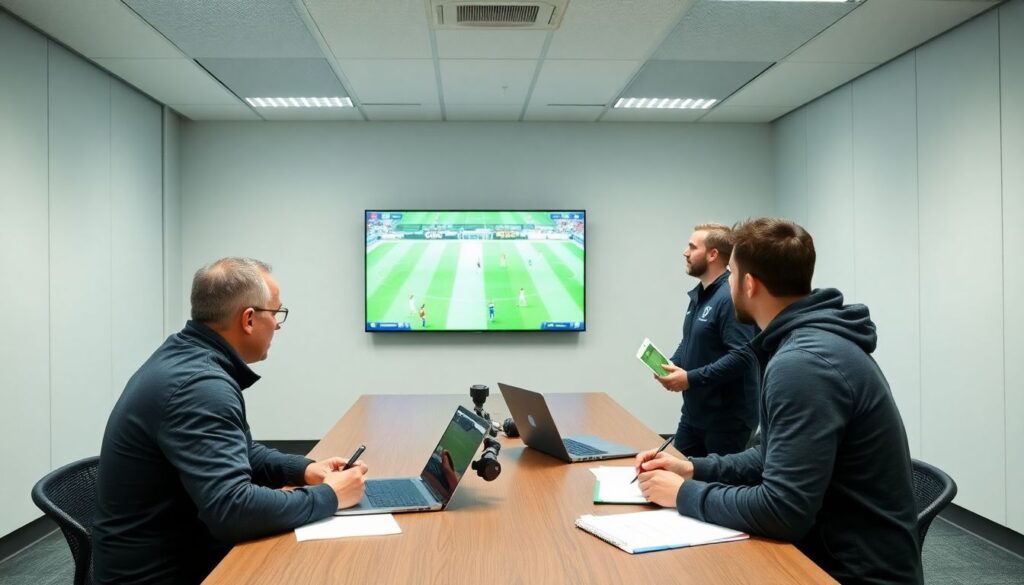
Formal education helps, but you can start with internal workshops using match clips, basic online resources, and clear written principles. Over time, complement this with targeted courses to deepen understanding and keep terminology consistent inside the club.
What is the fastest way to communicate in-game pressing adjustments to players?
Use simple hand signals or pre-agreed code words for switching between high press and mid-block. Reinforce these in training games so players react automatically on match day, reducing the need for complex touchline instructions.