Why High Pressing in the Süper Lig Is a Different Beast
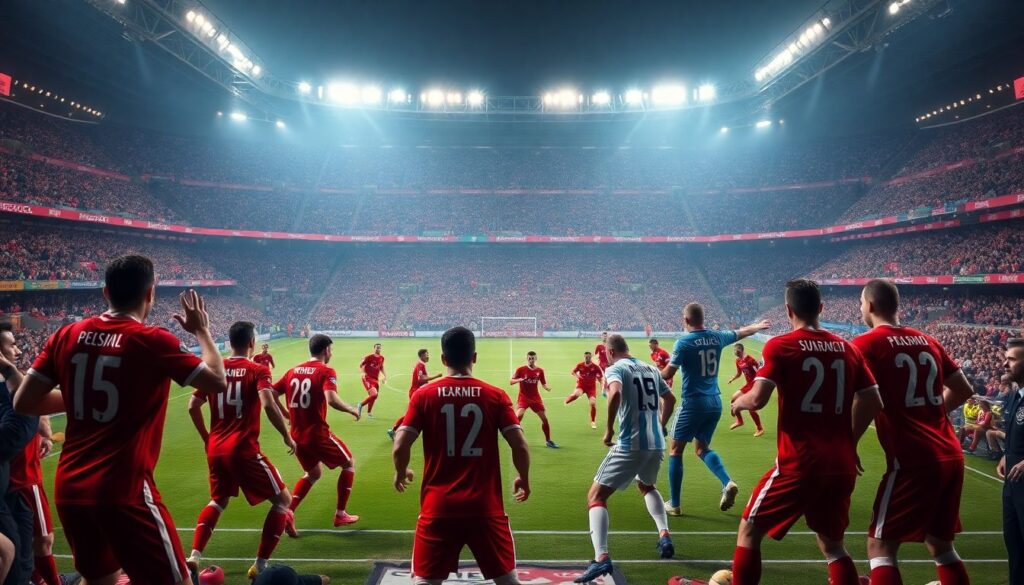
If you try to copy-paste Liverpool or City’s high press straight into Turkey, you’ll get punished fast. Different tempo, different refereeing line, more direct build-up, more individualists. That’s why any honest Süper Lig pressing tactics analysis has to start from context: extreme crowd pressure, wild momentum swings, and a league where a winger can dribble past three players and blow up your whole pressing structure in five seconds. So the question isn’t “How do we press like Europe’s elite?” but “How do we adapt elite principles to Süper Lig chaos without losing control?”
Real Case: Galatasaray’s Flexible 4‑4‑2 Press
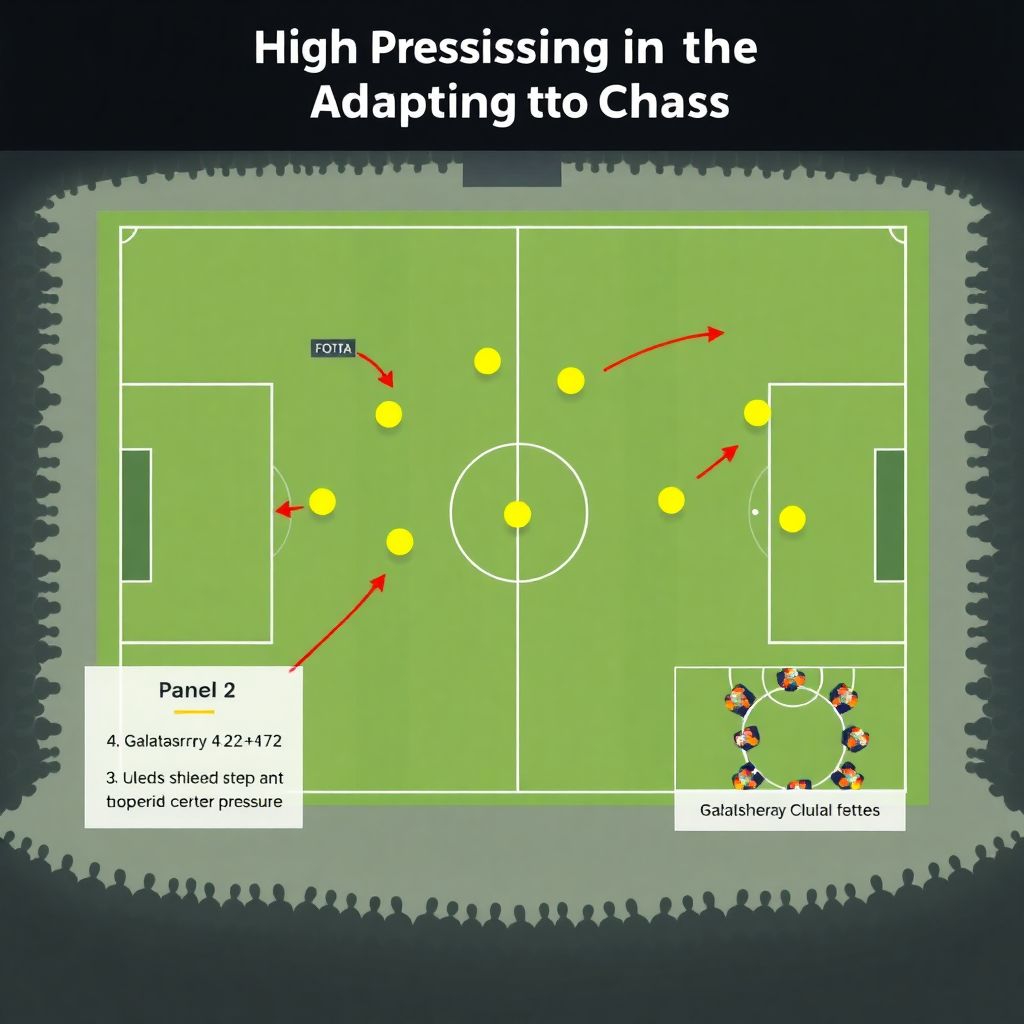
Look at Galatasaray under Okan Buruk when they press in a nominal 4‑2‑3‑1 that becomes a 4‑4‑2. On paper it’s simple: striker and 10 jump on center-backs, wingers lock full-backs, double pivot screens the six. The twist is in the triggers. They rarely go full gas on the first pass from the keeper; instead, they invite one “fake safe” ball to a full-back, then explode. The near winger sprints, the near eight jumps to the holding midfielder, and the far winger steps inside to guard the switch. It’s less about running more and more about compressing a whole half-space in two seconds. That’s why in any list of best high press teams in Süper Lig, Gala shows up: they’ve learned to weaponize the league’s verticality rather than fight it.
Non-Obvious Detail: Pressing Around the “Second Ball Zone”
A lot of coaches obsess over pressing the first pass; in Turkey, the real battle is around the second ball. Many Süper Lig teams go long from the keeper under pressure anyway. If your press is only designed to steal from the center-backs, you’re basically shadowboxing. The more advanced staffs build their high-press around where the clearance will land. They nudge the opponent to one side, deliberately leave one center-back “open”, then angle the striker so the keeper is forced to kick toward a preloaded flank. Three players are already positioned for the duel and, more importantly, for the second ball. This is where Süper Lig advanced stats high press metrics actually matter: it’s not just PPDA, but recoveries within 5–8 seconds after a long ball, and where on the pitch those recoveries happen.
Case Study: Fenerbahçe and the “Pressing Window”

Fenerbahçe in their better periods use short, violent “pressing windows” instead of a permanent high block. They know their front line can’t sprint like maniacs for 90 minutes in a league with this humidity and travel schedule. So they build 5–7 minute waves: one wave just after kickoff or right after scoring, another right after half-time, another if the crowd pushes them. Within these windows, they go man-to-man on the first line, with the six stepping aggressively onto the opposition pivot. Outside the window, the block drops to mid-height and becomes more zonal. This rhythm change confuses build-up teams that are used to stable pressure profiles. The practical takeaway for coaches: don’t think “We are a pressing team”; think “When and where do we go all-in, and how do we recover between waves?”
Alternative Method: Başakşehir’s “Trap Press” Instead of All-Out Pressure
If you’re not a big club and can’t sign eleven runners, trying to mirror top European sides is suicide. Başakşehir offer a clever workaround: trap pressing. Rather than hunting every back pass, they encourage circulation in harmless zones while secretly closing off progressive lanes. They show the full-back the line, but block the pass inside with tight cover shadows. Once the ball goes wide, the near eight and winger pounce from blind angles, while the striker curves his run to block the pass back into the center. It looks like passive defending for 15 seconds, then turns into a timed ambush. For smaller Süper Lig teams, this alternative is often better than a constant high block: similar turnover zones, far lower physical cost, and fewer exposed 1v1s at the back.
Non-Obvious Coaching Hack: Position Your Press Off Your Slowest Defender
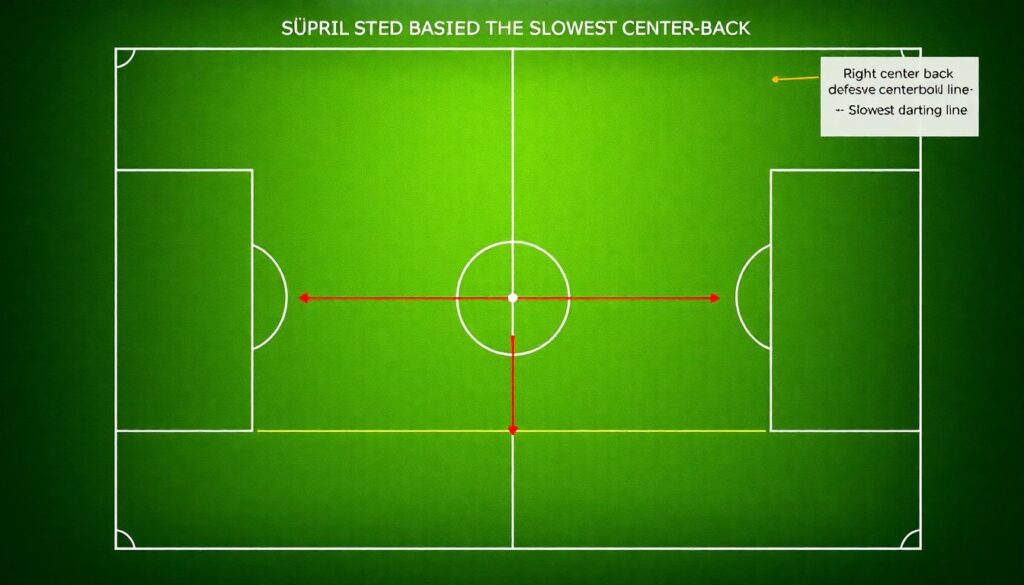
One of the smartest non-obvious solutions seen among progressive Süper Lig staffs is to design the whole pressing height from the perspective of the slowest center-back, not the bravest forward. If your right center-back is weak in foot races, your default starting line can’t be near the halfway line, no matter how fearless your winger is. Some Turkish analysts now start match prep by mapping “danger zones” behind each defender, then adjusting the pressing trigger distance accordingly. The front line still sprints aggressively, but the rest of the block sits 3–5 meters deeper than a classic European model, shrinking the space for through balls. You don’t lose pressing intensity; you just shift it slightly downward to protect your weakest link.
Using Data Without Becoming a Slave to It
Clubs that take pressing seriously are buying not only tracking data but also some form of Süper Lig tactical analysis subscription to benchmark themselves. The trap is copying dashboards from Premier League contexts. Instead, the better setups tweak standard metrics: PPDA split by game state (leading vs drawing), pressing actions after turnovers in the final third, and pressures in the half-space just outside the box. They also track “pressing losses” — situations where a failed press leads directly to an open cross or an isolated 1v1. Data here is a filter, not a dictator: analysts highlight patterns, but coaches still adjust to their squad’s personality, referee tendencies, and even specific stadium conditions like narrower pitches or tricky turf.
Practical Drill Ideas: Pressing That Actually Transfers to Matches
If your training games are 11v11 with vague instructions to “press high”, you’re wasting time. Break it down. A simple but brutal drill: 7v7+keeper in half a pitch, build-up team must play through three mini-gates past the halfway line, pressing team starts from realistic rest-defense positions. Add scoring for forced long balls and recovered second balls, not just goals. Another: 6v4 overload for the build-up side where the pressing team starts “late”, simulating a delayed trigger. The aim is to teach attackers how to curve runs to block passing lanes, not just sprint straight. These sort of exercises turn theoretical Süper Lig pressing tactics analysis into habits under fatigue and pressure.
Pro-Level “Cheats”: Small Touches That Sharpen Your Press
Elite coaches in Turkey quietly share a few “cheats” that don’t look like much on video but transform intensity. First, pre-agreed verbal cues: instead of random shouting, use one-word codes for jumping into a high press, switching sides, or dropping off. That slices reaction time by half a second. Second, position the captain not where he’s “comfortable” but where he best connects pressing lines — often as an eight rather than a six or full-back. Third, use set-pieces as pressing platforms: design corners and free-kicks so that your rest-defense structure is already a mini-high-press shape if you lose the ball and the opponent tries to break. These tweaks are nowhere near as glamorous as a Turkish football high press coaching course title, but they’re what actually keep your structure intact in the 88th minute.
Learning and Evolving: Building a Pressing Culture, Not a Single Scheme
Sustainable pressing is less about drawing a 4‑3‑3 trap and more about teaching players why certain decisions matter. The most resilient clubs invest in ongoing education: video sessions where players explain pressing triggers themselves, not just listen; analysts offering bite-sized clips via internal apps instead of hour-long lectures; and coaches who admit when a press is miscalibrated for a given opponent. In that sense, if you’re running an academy or semi-pro side, you don’t just need a rigid model — you need a mini “Süper Lig pressing tactics analysis” mindset embedded in your weekly routine. Combine data, clear language, and realistic drills, and suddenly your team starts to look less like a copycat of Europe’s elite and more like a Turkish version that can actually survive this league’s chaos.