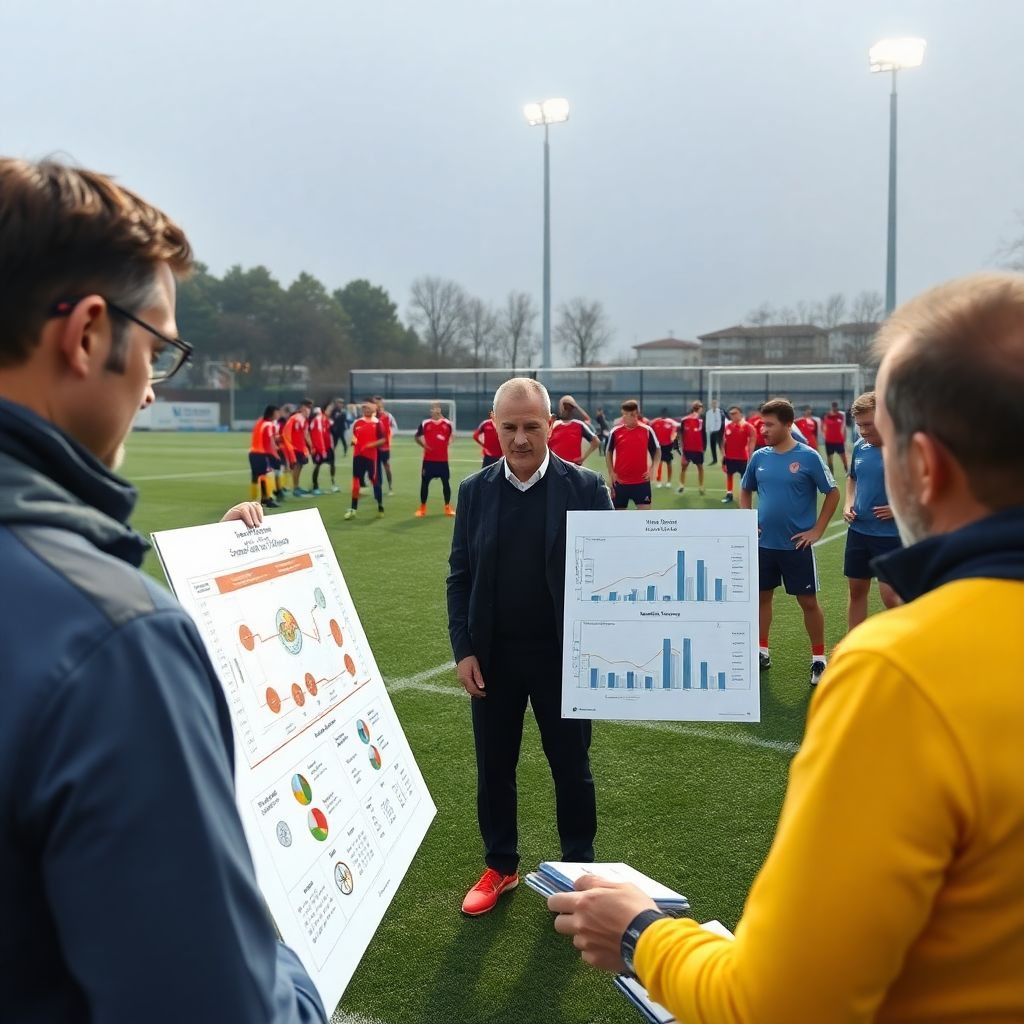
UEFA’s financial rules are forcing Turkish clubs to swap short‑term star chasing for sustainable squad building, more compact tactics, and better use of academies. Limits on losses and spending link wages and transfers to real income, so coaches, sporting directors, and boards must coordinate tactics, recruitment, and budgets instead of treating them as separate decisions.
Strategic Summary: How UEFA Financial Rules Reshape Turkish Clubs
- UEFA Financial Fair Play rules Turkish clubs face now connect sporting ambition directly to audited revenues, blocking uncontrolled deficit spending.
- The impact of UEFA financial rules on Turkish Super Lig teams is visible in lower net spending, shorter squads, and more role‑specific signings.
- Turkish football clubs transfer strategy under UEFA regulations is shifting toward value deals, loans, and resale‑potential players instead of aging stars.
- The core of how UEFA financial fair play affects Turkish club spending is the obligation to match wage and transfer commitments with predictable income.
- Coaches adapt with more compact, energy‑efficient tactics to reduce the need for expensive depth and constant high‑intensity pressing.
- Academies and local scouting become strategic assets, not side projects, as cheap, homegrown players unlock room in the budget.
- Any serious analysis of UEFA financial regulations on Turkish football budgets shows that sporting success now depends on integrated financial and tactical planning.
Regulatory Mechanisms Reshaping Club Budgets
UEFA’s financial framework for clubs combines several mechanisms: limits on accumulated losses, controls on late payment of transfer fees and wages, and close monitoring of how much of the club’s football income is spent on the squad. These tools do not tell coaches how to play, but they define what kind of squad construction is financially legal.
For Turkish clubs, this means every large contract and transfer must be justified against audited revenues, European prize money, matchday income, commercial deals, and realistic player‑sale expectations. Creative but risky practices of the past-short‑term loans from friendly companies, back‑loaded contracts, or aggressive bonus schemes-are more likely to trigger UEFA questions, settlement agreements, or sanctions.
In practice, the regulation converts the budget into a hard tactical parameter. A club cannot simply “solve” a tactical issue by signing three more foreign attackers or replacing half the squad in winter. Sporting directors must design a multi‑year squad plan where contract lengths, ages, and resale value fit the income profile and the club’s European participation prospects.
Practical guidance: Turkish boards should start the season with a clear wage‑to‑revenue target and a rolling three‑year projection. Sporting staff should receive not a fixed list of “no‑go” players by price, but a flexible envelope: maximum annual net wage sums, total amortisation allowed, and a required portion of the budget reserved for future renewals.
Immediate Tactical Adjustments on Matchday

- Smaller, more versatile squads: Instead of two expensive players for every role, one key starter and one flexible squad player cover several positions. Coaches must prioritise utility profiles (full‑back who can play on both sides, winger who can play as #10) to keep quality with fewer contracts.
- Energy‑efficient pressing: All‑game high pressing demands deep benches. Under strict budgets, many Turkish sides switch to mid‑block or situational pressing, protecting older or cheaper players who cannot run at elite intensity for 90 minutes, 40+ times per season.
- Set‑piece emphasis: When you cannot afford elite chance creators everywhere, set‑pieces become a low‑cost source of goals. Clubs invest in specialist coaches and targeted signings (tall centre‑backs, good servers) rather than an extra star playmaker.
- Risk control in possession: Losing the ball with many players ahead of it is expensive: it exposes limited‑quality defenders and costs points. Coaches in financially pressured Turkish clubs prefer safer, structured build‑up and controlled counter‑attacks over chaotic box‑to‑box games.
- Rotation driven by contracts, not only fitness: Players with appearance bonuses or mandatory‑buy clauses can no longer be used without thinking about the budget impact. Staff plan rotation with spreadsheets open: minutes management optimises both performance and contractual triggers.
- Foreign quota and salary balance: In the Super Lig, foreign‑player limits interact with UEFA rules. Coaches must align the best foreign slots with the highest‑impact positions while giving academy players real roles to keep the cost base sustainable.
Practical guidance: Before each season, coaching staff and analysts should agree on two or three “default game models” compatible with the existing wage structure: for example, a compact 4‑4‑2 for difficult away games that protects cheaper defenders, and a more expansive home model that leverages the few high‑wage stars.
Transfer Market Behaviour: From Big Spends to Smart Deals

UEFA Financial Fair Play rules Turkish clubs must follow discourage lump‑sum, high‑fee transfers without resale value. Amortisation spreads a transfer fee over the contract’s length, so long, expensive deals crowd out future flexibility. Turkish boards increasingly seek low‑fee or free transfers where wage structure, not fee size, is the main lever.
This shift creates several typical scenarios in the transfer market, directly visible in how Turkish football clubs transfer strategy under UEFA regulations has evolved.
- Short‑term loans with options: Instead of buying immediately, clubs loan players with buy options or obligations linked to European qualification or appearances. This protects cash flow and limits future obligations if sporting or financial conditions change.
- Deal focus on younger profiles: A 23‑year‑old with potential resale is preferable to a 31‑year‑old star on a similar wage. Even if the youngster is less proven, potential profit justifies the risk and fits UEFA’s emphasis on sustainable business models.
- Opportunistic free transfers with strict wage caps: Free agents still cost money, but without transfer fees, they offer more budget flexibility. The key shift: the club sets an uncompromising wage ceiling and walks away if the agent tries to exploit the “free” label.
- Sell‑to‑buy cycles: Outgoing transfers finance incoming deals. Sporting directors schedule sales windows (for example, after European groups) and pre‑identify replacement targets so the squad remains balanced despite necessary outgoing deals.
- Data‑driven role specialists: Instead of overpaying for all‑rounders, recruitment targets players elite in two or three metrics that solve specific tactical issues-e.g., a full‑back with top crossing numbers to exploit a tall striker, even if other attributes are average.
Practical guidance: Clubs should maintain a live depth chart with salary bands per position and age range. Any new signing must meet at least one of two conditions: resale potential within the contract or clear, measurable impact on match outcomes (e.g., expected goals added), documented in scouting reports.
The impact of UEFA financial rules on Turkish Super Lig teams becomes clearest when we trace complete decision cycles-budget, transfer, tactics-for a season. A rigorous analysis of UEFA financial regulations on Turkish football budgets always converges on the same risk: one reckless window can lock a club into three years of tactical and financial rigidity.
Youth Development and Academy Pathways as Strategic Assets
Homegrown players are the cleanest answer to how UEFA financial fair play affects Turkish club spending. They bring low wages at the start, no transfer fee, and high potential resale value. More importantly, they allow clubs to allocate limited foreign and high‑salary slots to the true difference‑makers in the first team.
Advantages of aggressive academy integration
- Low fixed costs: Academy graduates typically sign structured, ascending contracts that keep early‑career wages below foreign imports while giving room for performance‑based raises.
- Higher regulatory flexibility: Homegrown status supports both UEFA squad quotas and domestic registration rules, reducing the need for additional signings just to “fill” homegrown spots.
- Transfer upside: Even rotational academy players can be sold to mid‑table European clubs or other Super Lig sides at a pure profit, as there is no initial transfer fee to recover.
- Identity and fan tolerance: Supporters are more patient with local talents making mistakes than with expensive foreigners underperforming, which lowers the pressure to overspend to calm the fanbase.
Limitations and risk factors of relying on youth

- Performance volatility: Young players are inconsistent. Building too much of the XI around unfinished profiles can cost European qualification and the revenues needed for UEFA calculations.
- Development debt: If the club cuts back too much on experienced mentors, academy players may stagnate tactically, especially in defensive positions where organisation and communication are vital.
- Market timing risk: Counting on one or two big academy sales to “fix” the budget is dangerous; injuries, form dips, or tactical changes can destroy the expected fee.
- Overexposure to pressure: Throwing several teenagers into high‑pressure derbies or European qualifiers can hurt confidence and perceived market value.
Practical guidance: Turkish clubs should design clear pathways: each season, define 2-3 academy players who will receive structured minutes (cup games, late substitutions, low‑pressure league matches) and protect them from being used as emergency solutions in multiple roles without proper preparation.
Coaching Decisions and Formation Choices Under Financial Constraints
Coaches operating under strict UEFA scrutiny cannot think only in terms of “ideal football”. They must choose formations and principles that maximise the contribution of players the club can actually afford, and avoid tactical systems that demand constant high‑quality rotation in multiple positions.
- Myth: “We can fix everything in January.” Under UEFA monitoring, winter windows are narrow. Over‑reliance on mid‑season fixes ignores the reality that most of the wage budget is already locked and that panic loans can create next year’s problems.
- Myth: “Star‑heavy systems always pay off.” Tactics built entirely around one or two expensive attackers are fragile. If they are injured or leave to balance the books, the whole game model collapses.
- Mistake: formations that require many high‑end profiles. Systems like very attacking 3‑4‑3 often demand elite wing‑backs, ball‑playing centre‑backs, and creative eights. Maintaining that quality across the XI is costly and incompatible with a tight budget.
- Mistake: ignoring wage hierarchy in team management. Benching a high‑wage player for long spells might be tactically correct short term, but it destroys asset value and complicates future sales needed to meet UEFA targets.
- Myth: “Defensive football is automatically cheaper.” Passive, deep‑block teams can also be expensive if they rely on older defenders on big contracts to “organise” the game. Intelligent, proactive structures with well‑coached pressing traps can work with cheaper, more athletic players.
Practical guidance: For each tactical system under consideration, staff should list required player types and minimum quality levels, then map them to existing contracts. If two positions would require expensive upgrades, adapt the system instead of demanding signings the budget cannot sustain.
Concrete Club Case Studies: Adaptation Patterns and Outcomes
Consider a hypothetical Istanbul club entering UEFA monitoring after several seasons of over‑spending. The board agrees a soft internal cap on the wage bill and a plan to cut average squad age without losing competitiveness in the Super Lig.
Season 1 (stabilisation): The club sells two high‑salary veterans, replaces them with one younger starter and promotes an academy defender. Tactically, the coach moves from an all‑action 4‑2‑3‑1 to a more compact 4‑4‑2 in tough away games, reducing the running load on an aging midfield. Set‑piece training time increases, and a tall, relatively cheap centre‑back is signed primarily for defensive solidity and attacking corners.
Season 2 (rebalancing): With less wage pressure, the club can finally target a single, high‑impact winger with resale value instead of three average attackers. An internal rule limits contract length for players over 29, keeping amortisation under control. The team’s game model now maximises the new winger’s strengths through structured transitions and rehearsed wide overloads, instead of adding more expensive attackers.
Season 3 (sustainable contention): Two academy graduates become rotation regulars. One is sold abroad for a healthy fee, funding a targeted signing in a position that the system critically depends on. UEFA’s assessment of the club’s accounts improves, and the tactical identity-compact, set‑piece strong, transition‑focused-aligns with what the club can afford year after year.
Practical guidance: Clubs should treat each season as a step in a three‑year adaptation script: Year 1 to stop financial bleeding, Year 2 to re‑align tactics with a healthier squad cost structure, Year 3 to invest selectively in quality that keeps both sporting results and UEFA metrics on track.
Practical Implementation Questions from Clubs and Analysts
How quickly do tactical changes need to follow UEFA monitoring or sanctions?
Changes should begin in the same season the club enters monitoring, but must be phased. Immediate actions include trimming the most expensive, least‑used contracts and adapting match tactics to protect weaker positions instead of demanding new signings.
Which staff profiles are critical to link tactics and financial planning?
A strong sporting director, a head of recruitment with data literacy, and at least one analyst who understands both tactical models and basic budgeting are essential. Weekly alignment meetings between these roles and the head coach prevent conflicting decisions.
How can a club avoid weakening the team when selling to meet UEFA targets?
Map players by both sporting importance and market value, then prioritise selling high‑value, more replaceable roles. Plan successors one window in advance, using loans and staggered contract starts to avoid sudden gaps in the XI.
What metrics should analysts track to evaluate cost‑effective tactics?
Combine football metrics (expected goals, shot quality, field tilt, high‑intensity runs) with financial ones (minutes per salary unit, contribution to points per wage band). The goal is to identify tactics where “cheaper” roles still create strong impact.
How many academy players should be integrated at once under financial pressure?
Usually two or three per season with planned minutes is manageable. More than that increases volatility and can cost key results, which in turn harms the revenue side of the UEFA calculation.
Can a club still sign an older star under these rules?
Yes, if the contract is short, clearly affordable within projected revenues, and the tactical plan makes that player central to results. The mistake is stacking several such deals without resale value.
What is the minimum planning horizon for UEFA‑aligned squad building?
A three‑year rolling horizon is practical. Contracts, expected sales, and tactical evolution should all be sketched for at least three seasons, updated after each transfer window and UEFA reporting cycle.