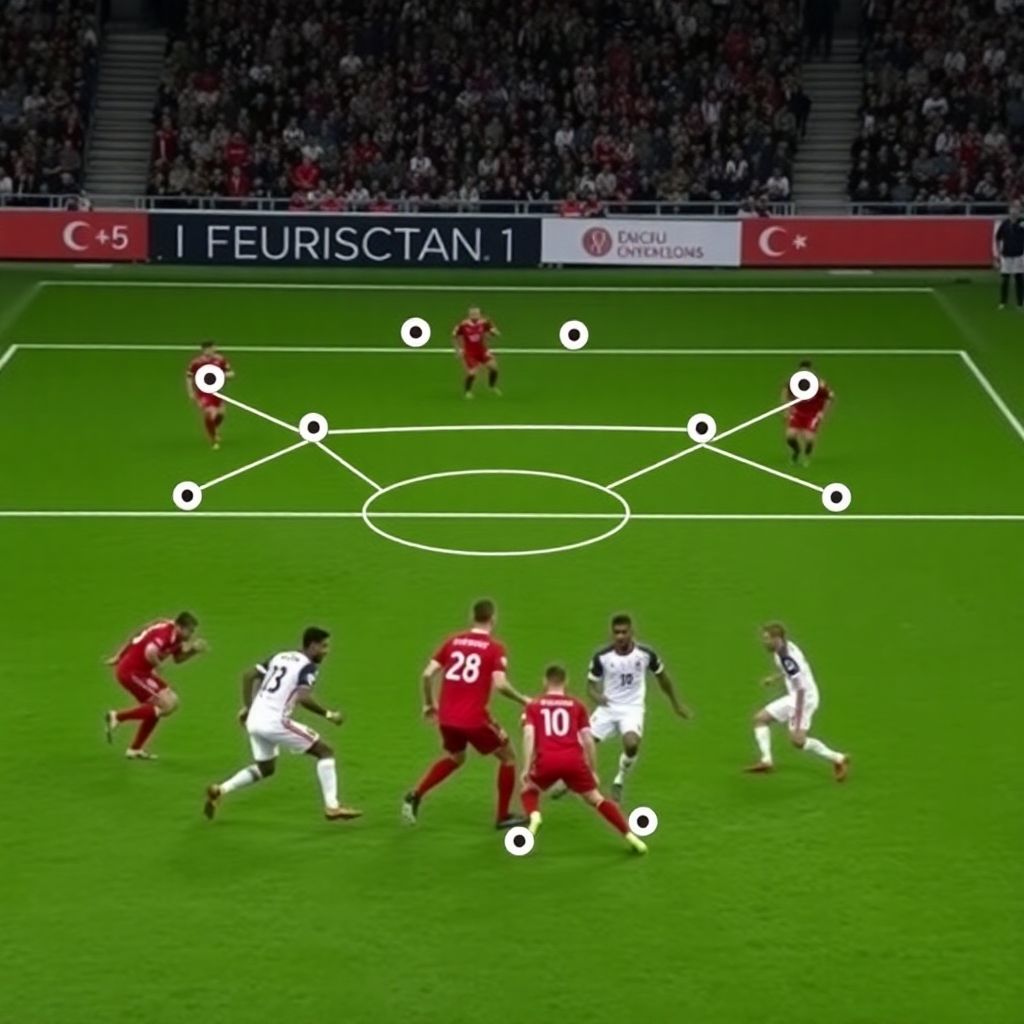
The recent tactical revolution in the Turkish Süper Lig is a shift from chaotic, end-to-end games toward controlled pressing built on compactness, clear triggers and coordinated runs. Teams now hunt the ball in units, manage risk with rest defence structures, and use pressing to create planned attacking situations instead of random transitions.
Debunking Common Myths Around the Süper Lig Tactical Shift
- The league has not become defensive; pressing is used to attack faster and higher up the pitch.
- Controlled pressing is not just running more, but running in synchronized patterns with clear triggers.
- This is not only for rich clubs; mid-table sides can press effectively with clear principles and role profiles.
- High pressing does not kill creativity; it can actually create more clean chances from forced turnovers.
- Possession is not abandoned; many teams mix controlled build-up with aggressive counter-pressing.
- Pressing intensity is not constant; smart teams phase it across the match to protect physical freshness.
Historical Shift: From Open Chaos to Structured Systems in the Süper Lig
For a long period, the Turkish Süper Lig was stereotyped as emotional, chaotic football: long stretches of broken structure, stretched distances between lines, and games decided by individual brilliance or set-pieces rather than collective behaviour. Teams often pressed in short, emotional bursts but without compact team shape.
The current revolution is the move from this open chaos into controlled pressing systems. Instead of chasing the ball on instinct, teams now define where they want the game to be played, then use pressing traps, touchline presses and zonal references to guide opponents into those areas. The chaos is still there in atmosphere, but the football is more repeatable and programmable.
Practically, this means three big changes. First, vertical compactness: back line, midfield and forwards move as a block, rarely more than a few zones apart. Second, pre-planned triggers: passes into full-backs, backward passes, or poor body orientation now activate unified pressure. Third, rest defence: when teams attack, they keep spare players prepared to defend the counter, not simply joining the attack impulsively.
For fans buying Turkish Super Lig tickets or choosing to watch Turkish Super Lig live streaming, this translates into matches where pressing moments, counter-attacks and prepared patterns are as important as raw emotion. Tactical detail has become a product in itself, deepening engagement for analysts and casual viewers alike.
Anatomy of the Controlled Press: Triggers, Angles and Spatial Principles
Controlled pressing in the Süper Lig is defined by clear, teachable mechanics. Coaches translate global ideas from pressing-heavy leagues into context-specific rules that fit Turkish tempo, stadium atmospheres and squad profiles.
- Pressing triggers: Common triggers include a backward pass to a centre-back, a slow horizontal switch across the back line, a pass into a full-back with closed body shape, and a bouncing or aerial ball into midfield. Players learn to react as a unit the moment a trigger appears.
- Angles of approach: The first presser rarely runs straight at the ball. Instead, he curves his run to block the inside passing lane to the pivot, forcing play toward the touchline. Teammates mirror this angle, closing inside options to turn the press into a directional funnel.
- Cover shadows: Players use their body position to mark two opponents at once. A winger presses the full-back while his body blocks the line into the interior midfielder, allowing the central midfielder to stay compact instead of jumping recklessly.
- Horizontal and vertical compactness: The distance between the first and last line is reduced so that losing a duel does not break the press. Horizontal distances between midfielders are also minimized to remove passing lanes between them.
- Touchline as the extra defender: Many Süper Lig teams intentionally show play toward the sideline where space is limited. Once the ball arrives, three or four players collapse to suffocate options, often using the crowd energy to increase intensity.
- Rest defence structure: While front units press, the back line and holding midfielder keep a stable shape against counter-attacks. Full-backs do not bomb forward simultaneously, and centre-backs hold slightly deeper starting positions to protect the space behind.
- Pressing-release rules: To avoid burnout, players learn when to disengage and drop into a mid-block. Typically, when one or two passes break the initial wave, the team quickly recovers shape instead of continuing hopeless chases.
Managerial Architects: How Coaches Rewired Team Behaviour and Identity
The tactical shift exists on the pitch because coaches redefined how their teams think and behave collectively. They moved from treating pressing as pure effort to treating it as a structured game-plan phase, tightly linked with build-up and chance creation.
- Reframing team identity around the ball: Instead of defining themselves by possession alone, many Süper Lig managers now define identity by what happens immediately after losing or winning the ball. Training time is heavily allocated to the first three seconds after transition, building a reflex culture.
- Role clarity for attackers: Forwards and wingers are no longer just scorers or dribblers. They are the first defenders, with precise starting positions and pressing tasks related to the opponent's build-up structure. This clarity allows even technically modest players to add value through tactical discipline.
- Game-plan diversity across opponents: Against top sides, coaches may favour a compact mid-block with selective pressing triggers. Against weaker or unstructured sides, they push the line higher and use more aggressive traps. The controlled press becomes a menu of options, not a single, rigid style.
- Integration with recruitment and academy: Sporting directors and youth coaches align with the first-team model. Scouting profiles emphasise work rate, pressing intelligence and tactical learning capacity. Young players are exposed early to pressing cues so that promotion to the first team is seamless.
- Match communication and in-game coaching: On the touchline, coaches constantly adjust pressing heights and triggers based on how opponents build. Signals and hand gestures cue pressing changes, ensuring that tactical plans do not freeze when the game becomes wild.
This managerial work has a direct impact not just on results but also on how people engage with the league. Whether analysing patterns on a Turkish Super Lig tactical analysis subscription, or reviewing Turkish Super Lig highlights and full match replays, you now see identifiable game models rather than random momentum swings.
Data Signals: Metrics and Video Evidence That Expose Pressing Success
Controlled pressing can be measured and visualised; it is not just a feeling. Coaches and analysts in the Süper Lig rely on a blend of event data, tracking tendencies and video to check if the game model is alive on the pitch.
Analytical indicators that support the pressing model
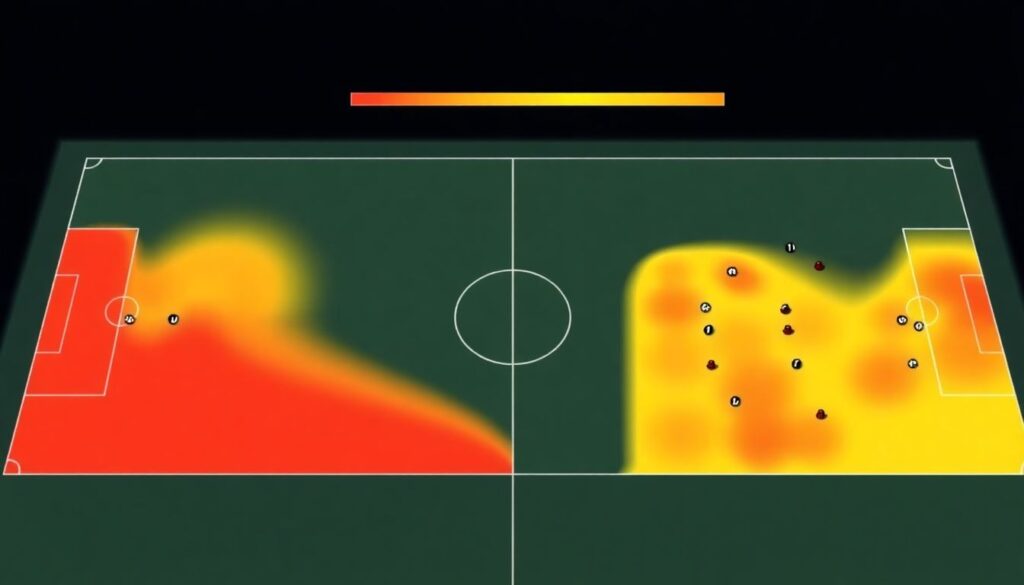
- Field tilt and territory control: Analysts assess what share of touches and passes happens in the opponent's half. Effective pressing usually correlates with higher territorial dominance, especially when combined with recovered balls in advanced zones.
- Pass disruption and build-up interruption: Fewer clean sequences for the opponent from goalkeeper to midfield suggest that pressing triggers and traps are working. Long, forced clearances are a good sign for the pressing team.
- Turnovers leading to shots: Instead of counting only shots, teams track how many shots originate from high regains or counter-pressing situations. If pressing is efficient, the share of shots from these situations increases.
- Pressing density on video: On film, analysts check how many teammates arrive around the ball within a short time window after a trigger. If only one or two arrive, the press is individual, not controlled; if four or five arrive in a compact zone, the structure is healthy.
Constraints and blind spots in pressing evaluation
- Context of match state: Metrics can be misleading if they ignore scoreline and time. Teams leading late often press less and defend deeper by choice, not failure.
- Opponent quality and style: Some opponents play direct from the start, bypassing build-up. Pressing stats may look weak even though the tactical game-plan is correct for that opponent.
- Physical load and schedule: Heavy fixture congestion forces rotation and lower pressing intensity. Data must be interpreted with an understanding of freshness, travel and European commitments.
- Limited tracking detail in some datasets: In certain matches or venues, tracking information may not fully capture distances and speeds. Video remains essential for validating any numerical insight.
These nuances matter to everyone, from coaches to people browsing the best Turkish Super Lig betting sites, because a surface-level reading of stats without context can produce wrong predictions about game dynamics.
Player Archetypes and Recruitment for High-Intensity, Organized Pressing
Organised pressing depends on fitting the right player types into the system. Several persistent myths about which players can press successfully still circulate in Süper Lig discussions.
- Myth: Only sprinters can press effectively – In reality, pressing favours players with acceleration, anticipation and body orientation more than pure top speed. Many successful pressing forwards in the league win the ball by reading triggers a fraction earlier, not by winning long footraces.
- Myth: Creative 10s cannot handle defensive work – Modern number 10s often become "pressing 10s" who jump to the pivot or first centre-back. With clear rules and compact support behind them, technical players can press without being physically dominant.
- Myth: Age automatically disqualifies older players from pressing – Older midfielders with strong positioning and communication often lead the press, guiding younger runners around them. Proper rotation and role design allow them to contribute without excessive high-intensity volume.
- Myth: Physical defenders cannot play in a high line – Many physical Süper Lig centre-backs succeed in a high line because their starting positions and timing improve. Reading long balls early often matters more than being the fastest defender over distance.
- Myth: Any hard-working winger fits pressing systems – Effort is necessary but not sufficient. Wingers must understand cover shadows, when to curve runs, and when to drop into the second line. Recruitment focuses on game intelligence as much as lung capacity.
Coherent recruitment, supported by video, data and live scouting, ensures that squads are built to sustain this style. When fans examine squad builds via a Turkish Super Lig tactical analysis subscription or detailed scouting breakdowns, they are effectively checking how well player archetypes match the intended pressing model.
Implementation Roadmap: Drills, Periodisation and Matchday Phasing
Turning theory into a functioning Süper Lig pressing machine requires a stepwise implementation, blending training design, physical management and clear matchday scripts. Below is a concise, practical blueprint.
- Define a simple pressing language: Coaches first agree on basic terms – such as "lock left", "set the trap" or "slide mid" – and link them to specific shapes (for example, 4-4-2, 4-3-3). This common vocabulary keeps in-game coaching clear and rapid.
- Micro-drills for triggers and angles: In small 4v4+3 or 6v6 games, coaches constrain build-up to one side and reward ball wins from pre-defined triggers like backward passes. Players repeat curved pressing runs and cover shadows until the patterns become automatic.
- Expand into full-line pressing: Once units learn triggers, drills scale up into 8v8 or 11v11 with clear zones on the pitch. The aim is to see full lines moving together, keeping compactness while pressing and then snapping back when the press is broken.
- Periodise intensity across the week: High-intensity pressing drills appear early in the microcycle, with more tactical and lighter work as matchday approaches. This protects players from overload, especially in weeks with multiple fixtures.
- Script matchday pressing phases: Before each game, staff define: "first 15 minutes: high press from goal-kicks; mid-game: mid-block with selective triggers; final phase if leading: compact block with counter-press only in central zones." Players know in advance how the team will adapt to scoreline and fatigue.
- Review using film and replays: The day after the match, coaches clip every key pressing moment into short segments. Players watch Turkish Super Lig highlights and full match replays focused on spacing, not just goals, so they see compactness, distances and rest defence quality.
In practice, this roadmap is visible to anyone who studies the league closely, whether through advanced platforms or simply by rewatching games after going to the stadium with Turkish Super Lig tickets or choosing to watch Turkish Super Lig live streaming from home. Over time, patterns become recognisable, confirming that pressing is now a deliberate, trained feature of the Süper Lig landscape.
Tactical Clarifications and Rapid Answers
How is controlled pressing different from just playing with high intensity?
Controlled pressing uses pre-defined triggers, compact spacing and coordinated movements across lines. Raw intensity without these rules often leads to players chasing the ball individually, leaving large gaps that opponents can exploit.
Can a lower-budget Süper Lig club realistically implement an advanced pressing system?
Yes, because the key resources are coaching clarity, repetition and role definition rather than expensive superstars. Many principles can be trained with existing squads by simplifying rules and building habits through small-sided games.
Does a pressing-focused strategy reduce the need for creative playmakers?
No, it changes where and how creativity is used. Instead of creating mainly against settled blocks, playmakers now receive more balls after turnovers in semi-open spaces, where one smart decision can immediately become a goal chance.
How should training be adjusted during congested fixture periods?
Coaches usually reduce the duration and load of high-intensity pressing drills, prioritise recovery, and use more video to reinforce principles. Tactical walk-throughs and compact-possession games replace long, full-pitch pressing sessions.
Why do some teams abandon the high press during a match?
This is often a planned adjustment, not a failure. After early high pressure to unsettle the opponent, teams may drop into a mid-block to conserve energy, protect a lead or respond to opponent changes in build-up structure.
What should analysts focus on when reviewing Süper Lig pressing performances?
Key checkpoints include team compactness around the ball, the timing of reactions to triggers, the number of high regains, and how often pressure results in rushed clearances. All of these combine to show whether the press is structured or chaotic.
How does pressing influence betting and match prediction in the Süper Lig?
Pressing shapes chance volume, game tempo and turnover locations, which affect expected goals and volatility. Understanding a team's pressing model provides better context than simply checking recent scores when making any kind of prediction.