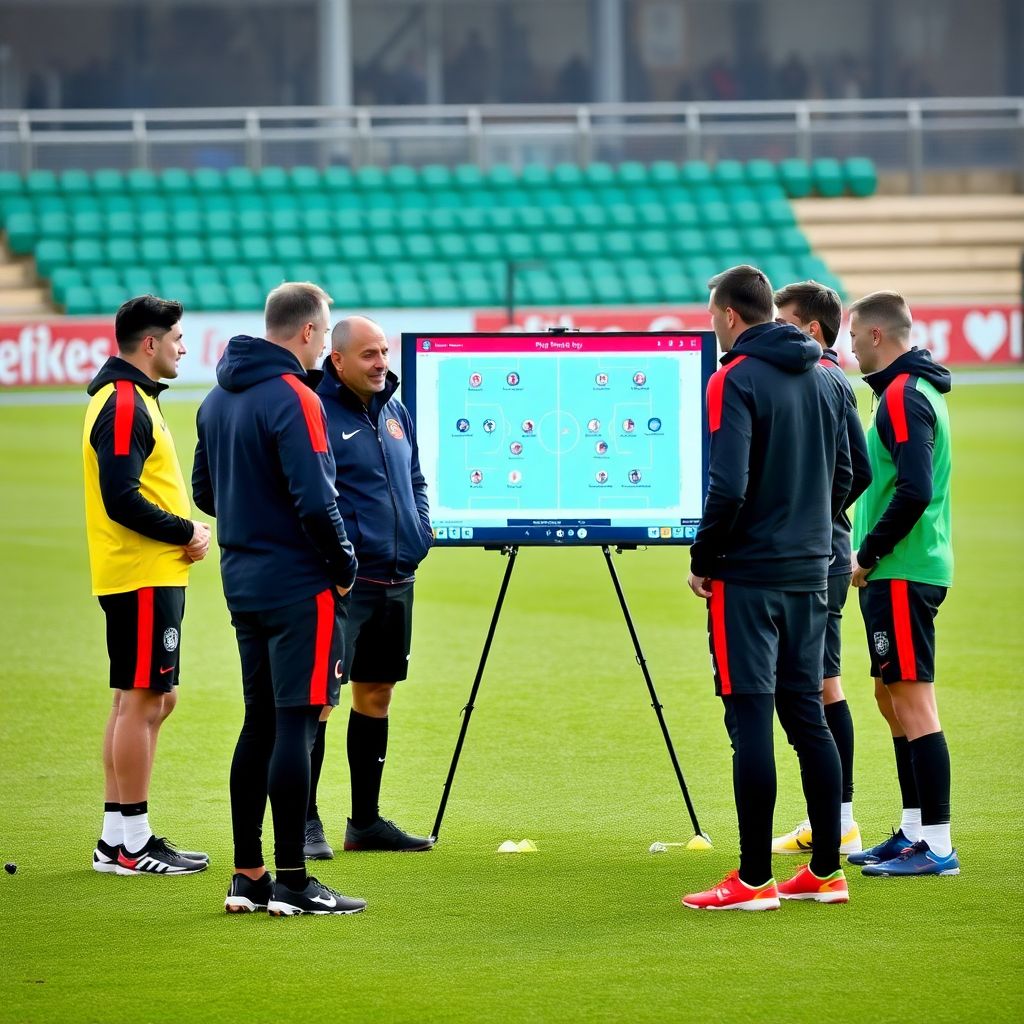
Tactical preparation in a Turkish Süper Lig matchweek follows a clear rhythm: Monday recovery and review, Tuesday opposition analysis, Wednesday tactical rehearsal, Thursday controlled intensity and organisation, Friday fine-tuning and roles, then matchday routines and in-game communication. This structure protects player load while sharpening game-plan clarity and collective automatisms.
Tactical Week Snapshot: Core Objectives from Monday to Matchday
- Use Monday for physical and mental reset while extracting objective data from the last match.
- Dedicate Tuesday to opponent scouting, patterns and a first draft of the game plan.
- On Wednesday, rehearse formations, transitions and set-pieces at match-like tempo but controlled volume.
- Thursday consolidates defensive organisation, role clarity and alternative variants for different scenarios.
- Friday focuses on scenario-based drills, individual tasks and clear pre-match protocols.
- Matchday is for structured warm-up, communication lines and trigger-based adjustments, not new information.
Monday – Recovery Debrief, Data Review and Mental Reset
Monday’s structure suits Süper Lig teams with one match per week or a weekend fixture after a full week. It blends light physical recovery, video feedback and mental decompression. Avoid full-intensity tactical work on Monday, especially for players with high GPS load or minor knocks from the previous game.
- Objectives: Reduce fatigue, close the last match emotionally, and extract 2-3 tactical lessons for the week.
- Recommended drills:
- Low-intensity rondos and mobility circuits for main starters.
- Shorter, higher-intensity technical games for non-starters and bench players.
- Breathing and relaxation routines to support nervous system reset.
- Staff roles:
- Head coach: 10-15 minute debrief with clear, neutral language.
- Performance staff: monitor GPS and HR, flag overload risks.
- Analyst: prepare 6-10 key clips, not a full lecture.
- Medical staff: quick screening and prioritisation of treatment blocks.
- Red flags:
- Turning Monday into a second match with competitive games that spike intensity.
- Long emotional meetings that re-open frustration instead of closing the chapter.
- Ignoring data from professional match analysis software for football teams when it contradicts subjective impressions.
- Overloading players with individual criticism instead of 1-2 main collective themes.
- Optional variants:
- For congested schedules: more emphasis on pool, bike and treatment, less on field work.
- For lower-minute players: short tactical game at moderate intensity to maintain rhythm.
Tuesday – Opponent Scouting, Pattern Identification and Game Plan Draft
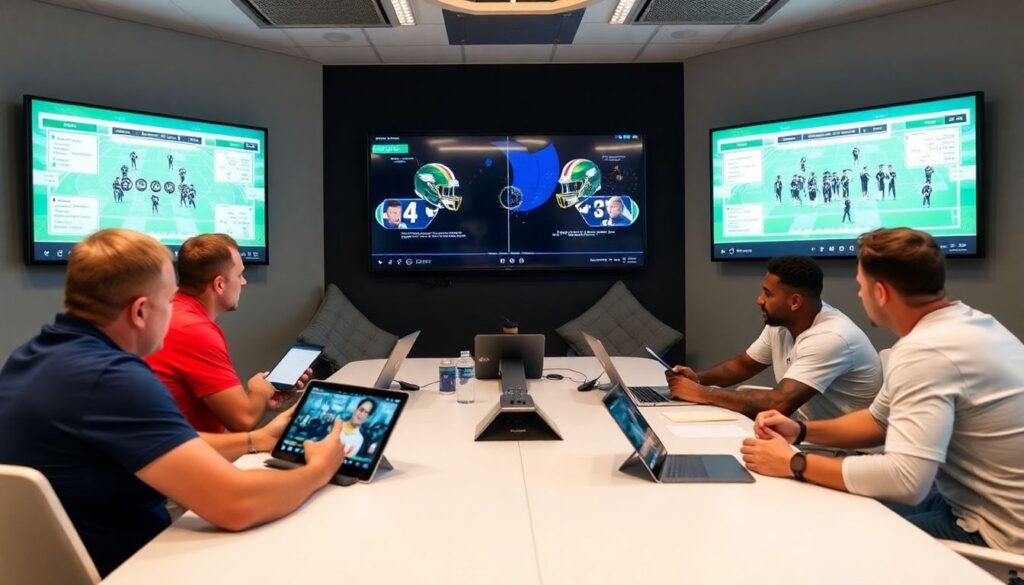
Tuesday reorganises the group around the next opponent. It combines video analysis, unit meetings and a first tactical walk-through. This day leans on tools, access and content planning; without proper preparation, the week becomes reactive and detail-light.
- What you need prepared:
- Full match and clipped footage of the opponent’s last several games (home and away).
- Access to a Süper Lig tactical analysis subscription or equivalent platform for reliable video and event data.
- Recent internal data from your own team: pressing efficiency, build-up success, set-piece outcomes.
- Essential tools:
- Professional match analysis software for football teams that allows drawing, tagging and quick playlist creation.
- Shared online folders or an internal platform for staff to exchange clips, notes and draft plans.
- Printed or digital field maps to annotate zones, rotations and pressing triggers.
- Staff and access requirements:
- Analyst: compiles 2-3 main patterns for each phase (build-up, attack, defence, transitions, set-plays).
- Assistant coaches: break down patterns positionally (back line, midfield, forwards).
- Head coach: defines the primary game model variation to use this week.
- Goalkeeper coach: prepares opponent-specific set-piece and finishing tendencies.
- Game plan drafting:
- Write a one-page tactical brief: desired pressing height, build-up structure, key match-ups.
- Flag 3-5 tactical priorities to be trained on Wednesday and Thursday.
- Block time for players’ video: short, position-specific playlists that connect directly to training content.
- Development resources for staff:
- Use a football tactical periodization course online to align staff vocabulary and training design.
- Attend Turkish Süper Lig coaching clinics and workshops to benchmark your weekly structure against other clubs.
- Periodically buy detailed Süper Lig match reports and data analytics to validate your internal assessments.
Wednesday – Tactical Rehearsal: Formations, Transitions and Set-Piece Work
Wednesday is the main tactical engine of the week. The goal is to rehearse the chosen game plan at near-match tempo while controlling total load. Before running the full sequence, confirm this mini preparation checklist.
- Confirm all key players are medically cleared for full or modified participation.
- Upload and distribute the one-page tactical brief to staff and, if possible, to players.
- Mark key zones on the pitch for pressing, build-up exits and overload areas.
- Assign one coach per line (defence, midfield, attack) for live on-field corrections.
- Prepare 1-2 reduced versions of each drill for players returning from injury.
- Activation and tactical briefing
Run a warm-up that mirrors the demands of your game model: acceleration, deceleration and direction changes. Finish with a concise field-side briefing connecting the session to the opponent and your main tactical priorities.- Keep the talk short and concrete, focusing on what players will see and do in the drills.
- Link each drill to a clear game situation (e.g. goal-kick build-up, mid-block press).
- Build-up structure and first phase under pressure
Set the team in the intended formation and rehearse first-phase build-up against a realistic pressing shape from the opponent.- Rotate pressing schemes from staff or reserve players to simulate likely variations.
- Freeze play briefly to correct spacing, angles and body orientation.
- For injury-managed players, reduce pitch size or minutes but keep them in their tactical role.
- Defensive block and pressing trigger rehearsal
Train your chosen defensive height and pressing triggers against the opponent’s common patterns.- Define simple verbal cues for triggers such as backward pass, poor first touch or lateral switch.
- Rehearse both aggressive press and fallback options for when players are late or underloaded.
- Monitor spacing between lines to avoid fatigue from unnecessary running.
- Transition-focused games
Use directional small-sided games with clear rules rewarding quick transition decisions.- Emphasise first two passes after ball recovery and counter-press timing after losing the ball.
- Limit play time for heavy-load players while keeping cognitive demand high.
- Encourage communication of roles in each transition, especially for pivot and centre-backs.
- Attacking set-piece patterns
Drill your primary and secondary corner and free-kick routines relevant to the opponent’s defensive set-up.- Clarify blocking, screening and run timing responsibilities for each player.
- Use simple numbering or naming codes for each routine to recall them quickly on matchday.
- For players on reduced load, run shadow movements without full contact.
- Defensive set-pieces and consolidation
Finish with defensive set-piece organisation and a short, controlled game to apply the day’s themes.- Check match-ups, zones and reactions to second balls on defensive corners and free-kicks.
- Close with a brief recap of what worked, what needs refining on Thursday and how it links to the opponent.
- Ensure players leave with clarity, not fresh confusion or new doubts.
Thursday – Controlled Intensity: Role Clarity, Defensive Organisation and Variants
Thursday tightens organisation and consolidates roles with controlled but meaningful intensity. Use this checklist to verify that the session is achieving the right outcomes without tipping players into excessive fatigue or confusion.
- Each player can state their role in pressing, build-up and set-pieces in one or two simple sentences.
- Back line and holding midfielder maintain compact vertical distances during game-based drills.
- Wide players understand when to drop into the block and when to stay high to threaten depth.
- At least one alternative plan exists for changes such as early goal against, red card or opponent formation shift.
- Defensive transitions show immediate reactions from the nearest three players, not only one presser.
- Communication between goalkeeper and defensive line is audible and consistent in most drills.
- High-load players complete the session without visible signs of excessive fatigue or loss of coordination.
- Returning-from-injury players finish their adapted tasks without pain signals or protective body language.
- Video clips planned from this session clearly show the intended structure and can be used on Friday if needed.
- No major tactical change is introduced late in the session; existing concepts are only clarified or slightly simplified.
Friday – Fine-Tuning: Scenario Drills, Individual Tasks and Pre-match Protocols
Friday should feel light, clear and sharp. The focus is on mental readiness, light tactical reminders and fixed routines. These are frequent errors that turn Friday into a source of anxiety or unnecessary fatigue.
- Adding new tactical concepts instead of reinforcing the week’s main ideas.
- Running long, high-intensity games that spike load and increase injury risk close to matchday.
- Delivering a long meeting with many clips instead of a few targeted reminders.
- Failing to review basic pre-match protocols, such as travel times, nutrition windows and warm-up order.
- Overloading key players with individual instructions that conflict with the collective plan.
- Ignoring set-piece refreshers, assuming players will remember routines from earlier in the week.
- Skipping individual conversations with players whose role is changing, such as rotation starters or first-time bench roles.
- Changing the starting eleven very late without a clear explanation that keeps trust intact.
- Neglecting to confirm captaincy, penalty taker order and leadership roles for critical moments.
- Underusing analyst support to correct small details that appeared in Thursday’s session.
Matchday – Warm-up Routines, Communication Lines and In-game Trigger Responses
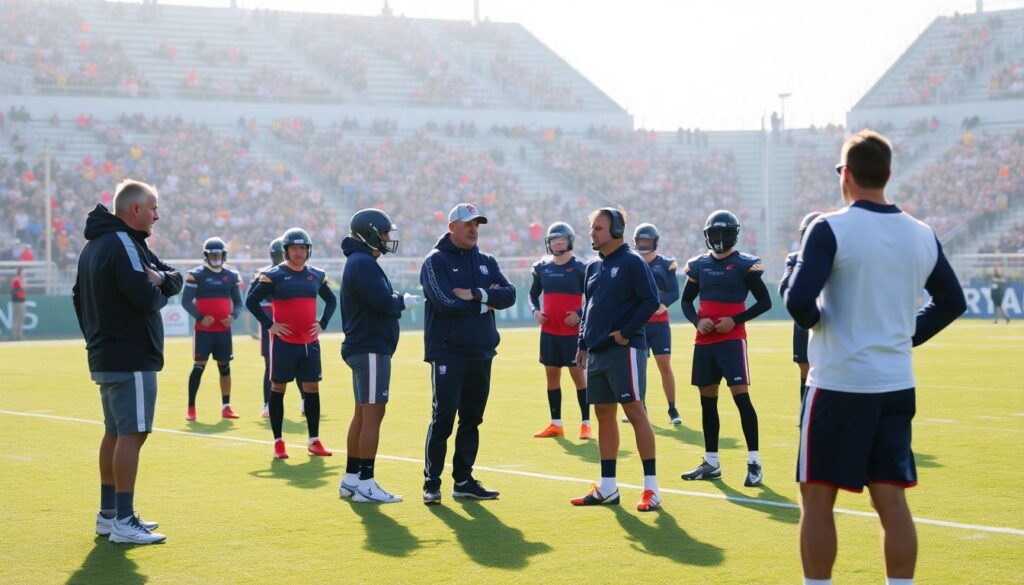
Matchday is for execution, not heavy learning. Tactical work appears mainly through warm-up structure, last reminders and in-game adjustments. Different schedules and squad situations may call for adjusted approaches; consider these safe alternatives.
- Variant for early kick-offs
Shorten the pre-match meeting and simplify messages to only essential cues. Adjust warm-up to include slightly longer activation to compensate for earlier start times, while keeping total load moderate. - Variant for heavy rotation line-ups
Hold a short, position-specific walk-through on the pitch or in a meeting room with magnets. Emphasise connections between players who have not often started together, especially in central areas. - Variant for congested fixture periods
Reduce the physical content of the warm-up while maintaining technical speed and decision-making exercises. Prioritise hydration, recovery protocols and simple, repeatable tactical reminders. - Variant for high-pressure matches
Limit last-minute tactical changes and avoid emotional speeches that add stress. Focus on 2-3 in-game trigger responses your team already rehearsed, reaffirming trust in the existing game model.
Practical Clarifications Coaches Ask Most Often
How many tactical priorities should I set for a single Süper Lig matchweek?
Limit yourself to a small number of clear priorities that can realistically be trained and retained. Typically this means a few key points in possession, out of possession and on set-pieces, all linked to the specific opponent.
How do I adapt this structure when we have two matches in one week?
Compress or merge elements: use recovery-plus-video after each game and run one main tactical day in between. Reduce physical load in all sessions while protecting clarity around the game model and specific opponent adjustments.
Where do online courses and subscriptions fit into our weekly workflow?
Use a football tactical periodization course online and similar resources outside the competitive week for staff development. Tools like a Süper Lig tactical analysis subscription should then plug into daily work, improving video, data and opponent preparation.
What if I have limited access to detailed data and analysis tools?
You can still structure a strong week using your own video, simple statistics and clear coaching language. When possible, buy detailed Süper Lig match reports and data analytics for key opponents to complement your internal observations.
How can smaller clubs match the analysis level of bigger Süper Lig teams?
Prioritise clarity over volume: fewer clips, sharper messages and simple team rules. Combine affordable professional match analysis software for football teams with staff education through Turkish Süper Lig coaching clinics and workshops to raise overall quality.
How much should individual player meetings change during the week?
Early in the week, focus on learning and correction; closer to matchday, shift towards confidence, clarity and small tactical reminders. Avoid heavy criticism late in the week and keep one-on-one talks short and purposeful.
Can I change formation late in the week if new information appears?
Only if the new structure is already familiar to the squad from previous work. Otherwise, adjust details within the existing formation and plan a fuller change for a later matchweek to avoid confusion and performance drops.