Context: what actually happened in this Intercontinental Derby?
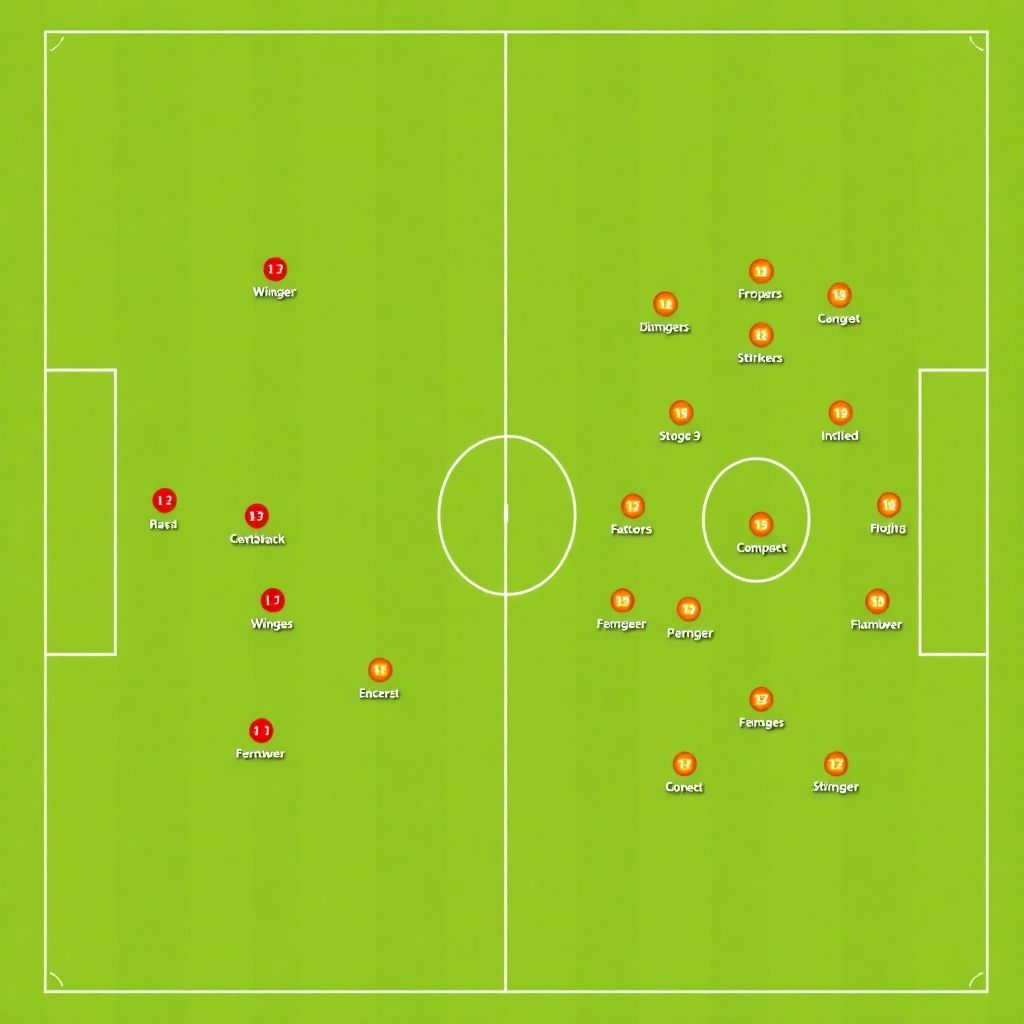
The latest Intercontinental Derby gave us a chaotic, high‑tempo match where both teams constantly tweaked shape instead of sitting in one rigid system. Galatasaray started from a nominal 4‑2‑3‑1, but it often morphed into a 2‑3‑5 in possession: full‑backs pushed high, one pivot dropped between centre‑backs, and the “10” roamed into half‑spaces. Fenerbahce, listed as a 4‑3‑3, defended more like a 4‑4‑2 mid‑block, with one midfielder jumping out to press the pivot. If you watched via a Galatasaray vs Fenerbahce live stream, you probably noticed how the camera kept needing to zoom out just to capture the number of players crammed between the lines. That density is the key to understanding the tactics behind this derby, not just the final scoreline or highlight clips.
At the same time, the emotional temperature was high but not completely wild: both coaches clearly came in with structured plans, and the game turned into a test of who could better control transitions and set‑pieces, not just who could shout louder from the touchline.
Key terms, quickly decoded
Before diving in, a few terms. A “mid‑block” is a defensive setup where the team doesn’t press right up at the opponent’s box, but also doesn’t park the bus; they defend roughly from the halfway line to their own third. “Rest defense” is how you position players behind the ball while attacking, so that you’re ready for counters. “Half‑spaces” are vertical lanes between the flank and the center; think of the pitch sliced into five columns: wing – half‑space – center – half‑space – wing. Finally, “overload‑to‑isolate” is a pattern where you crowd one side to drag defenders over, then quickly switch the ball to leave a teammate 1v1 on the far side. You don’t need coaching badges to follow these ideas; once you name them, they pop out every time you rewatch the derby.
So, when commentators say one side “lost control of transitions”, it basically means their rest defense was badly spaced and opponents ran through the middle like an open metro turnstile.
Galatasaray’s build‑up: 2‑3‑5 with a twist
Picture a simple text diagram of their structure in controlled possession:
CB ———— CB
FB —— DM —— FB
W —— 10 —— W
———— ST ————
Now skew that a bit: the left full‑back often tucked inside to become an extra midfielder, forming a 3‑2 in the first line, while the right full‑back flew high to give width. That asymmetry matters: it let Galatasaray use the left side for calmer circulation and the right side for quicker, riskier punches in behind. When the “10” dropped next to the pivot, it looked like a 3‑2‑4‑1; when he pushed up, it was a flat 2‑3‑5. Fenerbahce tried to solve this by curving their winger’s pressing runs to block passes into the pivot, essentially forcing centre‑backs towards the touchline. But every time Fenerbahce’s wide forward overcommitted, Galatasaray played a simple bounce pass: CB → FB → inside to the “10” in the right half‑space, who could then turn and drive.
That pattern explains why the game occasionally felt like Galatasaray were “breaking lines” almost too easily: those half‑space pockets kept reappearing whenever Fenerbahce’s first pressing line mis‑timed its jump.
Fenerbahce’s out‑of‑possession game: narrow, then aggressive
Fenerbahce’s 4‑4‑2 out of possession was intentionally narrow. Think of two banks of four close together:
WB — CB — CB — WB
WM — CM — CM — WM
——— ST —— ST ———
The wide midfielders started tucked in, showing Galatasaray towards the flanks. But the twist was in the triggers: the moment a pass was played into Galatasaray’s full‑back with his back to goal, Fenerbahce’s winger and full‑back would both spring forward, trying to create mini 2v1 traps. This works only if your back four stays compact and the nearest central midfielder shuffles wide to close the inside lane. When it clicked, it looked textbook: Galatasaray’s full‑back facing his own goal, one option cut, another pressed from behind, and a forced long ball. When it broke down, though, it left huge channels next to Fenerbahce’s centre‑backs, where Galatasaray’s striker could peel off and receive a direct diagonal.
This balance between compactness and width is exactly where the derby became a chess match rather than just a sprint contest.
Transitional chaos: where the game really lived
Most fans talk about “possession stats”, but in this Intercontinental Derby the real damage came during the three seconds after losing or winning the ball. “Counter‑pressing” means immediately hunting the ball once you lose it, before the opponent can lift their head. Galatasaray were more aggressive here: once the ball was lost around the box, their nearest three or four players swarmed the zone, with the pivot holding position to block the first vertical pass. If you draw it in your head, you get a triangle around the ball plus a safety pin behind it. Fenerbahce instead aimed for rapid verticality: win the ball, first touch forward, second touch wide. This “vertical then lateral” pattern tried to exploit Galatasaray’s full‑backs being high and sometimes detached from the centre‑backs, turning simple turnovers into 3v3 races. That’s why moments around the halfway line felt more decisive than neat possession around the box.
Often, a seemingly harmless misplaced pass in midfield caused the stadium to collectively hold its breath, because both teams were pre‑wired to explode into transition at the slightest invitation.
Text‑diagramming the decisive patterns
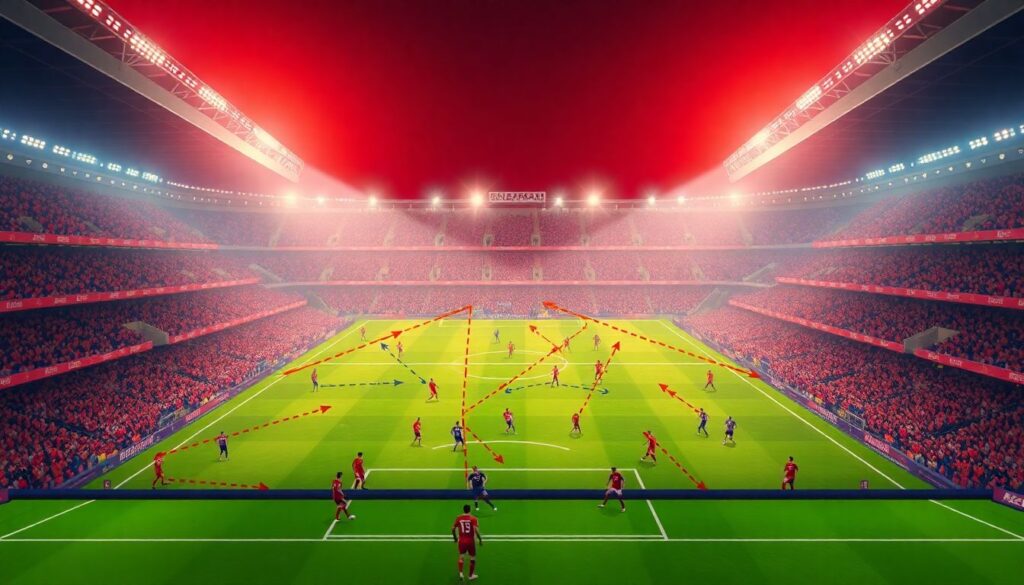
Let’s visualise a typical Galatasaray attack that actually sliced Fenerbahce open. Imagine the ball with the right centre‑back:
1. RCB → inverted LB (now in midfield)
2. LB → “10” between Fenerbahce’s lines
3. “10” turns and carries
4. RW tucks inside, FB overlaps wide
5. “10” slips a pass into the channel between FB and CB
In text form, arrows show the logic: → means progression, ↔ means bounce passes, ⇄ means switch of play. When Fenerbahce tried to counter this, they introduced a “cover shadow” concept: the pressing player runs in such a way that his body hides the line towards the “10”. In practice, though, the angles weren’t always perfect, so Galatasaray still found threaded passes. Fenerbahce’s best responses came when a deeper midfielder stepped up early, turning the second line into something like a 1‑2 screen instead of a flat three. If you rewatch via a replay or whatever Galatasaray vs Fenerbahce match predictions show as key moments, focus less on the final cross and more on who was free between lines two seconds earlier; that’s where the tactical story hides.
These micro‑patterns, repeated over 90 minutes, mattered much more than any single “magic” set play.
Comparison with other derbies and big games
Compared to, say, El Clásico or a North London Derby, the Intercontinental Derby prioritises vertical chaos over slow suffocation. In Spain you often get a long phase of sterile domination before a breakthrough; here, both Galatasaray and Fenerbahce accept that they’ll give up chances if it means creating more of their own. Strategically, this game felt closer to a Premier League high‑tempo clash like Liverpool vs Spurs than a cagey Italian title decider. Another difference: the way fans impact decisions. The crowd noise spikes after every tackle, which subtly pushes players to go forward instead of recycling possession. That’s why xG models alone don’t fully capture the derby’s flow; psychologically, a half‑chance in front of the ultras can feel as big as a clear cut opportunity in a calmer stadium. When you compare it to continental knockout ties, you’ll also notice less patient probing and more “winner‑takes‑all” energy, which nudges coaches to protect transitions first, aesthetics second.
In short, the tactical baseline is high, but everything is dialed up: pressing, risk, and emotional volatility all live closer to the red zone.
Non‑standard tactical fixes each side could try
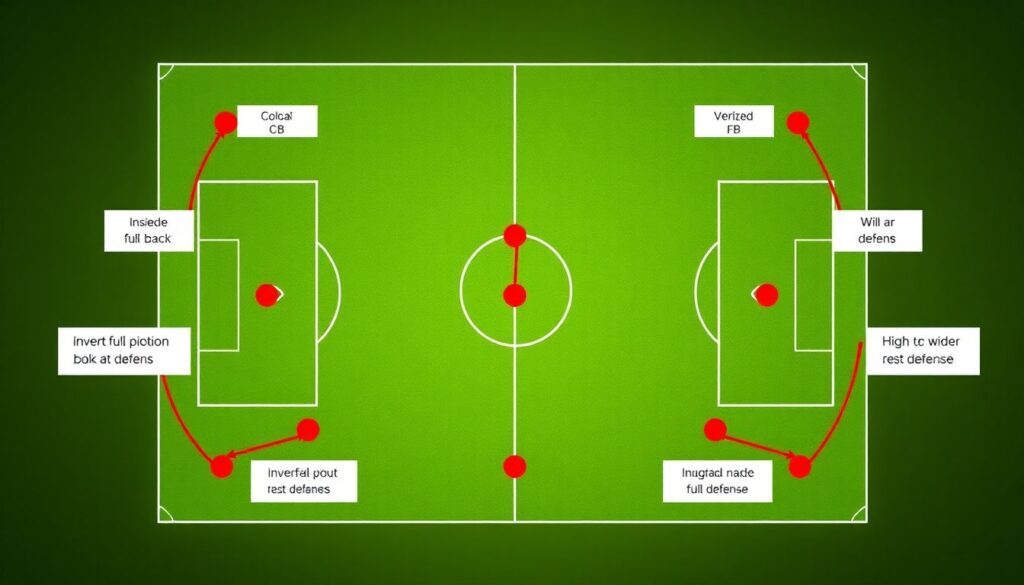
Galatasaray’s main issue was occasionally getting outnumbered in their rest defense when both full‑backs flew forward. One unusual solution: invert *both* full‑backs during first‑phase build‑up and let wingers provide permanent width, almost like a 2‑4‑4. Diagram in words: CB — CB behind, two full‑backs inside next to the pivot, “10” and opposite pivot slightly higher, wingers hugging touchlines. This would thicken the central structure and make counter‑pressing more reliable. It’s risky emotionally—fans love marauding overlapping full‑backs—but structurally it could reduce the “open motorway” effect on turnovers. Another offbeat tweak: use a “false full‑back” on one side, a natural midfielder starting on the team sheet as FB but playing almost exclusively in central lanes, turning the shape into a lopsided 3‑3‑4. With careful coaching, this could smother Fenerbahce’s central counters while still maintaining enough width from the winger.
You basically trade a bit of classical wing play for extra bodies where the derby tends to be decided: in the corridors around the centre circle.
Wild ideas Fenerbahce could experiment with
For Fenerbahce, the biggest recurring problem was protecting the space between their lines when the first press was broken. An unconventional fix would be a occasionally rotating diamond: out of possession, they defend 4‑4‑2, but on certain triggers (like a back‑pass to Galatasaray’s keeper) the “10” drops next to the pivot, temporarily forming a narrow 4‑3‑1‑2. The idea is to create a vertical “spine” of three central midfielders, making central progression harder. Another weird but intriguing option is a man‑oriented press on Galatasaray’s pivot, with responsibility passed like a relay baton: striker tracks him in build‑up, then when the ball goes wide, the nearest central midfielder takes over, allowing the striker to step back into the passing lane. If choreographed well, this moving cage around the pivot could starve Galatasaray of their favourite launching pad. It won’t look pretty at first; fans might even think players are out of position. But once automatisms click, it turns the centre into a no‑go zone and forces long, hopeful balls where Fenerbahce’s centre‑backs are more comfortable.
These are the sort of tweaks you’d try in pre‑season friendlies, but the derby’s stakes mean coaches often default to safer, more familiar patterns.
What this means for bettors, analysts and match‑goers
All this tactical nuance also matters if you like to bet on Intercontinental Derby online or argue about xG afterwards. Understanding pressing triggers, rest defense and transitional structures helps you go beyond simplistic “form” when thinking about outcomes. When working on your own Galatasaray vs Fenerbahce match predictions, look not just at who’s injured, but at who can handle half‑spaces and whether either coach is likely to shift from a mid‑block to a high press. If you’re grabbing Intercontinental Derby tickets or indulging in Intercontinental Derby VIP hospitality packages, knowing these tactical subplots turns live viewing into a completely different experience: instead of just following the ball, you start watching the off‑ball chains that decide whether an attack ever gets started. And if you can’t be in the stadium, you can still use these ideas from your sofa, rewinding specific sequences and drawing mental arrows: where did the press start, who broke it, and which space opened up as a result?
Once you see the derby through that lens, every long clearance and every five‑metre sideways pass stops being “random” and starts looking like a deliberate chess move in a very loud, very fast game.