Video Assistant Referee (VAR) has reshaped how football is played, refereed and discussed in Turkey and across Europe by adding structured video review to key decisions. It reduces obvious refereeing mistakes, changes player behaviour in the penalty area, influences tactics, and even affects markets such as var in football betting europe and media coverage.
Executive overview: VAR’s measurable effects on Turkish and European football
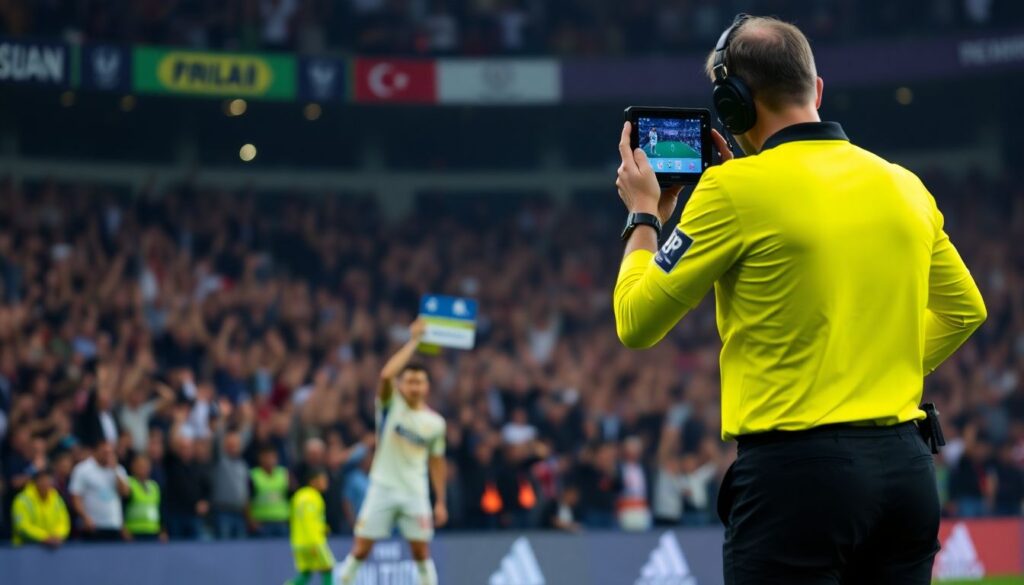
- VAR is a protocol, not a separate referee: it only intervenes in clear, significant errors in four decision types, leaving most of the match to the on-field referee.
- In the Süper Lig, VAR has made offside and penalty calls more consistent, even if football var controversy turkey super lig dominates headlines after big derbies.
- Major European competitions and the best european football leagues with var technology use similar protocols, but apply them with different tolerance levels for “clear and obvious error”.
- Coaches and players adjust pressing, defensive duels and penalty-area behaviour because they know incidents are recorded from many angles.
- Bookmakers and analysts track the impact of var on football results and odds, while clubs monitor turkey super lig var statistics and analysis for competitive and communication purposes.
Debunking persistent myths about VAR in Turkey and across Europe
VAR (Video Assistant Referee) is a system where a team of video officials supports the on-field referee with replays, angles and communication tools. Its scope is deliberately narrow: goals, penalties, direct red cards and cases of mistaken identity. It is not meant to re-referee every foul or tactical detail.
A common myth in Turkey and elsewhere is that “VAR controls the match”. In practice, the on-field referee keeps full authority. VAR can only recommend a review when there is a potential clear and obvious error in a match-changing decision. The final decision always belongs to the referee on the pitch, who can accept or reject the advice.
Another misconception is that VAR removes all controversy. In reality, it shifts debates. Instead of arguing about whether an assistant missed an offside, fans now discuss calibration of lines, frame selection and the threshold for intervention. Football var controversy turkey super lig often reflects disagreement about consistency and communication, not about the existence of the technology itself.
It is also wrong to think that VAR is the same everywhere. The laws and core protocol are global, but domestic leagues apply them with different emphases. Some European leagues encourage longer on-field reviews to protect referee autonomy, while others accept quicker “silent checks” from the video room. Understanding these local interpretations is essential when comparing turkey super lig var statistics and analysis with data from other competitions.
Technical landscape: VAR technologies, workflow and league-by-league differences
Under the surface, VAR is a coordinated technical workflow rather than a single device. In practice it relies on specialised staff, replay infrastructure and communication protocols that must work in real time, under pressure and with broadcast-quality reliability.
- Camera feeds and replay servers: Stadium cameras (broadcast and additional tactical angles) feed into a central system. Replay operators bookmark incidents and provide the VAR with ultra-fast access to different angles and speeds.
- VAR, AVAR and replay operator roles: The VAR leads the video team, supported by an assistant VAR (AVAR) and technical operators. The AVAR tracks live play while the VAR is reviewing, ensuring no incident is missed.
- Check vs review process: Every major incident is automatically “checked” in the background. Only when the VAR suspects a clear and obvious error does it escalate to an “on-field review” or a direct recommendation, depending on competition protocol.
- On-field review (OFR) mechanics: For subjective calls (penalties, red cards), the referee goes to the pitch-side monitor and sees 2-4 carefully selected replays. This is the most visible part of VAR for fans and TV audiences.
- Centralised vs on-site VAR rooms: Some of the best european football leagues with var technology use central hubs serving multiple matches, while others, including many fixtures in Turkey, operate VAR rooms inside or near the stadium.
- Integrated offside technology: Different leagues use different drawing tools and calibration methods. Some European competitions also test semi-automated offside systems, which track players via sensors and cameras to assist VAR with faster decisions.
- Communication with broadcasters and fans: Audio between referee and VAR is usually recorded but not broadcast live. Some leagues provide post-match recordings or explanations, while others communicate only via brief statements.
Refereeing outcomes: citation of error rates, overturned calls and match integrity
Even without quoting specific numbers, it is clear from multiple competition reports that VAR reduces the most obvious errors in offside, penalty and red-card decisions. Fewer match-defining mistakes survive to the final whistle, which directly improves perceived fairness and match integrity.
When comparing Turkey with other European leagues, the most discussed element is not whether VAR helps, but how consistently it is used. In the Süper Lig, turkey super lig var statistics and analysis often show similar patterns to other leagues: many checks, few formal reviews, and a relatively small portion of incidents that are actually overturned.
For practitioners (analysts, coaches, betting professionals), the key is to understand that VAR changes the distribution of outcomes. Marginal offsides are more frequently given, late penalties are more carefully scrutinised, and reckless challenges are more likely to result in suspensions. This transforms how we evaluate risk, reward and the impact of var on football results and odds across matches and seasons.
From a governance and competition integrity perspective, VAR also creates documentation. Clips, decisions and internal notes form a traceable record that can be used in referee training, club briefings and public communication when mistakes occur. Over time, this archive supports more consistent interpretation of the Laws of the Game.
Tactical ripple effects: how coaches and players adapted strategies under VAR
Teams in Turkey and across Europe quickly realised that VAR is not just a refereeing tool; it is a tactical constraint. Players self-regulate some behaviours because they know incidents can be revisited in slow motion from multiple angles, and coaches design strategies around this enforced transparency.
Competitive advantages created by VAR-aware tactics
- Cleaner defending in the box: Defenders are coached to avoid clear grabs, pushes and body checks on set pieces, especially when facing target forwards. The risk of a delayed VAR penalty changes how aggressively they mark.
- Structured pressing triggers: Pressing schemes account for the possibility that a high-speed challenge can be checked for a red card. Coaches often assign less impulsive players to high-risk duels.
- Disciplined attacking runs: Forwards train to hold runs and stay level with the last defender. Because technology catches marginal offsides more often, well-timed “curved” runs become a bigger competitive edge.
- Set-piece routines designed for scrutiny: Teams reduce chaotic screens and blocking moves that look bad on replay, replacing them with legal movement patterns that still create advantages but survive VAR review.
- Time-management and game-state planning: Knowing that added time can expand due to lengthy reviews, coaches adjust substitution timing and late-game risk-taking.
Constraints and tactical costs introduced by VAR
- Reduced benefit from “dark arts”: Simulations, hidden shirt pulls and off-the-ball provocations bring less advantage; they can be punished retrospectively during reviews.
- Psychological disruption during reviews: Long pauses can break momentum for pressing teams or home sides feeding off the crowd, which tactical staff must anticipate.
- Greater exposure for emotional leaders: Vocal captains and defenders who protest aggressively risk being caught on camera in ways that influence disciplinary follow-up.
- Uncertainty in borderline handball and contact calls: Different domestic interpretations make it hard to predict how a particular referee-VAR pair will treat slight contacts or hand positions, complicating risk-reward calculations.
Fan engagement and commercial results: attendance, broadcast metrics and public trust
Supporters initially expected VAR to make football “perfect”. When errors or perceived inconsistencies remain, frustration grows, especially in emotionally charged environments like the Süper Lig. This gap between expectation and reality is a core driver of public debate about the technology.
- Myth: VAR kills emotion in stadiums. In practice, it changes the rhythm of emotion. Goal celebrations sometimes pause, but they also explode when confirmation arrives, and controversy still fuels post-match discussion and media content.
- Myth: Attendance always drops after VAR introduction. Evidence from multiple European leagues is mixed and context-dependent. Factors like team performance, stadium comfort and ticket prices play a much larger role than VAR itself.
- Myth: TV audiences hate VAR so broadcasters lose out. Broadcasters often gain new storytelling angles: slow-motion breakdowns, referee audio (where allowed) and expert panels analysing decisions can keep viewers engaged through reviews.
- Myth: VAR decides betting outcomes more than referees did before. For professionals tracking var in football betting europe, VAR changes how and when certain markets settle, but human judgement remains central. The overall uncertainty of football results is still high.
- Myth: Turkish implementation is uniquely chaotic. While football var controversy turkey super lig is loud and politically coloured, many other European leagues face similar arguments about transparency, consistency and communication.
Regulation, discipline and precedents: governance, appeals and legal fallout
VAR exists within a regulatory framework set by IFAB and FIFA, then localised by national associations like the Turkish Football Federation (TFF) and major European leagues. This framework defines not only when VAR can intervene, but also how decisions can be challenged and what documentation must be kept.
At club level, legal and disciplinary departments are now more involved with video material. They gather clips to support appeals, prepare internal education for players, and sometimes advise coaches on how to discuss VAR in the media without violating league regulations.
The following simplified mini-case illustrates how governance, technology and communication intersect in practice in a Süper Lig context:
// Mini-case: Late penalty and VAR in a high-stakes Süper Lig match
Match: Title contender vs relegation candidate, 89th minute
Incident: Attacker goes down in the box, referee says "play on".

1. VAR silent check
   - VAR reviews multiple angles in the background.
   - Spots a potential studs-on-ankle contact missed in real time.

2. Recommendation
   - VAR to referee: "Recommend on-field review for potential penalty."
   - Referee pauses play, makes the VAR signal.

3. On-field review
   - Referee watches 2 angles in normal speed, 1 in slow motion.
   - Confirms clear contact with no ball played.

4. Decision and communication
   - Referee awards penalty, cautions defender.
   - Broadcaster shows replay; TFF later releases an explanatory note.

5. Aftermath
   - Club legal team decides not to appeal the caution; contact is clear.
   - Analysts add the incident to their turkey super lig var statistics and analysis dataset.
   - Media and fans still debate consistency with similar incidents in earlier weeks.
For practitioners, the lesson is simple: treat VAR incidents as part of a documented, precedent-building process. Collect, tag and review these moments, because they shape future decisions, tactical planning and even contractual clauses related to performance bonuses and disciplinary risks.
Practical practitioner queries about VAR usage and consequences
How exactly has VAR changed the role of the on-field referee?
The referee now manages not only players and game flow, but also a remote team of video officials. However, the referee still takes the final decision after any review and remains responsible for disciplinary control, game management and communication with captains.
What should analysts in Turkey track to understand VAR trends properly?
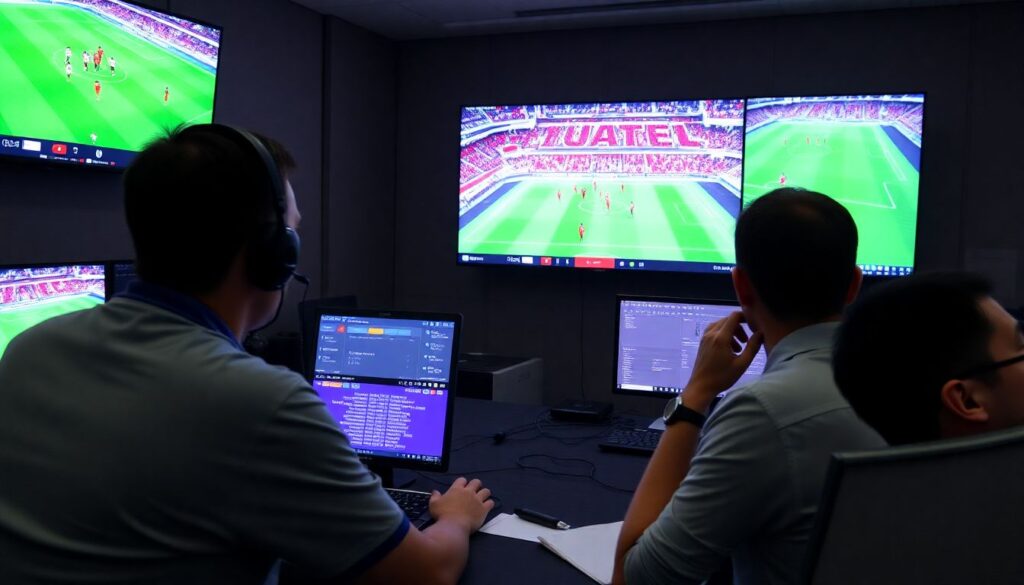
Analysts should log every check and formal review, the final outcome, the referee-VAR pair involved, and the match context. Combining this with turkey super lig var statistics and analysis from public sources helps reveal patterns in penalties, offside calls and red-card thresholds.
Does VAR make football betting markets more efficient or harder to beat?
VAR changes timing and volatility rather than fundamental predictability. Because the impact of var on football results and odds is now more visible around penalties and red cards, informed bettors and model builders factor likely VAR behaviour into pricing and in-play decisions.
Why does VAR seem more controversial in derbies and high-profile matches?
Emotional intensity, media attention and club narratives amplify every marginal decision. In big Süper Lig and European derbies, similar incidents receive more scrutiny and coverage, which can create the impression that VAR “behaves differently” in such games even when protocols are identical.
Are there European leagues that can be role models for Turkey in using VAR?
Instead of copying one league, Turkish stakeholders can study several of the best european football leagues with var technology, focusing on referee communication, post-match transparency and coach education. Adapting the most suitable practices to local culture usually works better than direct imitation.
How should coaches prepare players psychologically for VAR interruptions?
Coaches can rehearse “review scenarios” in training, including short pauses followed by restarts, to normalise the rhythm change. Clear instructions about behaviour during reviews (no crowding the referee, stay near the technical plan) help maintain focus and avoid avoidable bookings.
Can clubs use VAR footage for internal performance improvement, not just complaints?
Yes. Systematic review of VAR incidents helps identify recurring technical errors, poor decision-making in duels and emotional reactions that invite disciplinary trouble. Turning those clips into targeted training content is more productive than using them only for public protests.