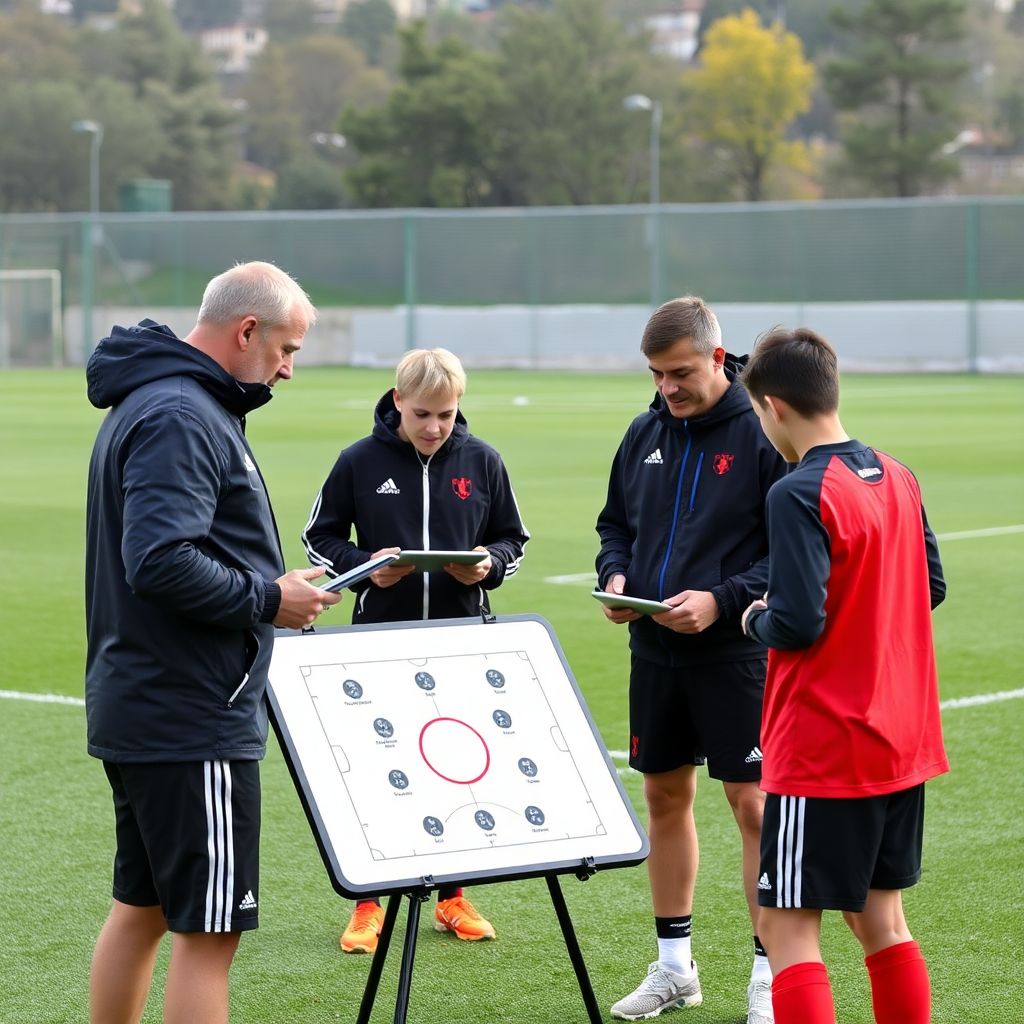
European coaching philosophies are reshaping Turkish football by adding structure: clearer game models, better training design, and more data-informed decisions. If Turkish clubs adapt these ideas to local realities instead of copying blindly, they gain tactical consistency, develop saleable players, and compete more sustainably in European competitions and domestic leagues.
Core shifts in coaching that matter
- If a club relies only on individual talent, then adopting a shared game model from modern European coaching brings repeatable performances and clearer roles.
- If training is mainly fitness-based, then shifting to game-realistic sessions raises tactical intelligence and decision-making speed.
- If analysis is focused only on results, then integrating performance data (pressing intensity, field tilt, chance quality) improves long-term planning.
- If academies prioritise early results, then copying structures from the best European football academies for Turkish players improves transitions to senior football.
- If coaching education is informal, then using UEFA coaching courses for Turkish coaches standardises language, concepts, and methodology across the club.
Myths about European influence on Turkish clubs – what’s false
Discussion about European football coaches in Turkey is often driven by myths rather than clear definitions. European influence is not simply about nationality; it is about the transfer of specific methods: structured game models, periodisation, role clarity, use of data, and coordinated academy-to-first-team pathways.
If a club thinks “European-style” means only hiring a foreign head coach, then it misunderstands the concept. Turkish clubs hiring European football coaches without changing scouting, training design, or academy structures usually see short-term spikes, but not a deep reshaping of football identity or sustainability.
Another myth: “European” automatically means defensive and slow. In reality, the dominant European coaching philosophies today (from Germany, Spain, Italy, England) are extremely aggressive with and without the ball: high pressing, fast transitions, and controlled, high-tempo build-up. If Turkish teams copy only the possession without the pressing, then performances become sterile and easy to defend.
A final misconception is that European methods are incompatible with Turkish passion and intensity. If clubs assume this, they miss the main synergy: European structures can organise Turkish emotional energy into disciplined, repeatable behaviours, instead of replacing it. The goal is integration, not cultural substitution.
Foundations of modern European coaching adopted in Turkey
If you want to understand what is really being imported, focus on the core building blocks of European coaching methodology rather than on passports.
- Clear game models and principles
If a staff cannot explain how the team should attack, defend, and transition in simple principles, then it is not applying modern European coaching. The first step is a written game model shared across first team and academy. - Tactical periodisation in training
If training sessions are split into “fitness day”, “tactics day”, “technical day”, then you are behind. European approaches blend physical, tactical, technical, and mental demands in every session, always linked to the game model. - Role clarity and reference positions
If players hear only “run more” or “be creative”, then roles are unclear. European influence brings well-defined zones, reference points, and micro-roles (for example, inside-forward vs touchline winger) that shape decision-making. - Video and data-informed feedback
If feedback is mainly emotional (“no desire”, “no concentration”), then players cannot adjust. Modern staffs use clips and simple metrics to show what must change: distances between lines, pressing triggers, body orientations when receiving. - Integrated academy-to-first-team pathway
If academy teams play a completely different style than the seniors, then promotion will be chaotic. European influence pushes for aligned structures, often formalised through a Turkish football clubs partnership with European academies. - Process-based evaluation
If coaches are judged only on short-term results, then there is no space for development. European-inspired clubs increasingly track process KPIs like chance quality and pressing efficiency alongside the table position.
Tactical paradigms transferred: pressing, build-up and positional play
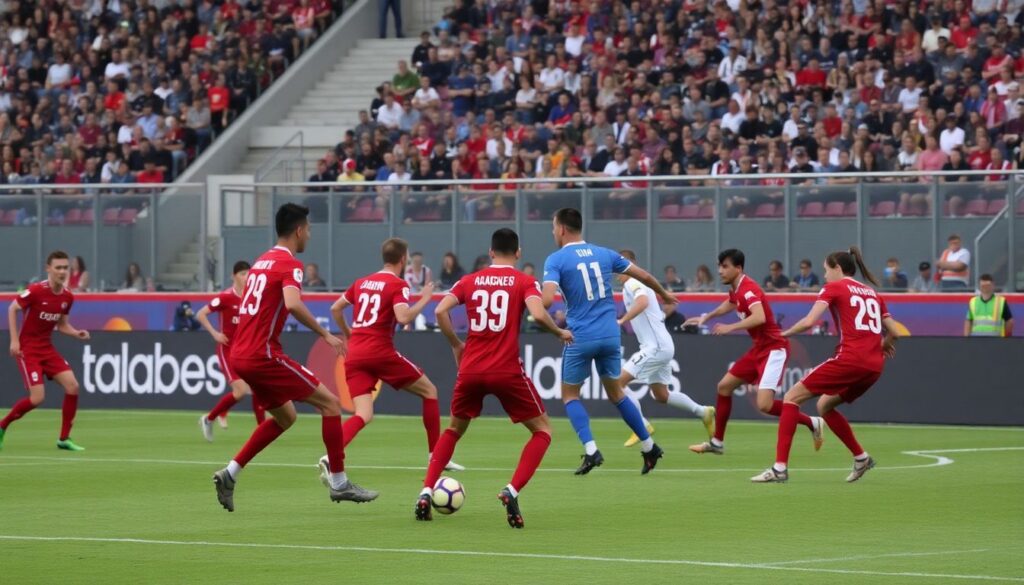
Most visible changes in Turkish football appear in how teams press, build from the back, and occupy space. If you want to apply these shifts, think in scenarios rather than generic “attacking” and “defending”.
-
High pressing after loss
If your team loses the ball and drops immediately, then you are not using the European idea of counter-pressing. The European version: closest players attack the ball, far players mark options, and the line steps up together for 5-8 seconds to win it back fast. -
Structured build-up against mid-blocks
If centre-backs are isolated and full-backs stay flat, then build-up becomes predictable. European-influenced Turkish teams use one full-back inverting or a midfielder dropping, creating a 3+1 or 2+3 structure to progress through the first line. -
Positional play in the final third
If all your attackers run to the ball, then spacing collapses. Positional play keeps width and depth: one wide, one half-space, one pinning the last line. This creates triangles and passing lanes, instead of random crowding around the ball. -
Pressing traps on the touchline
If you press only straight and centrally, rival playmakers stay comfortable. European approaches add traps: show the opponent to the flank, then jump aggressively with touchline + sideline acting as extra defenders, tightening angles. -
Rest defence when attacking
If your defenders stay far behind when you attack, then transitions hurt you. European coaches insist on rest defence: holding coverage behind the ball, prepared to counter-press or delay counters immediately after losing it. -
Set-piece organisation as a tactical pillar
If set-pieces are improvised, then you give away free value. Modern European influence brings detailed attacking and defending routines, role cards, and repeated practice in training, which Turkish sides are starting to copy more systematically.
Player development changes: academies, sports science and loan systems
European coaching philosophies are reshaping how Turkish players are raised, monitored, and exposed to competitive minutes. If clubs treat development as random, they fall behind; if they treat it as a pipeline, they begin to match European standards.
Upsides of adopting European-style development models
- If academies align with first-team game models, then promotions are smoother and young players contribute earlier.
- If Turkish football clubs partnership with European academies is carefully structured, then coaches access curricula, session templates, and benchmarking rather than vague “know-how”.
- If sports science tracks load, sleep, and recovery, then injuries decrease and peak performances last longer across the season.
- If loan systems are planned (league level, style of play, guaranteed minutes), then young players get relevant experience instead of random moves.
- If families understand the path (U14-U19-reserve-loan-first team), then external pressure on coaches becomes more manageable.
- If the club uses contacts with the best European football academies for Turkish players, then talented youngsters get mixed exposure: domestic competition plus short-term European training camps.
Limits and risks to watch carefully
- If the club copies European academy drills without adapting to Turkish physical and cultural context, then players may lose natural creativity and street-football instincts.
- If sports science dominates selection, then late-maturing but intelligent players risk being discarded too early.
- If loans are decided mainly by agents, then the club loses control over developmental priorities and playing style fit.
- If coaches focus only on exporting players, then domestic competitiveness and club identity can suffer.
- If UEFA coaching courses for Turkish coaches are treated as a checklist instead of a continuous learning path, then licences bring prestige but not real methodological change.
Institutional and cultural barriers slowing implementation
Adopting European philosophies is not only a tactical challenge, but an organisational one. If leadership, fans, and media do not align, change collapses quickly.
-
Short-termism in board decisions
If boards fire coaches after a few poor games, then no complex game model can settle. European-style projects need at least one full pre-season plus a season of refinement to show their adult form. -
Misaligned incentives for coaches
If coaches are rewarded only for league position, then they will avoid academy players and risk-averse pressing systems. Incentives must include minutes for homegrown players and progress in specific performance indicators. -
Fan pressure against developmental mistakes
If fans interpret every build-up error as “unnecessary risk”, then coaches will abandon modern ideas. Clubs must communicate the plan: why playing from the back and pressing high will pay off across the season. -
Fragmented club structures
If sporting directors, head coaches, and academy directors work in isolation, then European coaching philosophies arrive in pieces. A clear football department with shared language is mandatory. -
Over-romanticising foreign solutions
If everything local is seen as “backward” and everything European as “advanced”, then clubs ignore strong Turkish strengths: competitive mentality, emotional resilience, and technical flair. The right move is hybridisation, not imitation. -
Language and communication gaps
If foreign staff cannot communicate nuances in Turkish, then concepts get lost. Clubs should invest in professional translators or bilingual assistants to turn European ideas into usable field language.
Measurable impact: performance metrics and case studies
Instead of arguing in general terms, clubs in Turkey can use simple metrics and case-based learning to judge European influence. If you cannot measure it, then you are acting on impressions, not evidence.
Imagine a club that decides to shift from reactive football to a European-style proactive model under one of the European football coaches in Turkey. They design the change around explicit “if…, then…” rules:
- If build-up is blocked by a front two, then pivot drops to form a back three and full-backs push high to stretch the block.
- If the ball is lost in the middle third, then nearest three players counter-press instantly while the back line steps up five metres instead of dropping off.
- If the team leads by one goal after 70 minutes, then pressing intensity is reduced in the first line, but the block stays higher than the box edge to avoid deep defending.
Across a season, they track four basic indicators: shots conceded, average defensive line height, high regains per match, and minutes played by academy graduates. If these metrics improve while results stay stable or better, then the European-style shift is working; if not, then the club must adjust principles rather than abandoning the project entirely.
Practical answers to common implementation doubts
How should a Turkish club start integrating European coaching ideas without shocking the squad?
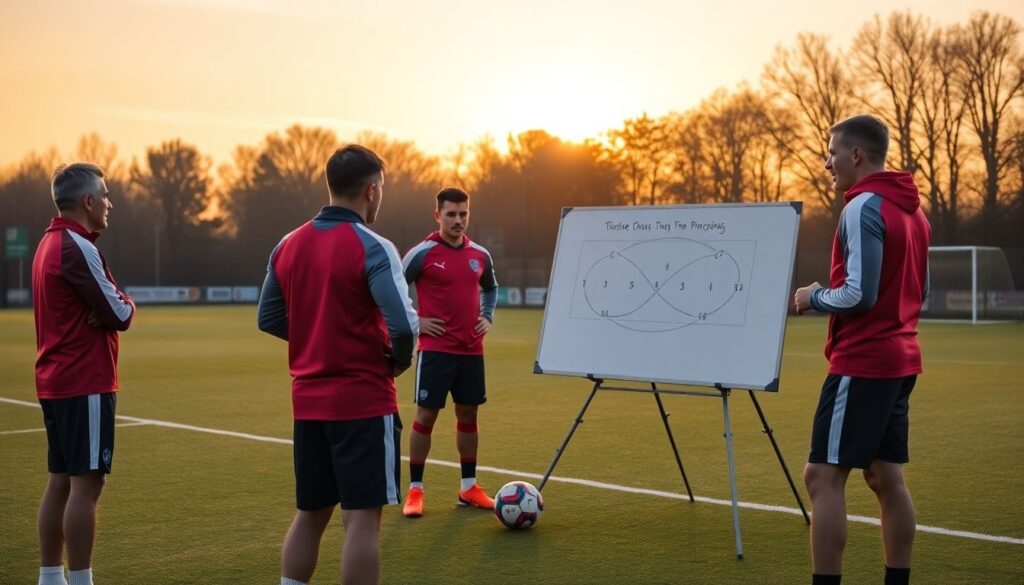
Begin with clear, simple principles: one pressing rule, one build-up pattern, and one rest-defence rule. If players adapt well, then layer more complexity. Avoid changing everything in one pre-season; link each new idea to a visible in-game situation.
Are foreign head coaches essential for playing European-style football in Turkey?
No. If the club structures its game model, coaching education, and academy work professionally, then Turkish coaches can apply the same philosophies. Foreign coaches help mainly by accelerating learning and modelling standards, not by owning the concepts.
What should academies prioritise first: tactics, technique, or physical development?
If players are under 14, then technical quality and game intelligence should dominate. From 15-18, integrate tactical principles and physical preparation that mirror first-team demands. The key is sequencing, not choosing one dimension forever.
How can a club judge whether pressing changes are successful?
Track high turnovers, shots created after recovery, and the team’s average defensive height. If these rise while fouls and yellow cards do not explode, then pressing is becoming more effective and controlled, not just more emotional.
Do partnerships with European academies automatically upgrade development?
No. If the partnership brings only logos and friendly games, then impact is small. Real value appears when session designs, game models, staff exchanges, and data benchmarks are shared and integrated into daily academy practice.
How can Turkish coaches benefit most from UEFA coaching courses?
If they treat courses as a starting framework, then they gain shared vocabulary and tools. After the licence, they must adapt content on the pitch, test ideas in local contexts, and keep reflecting through video analysis and peer discussion.
What is the best way to balance local flair with European structure?
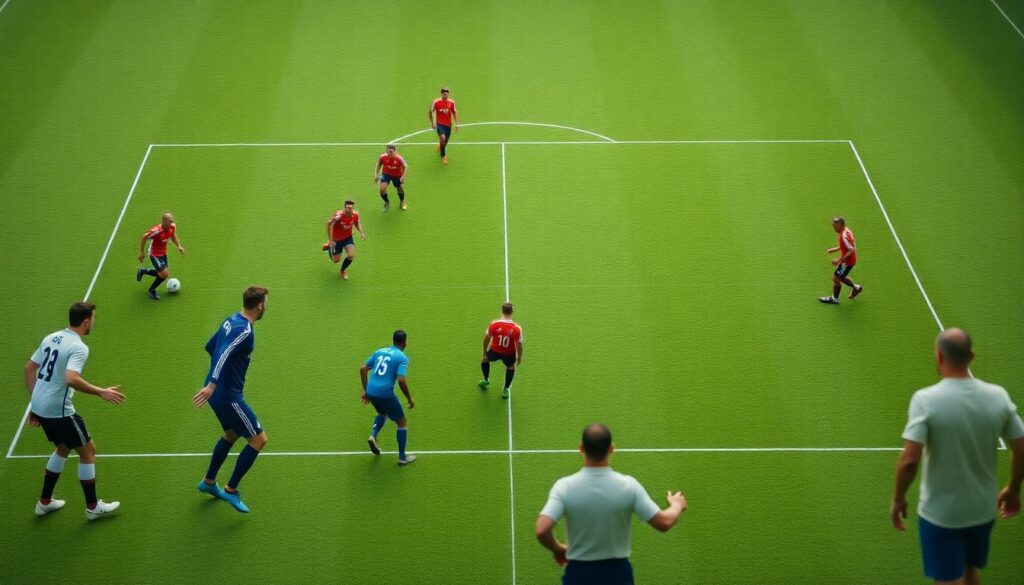
Define non-negotiable team principles (pressing, distance between lines, rest defence), then allow creativity in the final third and in 1v1 situations. If structure protects transitions, then flair can be expressed without destroying collective balance.