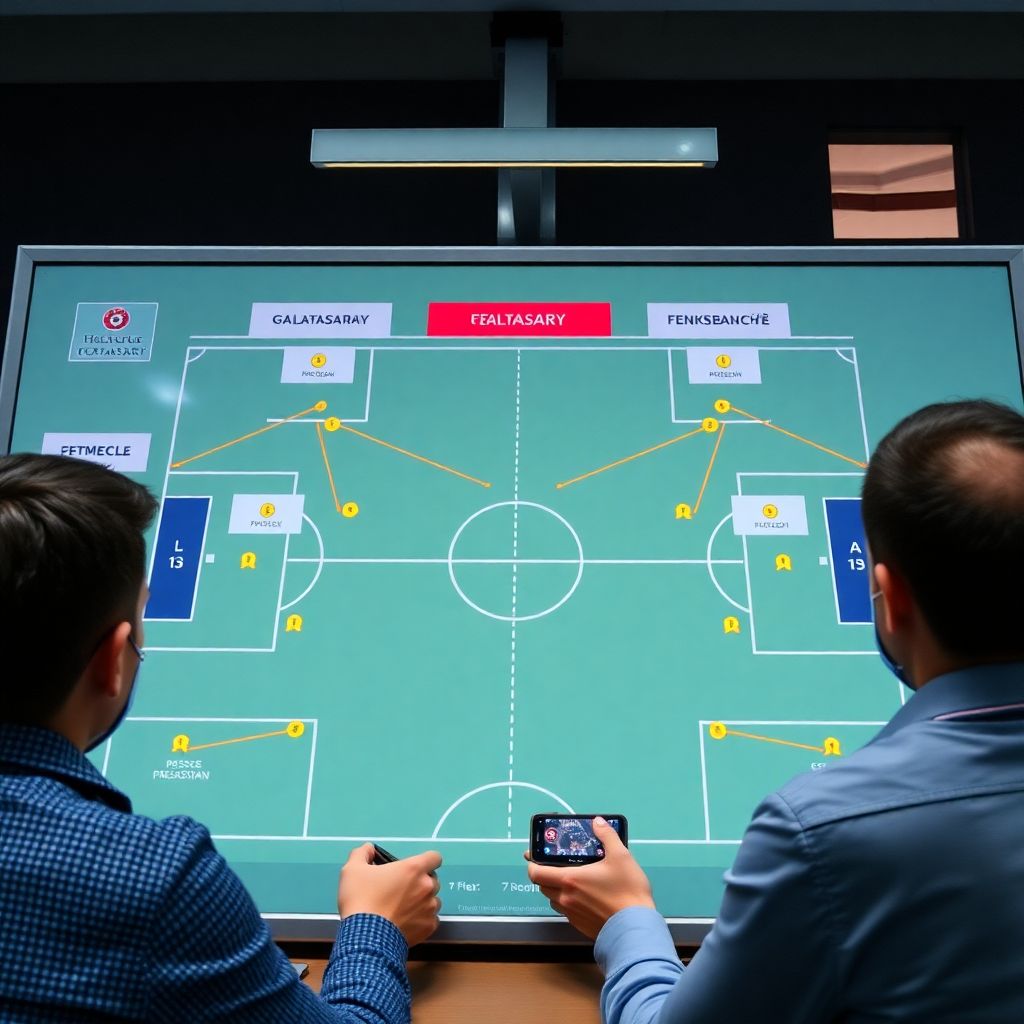
A classic Galatasaray-Fenerbahçe derby tactical analysis means isolating structures, patterns and decisions that shaped the result: formations, pressing heights, build-up routes, transitions and set pieces. If you understand these layers, then you can re-watch any historic derby and explain not just what happened, but why it kept recurring.
Persistent Myths and Immediate Findings
- If you believe derbies are decided only by emotion and chaos, then you miss repeatable patterns in pressing traps, wing overloads and set-piece schemes that consistently tilt the game.
- If you think the atmosphere makes tactics irrelevant, then you overlook how coaches often lower the defensive line and simplify build-up to control risk in this specific rivalry.
- If you assume every game is unique, then you fail to see how certain Galatasaray-Fenerbahçe themes recur across eras: asymmetrical full-backs, a congested double pivot zone and diagonal switches into the weak-side half-space.
- If you watch only the ball, then you ignore key metrics like how often the pivot receives on the half-turn, the number of passes into the final third and the average pressing height of each block.
- If you focus only on star names, then you under-value role players whose off-ball movements open lanes, pin full-backs or block the six-space and silently decide the derby.
Match context and strategic stakes
If you want to understand any Galatasaray Fenerbahce tactical analysis properly, then you must anchor it in context: league position, recent form, suspensions and even the stadium. These factors strongly influence risk tolerance, line height and whether a coach chooses proactive or reactive control.
If the match is early in the season with both teams in stable form, then coaches usually accept more open transitions and higher pressing heights. If the fixture is decisive for the title, then expect compact mid-blocks, slower circulation and greater emphasis on set pieces and second balls.
If Galatasaray play at home with strong crowd backing, then they tend to push full-backs higher and stretch the pitch, while Fenerbahçe prioritise compactness and counter-attacks. If the tie is at Kadıköy, then Galatasaray often drop one pivot deeper to secure central protection against direct play and aggressive second-ball hunting.
If you are watching a classic Galatasaray Fenerbahce derby full match replay, then take notes on the first ten minutes: where goal-kicks are aimed, how far centre-backs advance and which side first commits extra players between the lines. These early choices define the strategic stakes and the rhythm of the game.
Common myths revisited: what fans get wrong
- Myth 1 – Derbies are pure chaos, tactics do not matter
If you hear that structure disappears in this game, then point to clear patterns: staggered midfield lines, consistent pressing triggers on backward passes and well-drilled set-piece routines that repeat across multiple derbies. - Myth 2 – “Who wants it more” always beats game plans
If you assume desire alone wins, then explain how superior spacing, safer rest-defence and controlled counter-pressing often convert that intensity into territorial advantage and more sustained attacks. - Myth 3 – One tactical key (pressing, long balls, stars) decides everything
If someone reduces a derby to a single factor, then show how outcomes usually come from a chain: build-up orientation, pressing scheme, width management, box occupation and set-piece execution working together. - Myth 4 – History guarantees the same script
If people lean only on Galatasaray vs Fenerbahce history and statistics, then remind them that different coaches, player profiles and fitness levels can invert old patterns, even if some structural themes persist. - Myth 5 – Wide players are only dribblers, not structural pieces
If wingers are seen just as 1v1 specialists, then highlight how their starting positions (touchline vs half-space) decide whether full-backs can overlap, pivots can step up and centre-forwards get isolation vs a single centre-back. - Myth 6 – Substitutions are about “fresh legs” only
If fans think changes are only for energy, then track role shifts: in derbies, substitutions often flip pressing triggers, re-balance the midfield triangle or change which half-space is overloaded.
Formations, roles and player responsibilities
If you want to decode formations in a historic Galatasaray-Fenerbahçe clash, then separate starting shapes from in-possession structures. Derbies often start as mirrored 4-2-3-1 or 4-3-3 systems, but transform once one side dominates possession or scores the first goal.
Scenario 1: Galatasaray in a 4-2-3-1 vs Fenerbahçe 4-3-3
If Galatasaray line up 4-2-3-1, then expect:
- One pivot staying deeper to screen counters and receive from centre-backs.
- The other pivot stepping into the right or left half-space to connect with the number ten.
- Full-backs providing maximum width so wingers can make diagonal runs inside.
If Fenerbahçe answer with a 4-3-3, then their single pivot often anchors between the lines while the two advanced eights press inside-out. If Galatasaray circulate faster than the Fener eights can press, then they will find consistent entries into the central pocket behind the first line.
Scenario 2: Fenerbahçe asymmetrical 4-4-2 out of possession
If Fenerbahçe drop into a 4-4-2 block when defending, then one winger tucks inside to form a narrow three in midfield. If this wide-midfield trio slides well, then they can block Galatasaray’s central progression and force play towards touchlines.
- If the near-side striker curves runs onto the centre-back, then he can block passes into the pivot and guide the ball wide.
- If the double pivot of Galatasaray fails to create diagonal passing lanes, then centre-backs will be stuck circulating horizontally under pressure.
Scenario 3: Galatasaray back three in build-up
If a Galatasaray full-back tucks in to form a temporary back three, then the far-side full-back can stay high and wide. If this overload vs Fenerbahçe’s first pressing line is successful, then Galatasaray can progress with a free man stepping into midfield.
- If the tucked-in full-back receives facing forward, then he becomes a disguised pivot, enabling vertical passes that break two lines at once.
- If Fenerbahçe do not adjust the pressing scheme, then Galatasaray’s spare defender will consistently carry the ball into the middle third.
Scenario 4: Role of the number ten and second striker
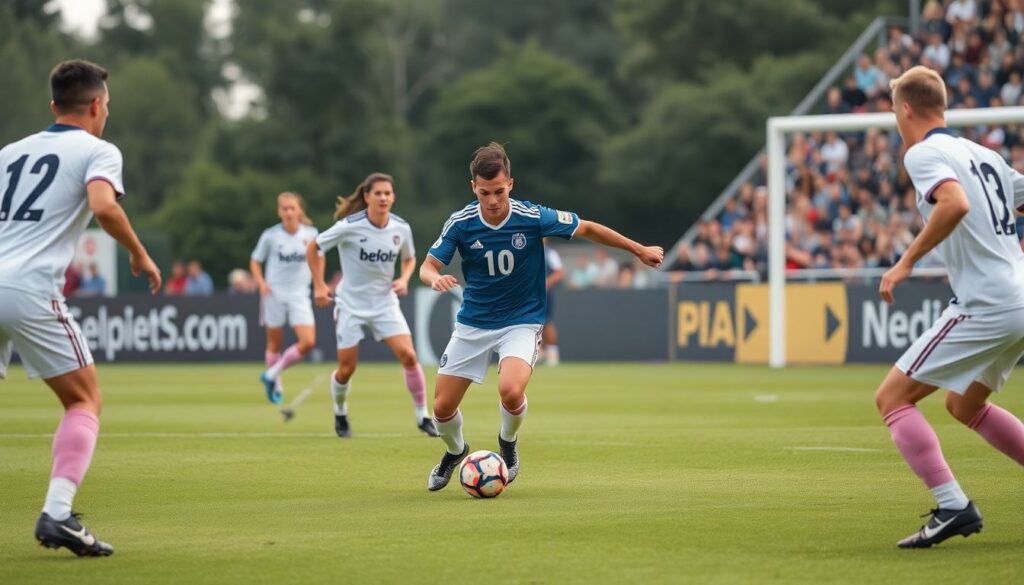
If either team uses a classic number ten, then that player’s job goes beyond creativity. He must:
- Block the opposition pivot when out of possession.
- Arrive between lines at the right moment to receive on the half-turn.
- Trigger pressing traps by jumping onto centre-backs after backward passes.
If the number ten times these actions well, then he becomes the hinge connecting pressing structure and attacking transitions, often the invisible difference-maker in the derby.
Phases of play: build-up, transition and finishing patterns
If you analyse phases of play, then split the derby into three main corridors: build-up, transitions and finishing actions. Each phase has recurring pluses and constraints for both teams, which you can map without needing real-time data feeds.
Upsides of typical Galatasaray and Fenerbahçe approaches
- If Galatasaray use a short build-up with centre-backs split and a dropping pivot, then they gain cleaner progression into midfield and can move the opponent’s block side to side.
- If Fenerbahçe prioritise fast vertical transitions after regains, then they often find larger spaces behind Galatasaray’s advanced full-backs.
- If either team attacks with three players between the lines, then they can overload the pockets between opposition midfield and defence and create higher-quality shooting positions just outside the box.
- If wide rotations (full-back underlap, winger holds width) are well-timed, then crossing situations become less predictable and cut-backs from the byline are easier to create.
Limitations and structural risks in each phase
- If centre-backs dwell too long in build-up in a hostile atmosphere, then pressing waves from the opposition forwards can force rushed clearances and low-quality long balls.
- If the counter-press is poorly organised after losing the ball high, then the opponent can break through the first wave and attack with superiority into open central lanes.
- If finishing patterns rely only on early crosses from wide areas, then shots will often be from suboptimal positions and easier to defend with compact central defenders.
- If midfielders are slow to track runners from deep, then second-line arrivals from the opposition can dominate the edge of the box and dictate where rebounds land.
Set-piece routines, pressing triggers and repeatable situations
If you focus only on open play, then you miss how many historic derbies swing on set pieces, pressing triggers and recurring micro-situations that repeat every few minutes.
- Mistake 1 – Treating corners as random chaos
If analysts ignore corner structures, then they miss clear signals: near-post crowding to free far-post runners, blockers creating paths for late arrivals and deliberate targeting of specific match-ups in the box. - Mistake 2 – Overrating man-marking on set pieces
If you think tight man-marking solves everything, then notice how well-coached Galatasaray or Fenerbahçe sides often use mixed schemes, with zonal markers in key zones and trackers for the most dangerous headers. - Mistake 3 – Misreading pressing triggers as “random aggression”
If you see both teams suddenly sprinting forward in waves, then look for cues: backward pass to a full-back, heavy touch by the pivot or a switched ball that hangs in the air. These are usually pre-agreed pressing triggers. - Mistake 4 – Ignoring throw-ins as tactical moments
If you switch off during throw-ins, then you miss mini-patterns: third-man combinations along the line, inside flicks into the half-space and traps set for the receiver with his back to goal. - Mistake 5 – Underestimating repeatable crossing zones
If you do not track where crosses usually come from, then you overlook “hot corridors” – the same outer channels repeatedly used to attack the far-post zone or the penalty spot.
Coaching adjustments, substitutions and decisive turning points
If you want to read a classic Galatasaray-Fenerbahçe derby like a coach, then pay special attention around goals, major chances and substitutions. These moments usually trigger structural changes that shift control, even if the formation label stays the same.
Mini case study: from reactive to proactive control
Imagine a historic derby where Galatasaray start cautiously and Fenerbahçe dominate territory in the first half, while you watch via a classic Galatasaray Fenerbahce derby full match replay instead of a Galatasaray vs Fenerbahce live stream.
- If Fenerbahçe press high and pin Galatasaray deep for extended spells, then Galatasaray’s coach might respond by:
- Dropping the number ten closer to the pivots to form a temporary midfield three.
- Instructing the goalkeeper to play more direct into the striker to bypass the first press.
- Switching the more secure full-back to the side targeted by Fenerbahçe’s press.
- If these adjustments stabilise build-up and raise Galatasaray’s average possession line, then Fenerbahçe’s intensity can drop, creating more even central duels.
- If Fenerbahçe then concede space wide, the away coach might:
- Introduce a fresh winger to attack the full-back who is already on a booking.
- Shift to an in-possession 3-2-5 by dropping a full-back and pushing both wingers high.
- Ask the striker to drift wide, dragging a centre-back out and opening the middle for late midfield runs.
- If this wide overload produces repeated cut-backs, then the decisive goal often comes not from a spectacular action but from one more arrival in the box against a scrambling defensive line.
If you are preparing to buy Galatasaray vs Fenerbahce derby tickets for a future match, then using this if-then lens on an old encounter will help you recognise similar turning points live in the stadium.
Tactical clarifications and practitioner questions
How should I start analysing a historic Galatasaray-Fenerbahçe derby?
If you are new to this level of detail, then start with three questions: who controls central spaces, who wins wide 2v2s and which team presses higher over longer periods. From there, then you can zoom into build-up shapes and set-piece patterns.
What basic indicators can I track without advanced data?
If you do not have tracking stats, then count sequences: how many passes each team makes before losing the ball, how often they enter the final third and from which channels shots originate. These simple tallies already reveal territorial control and attacking focus.
How do I separate tactical plan from individual errors?
If a goal comes from a mistake, then rewind several phases to see whether the structure exposed that player. If the same weakness appears repeatedly (same lane, same mismatch), then the issue is usually tactical rather than purely individual.
Does the stadium atmosphere change tactical choices?
If the game is at Ali Sami Yen or Rams Park, then home pressure often encourages Galatasaray to keep full-backs higher and maintain longer possession spells. If it is at Kadıköy, then Fenerbahçe typically accept more risk in pressing and earlier long diagonals.
What can a neutral coach learn from this rivalry?
If you coach at any level, then study how both teams secure their rest-defence when attacking and how they overload one side before switching to the far side. These principles transfer directly to training tasks and small-sided games.
How should I watch if I mainly care about one team?
If you support only Galatasaray or only Fenerbahçe, then first watch the game focusing purely on your team’s spacing and decisions. Then, if possible, re-watch focusing only on the opponent’s pressing and transitions to understand the full interaction.
Where does video access influence my analysis approach?
If you have only highlight packages, then focus on shot creation patterns and set pieces. If you can find longer footage through a Galatasaray vs Fenerbahce live stream recording or official archives, then analyse entire possession chains and pressing waves instead.