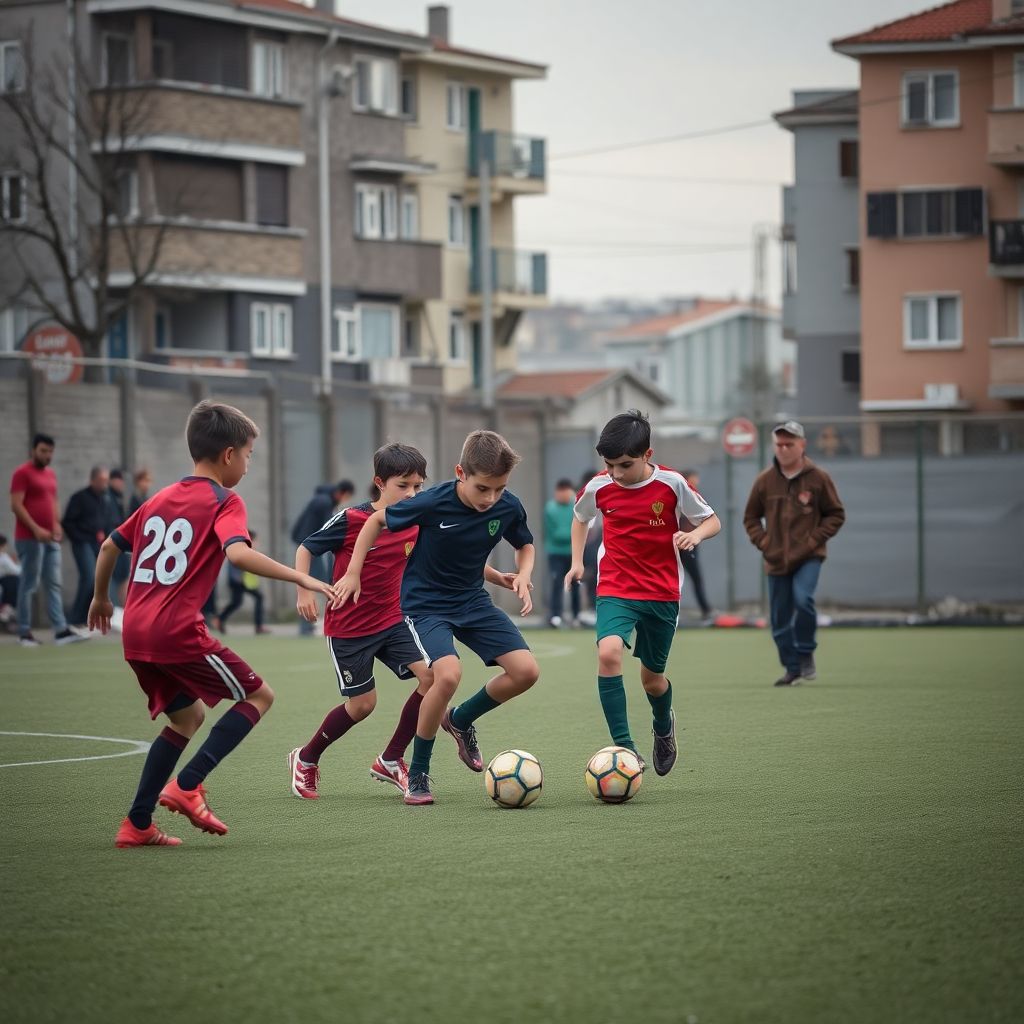
Neighbourhood pitches in Turkey turn street games into a low‑cost, high‑intensity training ground that feeds clubs and youth football academies in Turkey. By designing safe, accessible spaces, organising simple talent‑spotting routines and building links to local coaches, communities can support Turkish football talent development without losing the creativity and joy of street play.
Core lessons from neighbourhood pitches
- Street football pitches in Turkey work best when they are within walking distance, free or very cheap, and open at predictable hours.
- Small, hard courts accelerate technique, pressing and decision‑making, which explains part of how Turkey develops football superstars from modest neighbourhoods.
- Clear safety rules, basic lighting and surface maintenance are non‑negotiable to protect young players and reassure parents.
- Simple observation routines on local pitches help coaches spot talent without killing the informal, playful atmosphere.
- Strong pathways from neighbourhood football fields Istanbul and other cities to clubs and youth football academies in Turkey require trusted local intermediaries.
- Inclusive scheduling and community ownership reduce conflicts, vandalism and exclusion of girls or younger children.
Historical roots: street football culture across Turkish cities
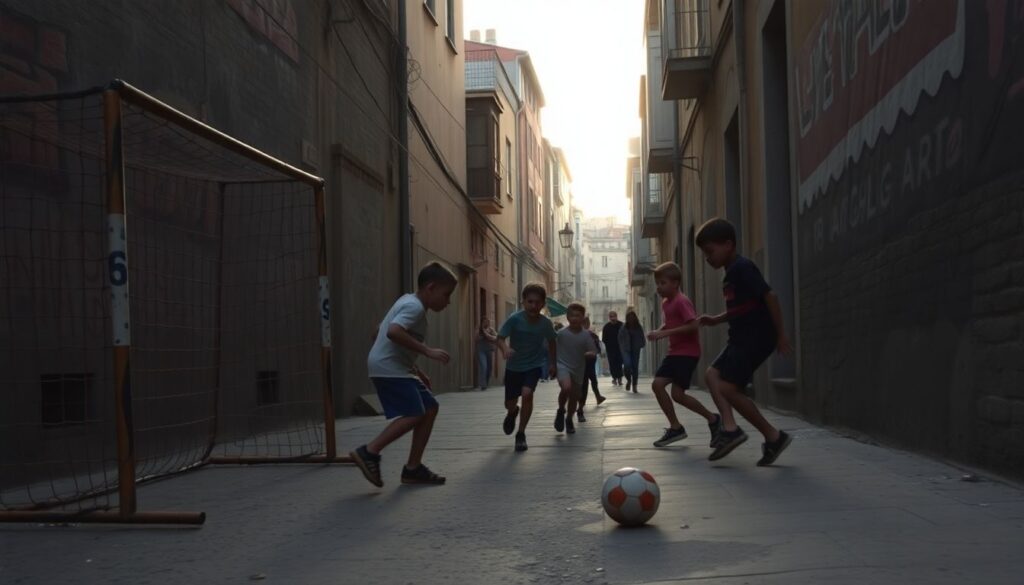
Street football has long been part of daily life in Istanbul, Ankara, Izmir, Bursa and Anatolian towns. Children played in alleys, schoolyards and improvised car parks, often with improvised balls and makeshift goals. That informal culture still underpins Turkish football talent development today.
This approach works well when:
- You have dense neighbourhoods with many children close in age.
- Parents are comfortable with kids playing outdoors and walking short distances alone or in groups.
- There is at least one safe open space that can be turned into a small pitch.
- Local adults (coaches, teachers, volunteers) are willing to supervise loosely and mediate conflicts.
It is less suitable when:
- Traffic, crime or unsafe buildings make unsupervised outdoor play too risky.
- Available land is extremely limited and expensive, so a pitch would create serious tension with other community needs.
- There is no realistic access to nearby clubs or academies, so pathways for talented players would be very weak.
- Local authorities strictly ban ball games in all potential spaces and are unwilling to negotiate exceptions.
Design and maintenance of neighbourhood pitches: what works
To turn a casual open space into a reliable talent incubator, you need a basic but thought‑through setup. Focus on safety, accessibility and low operating costs so the pitch can survive for years without heavy budgets.
Essential physical requirements
- Flat, even surface (artificial turf, acrylic, asphalt or concrete) with no sharp edges, holes or loose stones.
- Enclosure (fence or walls) high enough to keep the ball in and protect windows, cars and passers‑by.
- Small‑sided dimensions (for example 20-30 metres long) to allow intense 3v3 to 6v6 games.
- Durable goals fixed to the ground or weighted so they cannot tip over.
- Basic drainage or slope so water does not pool and create slipping hazards.
Risk and mitigation:
- Risk: injuries from poor surfaces. Mitigation: patch cracks, remove debris weekly, and ban play after heavy rain on slippery ground.
- Risk: broken windows and neighbour complaints. Mitigation: use high fencing behind goals, limit shot power in some sessions, and involve neighbours in rule‑setting.
Access, scheduling and basic rules
- Set clear open hours that fit school times and respect neighbours’ quiet hours.
- Reserve short weekly slots for organised coaching or scouting without blocking free play.
- Post simple rules: footwear, no glass, fair play, conflict resolution steps, and emergency contact numbers.
- Ensure inclusive time windows where girls and younger children know they are welcome.
Risk and mitigation:
- Risk: overcrowding that increases collision injuries. Mitigation: limit players per game, rotate teams and use a simple queue system.
- Risk: exclusion of some groups. Mitigation: announce mixed sessions, girls‑only hours or school‑partnered slots.
Low‑cost maintenance routines
- Weekly checks for loose fencing, damaged nets, broken glass and worn surfaces.
- Community cleaning days with local clubs or schools, aligned with key youth football academies in Turkey to build relationships.
- Simple logging of incidents and repairs so recurring problems are visible and fixable.
Risk and mitigation:
- Risk: vandalism or graffiti leading to closure. Mitigation: involve local youth in artwork and stewardship, and ensure lighting and passive surveillance from nearby buildings.
- Risk: maintenance costs overwhelming small budgets. Mitigation: prioritise safety‑critical repairs and phase cosmetic improvements.
Talent identification: spotting potential in informal games
Neighbourhood pitches are ideal for observing real behaviour under pressure. To support how Turkey develops football superstars from street culture, you need a simple, repeatable process that respects the informal environment and keeps all children safe.
Key risks and limitations before you start
- Early selection bias: Focusing on the tallest or fastest children can hide late bloomers. Mitigate by revisiting groups regularly and tracking progress, not only current dominance.
- Over‑professionalisation: Turning every game into a trial may kill joy and creativity. Mitigate by keeping most sessions purely playful and separating a few observation days.
- Safety under higher intensity: When coaches are present, games often speed up and become more physical. Mitigate with clear tackling rules, warm‑ups and immediate action on dangerous play.
- Unclear communication with parents: Surprise scouting offers can create mistrust. Mitigate by informing parents in advance about how talent identification works and what any invitation means.
-
Define what you are looking for, beyond physical size
Agree as coaches and community leaders what qualities matter: first touch, decision‑making, scanning, resilience, playmaking, attitude to teammates. Avoid over‑weighting early physical maturity.
- Technical: ball control in tight spaces, weak‑foot use, quick turning.
- Tactical: awareness of space, quick support runs, understanding of overloads.
- Mental: persistence after mistakes, reaction to losing, respect for others.
-
Organise observation days that feel like normal street games
Choose times when kids naturally gather at neighbourhood football fields Istanbul or other local pitches. Introduce observers as guests, not judges, and keep formats close to usual games (3v3, 4v4, 5v5).
- Limit instructions so creativity stays visible.
- Rotate teams and positions so children show different skills.
- Ensure safe numbers per pitch to avoid chaotic, risky crowds.
-
Use simple rating sheets during and after games
For each player you notice, mark quick impressions in a few categories instead of detailed scores. This keeps focus on observation, not paperwork, and helps guard against snap judgements based on one brilliant moment.
- Rate only a small number of players per session to reduce errors.
- Note context: age, playing with older children, position, fatigue.
-
Cross‑check impressions across multiple sessions
Reliable Turkish football talent development relies on consistency, not one‑off performances. Revisit the same pitch over weeks and see how players adapt, improve and behave with different peers and adults.
- Flag both constant standouts and fast improvers.
- Watch how players handle tougher opponents and bad days.
-
Engage parents and guardians transparently
When you identify potential, talk to families in simple, honest language about what you see, what a next step could be, and what it is not (no guarantees, no pressure). Provide written contacts for clubs or youth football academies in Turkey you partner with.
- Clarify costs, time commitments and transport expectations.
- Encourage parents to prioritise school and well‑being alongside football.
-
Offer trial opportunities with clear safeguarding
Invite selected children to structured sessions or open days at clubs, always with parent consent and safe transport plans. Work with organisations experienced in how Turkey develops football superstars to ensure balanced training loads and educational support.
- Keep group sizes small for better supervision.
- Ensure emergency contacts, first aid and hydration are in place.
Coaching methods adapted for small-sided street formats
On neighbourhood pitches, coaching must stay light, game‑based and safe. Use this checklist to verify that your sessions fit the context and minimise risk.
- Sessions start with 5-10 minutes of dynamic warm‑up suitable for hard surfaces, reducing ankle and knee injuries.
- Most training is small‑sided (2v2-5v5) with frequent ball touches instead of long lectures or running without the ball.
- Coaches adjust drills to the actual pitch size and surface, avoiding high‑speed sprints on slippery or uneven areas.
- Games encourage creativity: no over‑coaching, players attempt feints, quick combinations and risk‑taking without fear of punishment.
- Rules are adapted for safety: controlled contact, no sliding on concrete, clear boundaries for aggressive behaviour.
- Mixed‑age sessions position older players as protectors and role models, not as enforcers who dominate or intimidate younger ones.
- Regular rotation of positions prevents early labelling and supports complete skill sets (defending, building, finishing).
- Coaches integrate simple decision‑making tasks: overload games, neutral players, time limits on touches to improve speed of thought.
- Hydration breaks and shade are planned, particularly on hot days, with explicit reminders to rest if dizzy or in pain.
- End‑of‑session reflections focus on learning and enjoyment, not only winning, helping players handle pressure when moving to formal environments.
Pathways from local pitches to clubs and academies
Even excellent neighbourhood development fails if there is no safe, realistic route into structured systems. Avoid these common mistakes when trying to connect street football pitches in Turkey to formal clubs and academies.
- Relying on one enthusiastic coach as the entire pathway, instead of building stable relationships with multiple clubs and organisations.
- Promising children and parents rapid professional contracts, which creates unhealthy pressure and disappointment.
- Ignoring school schedules and exam periods when planning trials and training, leading to academic problems and parental backlash.
- Sending young players to distant clubs with long, unsafe travel routes and no adult supervision.
- Failing to agree on clear expectations with youth football academies in Turkey about playing time, feedback and support for late developers.
- Overloading talented children with overlapping commitments (neighbourhood games, club training, school teams) without monitoring fatigue or injuries.
- Not tracking players once they leave the neighbourhood pitch, so there is no feedback loop on which selection criteria actually predict success.
- Excluding girls or children from lower‑income families from pathway opportunities because of assumptions about commitment or resources.
- Skipping written consent and information for parents, which can create mistrust and even legal issues when injuries occur.
- Ignoring emotional readiness; some children may be technically gifted but not yet prepared for strict, competitive environments.
Social impact: inclusivity, safety and community ownership
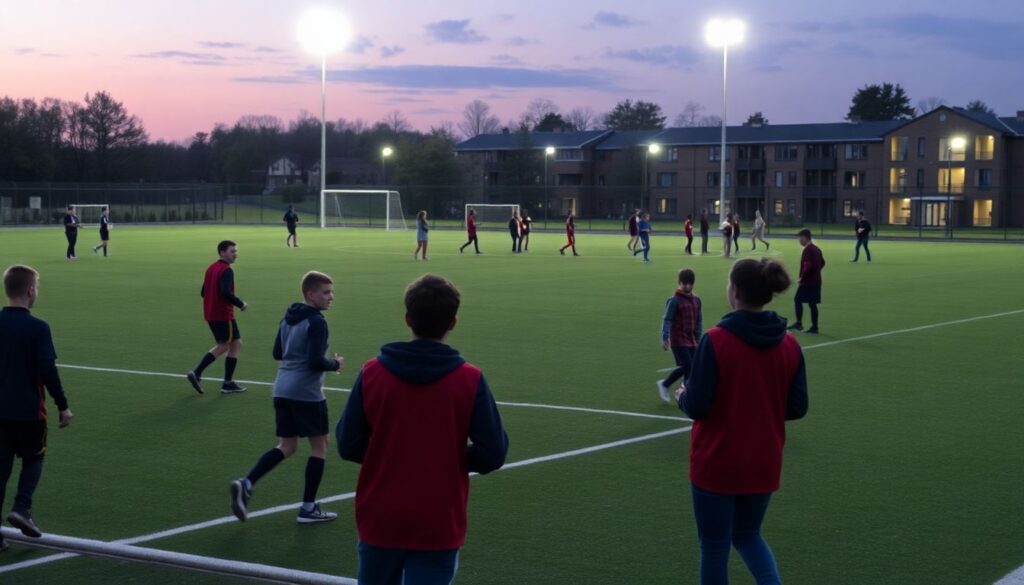
In some contexts, a classic fenced pitch is not the only or best solution. Consider these alternatives and when they make sense.
- Shared school and club facilities after hours – Useful where land is scarce but existing pitches already exist. Agreements between municipalities, schools and clubs can open these spaces to neighbourhood children with supervised, safe access.
- Rotating street‑closure play streets – In dense areas of Istanbul and other cities, temporary street closures for a few hours can create flexible play zones. This reduces permanent infrastructure costs but requires strong traffic management and community buy‑in.
- Multi‑sport courts instead of football‑only pitches – Where budgets are limited, courts marked for futsal, basketball and other games serve more residents and spread maintenance costs. They still support Turkish football talent development while avoiding conflicts with non‑football users.
- Club‑led satellite sessions in open parks – When building a pitch is not feasible, clubs can run regular, supervised small‑sided sessions in safe park areas, bringing the academy experience closer to children without heavy construction.
Practical answers to common implementation challenges
How can we keep neighbourhood pitches safe without constant professional supervision?
Design for safety first: stable goals, good lighting, clean surfaces and clear rules. Combine occasional adult presence with peer leaders among older players. Encourage neighbours to report issues early and close the pitch temporarily during dangerous conditions.
How do we avoid conflicts with residents living next to the pitch?
Set and communicate fixed playing hours, especially in the evenings. Install fences or nets to protect windows and parked cars, and invite residents to planning meetings so they feel ownership instead of disturbance. Quick response to noise or litter complaints builds trust.
What if there are no clubs or academies interested in our neighbourhood players?
Start by inviting coaches to watch local games on busy days and share simple highlight clips with their permission. Connect to district football associations and grassroots programmes focused on Turkish football talent development, then gradually build formal partnerships and shared events.
How can we make sure girls feel welcome on local pitches?
Reserve regular mixed and girls‑only time slots, led where possible by female coaches or volunteers. Make inclusion part of the posted rules, challenge disrespectful behaviour immediately and highlight positive role models from women's football in Turkey.
How do we balance informal creativity with structured coaching?
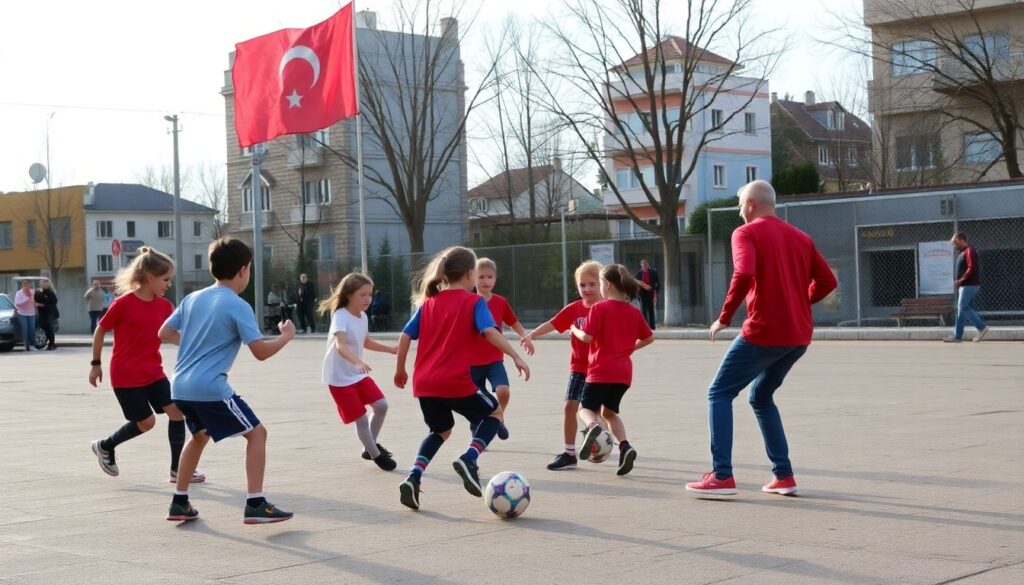
Keep most sessions as free play and limit structured coaching to short, focused blocks. Use game‑like exercises instead of rigid drills, and avoid constant correction. This preserves the street style that helps how Turkey develops football superstars while adding guidance.
What can we do if the surface is very hard and injuries are common?
Adjust rules (no sliding, controlled contact), use appropriate footwear and prioritise warm‑up and cool‑down. If possible, add rubber layers or mats in high‑impact zones. Consider shifting some high‑intensity drills to softer nearby areas such as school grass fields.
How should we handle children who are talented but struggle at school?
Work with families and teachers to coordinate schedules and support schoolwork, not replace it. Make clear that academy or club opportunities depend on healthy balance, and look for programmes that provide tutoring or academic monitoring alongside football.