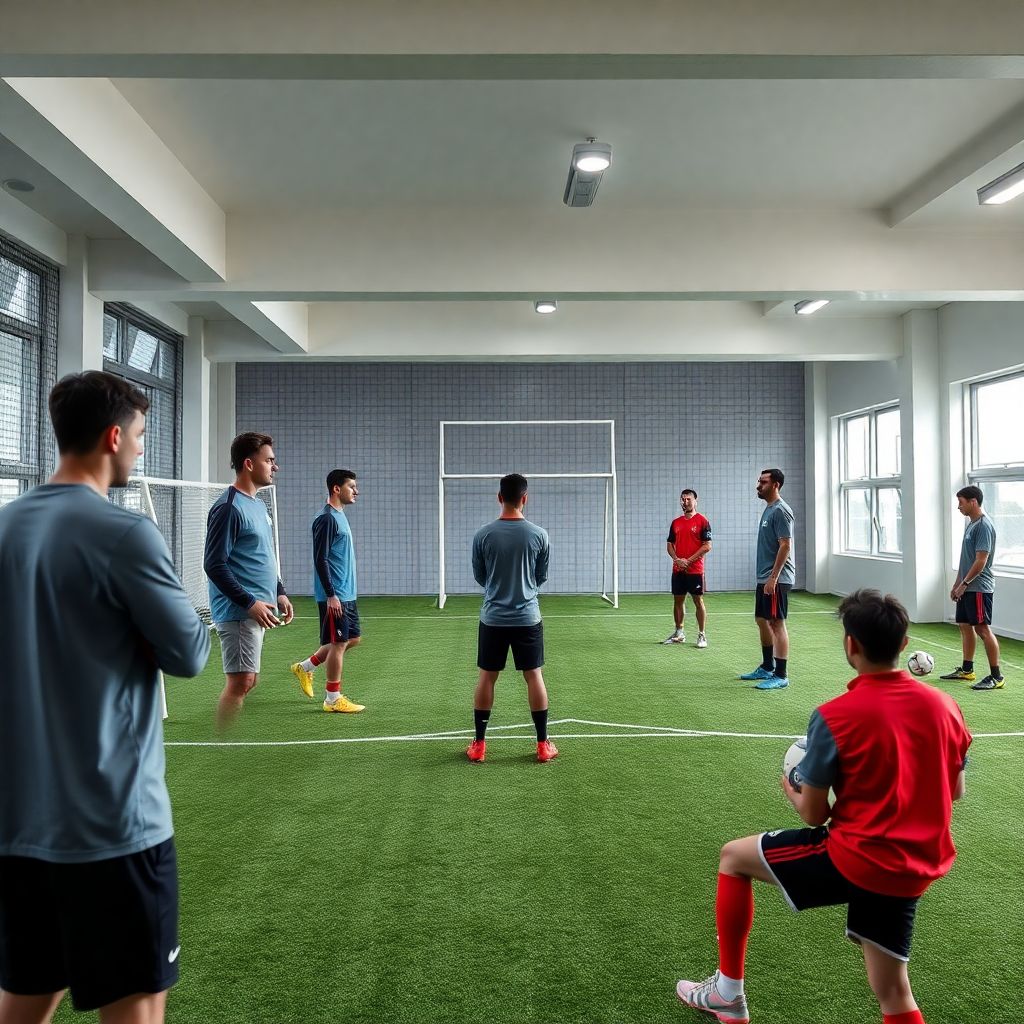
To modernize player development in Turkey, build a simple system: standard testing, periodized strength and power work, age‑appropriate nutrition, basic sports science monitoring, and clear talent pathways from academy to pro. Start small, use safe, repeatable protocols, and track only a few key metrics per squad each week.
Core Interventions Snapshot
- Standardize baseline testing 2-3 times per season for all squads and record results in one shared database.
- Run periodized strength and conditioning blocks tailored separately for football and basketball demands.
- Implement age‑specific nutrition habits and refer top talents to a qualified sports nutritionist in Turkey when possible.
- Use low‑cost GPS or simple session‑RPE to manage weekly load and recovery quality.
- Define a transparent pathway from local academy to first team with physical and technical benchmarks.
- Train or hire at least one strength and conditioning coach in Turkey to coordinate programs across age groups.
- Use pre‑defined KPIs (speed, power, availability, minutes played) to judge progress, not just match results.
Assessing Athletic Baseline: Testing Protocols for Turkish Teams
This framework suits football and basketball clubs, regional academies, and even the best fitness training camps in Turkey that want objective development data.
Skip or delay testing when athletes are injured, sick, badly sleep‑deprived, or during congested fixtures; in these cases, prioritize recovery and medical clearance first.
| Test | Sport / Group | Recommended Frequency | Key Metrics to Track |
|---|---|---|---|
| 30 m sprint (with 10 m split) | Football & Basketball (U14-Pro) | Pre‑season, mid‑season, end‑season | 10 m acceleration time, 30 m time, best vs average |
| CMJ (countermovement jump) | All squads | Monthly; weekly for elite squads | Jump height, left/right asymmetry, fatigue trends |
| Yo‑Yo Intermittent Recovery | Football; high‑minute basketball players | Pre‑season and mid‑season | Max distance, HR recovery at 1′ and 2′ |
| 1RM or 3-5RM strength tests | U16-Pro, experienced lifters only | Pre‑season and after strength blocks | Relative strength (load per kg bodyweight), movement quality |
| Movement screen (squat, lunge, push, core) | U12-Pro | Pre‑season; recheck after injuries | Movement competency, pain, asymmetries |
For clubs without full sports science programs in Turkey, start with just three tests: 30 m sprint, CMJ, and a simple Yo‑Yo or shuttle run. Record results in a spreadsheet and compare athletes by age, position, and training age rather than only by match performance.
Suggested KPIs:
- Percentage of squad with valid baseline in last 3 months.
- Change in average 10 m and 30 m sprint times pre‑season to mid‑season.
- Number of soft‑tissue injuries before and after implementing testing plus follow‑up interventions.
Periodized Strength and Power Programs for Football and Basketball
To support modern football academy Turkey player development and pro clubs, align strength and power around the competitive calendar and travel demands.
Minimum infrastructure for safe, effective work:
- Racks with safety pins and adjustable bars (at least 2 per 20 players).
- Plates, barbells, dumbbells, and resistance bands for progression and regression.
- Stable boxes for jumps and step‑ups, not improvised unsafe platforms.
- Space for sprints, change of direction, and med‑ball throws (10-20 m lane).
Human resources and coordination:
- At least one qualified strength and conditioning coach Turkey based, responsible for long‑term plan and monitoring.
- Regular communication between S&C, technical coaches, and medical staff about weekly load and individual restrictions.
- Basic education sessions for athletes on why strength sessions are non‑negotiable, especially in‑season.
Simple periodization outline (per team):
- Off‑season (3-6 weeks) – 3-4 gym sessions/week; focus on hypertrophy and general strength, plus corrective work.
- Pre‑season (4-8 weeks) – 2-3 gym sessions/week; progress to heavier strength and power (jumps, throws, sprints).
- In‑season – 1-2 gym sessions/week; keep intensity high but lower volume; use micro‑dosing around matches.
Football vs basketball focus:
- Football: repeated sprint ability, hamstring strength (Nordics, RDLs), deceleration, and unilateral power.
- Basketball: vertical and horizontal jumping, landing mechanics, hip and ankle stiffness, and upper‑body strength for contact.
Practical KPIs to track monthly:
- Trend in CMJ height and variability for the squad.
- Trend in relative lower‑body strength (e.g., trap‑bar deadlift per kg).
- Number of sessions completed per athlete vs planned (compliance rate).
- Time‑loss soft‑tissue injuries to hamstring, groin, calf, and ankle.
Nutrition Strategies Across Development Stages: Youth to Pro
The safest way to upgrade nutrition is to build simple, sustainable habits for each age group and involve families whenever possible, with specialist support from a sports nutritionist Turkey based for high‑potential or clinical cases.
-
Define basic rules by age category
Create clear, simple priorities for U12, U13-U15, U16-U19, and senior squads.
- U12: regular meals, hydration, and food quality over supplements.
- U13-U15: add pre‑/post‑training snacks and school‑day planning.
- U16-U19: energy for growth, matches, and strength training.
- Senior: performance, recovery, and body‑composition targets.
-
Standardize pre‑training and pre‑match fuel
Agree club‑wide guidelines on what and when to eat before sessions and games.
- Light, easily digestible meals 2-3 hours before high‑intensity work.
- Small top‑up snack 30-60 minutes before if needed.
- Avoid trying new, unfamiliar foods on match day.
-
Lock in post‑training recovery habits
Focus on rehydration and a snack or meal within roughly one hour after training or matches.
- Include a source of protein, carbohydrates, and fluids.
- Use simple, available foods rather than expensive products when budget is limited.
-
Coordinate with families and schools
Especially for academy players, provide short, practical guides to parents and teachers.
- One‑page examples of day plans on school and match days.
- Safe hydration rules during hot Turkish summers and Ramadan adjustments.
-
Introduce body‑composition monitoring carefully
For U16+ only, and always with health and performance as the priority, not appearance.
- Use consistent, non‑invasive methods (e.g., skinfolds with trained staff) or partner clinics.
- Avoid public weigh‑ins and always explain the purpose.
-
Refer complex cases to specialists
When there are medical conditions, eating‑behavior concerns, or elite demands, involve professionals.
- Build relationships with at least one trusted sports nutritionist Turkey clubs can access.
- Link with club doctor and psychologist when needed.
-
Set simple, trackable nutrition KPIs
Keep metrics practical so coaches and players can follow them.
- Percentage of players bringing suitable pre‑training snacks each week.
- Hydration checks before training during hot months (e.g., urine color chart education).
- Self‑reported energy and recovery scores on a 1-5 scale.
Fast‑Track Nutrition Mode
- Agree one default pre‑training snack and one post‑training snack for the whole squad.
- Share a single one‑page nutrition guide per age group with parents and players.
- During hot weeks, emphasize fluids and salt in meals; monitor simple signs of dehydration.
- For any player with repeated low energy or frequent illness, fast‑track a referral to a qualified specialist.
Integrating Sports Science: GPS, Load Management and Recovery Modalities
Full GPS systems are ideal, but many Turkish clubs can still use basic sports science principles with simple tools such as session‑RPE, wellness questionnaires, and low‑cost wearables.
Use this checklist to verify that integration is working:
- Each session has a documented target (e.g., high‑speed running, small‑sided conditioning, technical recovery).
- Players rate session difficulty (session‑RPE) within 30 minutes after training or matches.
- Weekly load (training plus matches) is reviewed at least once per week by S&C and head coach.
- High‑risk players (returning from injury, big spikes in minutes) are flagged and adjusted.
- At least one low‑intensity recovery session (mobility, pool, light technical) is scheduled after intense matches.
- Sleep, soreness, and mood are monitored using a simple, consistent 1-5 scale or short questionnaire.
- Recovery modalities (cold water, massage, compression) are used appropriately after heavy loads, not randomly.
- Video or data reviews identify where game demands are changing (more sprints, contacts) and training is adapted.
- Injury data are summarized every 3 months and discussed with coaching staff.
Where budget allows, partner with universities offering sports science programs in Turkey to support data analysis, seasonal research projects, and staff education for both clubs and academies.
Talent Pathways and Transition: From Academy to Professional Level

Many clubs and academies lose talent between youth and first team not because of ability but because processes are unclear or overloaded with short‑term goals.
Common mistakes to avoid:
- No written pathway from academy squads to reserves and first team, with physical and tactical expectations clearly described.
- Over‑reliance on short trial periods instead of long‑term tracking of training data, minutes played, and fitness history.
- Ignoring individual growth and maturation when comparing U13-U16 athletes, leading to premature deselection of late developers.
- Lack of coordinated planning between academy and senior S&C staff, so promoted players are suddenly exposed to higher loads.
- Focusing testing and monitoring only on elite squads, leaving younger age groups without structure.
- Using punishment running or gym work after poor results, which damages athlete trust and recovery.
- Failing to teach players self‑management skills (sleep, nutrition, individual warm‑up routines) before they reach professional level.
- No structured off‑season plan, so players arrive to pre‑season unprepared and at higher injury risk.
- Neglecting the mental and social transition when players move away from home or change city or league level.
Football and basketball organizations should align their academy programs with realistic first‑team demands and use both testing and match data to make promotion decisions, rather than relying mostly on subjective impressions.
Implementation Roadmap: Facilities, Staffing, Budget and Education
Different organizations in Turkey have very different resources; select an implementation route that fits your context but still moves you toward best practice.
-
Lean internal model
For small clubs or regional academies with limited budgets.
- Use basic equipment, spreadsheets, and free education resources.
- One coach doubles as S&C with support from local university interns.
- Ideal when you need a starting point with minimal cost and can grow later.
-
University partnership model
For organizations near universities with sports science programs in Turkey.
- Share facilities and data projects; host interns and thesis students.
- Gain access to lab‑grade testing and sport science expertise cheaply.
- Suitable when you have motivated staff but limited specialist headcount.
-
Specialist external support model
For pro clubs and ambitious academies.
- Hire dedicated S&C coaches, nutritionists, and analysts, or contract them part‑time.
- Send players to best fitness training camps in Turkey during off‑season to accelerate progress.
- Use when competing for national titles or European places and budgets are higher.
-
Hybrid camp‑based model
For clubs without year‑round infrastructure but with seasonal access to complexes.
- Run intensive pre‑season and mid‑season blocks in high‑quality facilities.
- Maintain simpler programs during the rest of the year at home grounds.
- Works well for clubs that travel to central locations or coastal regions for camps.
Across all models, prioritize appointing or developing at least one coordinator who understands both technical coaching and performance science to keep football academy Turkey player development aligned with first‑team and national‑level expectations.
Practical Obstacles and Evidence-Based Solutions
How can a small Turkish club start without expensive technology?
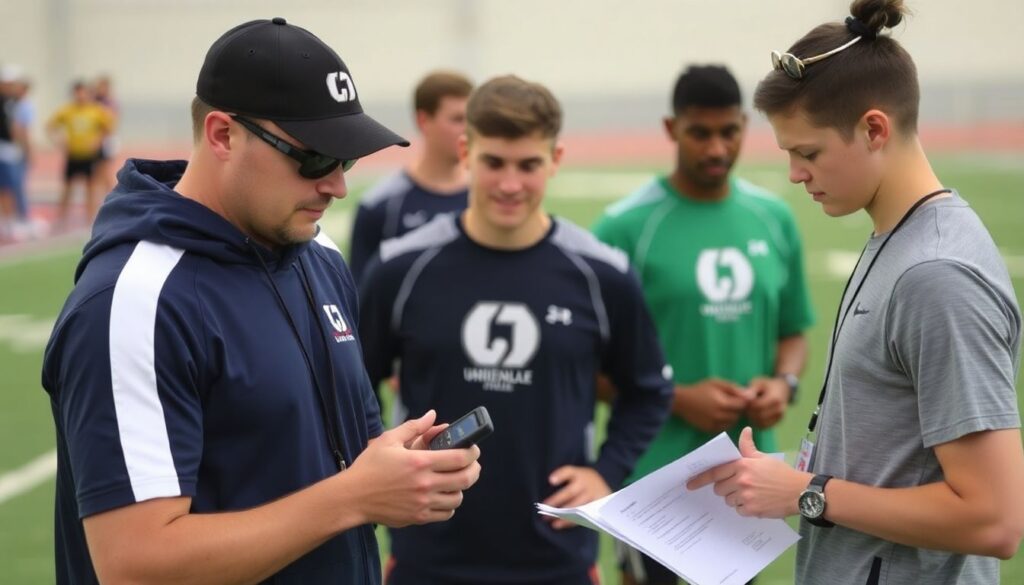
Begin with free tools: RPE scales, simple wellness questions, stopwatch sprints, and basic jump tests. Store data in spreadsheets and focus on consistency of testing dates and protocols. Add GPS or more advanced systems only when staff can actually use and interpret the data.
How do we keep players motivated for strength training during the season?
Use short, focused sessions on key match‑relevant qualities, such as sprint speed and jumping power, instead of long bodybuilding‑style workouts. Track and show progress in simple metrics like jump height or sprint times so athletes see clear benefits for performance and selection.
What if parents resist nutrition changes for younger players?
Provide short, culturally sensitive education, including low‑cost food examples that fit Turkish eating habits. Emphasize health, growth, and school performance rather than weight. Invite parents to information sessions and share clear written guidelines instead of complex scientific explanations.
How can we use fitness camps without disrupting the season?
Schedule intensive blocks at the best fitness training camps in Turkey during pre‑season or international breaks. Coordinate with club staff so camp content matches your long‑term plan, and avoid stacking heavy camp loads on top of congested fixtures or travel periods.
What is the safest approach to testing strength in youth players?
Focus on technique and submaximal loads first, using movement quality as the primary filter. Use estimated maxes from 3-5 repetition sets instead of true 1RM for less experienced athletes, and only progress under direct supervision of a qualified strength and conditioning coach Turkey based.
How do we transition a top academy player into the first team physically?
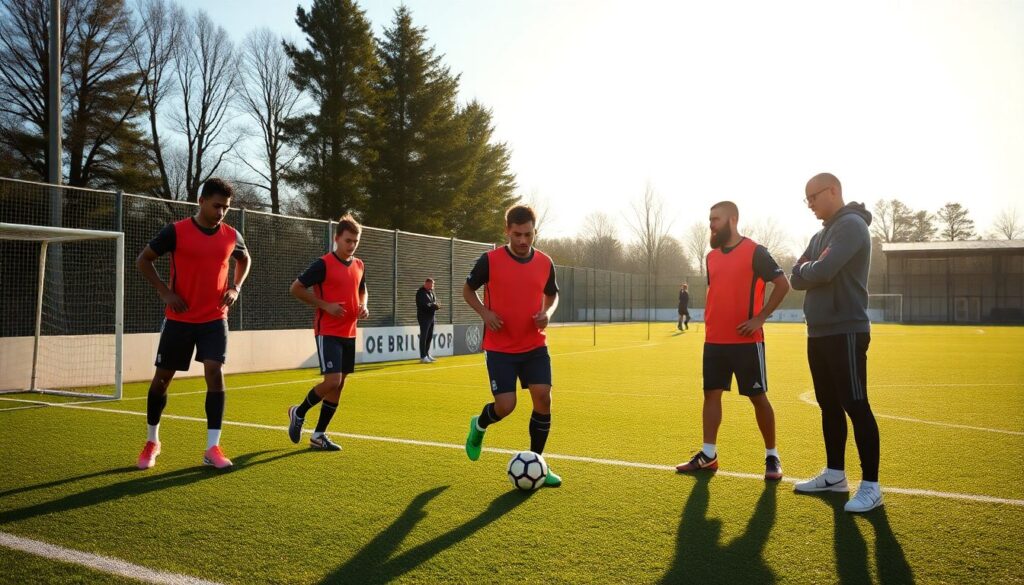
Plan at least one full season of gradual exposure to first‑team training loads and match intensity. Monitor wellness, injuries, and sprint or jump metrics, and adjust strength, conditioning, and recovery so the player arrives ready, not already overloaded or fatigued.
How can we evaluate if our modernization plan is working?
Set 3-5 core KPIs, such as injury rates, availability, sprint or jump improvements, and minutes played by academy graduates. Review them at least twice per season with all stakeholders, and adjust programs based on these objective trends rather than only on win‑loss records.