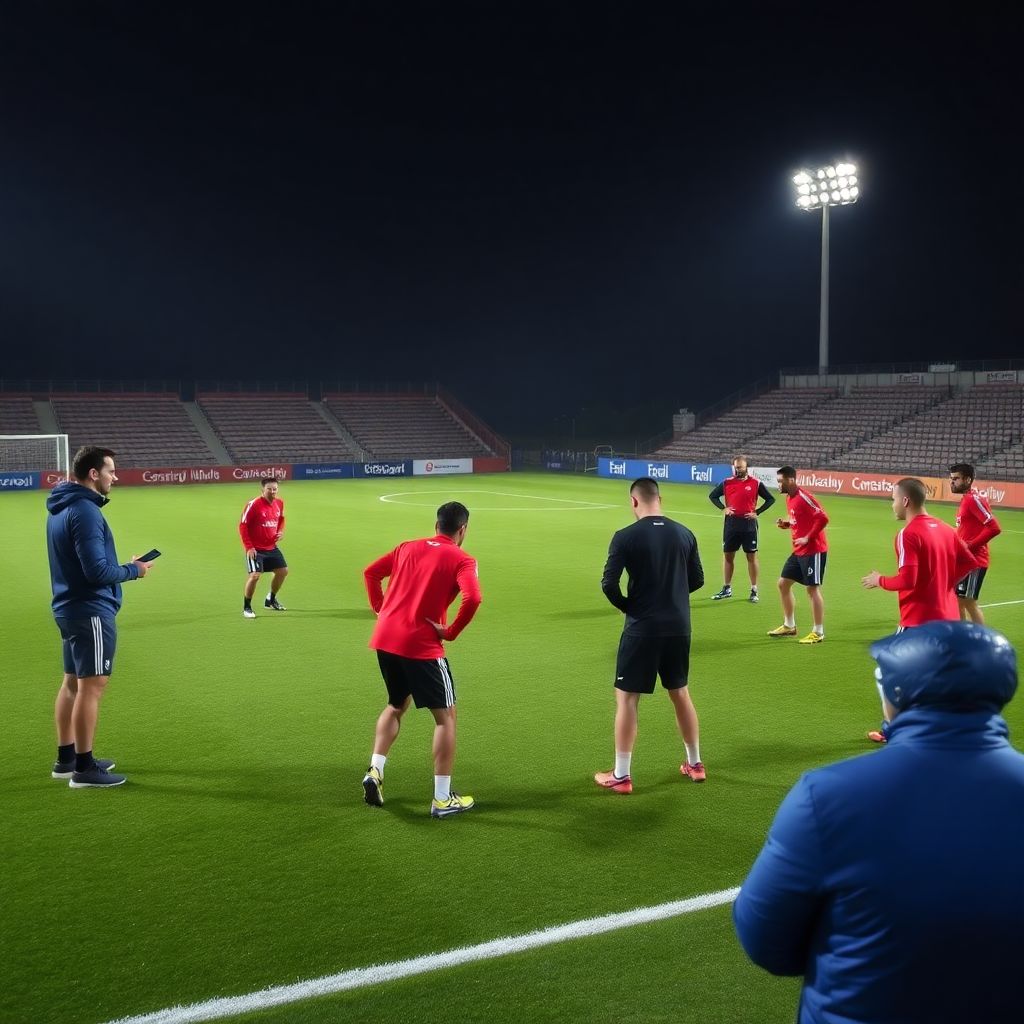
Galatasaray transformed their pressing by tightening distances between lines, clarifying individual roles, and linking clear triggers with intensive, football-specific conditioning. To replicate this, you need a structured preseason, position‑specific drills, strict compactness rules, and video feedback. Below is a step‑by‑step blueprint you can safely apply with intermediate‑level players.
Pressing Blueprint: Core Tactical Shifts
- Shift from man‑oriented chasing to zone‑plus‑individual responsibility around the ball.
- Use high‑intensity but short pressing drills tied to clear, repeatable triggers.
- Train the back line to hold a high position and squeeze space instead of dropping early.
- Codify pressing roles for front three, midfield triangle, and back four in each block.
- Integrate immediate counter‑pressing after loss with automatic fallback rules.
- Base session design on continuous galatasaray pressing tactics analysis and match clips.
Preseason Foundations: Conditioning and Drill Progression
This pressing model suits intermediate to advanced squads with stable attendance, basic positional discipline, and enough fitness for repeated high‑intensity efforts. Avoid implementing it fully with very young players, teams with fewer than two weekly sessions, or squads still struggling with simple defensive shape and communication.
Across preseason, combine physical and tactical work from day one instead of running‑only phases. For a structure close to what you see in a galatasaray tactical analysis 2024, build in three layers:
- General aerobic base with the ball – rondos, large possession games, and positional keep‑ball to raise overall volume while reinforcing simple pressing cues.
- Repeated sprint capacity in game‑like drills – small‑sided games (3v3 to 6v6) with touch limits and goals that reward quick ball recovery.
- Position‑specific pressing scenarios – 7v7 to 11v11 with conditioned build‑up patterns for the opponent to trigger your press in realistic zones.
Typical weekly progression during preseason could look like this:
- Early week: bigger spaces, lower intensity, focus on structure and distances.
- Midweek: smaller spaces, higher intensity, specific pressing triggers and roles.
- End of week: full‑pitch, match‑tempo games to rehearse the full pressing system.
To stay updated and inspired, use resources such as an advanced football coaching tactics book and a galatasaray match analysis subscription, then convert insights into clear training constraints.
Trigger Mechanisms: When and Where to Initiate the Press
Before defining individual roles, agree on collective pressing triggers and pressing zones. This keeps your decisions consistent and easier to learn.
You will need:
- Full‑pitch and half‑pitch grids marked with cones to define vertical and horizontal lanes.
- Video of your own games plus reference clips; a basic galatasaray pressing tactics analysis is ideal to illustrate triggers visually.
- Whistle or sound cues to freeze play and correct distances and body orientation safely.
- Simple terminology for triggers (e.g. “back pass”, “wide trap”, “poor touch”).
- Access to at least one football pressing tactics course online or webinar to refine your ideas and compare with other coaches’ models.
Common high‑press and mid‑block triggers you can adopt:
- Back pass or square pass to a facing‑own‑goal centre‑back.
- Receiver with closed body shape near the touchline.
- Lofted pass into a full‑back or defensive midfielder.
- Opponent’s striker dropping deep leaving their back line on the ball.
- Loose, bouncing or poorly controlled first touch under mild pressure.
Start with two to three core triggers and build your drills specifically around them; add more only when the group responds consistently and safely.
Role Profiles: Responsibilities Across Defensive Lines
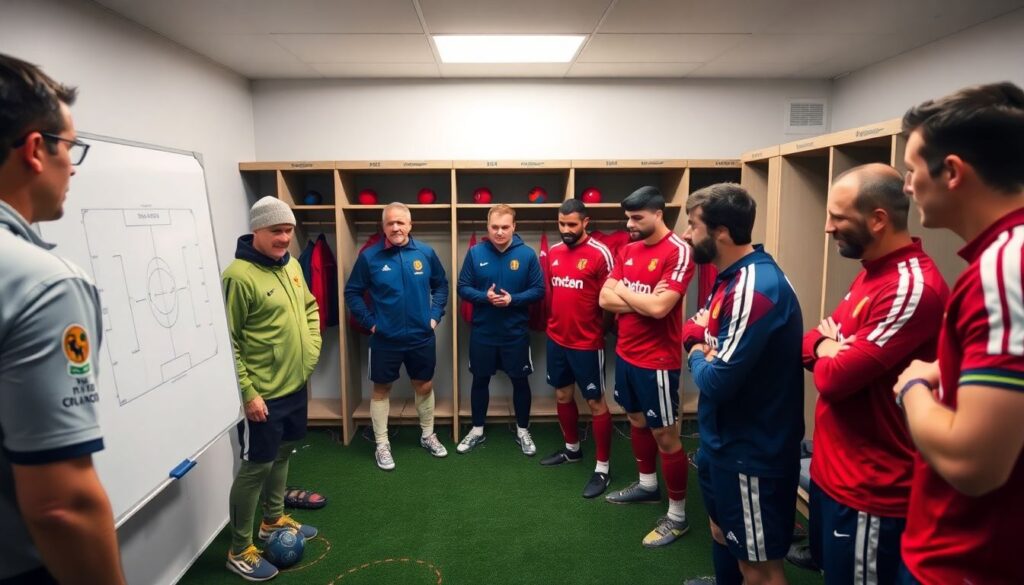
Before the detailed steps, align staff and players with a short preparation checklist so the process remains safe, clear and repeatable.
- Define your default block (high press, mid‑block, or flexible) for the current squad.
- Print or share a simple diagram of your 4‑3‑3 or 4‑2‑3‑1 pressing shape.
- Assign one communication leader per line: striker, central midfielder, centre‑back.
- Agree on maximum distance between lines and between centre‑backs.
- Prepare 2-3 short video clips per line showing correct pressing behaviour.
- Clarify the front line’s first responsibility
Explain that the front line’s main job is to steer play, not just chase. The central striker blocks the pivot or one centre‑back, while wingers set pressing angles to force the ball into a pre‑agreed side.- Drill: 6v3 or 7v3 build‑up vs. press, where the three forwards score by forcing a pass into a wide “trap” zone.
- KPI: the ball is played into your chosen side at least half the time during the drill.
- Define midfield compactness and cover shadows
Your midfielders must protect the central lane and passing lines into the pockets. The closest midfielder presses forward on the trigger, while the others cover behind and inside.- Drill: 4v3 in central channel, with three midfielders working to block vertical passes while stepping out on backward or sideways passes.
- KPI: few or no direct passes are allowed through central lanes during each repetition.
- Set rules for the back line’s height and aggression
The defensive line should hold a high position to compress space as the front and midfield lines step up. Centre‑backs communicate and move as a unit, avoiding unnecessary dropping.- Drill: 6v4 plus goalkeeper, where the back four must hold a marked offside line while reacting to long balls behind.
- KPI: the back line moves forward together after every cleared ball or regained possession.
- Synchronise lateral shifting between all three lines
When the ball is forced wide, all lines shift together towards the strong side while maintaining access to the far side if the ball is switched. Distances between players should remain short enough to press aggressively without fouling.- Drill: 8v8 on three vertical lanes, scoring only allowed from the wide lanes to promote shifting and trapping.
- KPI: no more than one opponent is left completely free on the far side during shifts.
- Teach clear exit and reset commands
Not every pressing attempt will succeed; you need a safe reset. Decide phrases such as “drop”, “mid”, or “lock” and train players to fall back to the next block quickly when the ball escapes pressure.- Drill: 9v9 transition game where the coach calls “reset” when the pressing team loses access; team must recover a compact mid‑block shape within a few seconds.
- KPI: entire team returns behind the ball and restores spacing on command without confusion.
- Integrate goalkeeper as the eleventh presser
The goalkeeper must hold an advanced starting position to deal with balls in behind and support circulation when you regain possession. This lets the back line stay high without risking large gaps.- Drill: 7v6 plus keeper, focusing on through balls and sweeper‑keeper actions, then immediate distribution to start counters.
- KPI: goalkeeper intervenes early on long balls, reducing one‑v‑one situations.
Compactness and Angles: Spatial Principles for Effective Pressure
Use this checklist to verify whether your pressing structure is functioning like a top side’s model and to keep your players safe from excessive chasing and fatigue.
- Vertical distances between lines remain short enough that one pass seldom beats two lines at once.
- Horizontal distances between teammates allow for cover and support, with no large gaps for opponents to run through.
- Pressing players approach at angles that block inside passes and show the ball into pre‑defined traps.
- Cover players stand close enough to press immediately if the first presser is beaten.
- The nearest three to four players always react together to triggers, instead of single players jumping out alone.
- Defensive line moves forward whenever the ball travels backwards or sideways for the opponent.
- Your team rarely needs emergency recovery sprints of maximum length during training games.
- In match clips, the team shape looks compact and connected, similar to images from high‑level galatasaray tactical analysis 2024 breakdowns.
- Players can verbally explain where to force the ball and who covers behind them.
Transition Scenarios: Recovering Structure After Ball Loss

Even well‑drilled pressing teams suffer if they handle transitions poorly. Watch out for these frequent mistakes and address them in your design.
- Only the ball‑loser reacts, while teammates stop, creating easy counters for the opponent.
- Multiple players sprint straight towards the ball without controlling central spaces or passing lanes.
- The back line drops too deep, opening a large gap between defenders and midfield.
- Wide players stay high and disconnected after losing the ball, leaving full‑backs exposed.
- Midfielders chase back in straight lines instead of recovering into central “goal‑protecting” areas.
- Team keeps pressing aggressively even when clearly outnumbered around the ball.
- No clear rule exists for who stops the counter with a tactical foul when safe and allowed by the referee.
- After failed counter‑pressing, players walk back instead of sprinting into a compact re‑block shape.
- Coaches design drills without clear transition phases, so players never rehearse realistic reactions.
Opposition-Specific Adjustments: Scouting Insights to Training Tasks
Once your base model is stable, you can safely adapt it to different opponents without confusing players. Here are structured variants and when to use them.
- High pressing vs. slow build‑up teams – Push your line higher and commit more players to the first wave against sides that build from the back slowly. Use midweek sessions to rehearse pressing the goalkeeper and centre‑backs, mirroring patterns you see through your galatasaray match analysis subscription.
- Mid‑block pressing vs. direct or highly technical teams – Against long‑ball or very technical opponents, wait in a compact mid‑block and press mainly on second balls and wide traps. Adjust drills to start with long passes and fight for knockdowns instead of pure short build‑up.
- Asymmetric press vs. strong playmaker zones – When an opponent relies on one side or one playmaker, overload that side with extra coverage while leaving the weak side slightly freer. Train this by locking one channel and forcing all build‑up into your overloaded zone.
- Conservative press during congested fixture periods – If your squad is tired or recovering, lower the total pressing volume but keep clear triggers. Short, high‑quality blocks of pressing inside medium‑intensity games protect players while maintaining habits you have studied in every galatasaray pressing tactics analysis you consume or in an advanced football coaching tactics book.
Continually refine these variants by comparing your games with online breakdowns and content from any football pressing tactics course online you follow, adapting principles rather than copying shapes blindly.
Typical Implementation Pitfalls and Practical Remedies
How many pressing triggers should I introduce at the start?
Begin with two or three main triggers that are easy to identify and rehearse them until reactions are automatic. Add extra triggers only when players consistently recognise and execute the first set in both training and matches.
How do I adapt this pressing model for youth or lower fitness levels?
Use smaller areas, shorter work periods and longer rests, and favour a compact mid‑block over constant high pressing. Focus on distances, angles and basic transitions rather than maximum intensity to keep the process safe and understandable.
What is the best way to use video with players for pressing improvement?
Select a few short clips from your own games and from high‑level references like galatasaray tactical analysis 2024 breakdowns. Show only one focus per clip, such as line distances or first pressing angles, and then repeat the same scenario in the next training drill.
How can I measure if our pressing sessions are working?
Track simple KPIs: how often you win the ball in the attacking or middle third, how many passes the opponent plays before you regain possession, and how many clear counter‑attacks you concede. Review these after each cycle of training weeks.
What should I do if individual players keep breaking shape to press alone?
Freeze play in training, show them the gaps left behind and explain their role in the larger structure. Use constrained games where players can only press after a verbal cue or a specific trigger, building their discipline and timing.
How do I protect my team from fatigue with an intense pressing style?
Limit total high‑intensity minutes per session, rotate players through roles, and schedule lighter, more tactical days after heavy pressing work. Monitor body language and execution quality; when pressing becomes disorganised, reduce load rather than forcing more volume.
Is it necessary to copy Galatasaray’s exact formation to press like them?
No, the principles of compactness, triggers and role clarity matter more than the exact shape. Translate those principles into your preferred formation, adjusting roles to suit your players’ strengths and communication habits.