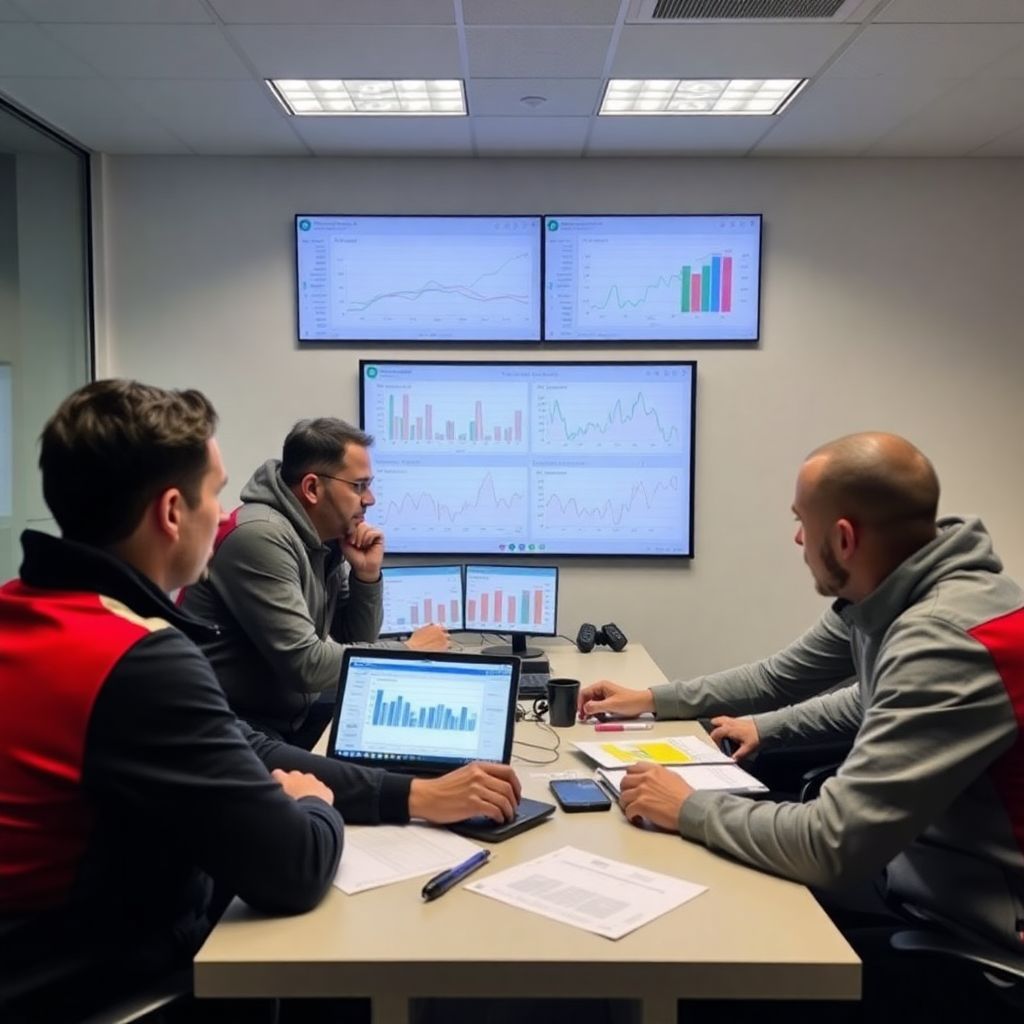
For Turkish clubs, the best choice is rarely pure intuition or pure data. The most effective model is a lightweight analytics setup that supports, not replaces, experienced coaches and scouts. Start with cheap, flexible tools and essential metrics, then scale toward deeper models only when decisions and budgets clearly demand it.
Concise findings for coaching and management
- Use intuition for context, motivation and “fit”; use analytics for repeatable, high‑stakes decisions such as transfers and set‑pieces.
- Begin with simple spreadsheets and free data, then grow into structured football data analysis software Turkey can support locally.
- For most Süper Lig clubs, a hybrid model (1-2 analysts + data‑literate scouts) delivers the best value.
- Data analytics in Turkish Super Lig should focus first on set‑pieces, recruitment filters and injury risk, not fancy xG dashboards.
- Regional vendors and sports analytics consulting Turkey football specialists are often more affordable than big international brands.
- Measure impact via clear KPIs (points, wage efficiency, resale value) to avoid investing in good‑looking but useless reports.
The evolution of decision-making in Turkish football: intuition to analytics
Decision‑making in Turkish football is shifting from purely experience‑based to evidence‑supported. To choose the right balance for your club, evaluate these criteria instead of chasing buzzwords.
- Budget and sustainability – How much can you invest each season without cutting squad quality or medical care? Cheap systems that survive crises are better than premium tools cancelled after one year.
- Decision types – Are your biggest mistakes in transfers, tactics, fitness, or academy promotion? Prioritise analytics where errors are frequent and expensive.
- Data availability – For which competitions and age groups can you realistically buy football performance data Turkey providers can deliver consistently?
- Staff skills – Do coaches and scouts understand basic stats and video workflows? If not, choose visual, low‑complexity tools and plan training.
- Club culture – Is the head coach open to numbers, or will dashboards stay unread? The “best” system is useless without buy‑in from the technical staff.
- Time pressure – For a relegation battle, you need quick, simple analytics (set‑pieces, opponent tendencies). Long‑term models pay off more in stable clubs.
- Integration with existing tools – Can new platforms connect with your video system, GPS and medical records, or will analysts copy‑paste all day?
- Local language and support – Turkish‑language interfaces and support teams reduce friction and training time, especially for older coaches.
- Transparency of models – Prefer methods where coaches can understand what metrics mean and why a player rates highly, instead of mysterious black box scores.
The practical question is not “data or intuition”, but “for which decisions do we trust data more, and where does human insight stay primary?” The comparison below helps structure this.
| Aspect | Primarily intuition‑driven | Primarily data‑driven |
|---|---|---|
| Use cases | Motivation, dressing room dynamics, leadership, cultural fit at a Turkish club. | Shot quality, pressing intensity, age curves, injury risk, set‑piece routines. |
| Strengths | Fast, flexible, uses local context and personality knowledge. | Objective, consistent across players and seasons, easy to audit and compare. |
| Weaknesses | Biased by recency, emotions, politics, media pressure. | Misses dressing‑room issues, family situations, and tactical roles not captured by data. |
| Typical mistakes | Overrating “big club experience”, one good game, or famous agents. | Over‑trusting small samples, ignoring style differences between Turkish and foreign leagues. |
| Best balance | Use data to filter and rank options; use intuition and live scouting to make the final choice among shortlisted players or tactical plans. | |
Low-budget analytics: affordable tools and data sources for Süper Lig and below
Clubs in Turkey often assume analytics requires expensive European providers. In reality, you can build a strong base with local and global low‑cost options, combining Turkish football analytics services with generic tools.
| Variant | Best for | Pros | Cons | When to choose |
|---|---|---|---|---|
| Spreadsheets + free public data | Amateur, academy, lower professional leagues with almost zero budget. | Almost free, flexible, easy to learn; good for basic shot maps, minutes, and simple xG approximations. | Manual work, limited depth; quality and coverage of free data can vary for Turkish competitions. | Use as a starting point if you have an analyst or coach comfortable with Excel/Google Sheets and time to build simple dashboards. |
| Low-cost global data platforms | Süper Lig and 1. Lig clubs needing structured event data and video integration. | Ready‑made dashboards, stable data feeds, tactical views; often integrate easily with video and GPS. | Subscription fees, may lack Turkish language or specific local competitions. | Choose when you want reliable data analytics in Turkish Super Lig matches and can assign at least one staff member to use the platform regularly. |
| Local Turkish football analytics services | Clubs prioritising Turkish language, local competitions and customised reports. | Context‑aware metrics, local support, easier communication with coaches; often cheaper than big international brands. | Sometimes smaller feature set; long‑term continuity can depend on a small team. | Ideal if you need detailed reports on TFF 1. Lig, 2. Lig and youth leagues, plus custom opposition analysis in Turkish. |
| Freelance or part-time analyst | Clubs testing analytics without committing to a full department. | Flexible costs, can combine multiple tools; good bridge between coaches and raw data from any provider. | Dependence on one person; risk if they leave mid‑season; requires clear scope and deliverables. | Use when you are unsure about long‑term budget but want to experiment with reports and workflows for half a season. |
| Full in-house analytics department | Ambitious Süper Lig clubs aiming for European competitions and consistent recruitment models. | Maximum control, tailored metrics, strong integration across medical, scouting and coaching. | Highest fixed cost; requires strong leadership to align with coaching philosophy. | Choose only when you already use external data efficiently and the board commits to multi‑year support for analysts. |
Regardless of variant, ensure the core platforms function as practical football data analysis software Turkey‑based staff can actually operate: Turkish menu options, video tagging, mobile access, and exports to familiar formats.
Combining scout intuition with statistical player profiles
The aim is not to replace scouts, but to give them better questions. Use the following “if… then…” scenarios to align budgets, data depth and human judgement.
- If you have a very small budget, then:
- Use public data to pre‑filter by age, minutes, basic productivity (goals, assists, defensive actions).
- Send scouts only to watch shortlisted players live or on video, focusing on mentality, communication, and adaptation to Turkish tempo.
- If you can afford basic paid data but not a full analytics team, then:
- Buy football performance data Turkey providers offer for your main leagues and create simple statistical player profiles by position.
- Ask scouts to confirm or challenge those profiles (for example, “data says strong presser, do you see the same in matches?”).
- If your goal is to reduce transfer mistakes on foreign players, then:
- Use models that adjust stats for league strength and playing style before comparing players to Süper Lig benchmarks.
- Let scouts focus on off‑ball behaviour, professionalism, family situation, and willingness to adapt to Turkey.
- If coach and head scout strongly disagree about a player, then:
- Review the full statistical profile and video clips together: where does the player rank vs current squad and league peers?
- Define a small “trial” experiment (short contract, loan with option) if numbers are good but trust is low.
- If you can invest in a more premium setup, then:
- Combine advanced models (xG, xThreat, possession value) with structured live scouting reports in a shared platform.
- Use sports analytics consulting Turkey football specialists to audit your recruitment hits and misses every season.
- If you want to promote more academy players, then:
- Track youth metrics over time (involvement in dangerous actions, physical outputs) and compare with first‑team benchmarks.
- Let academy coaches and scouts discuss which data “overachievers” deserve earlier first‑team minutes.
Tactical preparation: using match data, video tagging and set-piece models
Match preparation benefits quickly from a simple, repeatable process that any mid‑level club can run.
- Define 3-5 tactical questions for each opponent (pressing triggers, build‑up zones, set‑piece patterns, transitions).
- Using your main platform or simple tools, tag the last 3-5 games for these moments: corners, free‑kicks, goal‑kicks, high press, counters.
- Extract basic numbers: where do they concede most shots, which players take set‑pieces, how often they play short or long?
- Create short video playlists: 8-12 clips for each key theme, plus one compilation per set‑piece type (attacking and defending).
- Design 2-3 match plans based on evidence (for example, “target far‑post corners vs their zone marking”, “press left centre‑back who is weaker on ball”).
- Present a concise session to players: simple language, no more than 15-20 minutes of clips, clear individual tasks per line.
- After the match, review what worked vs the data predictions and adjust tagging categories for future matches.
Implementing analytics on a shoestring: staffing, workflows and change management
Budget‑constrained Turkish clubs often waste money not because tools are bad, but because implementation is poor. Avoid these common mistakes when choosing your path.
- Buying platforms without a designated owner – If no one is clearly responsible for usage, the system will sit idle after initial enthusiasm.
- Overcomplicating from day one – Starting with ten dashboards, ten KPIs and custom models confuses coaches; begin small and add complexity later.
- Ignoring coach education – Assuming the head coach will “figure it out” creates resistance; plan short, regular sessions to build trust in numbers.
- Separating analysts from the pitch – Locking analysts in an office breaks communication; they must attend training, be in pre‑match meetings and speak the football language.
- No integration with scouting – Data and video teams working separately from scouts leads to contradictory reports and power struggles.
- Chasing fashionable metrics only – Focusing on complex expected metrics while ignoring basics like set‑pieces, shot locations and fitness minutes wastes effort.
- Underestimating data cleaning – Wrong player IDs, missing minutes and inconsistent positions make conclusions unreliable and hurt credibility.
- Not planning for staff turnover – When a single analyst leaves, knowledge disappears; document definitions, templates and workflows from the beginning.
- Short-termism from the board – Canceling subscriptions after one bad season prevents learning; analytics ROI appears over multiple windows, not one month.
- Zero link to contracts and incentives – If recruitment and coaching bonuses ignore agreed KPIs, people will not care about the analytics results.
Evaluating impact: KPIs, A/B testing and avoiding misleading correlations
For Turkish clubs, the most sensible mix is: basic data tools plus one analyst for lower budgets, and a hybrid in‑house/consulting model for ambitious Süper Lig teams. Data should decide filters and trends; intuition should decide final selections, leadership calls and dressing‑room management.
Common practical questions from coaches and analysts
How much data do we need before analytics are useful?
You can start with last season’s matches, basic event data and clear definitions for 5-10 metrics. Consistency matters more than volume; evaluate trends across at least half a season before changing big tactical principles.
Which decisions in Turkish football benefit most from analytics first?
Recruitment shortlisting, set‑piece design and workload management usually show impact fastest. These areas combine high influence on results with relatively simple data structures, even for clubs with limited budgets and staff.
Are Turkish football analytics services better than global tools?

Neither is always better. Local providers often understand league context, language and schedule, while global platforms can offer broader coverage and stability. Many clubs combine a local partner for reports with an international data feed.
How can a traditional coach learn to trust data?

Start with small, concrete examples: for instance, show how targeted set‑piece changes increased shot quality. Avoid abstract models and instead connect metrics directly to match clips and training drills.
What is a realistic first hire: analyst or data provider?
For most clubs, hiring or assigning an analyst who can extract value from existing video and simple data is better than buying the most expensive platform. Once workflows exist, upgrade to richer data sources.
Can analytics help in academy and youth decisions?
Yes, but focus on trends, not labels. Track match involvement, physical outputs and development over time, and compare to successful graduates. Use numbers to support, not replace, coach judgement on mentality and learning speed.
How do we avoid being misled by correlations?
Always ask whether a metric logically connects to performance in your context, and test changes in controlled ways. For example, adjust only one tactical element at a time and monitor results over several matches before drawing conclusions.