
The New Wave of Women’s Football: Why Turkey and Europe Matter Right Now
Women’s football in Turkey and across Europe is no longer a niche. It’s a fast‑growing sports market, a cultural shift, and, frankly, one of the most exciting things happening in football today. Stadiums are filling up, broadcasters fight for rights, brands line up for sponsorships, and girls finally see professional paths that didn’t exist 10–15 years ago.
And in the middle of this boom, Turkey is moving from “late starter” to “sleeping giant,” while the rest of Europe sets new standards in visibility, money and player development. Let’s break it down по‑простому: что уже происходит, где узкие места и как не запороть старт, если вы — начинающая футболистка или тренер.
Where We Are Now: Numbers, Popularity and Momentum
Europe: From Side Pitch to Main Stage
Over the last decade, women’s football in Europe has exploded in attendance and viewership.
– The UEFA Women’s Euro 2022 in England drew over 570,000 fans in stadiums and more than 365 million TV and digital viewers worldwide, according to UEFA.
– The final at Wembley had around 87,000 spectators – a record for any European Championship match, men’s or women’s.
Those numbers directly affect demand for women’s football tickets europe: fans travel, plan holidays around matches, and look for club and national team games months ahead. For the upcoming tournament cycle, interest in women’s euro 2025 tickets is already visible in search trends and early pre‑registration campaigns.
Domestic leagues follow the same curve. England’s WSL, Spain’s Liga F, Germany’s Frauen‑Bundesliga and France’s D1 Arkema show steady increases in matchday attendance and TV audiences. Clubs like Barcelona Femení and Olympique Lyonnais Féminin have become global brands, not just women’s “sections” of big clubs.
Turkey: Catching Up Fast
Turkey started later but is moving quickly. The Turkish Women’s Super League was restructured and rebranded in the early 2020s. Big clubs like Galatasaray, Fenerbahçe, Beşiktaş and Trabzonspor now invest in women’s squads, and that changes everything: media attention, training conditions, and youth interest.
The Turkish national team isn’t yet a European powerhouse, but youth participation is rising year by year. Local federations and municipalities launch school programs, and we see more regional tournaments. It’s not Germany or Spain yet, but the trajectory is clearly upward.
Money on the Pitch: Economic Aspects and Why Brands Care
Broadcasting, Streaming and New Revenue Streams
The most visible shift: women’s football stops being “bonus content” and becomes a product in its own right.
– Broadcasters buy separate rights packages for women’s leagues.
– Platforms fight for exclusive turkish women’s football league streaming, seeing it as a relatively cheap way to attract young and female audiences.
– Sponsorship deals are increasingly tailored specifically to women’s teams, not just copy‑pasted from the men’s side.
In Western Europe, media rights values are still modest compared to men’s football, but they’re growing at double‑digit percentages per cycle. Women’s Champions League broadcasting revamp with centralized rights and global streaming options shows where the market is going.
Short paragraph: where money goes, structure follows. More cash means better pitches, medical staff, analytics, and youth programs. That infrastructure is what turns a “trendy project” into a sustainable ecosystem.
Merch, Tickets and the Business of Fandom
Fans don’t just watch — they buy. Clubs report steady growth in sales when they start to properly market women’s teams. Once people can easily buy women’s football jerseys europe wide — with player names, limited editions and national‑team designs — the revenue per fan jumps.
Ticket prices for women’s games are still generally lower than men’s, which is both a challenge and an opportunity. On the one hand, matchday income is smaller. On the other hand, it makes women’s football the most affordable entry point to live top‑level football for families, students and new fans. For many, the first ever stadium experience is a women’s match — and they tend to come back.
Turkey vs. the Rest of Europe: Different Stages, Similar Battles
Infrastructure, Culture and Support
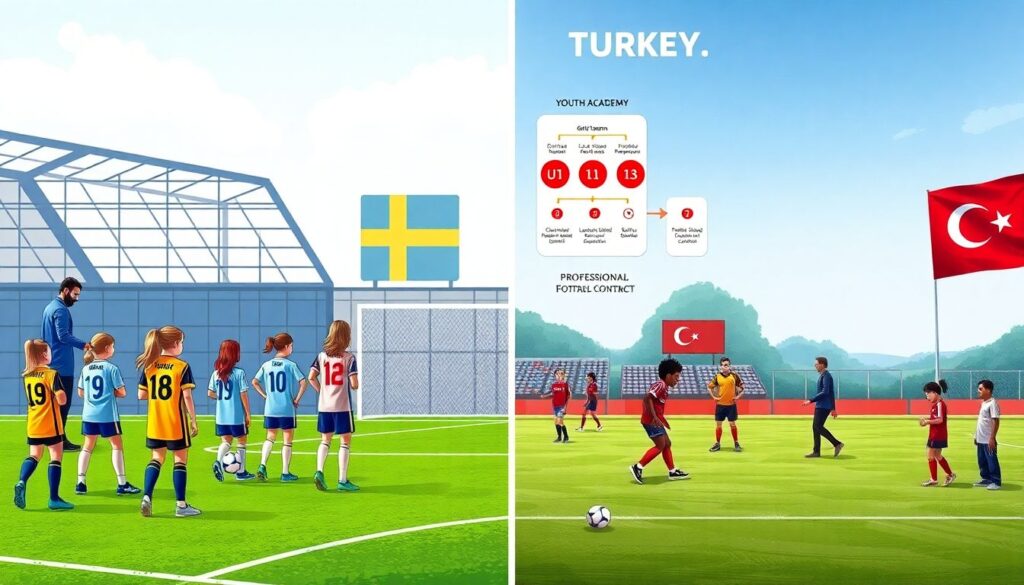
In Northern and Western Europe, girls football academies in europe are already part of the ecosystem: U9, U11, U13 teams, licensed coaches, scouting networks. A girl in Sweden or Germany can play from age 6 and know exactly which steps lead to a professional contract.
In Turkey, the map is more patchy. Big‑city clubs increasingly open youth sections for girls, and some private academies push hard, but many regions still lack proper leagues, qualified coaches and safe training conditions for girls. Culturally, families may also be more cautious about letting girls pursue football seriously, especially outside big urban centers.
However, once top Turkish clubs put real weight behind women’s projects, we usually see a “copy effect”: smaller clubs follow, municipalities support pitches and tournaments, and media starts paying attention. That’s already happening, just not evenly across the country.
Competitive Level and Talent Export
European leagues like the WSL or Liga F are magnets for global talent; top players from the US, Brazil, Australia and Japan go there to compete at the highest level. Turkey, for now, is more a “stepping stone” league: a place where regional talents can go professional, gain visibility, and then maybe move on to top‑five leagues.
That’s not a bad thing. Many European men’s leagues grew exactly that way: first as export hubs, later as destinations. If Turkey continues to improve the league level, facilities and scouting, we’ll likely see more Turkish players making it to clubs in England, Spain and Germany — and then bringing that quality and experience back to the national team.
Future Stars: Who’s Coming Next?
The European Talent Pipeline
In Europe, the future stars of women’s football are already training 4–5 times a week in professional environments at age 14–16. Programs linked to big clubs (Barcelona, Lyon, Chelsea, Wolfsburg, Arsenal, etc.) create clear development paths:
1. Local grassroots and school football.
2. Regional development centers or certified girls’ academies.
3. Youth teams of professional clubs.
4. Reserve / B‑teams in semi‑pro leagues.
5. First‑team contracts in top divisions.
The result? By 18–19, some players already have 50+ senior appearances and continental competition experience. That’s why we see teenagers starring at Euro and World Cup tournaments.
Short but key point: the next big European names are probably already on Talent ID lists; they’re just not famous yet.
Turkey’s Next Generation
In Turkey, the talent pool is more uneven, but there are clear signs of a wave building. More girls enter regional and school championships; scouting networks slowly expand; and mixed‑gender teams at younger ages help talented girls get more intense match experience.
We’ll likely see:
– More dual‑nationality players (Turkish roots, raised in Germany, the Netherlands, etc.) choosing to play for Turkey.
– A few standout teenagers from Istanbul, Ankara and Izmir academies moving to mid‑tier European clubs.
– Growth in U17 and U19 national‑team performance as domestic competitions improve.
If the federation and clubs stay consistent for the next 5–8 years, Turkey could become a regular participant at major tournaments, not just an outsider hoping for a miracle qualification.
Common Beginner Mistakes in Women’s Football (And How to Avoid Them)
1. Treating Women’s Football Like “Just Slower Men’s Football”
This is a classic mistake for coaches, parents and sometimes players themselves. Women’s matches often feature:
– Slightly different rhythm and physical profile.
– More compact defending due to less explosive speed in depth.
– Greater importance of technical precision and decision‑making.
Trying to copy‑paste men’s tactics, training load and communication rarely works. Good coaches adapt: they focus more on first touch, body orientation, short combinations, and game intelligence, not just “run faster and press higher.”
2. Ignoring Physical Preparation and Injury Prevention
A lot of beginners — especially teenage girls who join clubs late — underestimate strength and conditioning.
Frequent issues:
– Weak core and hip muscles.
– Poor landing mechanics when jumping.
– No structured warm‑up and cooldown.
This increases ACL and ankle injury risk, which is already higher in women. A simple fix: introduce regular strength sessions (bodyweight at first is fine), proper warm‑ups (like FIFA 11+), and basic mobility work. It’s not about “bulking up”; it’s about making sure knees and ankles survive the season.
3. Overtraining Without Recovery
Ambitious newcomers often want to “catch up” and load everything at once: school team, club training, private sessions, weekend tournaments. Sounds heroic, but the body and mind burn out fast.
Watch for:
– Chronic fatigue, bad sleep, constant soreness.
– Irritability and loss of motivation.
– Frequent minor injuries.
The smart approach: 1–2 rest days per week, honest communication with coaches about total workload, and a season plan that cycles intensity (hard weeks vs lighter ones).
4. Forgetting the Basics: First Touch and Scanning
Many beginners rush into advanced tricks and shooting drills, skipping the fundamentals. On the pitch, the most common beginner mistakes are:
1. Receiving the ball with the wrong foot, turning into pressure.
2. Not scanning (lifting the head) before the ball arrives.
3. Taking too many touches and losing the ball easily.
4. Panicking under pressure and clearing the ball blindly.
5. Standing flat‑footed instead of staying light and ready to move.
If you fix just two things — first touch and scanning — your game level jumps immediately. Watch top women’s players: they constantly look around before receiving and already know their next move before the ball arrives.
5. Underestimating Mental Side and Confidence
Girls often face extra social pressure: “Football is not for girls”, “You started too late”, “You’ll never go pro.” Over time, that eats away at confidence. Common mental mistakes:
– Playing “too safe,” avoiding risk and forward passes.
– Judging yourself harshly after one bad game.
– Comparing your level to pros instead of your own progress.
Practical fix: track your own small wins (better fitness test, fewer bad touches, more duels won), work with coaches who know how to build confidence, and consciously separate your self‑worth from one match result.
6. Poor Career Navigation
As women’s football grows, more options appear: foreign academies, scholarships, multiple league levels. Beginners and their families often:
– Choose offers based only on “big club names,” ignoring playing time and coaching quality.
– Move abroad too early without language or support structure.
– Ignore education and future plans, banking on a pro career that may not materialize.
Smart path: aim for environments where you actually play, develop and feel safe. Sometimes a mid‑table club with a great coach beats a superclub where you sit on the bench.
How the Boom Changes the Football Industry
New Careers, Not Just New Matches
The rise of women’s football in Turkey and Europe opens jobs far beyond the pitch:
– Analysts and data scientists specializing in the women’s game.
– Journalists and content creators covering women’s leagues with proper depth.
– Agents and lawyers who actually understand the specifics of women’s contracts and maternity clauses.
– Coaches, physios and psychologists with gender‑specific expertise.
Short note: a teenager following women’s football today might become not a pro player, but a club analyst, marketing lead, or academy director in 10–15 years — still shaping the game.
Commercial and Cultural Impact
From an industry point of view, women’s football is a growth market in a sports world where many other segments are saturated. It attracts:
– New audiences: more female fans, families with kids, fans who dislike the hyper‑commercial vibe of some men’s competitions.
– New sponsors: brands that want to be associated with equality, health and empowerment, not just raw business.
As more people attend games, buy jerseys, travel for tournaments and follow turkish women’s football league streaming or big European clashes, local economies feel it too — from transport and hotels to sports bars and grassroots clubs.
What’s Next: Forecasts for Turkey and Europe
Europe in the Next 5–10 Years
Most analysts expect:
– Continued double‑digit growth in sponsorship and media rights for top women’s leagues.
– Regular use of big stadiums for derby matches and key fixtures.
– A more competitive club landscape, with more teams capable of challenging Lyon and Barcelona at Champions League level.
– Closer integration between women’s and men’s club operations, sharing facilities, analytics and commercial teams, but maintaining separate brand identities.
Looking ahead to major tournaments, demand for women’s euro 2025 tickets and similar events will likely break new records. If organizers keep ticket prices accessible while improving fan experience, women’s football becomes many people’s “default choice” for live international football.
Turkey in the Next Decade
For Turkey, the next 10 years are about catching the wave without losing balance:
– Strengthen youth leagues and school competitions for girls, especially outside major cities.
– Invest in coach education focused on women’s football.
– Build stable club structures so that women’s teams don’t depend solely on one president’s enthusiasm.
If those pieces fall into place, realistic goals are:
– Regular participation in Euro finals tournaments.
– Export of 10–20 players to top European leagues.
– Turkish clubs occasionally reaching later rounds of the Women’s Champions League.
And, crucially, a cultural shift where seeing girls playing football in parks, schools and local clubs is completely ordinary, not “unusual.”
Final Thoughts: How to Grow With the Game
Women’s football in Turkey and Europe is at a rare intersection: cultural change, commercial opportunity and genuine sporting quality all rising together. Fans plan trips around matches, browse women’s football tickets europe platforms, and proudly buy women’s football jerseys europe to support new idols. Broadcasters keep adding women’s matches to prime‑time slots. Little girls and late‑starting teenagers finally see pathways, not just barriers.
If you’re a beginner player, focus on smart habits and avoid the classic mistakes: respect physical prep, obsess over basics, protect recovery, and build mental resilience. If you’re a coach or parent, adapt your expectations to the specific realities of the women’s game instead of treating it as an afterthought.
The wave is already here. Those who learn fast — on the pitch and off it — will ride it, not chase it.