
The Süper Lig produces many elite wingers because Turkish football culture, street-style play, and club tactics all reward 1v1 skill, creativity, and aggressive wide attacks. This ecosystem shapes player profiles early, but also has limits: defensive habits, off‑ball discipline, and adaptation to more structured European systems can lag behind.
Core Tactical Conclusions
- The Süper Lig is not only a seller of stars; it is a specific development environment that amplifies winger strengths and hides some weaknesses.
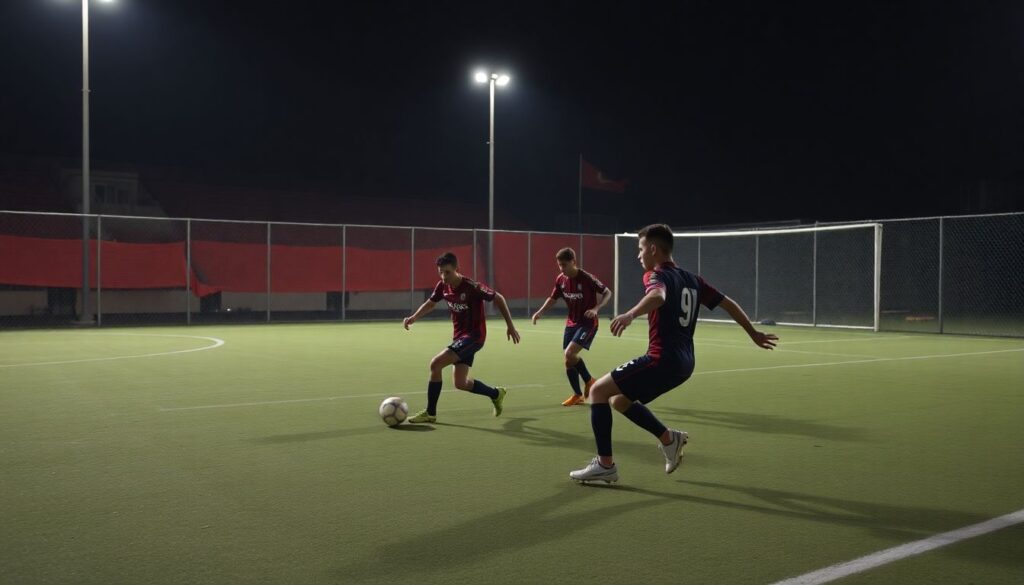
- Historical street and cage football in Turkey hardwires dribbling, improvisation, and 1v1 dominance in wide areas.
- Many coaches intentionally build systems and game models that funnel attacks through the wings instead of central overloads.
- Market demand and transfer income push clubs to prioritise recruiting and showcasing wingers over other positions.
- For scouts, any Turkish Super Lig wingers analysis must separate system-driven output from truly transferable qualities.
- Safe evaluation requires stress-testing Turkish wingers in data, video, and live games against compact, tactically disciplined opponents.
Debunking Myths: Why the Süper Lig Isn’t Just a Talent Export
A common myth is that the Süper Lig simply happens to produce the best wingers in Turkish Super Lig history because clubs buy ready-made flair players from abroad and flip them for profit. This view misses how deeply winger-friendly the local football culture and tactical environment really are.
Another misconception is that Turkish wide players are “luxury attackers” whose numbers are inflated by chaotic games and weak defending. While match rhythm can indeed be open, a serious tactical analysis of Super Lig attacking wingers shows that many are constantly solving complex problems: attacking set blocks, receiving under pressure, and creating on limited time.
It is also misleading to say that why Turkish league produces elite wingers can be reduced to individual talent alone. The answer is structural: training habits, street football, selection biases in academies, and market incentives all work in the same direction. Wide attackers are given more freedom, touches, and margin for error than other roles.
For coaches and scouts, the safe way to approach any Super Lig talent scouting report wingers wise is to see the league as a specialised development lab. It amplifies dribbling, 1v1 creation, and transition threat, but it may undertrain defensive organisation, pressing triggers, and compact-block behaviour. Your task is to filter signal from league-specific noise.
Historical and Cultural Roots of Wide Play in Turkey
Turkish football’s winger culture starts long before professional academies. These roots explain why so many wide players from the Süper Lig fit the “high-skill, high-chaos” archetype that later fascinates European clubs.
- Street and cage football: Informal games on tight concrete pitches encourage flair, nutmegs, and 1v1 beating, especially near touchlines where defenders naturally “show” attackers outside.
- Fan expectations of flair: Crowds in Turkey strongly reward risk-taking and dribbles. A winger who beats a man may be cheered louder than a conservative but effective pass.
- Historic club heroes on the wings: Many clubs idolise past wide players as symbols of the badge, reinforcing the idea that becoming an elite winger is the most glamorous career path.
- Media narratives: Local media highlights highlight-reel plays from wide areas more than subtle central actions, pushing youngsters to emulate step-overs rather than scanning or positional play.
- Training habits in youth football: Coaches often set up drills that isolate wingers in 1v1 or 1v2 scenarios, valuing dribbling volume and crossing over deeper positional understanding.
- Touchline as a “safe playground”: In many grassroots teams, less disciplined or more creative kids are sent wide where their mistakes supposedly “hurt less” than central turnovers.
Club-Level Coaching Philosophies That Prioritize Wingers
At club level, certain recurring coaching ideas explain the volume of standout wide players fans notice in every Turkish Super Lig wingers analysis.
-
Wing-driven transition attacks
Many coaches prefer rapid counters through wide channels, asking wingers to carry over distance rather than play short combination football in the middle. -
Give the star winger the largest “budget of mistakes”
Tactically, the most talented winger is often allowed to lose the ball more often than others, as long as they keep taking on defenders. This freedom accelerates skill growth but can slow down decision-making maturity. -
Full-back support as a development platform
Some clubs deliberately pair attacking wingers with conservative full-backs who stay deeper. This gives wingers licence to play high and narrow, receiving more entries into the box and cutback chances. -
Set-piece design that highlights wide players
Short-corner routines or wide free-kick schemes are drawn to create 1v1 or 2v2 situations for the winger, giving them additional isolated reps inside the match flow. -
Rotating wingers across flanks
Coaches often switch wingers mid-game to exploit mismatches, building adaptability: many Süper Lig players learn both touchline-hugging and inverted winger roles before moving abroad. -
Protection from defensive duties in key phases
Some game models deliberately exempt the main wide attacker from deep tracking in order to keep them high and ready for counter-attacks, reinforcing an attack-first mindset.
Tactical Systems and Match Models That Create Space for Width
The Süper Lig’s tactical landscape consistently creates large zones for wide attackers to exploit. This is why Turkish league produces elite wingers who are comfortable operating with space and tempo changes near the flanks.
Attacking-system advantages for wide players
- Frequent use of 4-2-3-1 and 4-3-3, with clear wide roles and high starting positions for wingers.
- Number 10s often drift toward the ball side, dragging central midfielders away and isolating the opposite winger 1v1.
- Full-backs underlap or stay in half-spaces, leaving the touchline to the winger and simplifying decision trees: drive inside or attack outside lane.
- Teams accept high-tempo, back-and-forth games, providing more transition moments where wide players can run at retreating defences.
- Pressing schemes sometimes allow opposition full-backs to receive, then spring traps, creating turnovers that immediately feed the winger.
Limitations and risk factors for player evaluation
- Less frequent exposure to slow, positional attacks against very low, organised blocks compared with top European leagues.
- Some wingers are rarely asked to press in synchrony with midfield lines, making their pressing IQ and stamina hard to project.
- Because central build-up is occasionally bypassed, decision-making in tight pockets between lines may be underdeveloped.
- Defensive tracking of opposition full-backs can be inconsistent, masking issues with work rate and concentration.
- Refereeing standards and contact thresholds differ from UEFA competition, which can inflate duel success and foul-winning numbers.
Player Development Pathways: Academies, Informal Play, and Scouting
The pathway from street to Süper Lig shapes a recognisable winger archetype, but also produces blind spots. Understanding both is crucial before writing any Super Lig talent scouting report wingers focused.
Common misconceptions and development traps
- Myth: More dribbles always equal better development
Reality: Endless 1v1s in academy and informal play build confidence but can delay learning when not to dribble. Safe coaching adds rules: one-touch zones, timed releases, and constraints that reward early passing. - Myth: Defensive weakness is only “attitude”
Many Turkish wingers are simply under-coached in pressing detail: angle, cover shadow, and cue recognition. Correcting this requires explicit, repeated video and field work, not just demands to “run more”. - Myth: Crossing equals end-product
Youth teams may overvalue raw crossing volume. Elite environments reframe it toward decision-based wide play: cutback vs low cross vs reset, based on box occupation and second-ball structure. - Myth: If a winger dominates domestically, they will automatically adapt abroad
Transition to more structured leagues reveals gaps in scanning, tempo control, and patience in circulation. Safe planning includes gradual exposure to European competitions and targeted individual plans. - Myth: Physical profile can be fixed late
Leaving sprint mechanics, strength, and deceleration training too late risks limiting top-level upside. Clubs that succeed treat athletic development as early as U15, not as a finishing-school detail.
Market Forces and Physical-Profiling That Favor Wide Attackers
Market behaviour also explains why observers constantly debate the best wingers in Turkish Super Lig every season. Wide attackers are among the few roles where Süper Lig clubs can buy relatively low and sell high.
Many recruitment departments quietly tilt their filters toward winger-friendly traits: acceleration over 5-10 metres, high agility in tight spaces, sharp change of direction, and comfort receiving on the half-turn facing both touchline and goal. This physical-profiling then feeds back into academy preferences, as youth scouts search for similar movement patterns in younger players.
A simple, safe evaluation routine for a Turkish winger prospect could be summarised as a mini “script” for analysts and scouts:
// Pseudo-workflow for assessing a Süper Lig winger
1. Compile 8-10 full matches from different coaches and game states.
2. Tag all wide receptions: static vs on the move, touchline vs half-space.
3. Rate 1v1 attempts by context: transition, set block, crowded box.
4. Review off-ball defensive actions: pressing lane, tracking, compactness.
5. Compare performance when team leads vs chases the game.
6. Cross-check with non-Turkish matches (European cups, national team).
Used carefully, this routine reduces the risk of overrating league-specific strengths or underestimating hidden limitations. It aligns qualitative impressions from any Turkish Super Lig wingers analysis with hard evidence from varied, higher-control contexts.
Questions Coaches and Scouts Ask About Turkish Wingers
How much can Süper Lig winger output be trusted outside Turkey?
It is partially transferable. Ball-carrying, 1v1 ability, and bravery under pressure often scale well. Pressing, defensive discipline, and decision-making in slower, more structured build-up phases need separate, targeted evaluation through additional video and live scouting.
What is the safest way to build a scouting profile for a Turkish winger?
Combine event data, video tags, and at least a few live matches. Focus on repeatable behaviours: movement before receiving, body orientation, pressing habits, and reactions to losing the ball, not only goals and assists.
Are Turkish wingers generally weak defensively, or is that a stereotype?
It is an overgeneralisation. Some are under-coached defensively; others are simply used in systems that prioritise their attacking output. Assess the player in different structures before deciding if the issue is habit, instruction, or genuine limitation.
What should European coaches adjust when integrating a Süper Lig winger?
Expect an adaptation period in tempo control, pressing schemes, and decision-making in compact spaces. Provide clear tactical roles, consistent feedback, and progressive physical conditioning so strengths carry over while weaknesses are addressed.
How important is physical profiling when signing a Turkish wide player?
It is crucial. Many Süper Lig games allow more open running than top European leagues. Check if the player’s acceleration, deceleration, and strength hold up against higher-intensity, more compressed football.
Can Turkish wingers play as inside forwards or secondary strikers?
Often yes, especially those used as inverted wingers domestically. Test them in half-spaces, with back-to-goal actions and combination play, to see whether their decision-making and physical tools translate centrally.
What red flags should scouts look for in highlight-heavy winger clips?
Look for clips with little or no defensive work, only transition actions, and repeated success against the same isolated full-back. Insist on full-match footage that shows movement off the ball, pressing, and behaviour when the team is under pressure.