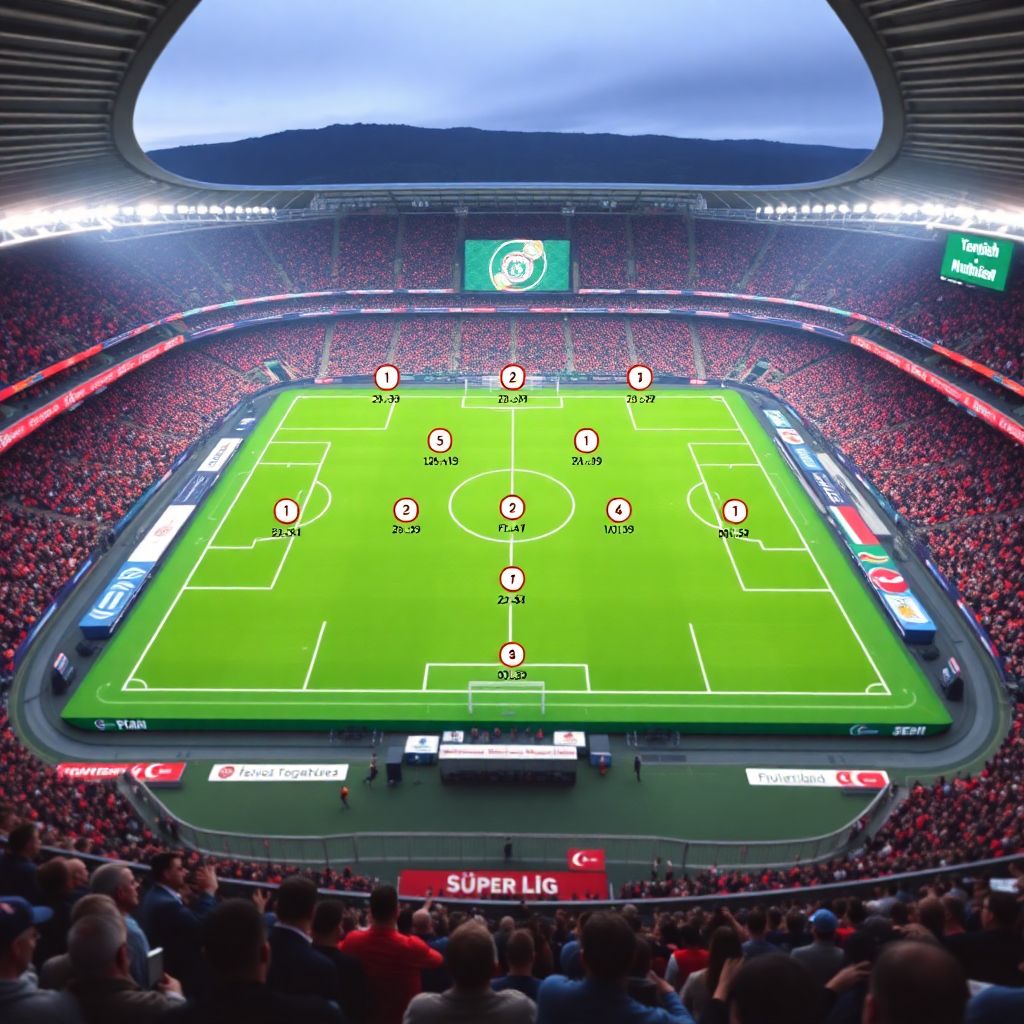
The 4-2-3-1 dominates the Süper Lig because it balances defensive safety with flexible attacking, fits the league’s tempo, and protects teams from chaotic transitions. Two holding midfielders stabilize rest defense, the no.10 links play, and wide players attack full-backs, making it a pragmatic, low-risk shape for Turkish clubs.
Why the 4-2-3-1 Fits the Süper Lig: Core Advantages
- Double pivot gives extra protection against direct counters and transitional chaos common in the Süper Lig.
- Clear roles for a creative no.10 and wide wingers suit locally available player profiles.
- Easy to shift between medium block, high press, and low block without changing formation.
- Simple reference system for full-backs and wingers reduces defensive mistakes in wide areas.
- Supports both possession-based and more direct styles with only minor role tweaks.
- Safe “default” shape for coaches under pressure, aiding Super Lig match predictions 4-2-3-1 formation analysts.
How the 4-2-3-1 Emerged in Turkish Football
The 4-2-3-1 in Turkish football is a four-defender system with two holding midfielders, three advanced midfielders, and one striker. In the Süper Lig it became the dominant structure as clubs searched for a safer alternative to open 4-4-2 or 4-3-3 shapes that were often punished in transition.
As tempo and athleticism increased, coaches needed extra protection for centre-backs without sacrificing a no.10. The double pivot answered this need. Many of the best Super Lig teams using 4-2-3-1 formation built their success on a stable holding pair, a creative playmaker between the lines, and aggressive wingers attacking the last line.
This stability also made the formation attractive for risk-averse boards and media-driven environments. When every dropped point is analyzed to death, the 4-2-3-1 is seen as a “responsible” choice. That is why any serious Super Lig 4-2-3-1 tactics analysis usually starts from its defensive balance, then adds attacking details.
Tactical Anatomy: Defensive Pivot, No.10, and Wide Midfield Duties
-
Double pivot (two holding midfielders)
- Concept: One sits as the deeper screen, the other shuttles to press or support build-up.
- Tactical implication: Protects centre-backs from direct balls and late runs from the half-spaces.
- Practical example: Versus a 4-3-3, the deeper pivot tracks the no.10; the more mobile pivot presses the ball-side 8.
-
No.10 (central attacking midfielder)
- Concept: Plays between opposition midfield and defence, often on the half-turn.
- Tactical implication: Becomes the main outlet after regain; first receiver to calm chaotic transitions.
- Practical example: In home games, coach instructs the 10 to start slightly left to overload the weaker opposition pivot.
-
Wide midfielders / wingers
- Concept: Start high and wide but must track back to form a compact 4-4-1-1 out of possession.
- Tactical implication: Their discipline decides whether 4-2-3-1 is solid or fragile against switches of play.
- Practical example: Weak-side winger tucks in to form a three-v-two in midfield when the ball is on the opposite flank.
-
Full-backs
- Concept: Provide width in build-up, overlap or underlap depending on winger type.
- Tactical implication: Mis-timed overlaps are the main risk; they open channels for counters.
- Practical example: Against a strong countering side, full-backs only cross the halfway line when both pivots are in position.
-
Lone striker
- Concept: Stretches the back line, links with the no.10, and starts the press.
- Tactical implication: If he cannot hold the ball, the team will suffer under pressure regardless of shape.
- Practical example: In away games, more emphasis on channel runs to relieve pressure and win territorial throw-ins.
Mini game situations to turn concept into practice
To move from theory to the pitch, coaches should script specific, repeatable situations. These mini-scenarios reduce risk, give clear reference points, and can be tracked easily with football analysis software for 4-2-3-1 tactics during post-match reviews.
-
Scenario 1: Losing the ball on the wing
- Ball is lost by right winger near opposition box.
- Nearest pivot jumps to the ball; far pivot drops to form a back three with centre-backs.
- Right-back delays, no.10 sprints to mark opposition pivot; left winger tucks into midfield.
-
Scenario 2: Regaining in the central third
- Pivot wins the ball in front of back four.
- Automatic pass to the no.10, who opens to the strong-side winger.
- Striker runs diagonally away from the ball to create a lane for the winger to drive inside.
-
Scenario 3: Defending against a 4-4-2
- Striker covers one centre-back; 10 screens the opposition holding midfielder.
- Pivots stay narrow to block the space between lines.
- Wingers drop to form flat four; triggers for press are backward passes to full-backs.
Exploiting Opponent Traits Typical of the Süper Lig
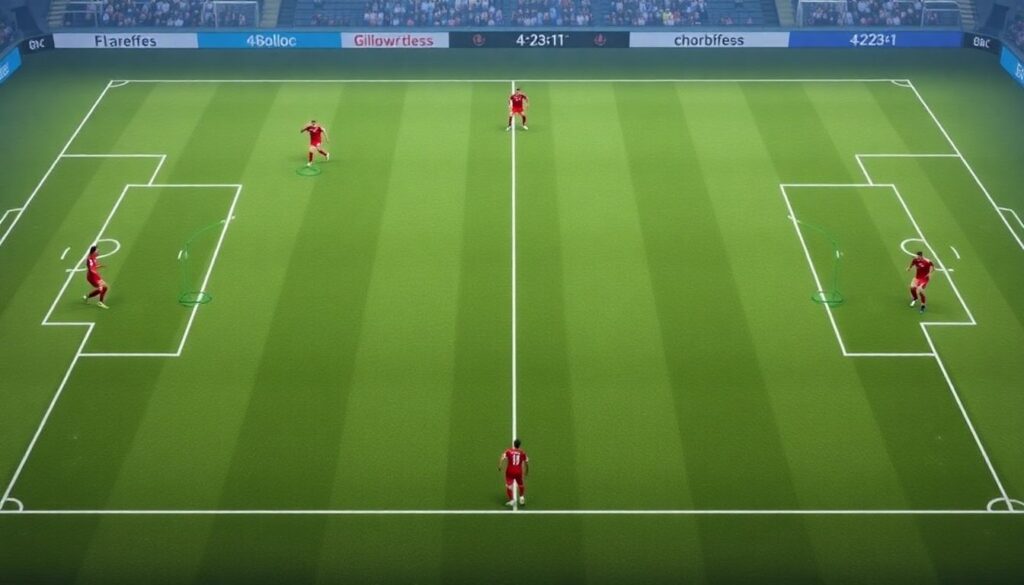
The 4-2-3-1 is especially effective against common Süper Lig behaviours: emotional momentum swings, aggressive full-backs, and stretched lines between defence and midfield. Safe exploitation means designing clear patterns without over-committing numbers forward.
-
Targeting adventurous full-backs
Many teams push both full-backs high at home. The wide players in your 4-2-3-1 can hold slightly deeper when defending, then spin into the empty channels on regain. The double pivot provides cover so full-backs can stay responsible instead of joining every attack.
-
Attacking big spaces between the lines
Some Süper Lig mid-table sides defend with large vertical gaps. Your no.10 and inside-moving winger can overload these pockets. Safe rule: never send more than one pivot past the ball; one always secures rest defence in front of the centre-backs.
-
Protecting against direct counters from deep
Long, straight balls behind the back line are common. With 4-2-3-1, centre-backs can defend more aggressively knowing the deeper pivot will cover second balls. This structure improves your stability and feeds cleaner data into any Super Lig 4-2-3-1 tactics analysis you or your analysts run.
-
Managing emotional matches and momentum swings
Derbies and high-pressure games often become chaotic. The pre-defined lanes and roles in 4-2-3-1 help players hold their positions instead of chasing the ball. That stability is one reason analysts factor this shape heavily into Super Lig match predictions 4-2-3-1 formation models.
-
Breaking deep 4-5-1 or 5-4-1 blocks safely
Use the 10 between lines and full-backs for width, but restrain one full-back at all times. Only send the far pivot into the box on delayed runs; the deeper pivot anchors transitions against counters from cleared crosses.
Ideal Player Profiles and Recruitment Priorities
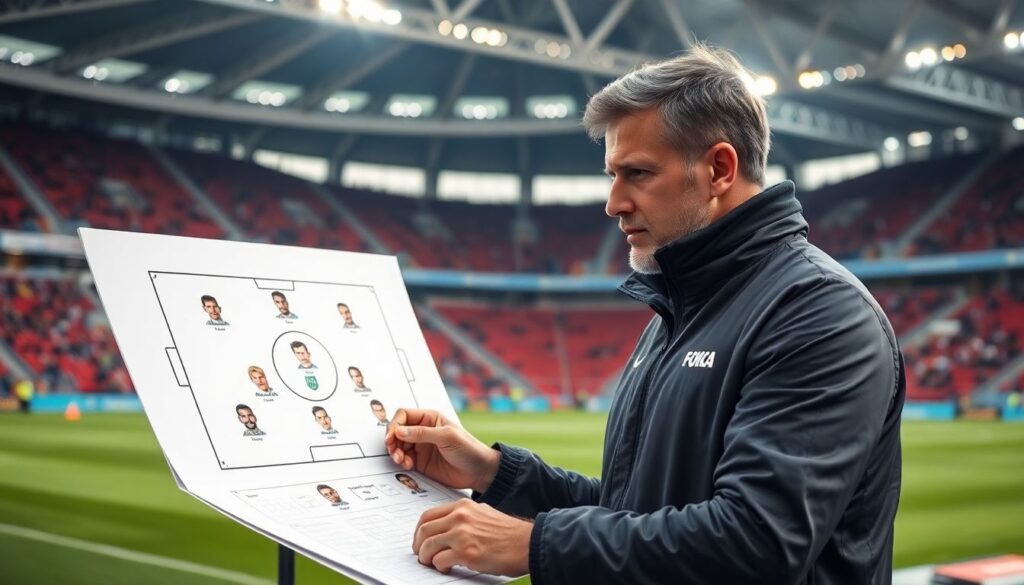
Safe implementation of 4-2-3-1 in the Süper Lig depends heavily on recruiting the right profiles, not just big names. Below are core requirements and realistic limitations coaches should accept when building squads.
Profiles that maximise the system
- Deep playmaker pivot – Comfortable receiving under pressure, able to play vertical passes into the 10 and wingers, yet disciplined enough to hold position.
- Ball-winning shuttle pivot – Aggressive in duels, good covering wide, can carry the ball 10-15 metres to break the first line.
- Creative, hard-working no.10 – Finds half-spaces, plays final passes, but also presses opposition pivot and helps the nearest pivot on rest defence.
- Asymmetrical winger pair – One more direct runner attacking depth; the other more of a playmaker moving inside to combine with the 10.
- Mobile lone striker – Can hold long balls, attack both channels, and initiate pressing triggers by forcing play to one side.
- Balanced full-backs – Capable of overlapping but tactically mature enough to read risk and stay in rest-defence shape when needed.
Structural and market limitations to accept
- Dependence on the no.10 – Injuries or loss of form in this position can make attacks predictable; always develop a secondary creative outlet (e.g., playmaking winger).
- High physical demands on wingers – They must sprint 60-70 metres repeatedly; squad depth is crucial in congested Süper Lig calendars.
- Potential isolation of the striker – If support is late, he becomes easy to double; safe fix is to advance one pivot carefully rather than pushing both full-backs.
- Risk of passive medium block – Teams may sit too deep and invite pressure; coach must define clear pressing triggers and re-press habits.
- Transfer-market mismatch – True two-way pivots and complete no.10s are scarce; clubs often compromise with converted 8s or wide playmakers.
Coaching Practices: Training Drills and Session Progressions
Safe adoption of 4-2-3-1 requires structured training, not just a line-up graphic. Session design should connect roles, transitions, and pressing rules step by step, similar to a good 4-2-3-1 football tactics course online but adapted to Süper Lig realities.
Common coaching mistakes to avoid
-
Teaching the shape only as a static 11v0
Players memorise positions but not behaviours. Always add a directional, competitive element quickly: for example, 7v7+3 in channels where pivots get bonus points for forward passes.
-
Neglecting rest defence in attacking drills
Many finishing drills start with a cross and end with a shot, ignoring what happens on a clearance. Add immediate counter-press phases and rules for where the pivots and full-backs must stand as the ball enters the box.
-
Overloading full-backs with impossible tasks
Expecting them to provide all width and still defend every counter is unrealistic. Build drills where the weak-side winger must cover the far full-back’s zone on turnovers.
-
Using generic pressing drills not tailored to 4-2-3-1
Pressing cues should be tied to the 10 and striker’s positions. Run 6v6+2 exercises where the front four must force play to one side before any intense press is allowed.
-
Ignoring video and data feedback loops
Without feedback, players repeat the same spacing errors. Use simple clips and, where possible, football analysis software for 4-2-3-1 tactics to show distances between lines and pivots’ starting positions during transitions.
-
Changing roles too quickly after bad results
Throwing away a whole pressing plan after one defeat confuses players. Instead, adjust one variable per week: for example, only change the starting line of the block while keeping the same build-up patterns.
In-Game Management: Pressing Triggers, Rotations and Substitution Patterns
Live management determines whether 4-2-3-1 stays a safe structure or collapses under pressure. Coaches need clear, pre-planned adjustments instead of emotional, random changes that break the formation’s balance.
Typical pressing triggers within 4-2-3-1
- Backward pass from full-back to centre-back – Striker jumps to press, 10 locks the pivot, ball-side winger closes full-back, nearby pivot steps to opposition 8.
- Loose touch by opposition pivot – Nearest pivot attacks, 10 squeezes space from behind, wingers pinch in to cut passing lanes to wide players.
- Goalkeeper forced onto weaker foot – Whole block steps 5-10 metres higher, front four angle runs to trap play on one side.
Safe rotational patterns
- Full-back-winger rotations – Only one of them may enter the half-space at a time; the other must maintain width or depth. This protects against counters through the channel.
- Pivot-no.10 rotations – Occasionally the 10 drops to build while one pivot advances, but always keep at least one pivot behind the ball.
- Winger-striker swaps – Short, timed movements rather than permanent swaps; after each action, players snap back to original reference zones.
Substitution patterns to preserve balance
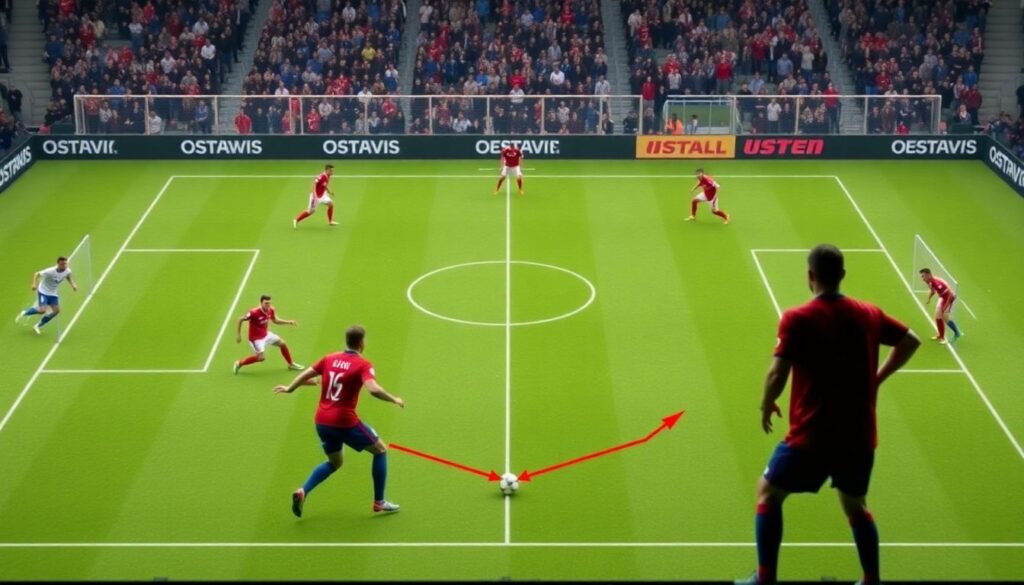
A safe change plan prevents late-game chaos. Below is a simple reference logic you can apply; it resembles the decision trees often discussed in a structured 4-2-3-1 football tactics course online.
- Chasing a goal: Replace one pivot with an attacking 8, but instruct full-backs to alternate overlaps. Do not push both full-backs and an extra 8 at the same time.
- Protecting a lead: Refresh wingers with high-work-rate players, not only defensive full-backs. They are first defenders in wide areas.
- Striker fatigue: Introduce a forward who can still press and hold the ball, even if technically weaker; this keeps the 4-2-3-1’s first line functional.
Coaches’ Practical Questions on Implementation
How do I start using 4-2-3-1 safely with my current squad?
Begin from your existing defensive structure and only adjust the midfield line. Keep your back four’s rules the same, define clear tasks for two pivots, and gradually re-position one extra attacker as the no.10 in training games.
What is the first principle I should teach my pivots?
Never both in front of the ball at the same time. One can join attacks or press, the other always protects the centre-backs and covers second balls in front of them.
How many attacking rotations are safe for amateur or semi-pro levels?
Limit it to one clear rotation per side: either full-back-winger or winger-10, not both. Simplicity reduces confusion and keeps your rest defence stable during transitions.
Can I use 4-2-3-1 against stronger opponents away from home?
Yes, but treat it as a compact 4-4-1-1 out of possession. Lower the block by 10-15 metres, keep wingers narrower, and use the 10 mainly for counters and set-piece delivery.
What if I do not have a classic creative no.10?
Use a hard-working runner as a “pressing 10” and shift creativity to an inverted winger or deep playmaker pivot. The structure stays the same; chance creation simply moves to different zones.
How can I integrate data and video without overwhelming players?
Pick one theme per week: for example, distance between pivots. Show two or three short clips, one good and one bad example, plus a simple graphic from your analysis software highlighting positions at the key moment.
Is 4-2-3-1 still relevant if my league trends towards 3-at-the-back systems?
Yes. Versus back-threes, your 10 can mark the pivot, wingers press wide centre-backs, and pivots control half-spaces. The structure remains flexible; only pressing angles and wide combinations need adapting.