Video assistant referee, or VAR, has gone from a curious experiment to a system that shapes how we watch, discuss and even bet on football. Below is a step‑by‑step guide to how VAR has changed Turkish and European football, where it works, where it fails, and how to “read” it better as a fan, player or bettor.
—
How VAR Actually Works in Real Matches
What VAR Is (Without the Techno-Jargon)
At its core, football var technology is just a set of extra eyes and angles. A team of officials in a video room watches every incident through multiple cameras, with slow‑motion and offside lines. They can recommend a review to the on‑field referee for:
– Goals and possible offences in the build‑up
– Penalties (given or not given)
– Straight red cards
– Mistaken identity in red/yellow cards
In Turkey and in UEFA competitions, the procedure is similar: the VAR checks everything silently in the background. Only when the video officials see a *clear and obvious error* or something *serious missed* do they suggest an on‑field review.
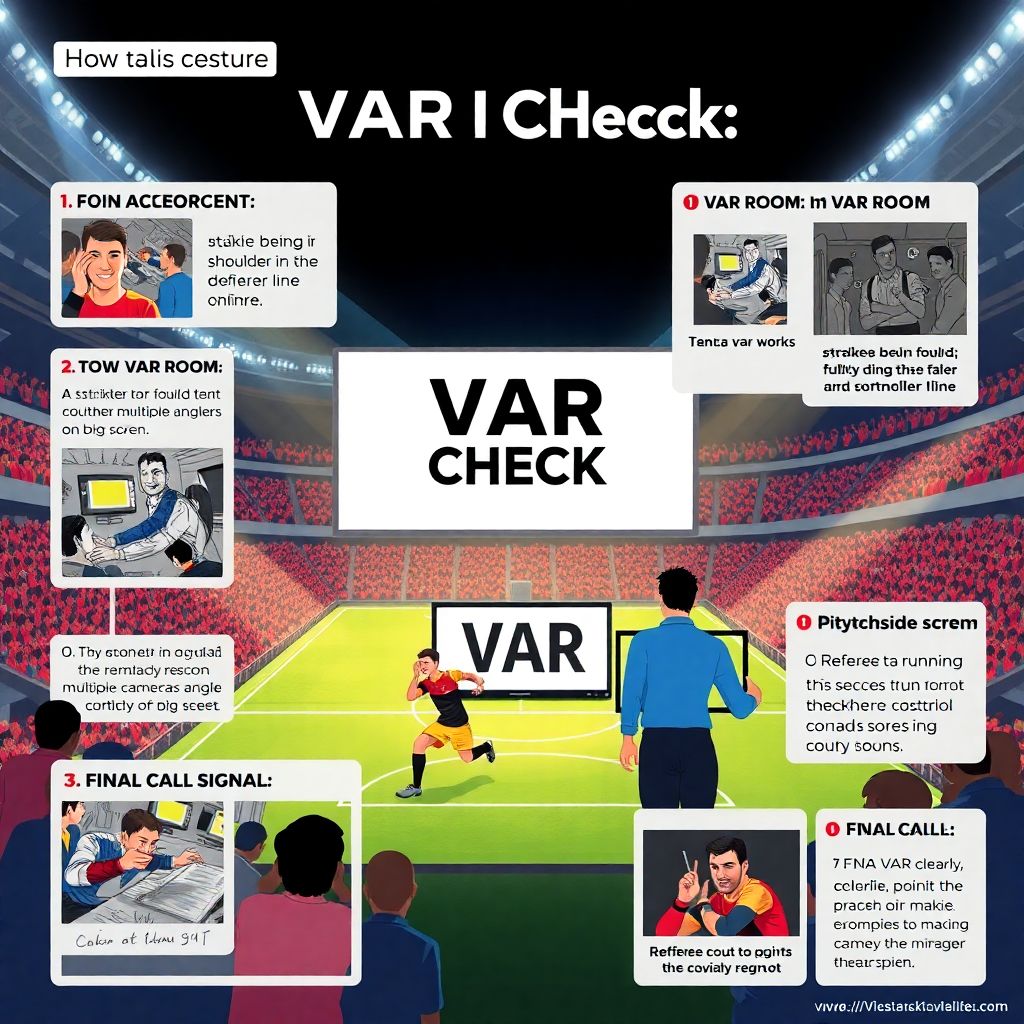
Step‑by‑Step: What Happens During a VAR Check
1. Incident occurs – A goal, a foul in the box, a possible red card tackle.
2. Silent check – VAR quickly reviews replays while play may continue or while players celebrate.
3. Recommendation – If they see nothing, play continues. If they spot a likely mistake, they tell the referee via headset.
4. On‑field review (OFR) – The referee runs to the pitchside monitor to see key angles.
5. Final call – Only the on‑field referee can confirm, overturn or stick with the original decision.
A common misunderstanding is that “VAR changed the decision.” Technically, VAR only *recommends*; the referee still signs off on everything. That detail matters when we discuss accountability and controversy.
—
VAR in the Turkish Süper Lig: From Chaos to a New Normal
How Often Is VAR Used in Turkey?
The Turkish Süper Lig was one of the early adopters, and it shows in the data. Precise numbers for the 2025–26 season don’t exist yet in public sources, but we do have reliable trends up to 2023–24:
– In the 2021–22 Süper Lig season, unofficial analyses by Turkish media counted roughly 1 VAR intervention every 2–3 matches, with penalties up significantly compared to the pre‑VAR era.
– By 2022–23, the Turkish FA (TFF) reported that the average number of VAR checks per game stabilized, but on‑field reviews (the visible “screen runs”) slightly decreased, meaning more situations were handled via quick silent checks.
– In 2023–24, early TFF briefs and club analytics suggested that over 80% of goals were checked by VAR, but only a minority (around 10–15% of those checks) led to actual changes to the scoreboard.
You’ll often read about “turkish super lig var decisions” being controversial. A big reason is transparency: not all audio between VAR and the referee is published, so fans see a long wait, a reversed call, but not always a clear explanation. That creates emotional debate even when the decision is technically correct.
Typical VAR Scenarios in the Süper Lig
In Turkey, three types of decisions stand out:
– Marginal offsides on goals – Sometimes toes or shoulders decide titles. Offside lines are drawn by technology, but calibration and camera angles still spark arguments.
– Contact in the box – The Süper Lig is physical; many borderline penalties are upgraded or downgraded by VAR.
– Red cards for violent conduct – VAR has increased sendings‑off for elbows, stamps and off‑the‑ball clashes that cameras catch but referees miss.
Because of the intensity of rivalries, especially in Istanbul derbies, every correction is interpreted through a club’s bias. But statistically, over the last three years, there’s a clear trend: fewer “missed” obvious penalties and reds, and more debates over marginal, subjective calls.
—
VAR Across Europe: A New Refereeing Ecosystem
How VAR Spread Through European Football
VAR in European football analysis shows a gradual consolidation:
– By 2021–22, all major big‑five leagues (Premier League, La Liga, Serie A, Bundesliga, Ligue 1) and the Turkish Süper Lig had fully integrated VAR.
– In 2022–23, more mid‑tier leagues in Eastern and Northern Europe joined, guided by UEFA protocols and shared training materials.
– The 2023–24 European season saw VAR present in all UEFA club competitions from the playoff stages onward, and standardized semi‑automated offside tech at major tournaments.
This ecosystem matters because referees move between domestic leagues and UEFA competitions. The experience referees gain in intense environments like Turkey, Italy or England improves how they apply VAR in Champions League nights.
Statistical Impact: Fewer Big Misses, More Micro‑Decisions
Specific numbers vary by league, but recurring patterns across UEFA reports and independent analytics to 2023–24 include:
– Increase in penalties compared with pre‑VAR seasons, typically in the range of 10–20% more penalties in many top leagues.
– Red cards for off‑the‑ball incidents climbed slightly, as cameras catch more unseen fouls.
– Goal errors reduced – Studies by some European national FAs suggest that the proportion of *clearly wrong* goal/penalty/offside decisions fell from about 5–6% to under 2% of key incidents.
So yes, there are still heated arguments, but the total number of *objectively bad* calls is almost certainly lower than before VAR.
—
VAR in UEFA Competitions: The Spotlight Effect
Champions League Nights and Global Scrutiny
If anywhere magnifies VAR, it’s the Champions League. Uefa champions league var controversies travel globally in seconds, and every slow‑motion replay is dissected on social media.
Between 2021–22 and early 2023–24:
– UEFA reported hundreds of checks per season, with around one visible on‑field review in most matches that had a major incident.
– Semi‑automated offside technology (SAOT) was introduced progressively, reducing the time to draw lines from 45–60 seconds to around 20–25 seconds on average, cutting down some of the worst delays.
The bigger issue isn’t whether the final call is correct—often it is—but whether the explanations are fast, clear and consistent. When fans don’t hear the reasoning, every borderline handball or soft penalty becomes a conspiracy theory.
Why Champions League VAR Feels Different From Domestic VAR
You might notice that referees behave more cautiously in UEFA matches:
– They’re under heavy assessment from UEFA observers.
– VAR teams are often composed of elite officials from multiple countries.
– The financial and sporting stakes are much higher.
The result: referees may be more willing to accept a VAR recommendation on big nights than they might in a regular league game. That subtle shift can create a perception that “the Champions League whistle” is harsher, especially on handballs and penalty‑area contact.
—
How VAR Has Changed the On‑Field Game
Tactical Shifts: Defending and Attacking Under VAR
Players and coaches have adapted in very practical ways:
– Defenders are more careful with off‑the‑ball grappling in the box, especially at set pieces, since every shirt pull can be seen.
– Attackers sometimes exaggerate contact, knowing VAR will check; if there *is* some contact, the referee might be persuaded to give a penalty.
– Goalkeepers are monitored more strictly on penalty kicks, as VAR checks if they left the line early.
Over the last three seasons, analysts across European leagues have observed a modest but recognizable trend: more penalties won from “soft” fouls that used to be waved away in real time and now get second looks.
Emotional Rhythm: Celebrations on Hold
Another change is psychological. Players often celebrate with a glance to the referee, waiting for confirmation. Fans in stadiums hesitate before full‑on joy because they know a VAR line might erase the goal.
This isn’t easy to quantify, but surveys in several European countries around 2022–23 showed a shared sentiment: people value more correctness but dislike losing spontaneous emotion. That trade‑off is at the heart of the VAR debate.
—
Mistakes Fans Commonly Make When Judging VAR
Error 1: Expecting VAR to Be Perfect
VAR is not a robot ref; it’s people using technology. Cameras have limits, angles can be blocked, and some laws (like handball) are inherently subjective. Assuming that football var technology will eliminate all mistakes sets you up for frustration.
How to avoid this trap:
Think of VAR as a way to cut down the *worst* errors, not as a guarantee of total fairness. When an incident is truly borderline, remember that reasonable people can disagree even after ten replays.
Error 2: Confusing the Law With Fairness
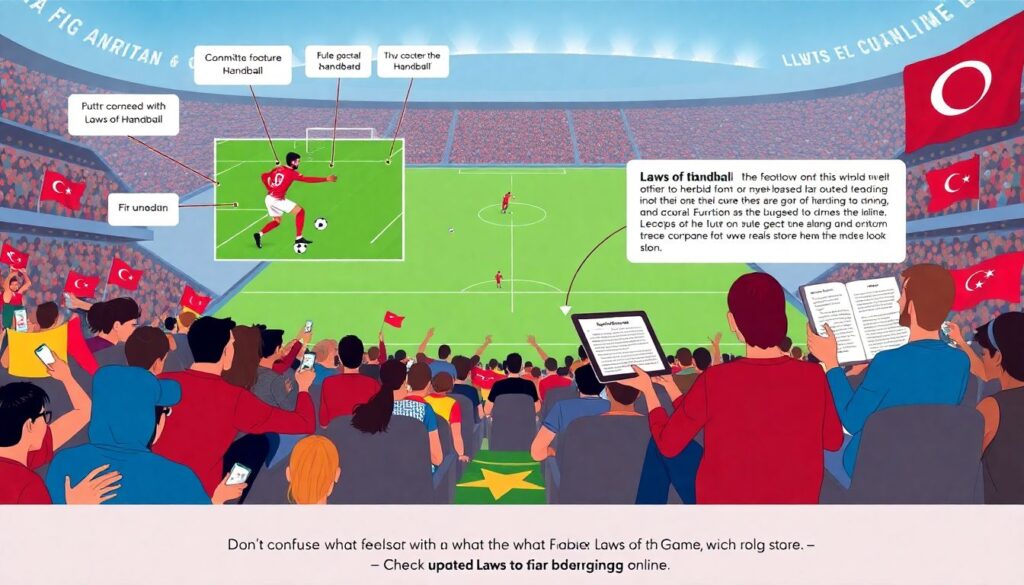
Many fans, in Turkey and across Europe, mix up “what feels fair” with “what the law says.” For example, deliberate handball is defined by arm position, distance and movement, not your personal impression of intent.
How to avoid this trap:
Before raging online, check the updated laws of the game from IFAB or your national FA. Often, the VAR decision makes more sense once you see the formal criteria applied.
Error 3: Ignoring the “Clear and Obvious” Standard
VAR is supposed to correct clear and obvious errors, not re‑referee every 50/50. When officials stick to that, some marginal calls you dislike *won’t* be overturned.
How to avoid this trap:
Ask yourself: would most neutral fans clearly say the original decision was wrong? If not, it probably doesn’t meet the threshold, even if it annoys you.
—
VAR and Football Betting: What Changed for Punters
The New Dynamics for Bettors
The impact of var on football betting is bigger than many casual fans realize. Because VAR affects goals, penalties and red cards, it directly shapes markets like:
– Match result (1X2)
– Total goals (over/under)
– Both teams to score
– Cards and penalty‑related specials
Over the last three seasons, several betting analytics firms have noted:
– Slightly higher over/under lines in leagues with many VAR‑awarded penalties.
– Increased volatility in live betting, since a single VAR call can swing expected goals (xG) and odds dramatically.
– Adjustments in Asian handicap lines, especially in competitions known for frequent VAR interventions like Serie A and some Turkish Süper Lig fixtures.
Practical Tips for New Bettors in the VAR Era
If you’re new to betting and want to understand VAR’s influence, keep these in mind:
– Study league patterns – Some leagues, including Turkey and Italy, generally award more VAR‑influenced penalties than, say, certain more conservative competitions.
– Watch the referee, not just the teams – Officials differ: some go to the monitor more frequently; some let more contact go.
– Be cautious in live markets – When play stops for a review, odds can freeze or swing. Avoid chasing losses based on emotion during those breaks.
Bullet‑point checks before you place a bet:
– Do you know the referee’s style and VAR tendencies?
– Is the league historically penalty‑heavy under VAR?
– Are there derby tensions or title stakes that could raise the chance of red cards?
—
Reading VAR Better: A Beginner’s Guide for Fans
How to “Train Your Eye” for VAR Decisions
If you’re just getting into football or only recently started watching European and Turkish games, VAR calls can feel random. They’re not, but you need a bit of structure to interpret them.
Here’s a practical routine:
1. Focus on first contact – When watching a replay, look for where and when the contact happens, not just the player’s fall.
2. Check arm and body positions – For handball or holding fouls, arm and body shape relative to the ball and opponent are key.
3. Count the replays – If the referee only watches one or two angles briefly, the decision likely fits the “clear and obvious” category; long, repeated views often signal a tough, subjective call.
Warnings for New Fans
New fans often:
– Assume any contact = foul or penalty. In modern VAR usage, intensity, consequence and context still matter.
– Believe VAR “hates” their club. Remember that VAR teams rotate; biases are much less plausible than people think.
– Forget that the on‑field referee decides. Blaming “the room” ignores who actually signs off.
Instead, treat each incident as a case study. Ask: what’s the law, what’s the standard, and what evidence did VAR have?
—
Specifics of Turkish VAR Culture vs. Wider Europe
Why VAR Feels Louder in Turkey
Turkish football culture is highly emotional and media‑driven. Talk shows dissect turkish super lig var decisions all week long. Club presidents release statements; ex‑referees break down frames on TV; fans compile their own “VAR errors” videos.
Compared to some European leagues:
– Media noise is higher – Each VAR call can dominate news cycles for days.
– Institutional trust is lower – Historical disputes with referees make fans more suspicious of the system.
– Stadium reactions are intense – Long reviews can trigger huge pressure on referees.
That doesn’t mean VAR “works differently”; the protocol is basically the same. But socially and psychologically, it has a bigger emotional footprint in Turkey.
Convergence With the European Standard
On the technical side, Turkey has been aligning more closely with UEFA practices:
– Similar training modules for VAR officials.
– Use of upgraded camera systems and, in key matches, semi‑automated offside.
– Increasing emphasis on referee communication and post‑match explanations.
As this convergence continues, you can expect fewer wild differences between a Süper Lig match on Sunday and a European fixture on Wednesday, at least in how VAR is supposed to function.
—
Key Takeaways and How to Use Them
If You’re a Casual Fan
– Accept that VAR improves overall accuracy but won’t remove all controversy.
– Learn the basics of the laws—especially offside, handball and penalty criteria—to make sense of reviews.
– Be patient with delays; they’re frustrating, but many prevent game‑changing errors.
If You’re a Serious Follower or Bettor
– Track trends in penalties, red cards and VAR interventions by league and by season.
– Incorporate referee and VAR behaviour into your analysis, not just team form.
– Treat emotional outrage and media noise as *information about sentiment*, not about objective probability.
—
A Note on Statistics and Limits
The broad patterns described here—more penalties, fewer gross errors, improved offside technology—are grounded in available data and official/independent reports up to the 2023–24 season. Because it is early 2026 but comprehensive public statistics for 2024–25 and 2025–26 are not yet fully available or standardized across all leagues, exact figures for those seasons can’t be quoted responsibly. Expect, however, a continuation of the same general trends: gradual technical refinement, persistent debate about subjectivity, and an ever‑growing role for VAR in how Turkish and European football are played, watched and argued about.
In short, VAR hasn’t “ruined” the game or “saved” it; it has changed the face of it. Understanding how it works—and where its limits are—lets you enjoy matches, discussions and even betting with a lot more clarity and a lot less confusion.