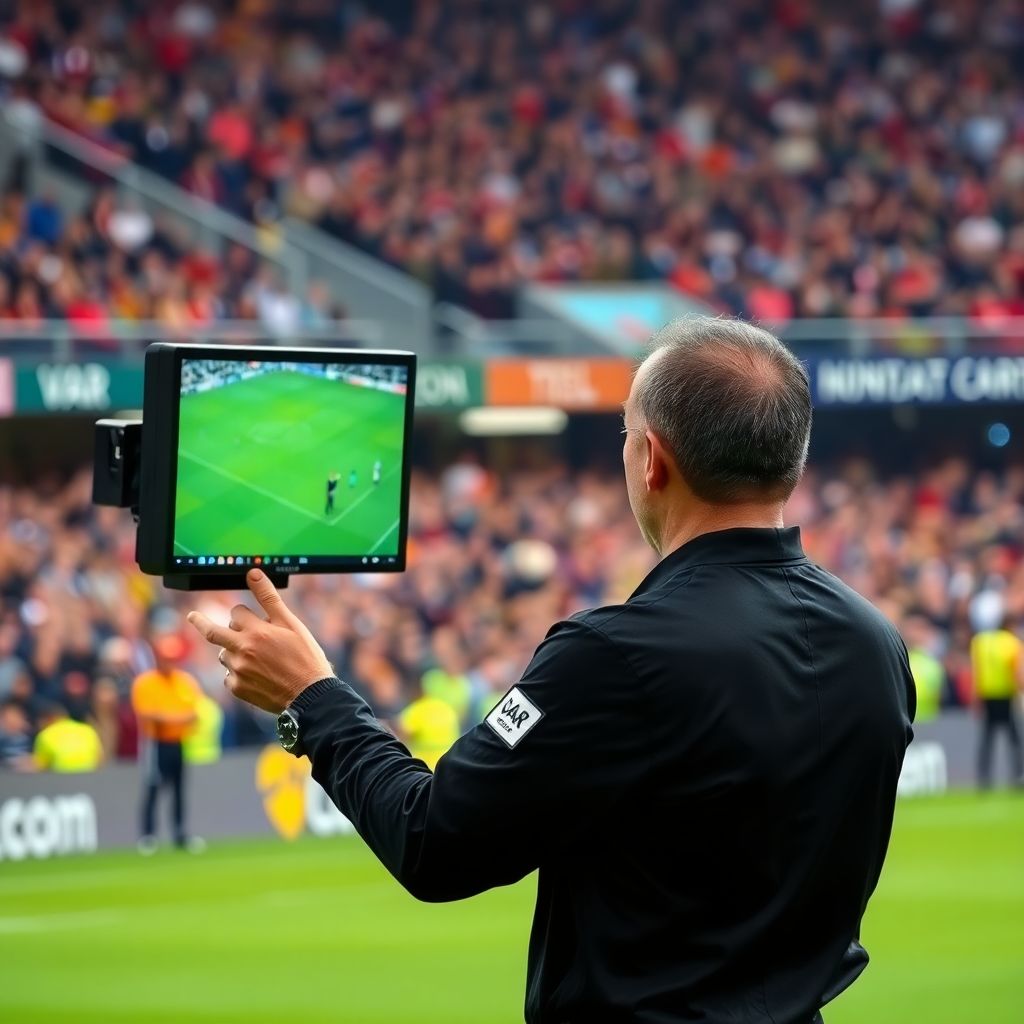
VAR has raised refereeing standards mainly by correcting clear on-field mistakes while keeping the referee as final decision-maker. In the Süper Lig and in wider European football, it works best as a safety net, not a replacement for judgment. Its benefits depend on strict protocols, referee training, transparent communication and honest recognition of VAR’s limits.
Dispelling Common Myths About VAR’s Role in Modern Refereeing
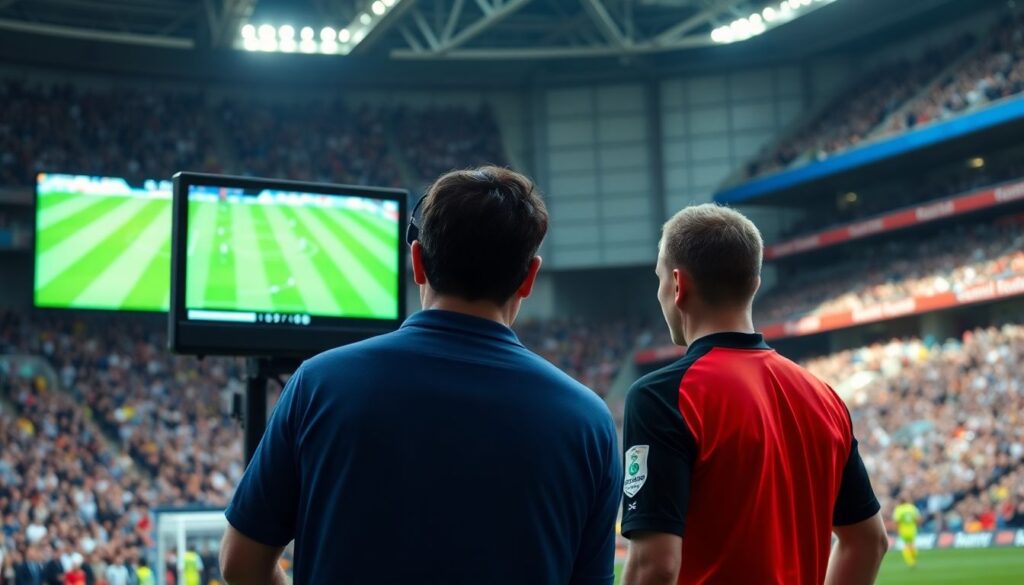
- Myth: VAR reviews every incident. Reality: VAR only checks specific match-changing situations and clear, obvious errors as defined in protocol.
- Myth: VAR makes referees less important. Reality: on-field referees still take the final decision; VAR is advisory support.
- Myth: VAR guarantees zero mistakes. Reality: it reduces big errors but cannot remove subjective interpretation or camera limitations.
- Myth: Every slow-motion clip must be re-refereed. Reality: VAR is not a general re-refereeing tool; it intervenes only when the original call is clearly wrong.
- Myth: VAR creates bias by design. Reality: inconsistency usually reflects human interpretation and application, not the technology itself.
- Myth: Removing VAR would remove controversy. Reality: many Süper Lig VAR decisions controversy episodes replaced, rather than eliminated, old debates about on-field calls.
How VAR Operates: Protocols, Technology and Decision Flow
Video assistant refereeing is a structured system that uses multiple camera feeds and specialist officials to help correct clear and obvious errors in defined situations. In practice, VAR technology in European football leagues follows common IFAB protocols covering goals, penalties, direct red cards and cases of mistaken identity.
The decision flow is deliberately conservative. The video assistant checks every relevant incident in the background. When a potential clear error is detected, the VAR recommends an on-field review or, in some factual cases such as offside, communicates a correction directly. However, the referee remains responsible for confirming or changing the original decision.
Safe implementation depends on three pillars: reliable broadcast-quality camera coverage, stable communication infrastructure, and well-drilled team procedures. To support this, referee training courses for VAR implementation typically focus on when not to intervene as much as when to intervene, so that the system does not overreach its intended role.
For clubs and federations, integrating football analytics services for VAR and referees is becoming standard. These services tag incidents, measure review times, track intervention frequency and support post-match debriefs. Used correctly, they help identify patterns of missed interventions, over-involvement and calibration issues between different referee teams.
Accuracy vs. Consistency: Measurable Effects on Match Decisions
- Reduction of clear, game-changing errors
VAR’s core effect is reducing obvious mistakes in goals, penalties and red cards. Referees can safely correct mis-seen handballs, off-the-ball violent conduct or offside goals that assistants could not capture live. - Improved factual decisions, persistent subjectivity
Offside lines, point of contact and location of fouls are more accurate thanks to frame-by-frame review. Still, borderline fouls and handballs remain subjective, so the impact of VAR on refereeing standards in Europe is uneven across incident types. - Increased pressure for consistency between matches
Clubs now compare similar VAR clips from different games and leagues. This comparison culture exposes inconsistencies in “clear and obvious” thresholds and pushes refereeing bodies to refine guidance and communication. - More disciplined positioning and mechanics
Knowing that their decisions will be checked, referees adapt their positioning and wait-and-see mechanics, especially for tight offsides and penalty situations. VAR acts as a safety net but also as performance feedback. - Game flow vs. review time trade-offs
Each check and review interrupts play. Safe practice is to keep reviews as short as accuracy allows, to communicate clearly with players, and to maintain fitness and focus during breaks so that the referee restarts with authority. - Psychological impact on risk-taking
Some referees become more confident in giving big decisions, knowing VAR can correct them; others become over-cautious, expecting VAR to save them. Targeted coaching is needed to keep decision-making proactive rather than passive.
Süper Lig Spotlight: Implementation, Training and Local Adaptations
The Süper Lig adopted VAR in line with international protocols but with its own competitive and media environment. The league faces intense scrutiny, passionate fan bases and a history of mistrust around officiating, which amplify any Süper Lig VAR decisions controversy even when protocol is correctly followed.
- Central VAR hubs and standardized setups
Centralized operations create consistent technical setups. Safe practice includes redundancy in communication lines and real-time monitoring of camera feeds to avoid technical failure influencing key matches. - Focused referee education cycles
Referee training courses for VAR implementation in the Süper Lig emphasize communication under pressure, managing benches during delays and explaining reviews with clear body language. Instructors also use clips from other European leagues to benchmark standards. - Language, culture and media expectations
Local language nuances, media narratives and fan culture shape how decisions are interpreted. Referees are coached to stay neutral in expression, to avoid inflaming existing narratives of bias when they use or decline to use VAR. - Collaboration with analytics and scouting teams
Clubs increasingly consume football analytics services for VAR and referees, using them to prepare players for likely interventions and to argue for policy changes. Federations respond by publishing more structured reports, incident breakdowns and education material. - Gradual protocol refinement
Experience in high-tension derbies and relegation battles has led to clearer national guidelines on handball interpretations, offside interference and when to recommend on-field reviews. These incremental adjustments aim to reduce controversy while staying aligned with IFAB.
Referee Behavior and Authority: On-field Management Before and After VAR
VAR reshapes how referees manage players, coaches and game tempo. It offers a safety net but also introduces pauses, visible consultations and shared responsibility. Understanding both advantages and restrictions is essential for maintaining authority without hiding behind technology.
Positive shifts in referee performance and confidence
- Referees can confidently punish off-the-ball violent conduct, knowing unseen incidents are likely to be captured on video.
- Assistants can delay flags on tight offside situations, reducing the risk of wrongly stopping clear goal chances.
- Post-match coaching is richer, using VAR clips and external football analytics services for VAR and referees to review positioning, foul recognition and communication.
- Instructors can design targeted referee training courses for VAR implementation, focusing on specific recurring patterns rather than only theoretical laws discussions.
- Referees have more support in hostile atmospheres, as clearly wrong decisions are less likely to survive, which can reduce long-term reputational damage.
Intrinsic limitations and new pressure points
- Authority can be undermined if the referee seems to wait for VAR instead of making strong on-field decisions.
- Players and coaches may demand reviews for every contact, forcing the referee to manage expectations and keep protocol boundaries firm.
- Camera angles are not perfect: some holding, minor deflections or obscured tackles remain impossible to judge conclusively even with VAR.
- Time lost in reviews can increase added time, contributing to fatigue and raising the risk of late-game errors outside VAR’s scope.
- Public communication focuses on individual incidents, which may hide deeper issues like poor positioning or weak foul detection skills that VAR cannot fix.
Comparative Data Across Europe: Trends, Metrics and Case Studies
Across the continent, VAR technology in European football leagues has been introduced with similar laws but different domestic interpretations. This creates varying expectations of what constitutes a “clear and obvious” error, and fuels cross-league comparisons among fans, media and officials.
| Aspect | Süper Lig pre-VAR | Süper Lig post-VAR | Major European leagues pre-VAR | Major European leagues post-VAR |
|---|---|---|---|---|
| Correction of clear offside goals | Lower correction rate, more missed offsides | Significantly fewer valid complaints about missed offsides | Lower correction rate, more missed offsides | Strong improvement, similar to Süper Lig trend |
| Penalty incidents reviewed | Only live decisions, no tech support | More penalties checked; some debates move to handball interpretation | Only live decisions, no tech support | More systematic reviews; similar handball debates |
| Perception of referee bias | High suspicion, limited objective evidence | Bias debates continue, now framed around VAR use or non-use | Club-specific bias debates | Bias debates continue, but often focused on protocol consistency |
| Transparency of explanations | Minimal public communication | Growing use of post-round explanations and incident reports | Varied by league, often limited | Increased publication of VAR audio or written reports in some leagues |
| Use of incident analytics | Basic match reports and clips | Regular internal reviews with tagged VAR clips | Basic match reports and clips | Extensive use of data and video platforms across elite leagues |
As leagues benchmark each other, several recurring myths and mistakes appear in discussions about the impact of VAR on refereeing standards in Europe.
- Confusing protocol differences with bias
Some competitions encourage more interventions, others fewer. Fans often interpret these structural choices as favoritism, when they are usually policy differences. - Over-reading single case studies
A dramatic mistake in a continental competition is sometimes treated as proof that VAR “doesn’t work”, ignoring the many quiet corrections that never reach headlines. - Ignoring training and resources
Leagues that invest heavily in referee training courses for VAR implementation and in technical infrastructure achieve smoother operations than those that adopt only the minimum required setup. - Underestimating communications strategy
Lack of clear explanations turns even correct decisions into PR failures. Publishing structured reviews, audio where regulations permit, and accessible guidelines can lower controversy. - Believing technology alone solves trust issues
Where historical mistrust is high, as reflected in frequent Süper Lig VAR decisions controversy debates, VAR is only one part of rebuilding confidence; governance and transparency are equally important.
Governance, Transparency and Stakeholder Reactions
Refereeing standards under VAR depend not only on technology and individual performance, but also on how federations, clubs, media and fans respond. Clear governance lines, consistent application of protocol and open communication are the safest tools to reduce conflict without promising perfection.
A simple way to structure safe governance around VAR in any league is to define, publish and regularly review three layers:
- Technical standards
Specify camera requirements, backup systems and communication protocols; run regular stress tests before high-risk fixtures. - Operational procedures
Detail check and review processes, thresholds for intervention, and escalation paths for unusual incidents; align them with IFAB guidelines. - Transparency and feedback
Commit to post-round debriefs, educational clips for fans, and confidential performance reviews for officials based on data from football analytics services for VAR and referees.
Mini-scenario illustration: a high-stakes Süper Lig match ends with a disputed non-penalty decision. Post-game, the federation releases a short clip and explanation within an agreed time frame, clarifying that VAR checked the incident, saw contact but judged it insufficient for a clear and obvious error. Internally, clips are coded and used in referee training courses for VAR implementation. This approach does not silence all criticism, but it safely narrows the gap between perception and reality while protecting both refereeing standards and the authority of the match officials.
Practical Answers to Recurring VAR Questions
Does VAR overrule the referee in the Süper Lig or Europe?
No. VAR can recommend a review or provide information, but the referee always makes the final decision. If the referee chooses to stick with the original call after an on-field review, that outcome stands.
Why do some similar-looking incidents get different VAR outcomes?
Two clips that look similar on TV may differ in speed, intensity, angle or referee’s initial view. Protocol also uses the “clear and obvious” standard, so marginal calls often stay with the original decision, which naturally creates some variation.
Is VAR used for yellow cards or minor fouls?
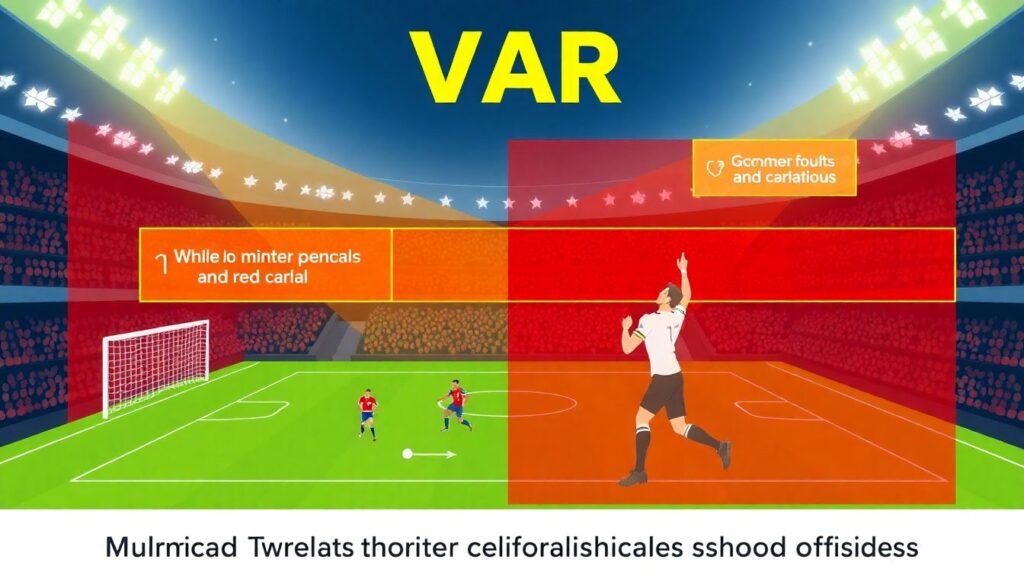
No. VAR is limited to goals, penalty decisions, direct red cards and mistaken identity. It does not get involved in second yellow cards, ordinary fouls or offside decisions that do not directly affect a goal.
Why do VAR checks sometimes take a long time?
Complex incidents may need several angles and frame-by-frame review to identify the point of contact or offside line. Safe practice is to balance speed and accuracy, but some situations inevitably require more time than others.
Can fans hear or see the VAR conversations?
In most European competitions, audio between referee and VAR is not broadcast live due to regulations. Some leagues release selected audio or detailed written explanations after matches to increase transparency.
Does removing VAR solve controversy around refereeing?
No. Controversy existed long before VAR. Without it, different incidents would be debated, especially obvious missed red cards or offside goals. VAR changes the focus of debates but also corrects many errors that would otherwise stand.
How can referees adapt safely to VAR without losing authority?
Referees should keep leading with strong on-field decisions, use VAR as backup for clear errors, communicate calmly with players, and engage in ongoing coaching based on match clips and analytics to refine their thresholds and mechanics.