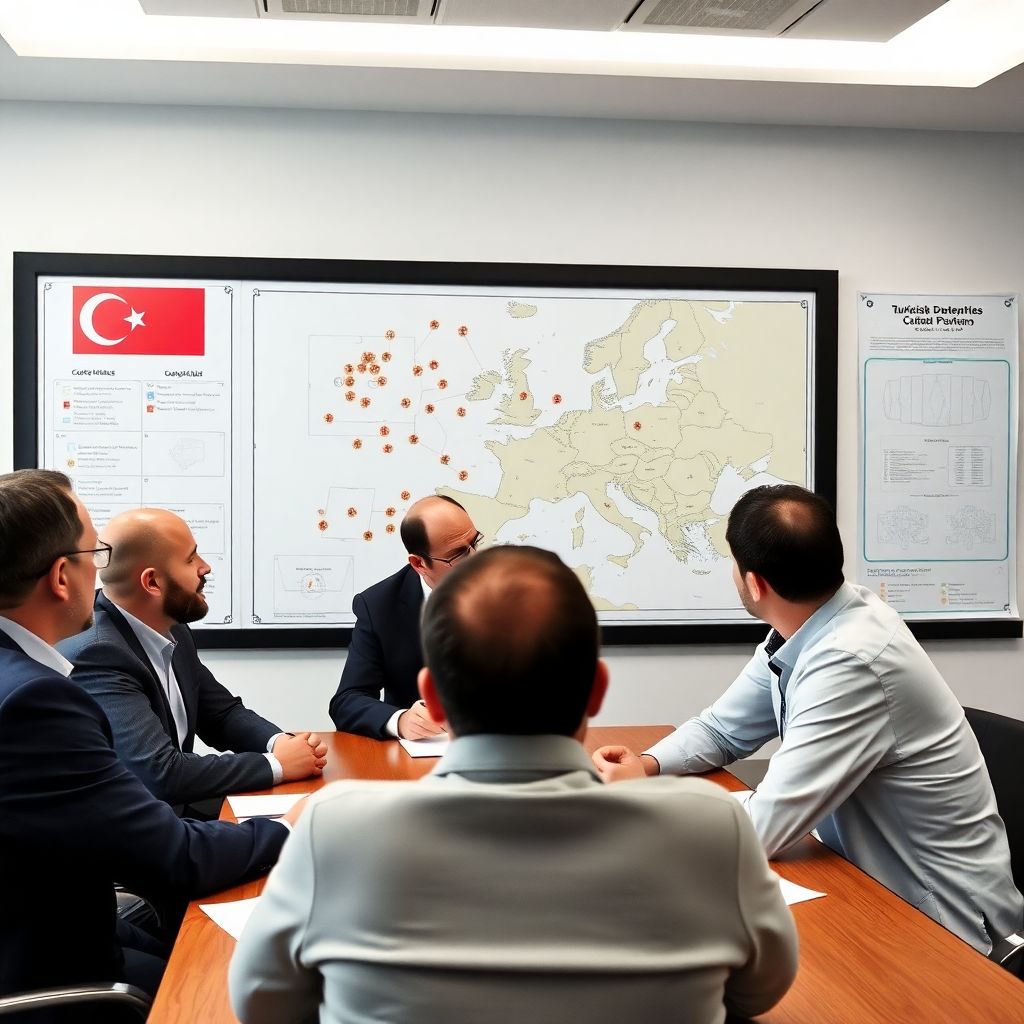
Coaching philosophies differ mainly in tempo, risk tolerance, player development models and club power structures across Europe’s top 5 leagues and the Süper Lig. For a Turkish club, choosing “the best” means aligning league-specific habits with your squad profile, budget, academy pipeline and ownership patience, not copying the latest fashionable model from abroad.
Core Contrasts: Tactical DNA Across Europe’s Top Leagues and the Süper Lig
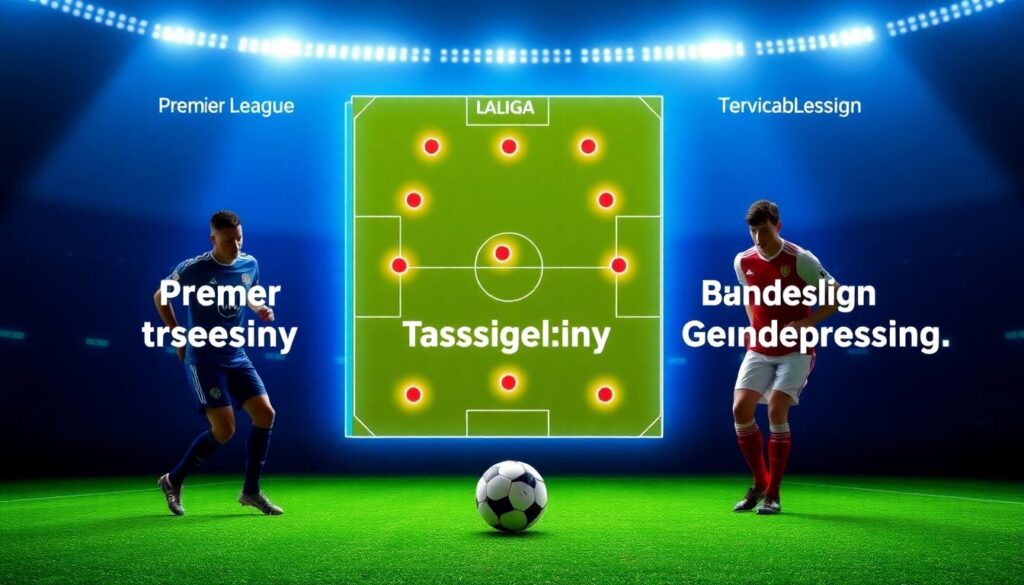
- Premier League prioritises high tempo, transition and star-player autonomy; Süper Lig copies parts of this without the same physical base.
- LaLiga offers the clearest possession and positional-play schooling, useful for clubs wanting technical control in Turkey.
- Bundesliga blends gegenpressing with strong youth pathways and data-driven structures, rarely seen consistently in the Süper Lig.
- Serie A still leads in tactical detail, compact defending and game management, which suits underdog Süper Lig clubs in Europe.
- Ligue 1 is a factory for athletic, resale-value players, while Turkish sides often prioritise short-term results with older profiles.
- Süper Lig mixes all of these, but high coaching turnover and politics often break continuity of any single philosophy.
Premier League: Intensity, Press and Player Power
Think from three angles: a head coach aiming to modernise a Süper Lig side, a scout/analyst benchmarking intensity, and a sporting director balancing branding with sustainability. Use these criteria to judge how much Premier League influence your club should really absorb.
- Physical intensity and tempo fit
Can your squad and local recruitment realistically sustain Premier League-style pressing volumes, repeat sprints and end-to-end transitions in congested Turkish calendars? - Pressing and transition structures
Does your staff understand pressing triggers, rest-defence and counterpressing organisation well enough to avoid chaotic “run and press” imitation? - Player power vs club structure
Are you ready for a culture where star players expect tactical freedom and public backing, while in Süper Lig environments boardrooms and fans also exert heavy pressure? - Media and narrative pressure
How will imported Premier League vs Süper Lig coaching styles handle Turkish media intensity, derbi culture and weekly refereeing controversies? - Set-piece and detail work
Premier League clubs now invest heavily in specialist coaches; can your budget and staffing match this, or will partial adoption create gaps? - Squad cost and depth requirements
High-intensity styles demand deep, homogeneous squads; is your wage structure and foreign-quota management ready for that load? - Fit with academy reality
Do your youth players come through with the athletic and tactical base required for such demands, or will you rely mainly on imports? - Risk profile of ownership
Does your board tolerate the short-term volatility that a full-intensity model brings, or is a more controlled philosophy safer?
LaLiga: Possession Principles and Technical Progression
LaLiga is where many coaches look when they search for the best football coaching methods in Europe to improve control and rhythm. For a Turkish club, the choice is not “copy Spain”, but selecting which possession variant matches your players, environment and league constraints.
| Variant | Ideal for whom | Strengths | Limitations | When to choose it |
|---|---|---|---|---|
| Positional play (Guardiola-style, structured zones) | Head coaches with strong tactical teaching skills; clubs with patient sporting directors and time for training repetition. |
|
|
When your board commits to a multi-season project and is serious about how coaching philosophy affects performance in football leagues, not just short-term results. |
| Flexible possession with counter threat | Coaches who balance ball control with direct attacks; analysts able to identify transition opportunities. |
|
|
When your squad has both technical midfielders and explosive wide players, and you compete for European spots but lack top-5-league depth. |
| Deep build-up, patient control | Clubs with brave goalkeepers, centre-backs comfortable under pressure and calm supporters. |
|
|
When relegation risk is low and you focus on long-term technical progression, similar to mid-table LaLiga clubs. |
| Territorial possession, crossing focus | Clubs with tall target forwards, strong set-piece delivery and limited creative midfielders. |
|
|
When your primary KPI is home dominance and points, not necessarily player resale or stylistic identity. |
| Hybrid Spanish-Turkish style | Sporting directors aiming to bridge European football coaching philosophies comparison with local realities. |
|
|
When you must respect club traditions but still want a clearer identity than typical tactical differences between Europe top 5 leagues and Turkey suggest. |
Bundesliga: Youth Pathways, Structure and Gegenpressing
Bundesliga models answer a practical question: how coaching philosophy affects performance in football leagues when data, youth development and club structures support the coach. Use clear “if-then” scenarios for Turkish clubs considering this direction.
- If you are a head coach at a mid-table Süper Lig club with limited transfer budget, then copy the Bundesliga focus on coordinated gegenpressing and youth promotion, not just the aesthetic of high pressing.
- If you are a sporting director wanting sustainable squad turnover, then mirror German practices: clear age profiles, minutes targets for academy players and early succession planning for key positions.
- If you are a scout/analyst, then build reporting templates that reflect German-style metrics: counterpressing actions, pressing intensity per zone and tactical adaptability of young players.
- If club ownership demands immediate European qualification, then avoid promising a full “Bundesliga project” without aligning expectations about development time and likely fluctuations in form.
- If your academy is under-resourced, then adopt only the team-tactical elements (pressing principles, verticality) and delay the full youth-pathway copy until infrastructure improves.
- If your medical and performance staff are small, then scale down pressing loads and density of fixtures compared with top German sides, or risk injury crises.
Serie A: Tactical Discipline, Defensive Craft and Match Management
Serie A philosophies help Turkish clubs solve game-management and defensive issues. Use this step-by-step checklist to decide how much Italian influence to embed.
- Define your underdog vs favourite profile in Süper Lig and Europe; choose an Italian-inspired compact block only if you accept lower possession and slower tempo.
- Audit your defenders and midfielders for concentration and communication; Serie A defensive schemes fail without vocal leaders and tactically disciplined sixes.
- Decide as a head coach how comfortable you are winning “ugly”; align with the sporting director and president so they do not suddenly demand expansive football after a few narrow wins.
- Map training time: allocate specific weekly blocks to defensive line work, rest-defence and set-piece detail, otherwise you import theory without habits.
- For the analyst persona, standardise video cut-ups of game-state phases (leading, drawing, trailing); Italian match management is about adjusting height and risk with the score.
- Calibrate fan expectations: communicate clearly that adopting certain Serie A ideas aims to improve European away performances, not just domestic style.
- Regularly review discipline metrics (fouls in dangerous zones, late duels) to ensure that increased compactness does not turn into penalty-box chaos.
Ligue 1: Athletic Profiles, Academy Output and Financial Realities
Ligue 1 offers lessons in producing and trading talent, critical for Turkish clubs balancing budgets. These are common mistakes when Süper Lig decision-makers try to borrow from France.
- Assuming physicality alone equals “French model”, ignoring the systematic academy coaching that underpins Ligue 1 athletes.
- Overloading the squad with powerful but technically limited players, losing the balance needed for structured build-up.
- Copying the buy-low, sell-high transfer strategy without creating a clear minutes pathway for young signings.
- Ignoring the difference in coaching stability; expecting quick resale profits in a Süper Lig context with frequent coaching changes.
- Underinvesting in individual development plans and position-specific coaching, which are common in top French academies.
- Expecting Ligue 1-style defensive transition solidity while keeping loose tactical discipline in training.
- Neglecting communication with fans about the project; suddenly fielding many young players without explaining the medium-term vision.
- Using “athletic profile” as a generic label instead of defining position-specific physical and tactical requirements with scouts and analysts.
- Hiring a “French-style” coach but surrounding them with staff unfamiliar with data and individual development processes.
Süper Lig: Local Traditions, Managerial Turnover and Tactical Hybrids
For Turkish clubs, no single philosophy from Europe’s top 5 leagues is universally best. Premier League models suit big-budget, branding-driven projects; LaLiga and Bundesliga principles fit technical and developmental agendas; Serie A ideas help underdogs in Europe; Ligue 1 thinking benefits trading clubs. The “best” is the blend your structure can sustain.
Coaches’ Practical Queries on Inter‑League Philosophies
How should a Süper Lig club start an European football coaching philosophies comparison in practice?
Begin with your constraints: budget, academy level, board patience and fan culture. Then map 2-3 benchmark clubs from each major league and analyse training behaviours, not just formations. Finally, choose one or two core principles to adopt, avoiding a superficial mix of everything.
What is the main tactical difference between Europe top 5 leagues and Turkey that coaches must respect?
The biggest gap is structural consistency: top 5 leagues repeat principles week after week, whereas many Turkish teams change plans with every result. Any imported philosophy must be simplified enough to survive pressure after two or three bad games.
Is the Premier League or LaLiga a better reference for a possession-focused Turkish side?
LaLiga is generally a cleaner reference for possession and positional play, with more emphasis on rhythm and technical profiling. Premier League ideas help more with transition and pressing. A Turkish club wanting control should lean Spanish, adding selected English intensity cues.
How can a sporting director balance Premier League vs Süper Lig coaching styles when hiring?
Define non-negotiable club principles first: pressing height, build-up risk, youth usage. Then hire coaches whose histories show they can adapt their style to local realities. Ask candidates to present specific Süper Lig match plans, not generic Premier League references.
Which league offers the best football coaching methods in Europe for youth development relevant to Turkey?
Bundesliga and Ligue 1 provide the most transferable youth models: clear pathways, data-informed decisions and brave use of young players. For Turkish clubs, combining their structural ideas with local talent pools can create a competitive advantage over purely transfer-focused rivals.
How much time does a Süper Lig club need to see impact from a new European-style coaching philosophy?
Expect visible tactical shifts within one pre-season, but real cultural change often needs several transfer windows. Without aligned board decisions and staff continuity, even the best imported ideas will look inconsistent on the pitch.
Can a hybrid of multiple leagues’ ideas work, or is that too chaotic?
A hybrid can work if you clearly prioritise two or three core principles and teach them relentlessly. Chaos appears when every defeat triggers a new reference league. Stability of message matters more than the exact blend you select.