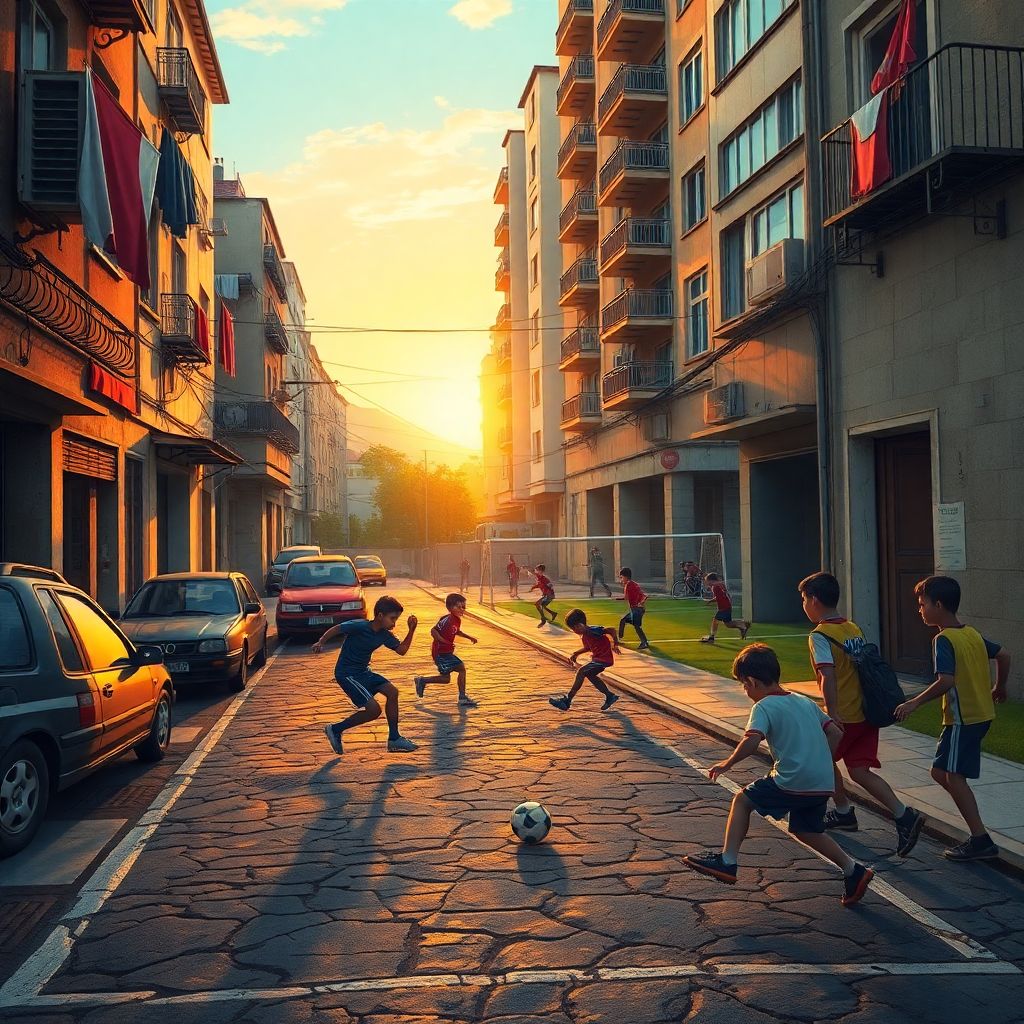
Football in Turkey isn’t just a sport; it’s a full operating system for emotions, identity and weekend planning. From kids juggling a worn-out ball in a side street to 50,000 people singing in unison under stadium floodlights, you’re looking at a culture with its own protocols, rituals and “error messages”.
Below is a structured, almost “technical manual” to turkish football culture — but written so you can actually enjoy reading it and use it to plan your own experience.
—
The Core Architecture of Football in Turkey
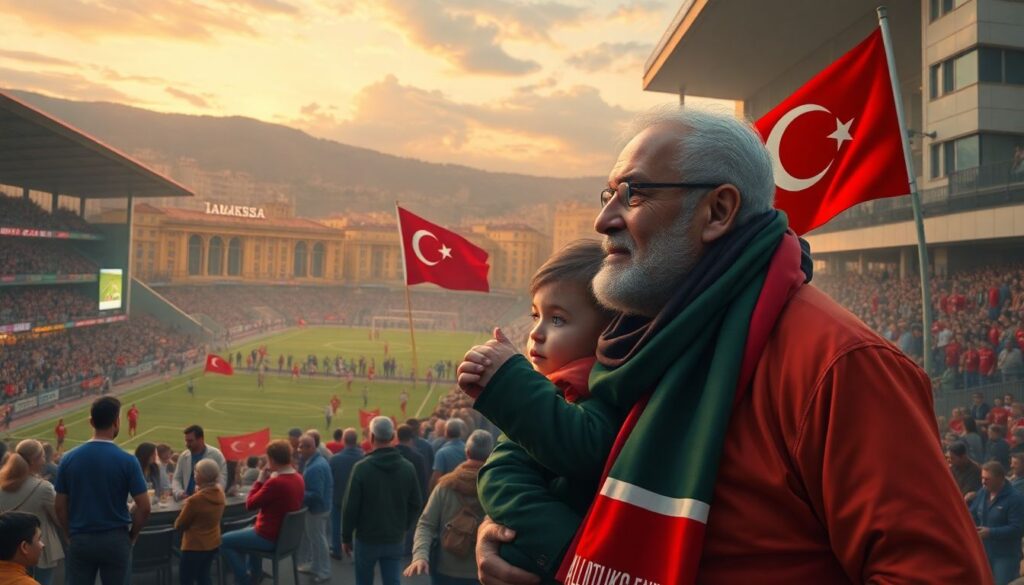
If you think football in Turkey is about 90 minutes and a final score, you’re missing 80% of the data. It’s:
– A social network long before social media
– A political and class marker in some cities
– A generational memory storage device (grandfather → father → child)
Experts in sports sociology describe it as a “multi-layered identity system”: club, district, city and nation stack on top of each other. Match day simply renders that stack in real time — through banners, chants and crowd behavior.
—
Street Football: The Development Environment
Street football is the original “development sandbox” of Turkish players and fans.
In back alleys of Istanbul, on dusty pitches in Central Anatolia or on coastal promenades in Izmir, games form spontaneously. Sidewalks become touchlines, parked cars become goalposts, and the local shopkeeper becomes the de facto VAR when there’s a dispute.
Coaches from youth academies often say an elite Turkish player typically logs thousands of “unstructured hours” on the street before ever setting foot in a professional training center. That chaotic environment builds first touch, body balance, and — more importantly — decision-making under social pressure. You don’t just lose the ball; you lose face in front of your friends.
—
From Street to Stadium Lights: Pathways and Transitions
The standard progression looks like a pipeline:
1. Street / Neighborhood Cage – Improvised rules, self-refereed, zero equipment standards.
2. School Tournaments – Slightly more formal context, basic coaching, first taste of tactical talk.
3. Amateur Clubs – Licensed coaches, scheduled training microcycles, physical conditioning.
4. Academies of Pro Clubs – Data-driven scouting, GPS vests, video analysis, mental skills coaching.
5. Professional Squads – Integration into Turkey Super Lig and occasionally European competitions.
Talent scouts for big clubs like Galatasaray, Fenerbahçe and Beşiktaş still spend time at amateur pitches and school tournaments, monitoring players’ “game intelligence” (oyun zekâsı), not just speed or technique. According to several academy directors, early exposure to unstructured street play correlates strongly with players who can adapt quickly to tactical changes during professional matches.
—
Necessary Tools: What You Need to Experience the Culture Properly
If you want to “compile and run” a real-life experience of football in Turkey, treat it as a project with prerequisites.
—
1. Physical and Digital Tickets
You’ll interact with two main layers:
– Passolig System – An ID-linked, smart-card based ticketing and security platform. You can’t just walk up and buy turkey super lig tickets with cash at the gate; you need a registered profile. This is a legal requirement designed to track attendance and manage security.
– Club Membership Ecosystems – Loyalty programs, priority windows for derbies, and reserved sections for hardcore fans.
Ticketing platform specialists advise registering and verifying your Passolig account at least a week before any big game to avoid card-issuing delays or payment verification issues.
—
2. Sensory and Safety Gear
This isn’t a library. Peak-decibel derbies can rival rock concerts.
– Ear protection (even simple foam plugs) is recommended by sports medicine experts, especially for kids.
– Comfortable shoes for standing and jumping; many stands are “active support zones” with near-constant movement.
– Layered clothing to handle temperature swings between pre-match street gatherings and late-night wind inside open stadiums.
Matchday operations managers consistently note that spectators underestimate the physical load of a high-intensity derby; dehydrated, overtired fans are the ones most likely to feel unwell before full-time.
—
3. Cultural Protocol Knowledge
Understanding stadium etiquette is a critical tool:
– Sit or stand in the correct sector for your club; neutral “tourist mode” is best signaled by staying low-key.
– Follow capos (fan leaders) and drum patterns; coordinated chanting is not random noise, it’s orchestrated support.
– Avoid provocative gestures or rival colors in hardcore home sections; these are treated as hostile inputs into a sensitive system.
Ultras and organized fan groups view the stand as a “sacred work zone,” and respecting that space is non-negotiable.
—
Step-by-Step Process: How to Immerse Yourself
To really plug into the system from street football to stadium lights, follow a staged, almost algorithmic approach.
—
Step 1: Observe the Street Layer
1. Identify local play nodes
Walk through residential districts on late afternoons or weekends. Look for small cages, schoolyards without nets, or improvised fields near apartment blocks.
2. Request access respectfully
Ask if you can watch or film a bit. In many areas, you may be invited to join, but treat that as a privilege, not a right.
3. Watch for unwritten rules
Note how teams are formed (by age? skill? friendship?), who acts as referee, and how disputes are resolved. This is your introduction to local football governance.
Sports anthropologists point out that these playground rules often mirror broader social norms in that district: notions of fairness, hierarchy and conflict resolution.
—
Step 2: Upgrade to Amateur and Semi-Pro
4. Attend a regional league game
Smaller clubs provide a high signal-to-noise ratio of emotion with less logistical complexity. No language skills? Body language and crowd reactions will translate the narrative for you.
5. Talk to coaches and parents
Ask about training loads, scouting visits, and academic balance. Youth-development experts in Turkey stress dual-career planning; serious teenagers are frequently advised to maintain strong school performance alongside football.
6. Track one player’s journey
Choose a promising youngster and follow their progress over a season. This gives you a concrete case study of how the system either supports or fails emerging talent.
—
Step 3: Enter the Professional Layer
7. Book a major-league match
Use official channels or reputable agencies offering football tours in turkey; they’ll often bundle transport, guides and guaranteed seats.
8. Prioritize a derby if possible
Securing galatasaray fenerbahce match tickets can be challenging, but that fixture is the “stress test” of the entire system — passion, choreography, security, politics, everything.
9. Arrive early, stay after
Pre-match, inspect fan choreography assembly, listen to early chants, and monitor how tension builds. Post-match, observe crowd dispersal, bar debates, and media narratives on TV in nearby cafés.
Sports-event analysts recommend documenting your observations in a simple log: entry time, first chant, first pyro, peak noise, first major conflict. You’ll quickly recognize recurring patterns.
—
Expert Recommendations for Navigating the Culture
Drawing on insights from coaches, psychologists and matchday operators, several best practices emerge.
1. Adopt a “participant-observer” mindset
Don’t just sit and consume. Learn one chant, wear one scarf, follow one club for at least a month. A sports psychologist would call this “identity sampling” — temporary but genuine engagement to understand how fans fuse self-image with team performance.
2. Balance emotion with critical distance
Local fans will swing hard from euphoria to outrage within minutes. Tactical analysts suggest watching at least one match again on TV replay to decouple raw emotion from game structure: pressing schemes, build-up patterns, set-piece designs.
3. Include off-pitch modules
Visit club museums, training grounds and fan cafés. If you buy turkey football fan merchandise, ask sellers about the symbolism on scarves or flags: years printed, slogans, emblems. You’ll get quick micro-lessons in club history and rivalries.
4. Mind your mental and physical load
High-stakes games carry a kind of emotional contagion. Experts advise: hydrate, eat before the match, and schedule decompression time afterward. Don’t stack multiple derbies in a single weekend expecting your nervous system to reset instantly.
—
Troubleshooting: Common Issues and How to Fix Them

Even a well-planned football immersion can throw errors. Think of this as your debugging guide.
—
Problem 1: Ticketing Failures
Symptoms:
– Passolig registration rejected or delayed
– Payment issues for online orders
– Inability to transfer tickets to a friend
Fixes:
– Start registration at least 7–10 days before your target match.
– Use a widely accepted credit card and ensure 3D Secure / SMS verification is active.
– For transfers, confirm both accounts are fully verified; incomplete profiles often block ticket movement.
Ticketing consultants also recommend buying directly from official club or league channels for high-demand fixtures, even if the process feels more bureaucratic.
—
Problem 2: Overwhelming Noise and Intensity
Symptoms:
– Headache or ringing ears post-match
– Anxiety from crowd surges or jumping sections
– Sensory overload during pyro shows and continuous chanting
Fixes:
– Choose a side stand or higher tier seat, away from ultra blocks behind the goals.
– Use earplugs and take short breaks in concourse areas during peak noise.
– For kids or sensitive spectators, target afternoon games against mid-table opponents, not derbies.
Stadium safety managers consistently report that seat location is the single biggest factor in whether newcomers enjoy or endure their first match.
—
Problem 3: Social and Cultural Missteps
Symptoms:
– Angry looks when cheering a neutral move
– Tension after wearing the “wrong” colors
– Being shushed or corrected by surrounding fans
Fixes:
– Before the match, ask locals which stands are safest for neutrals and which are hardcore home or away zones.
– Avoid enemy club colors entirely; if unsure, stick to dark or neutral clothing.
– When in doubt, follow crowd cues: clap when they clap, sing when they sing, keep celebrations muted if surrounded by the opposing side.
Fan-culture researchers highlight that most conflict stems from perceived disrespect, not simple ignorance. Signal respect and curiosity, and fans are usually eager to help you integrate.
—
Problem 4: Unrealistic Tactical Expectations
Symptoms:
– Dismissing Turkish football as “chaotic” after one or two games
– Frustration at refereeing standards or time-wasting
– Confusion at intense media and fan reactions to small incidents
Fixes:
– Watch a mini-sample: three different matches, ideally including one top-4 clash, one mid-table game and one relegation battle.
– Listen to post-match analysis shows to see how local pundits read the game; this frames refereeing and tactical choices inside domestic norms.
– Remember: every league has its own game rhythm, officiating thresholds and “accepted deviance” levels.
Performance analysts argue that taking the league on its own terms, not as a derivative of another country’s football, yields far better insight.
—
From Floodlights Back to the Street
After a few weeks moving up and down the ladder — from kids on asphalt to full stadium choreographies — patterns emerge.
You see how a miscontrolled ball at age ten might shape confidence at age fifteen. How a local club’s training philosophy can influence a national team’s tactical DNA. How a single derby loss can rewrite a city’s mood for days.
More importantly, you understand that turkish football culture is an integrated ecosystem, not a collection of isolated events. The street, the schoolyard, the amateur pitch, the academy and the stadium all talk to each other continuously.
Approach it with the right tools, follow a deliberate step-by-step process, and keep this troubleshooting guide in your back pocket. Do that, and you’re not just watching football in Turkey — you’re decoding an entire way of life, from cracked concrete to blinding stadium lights.