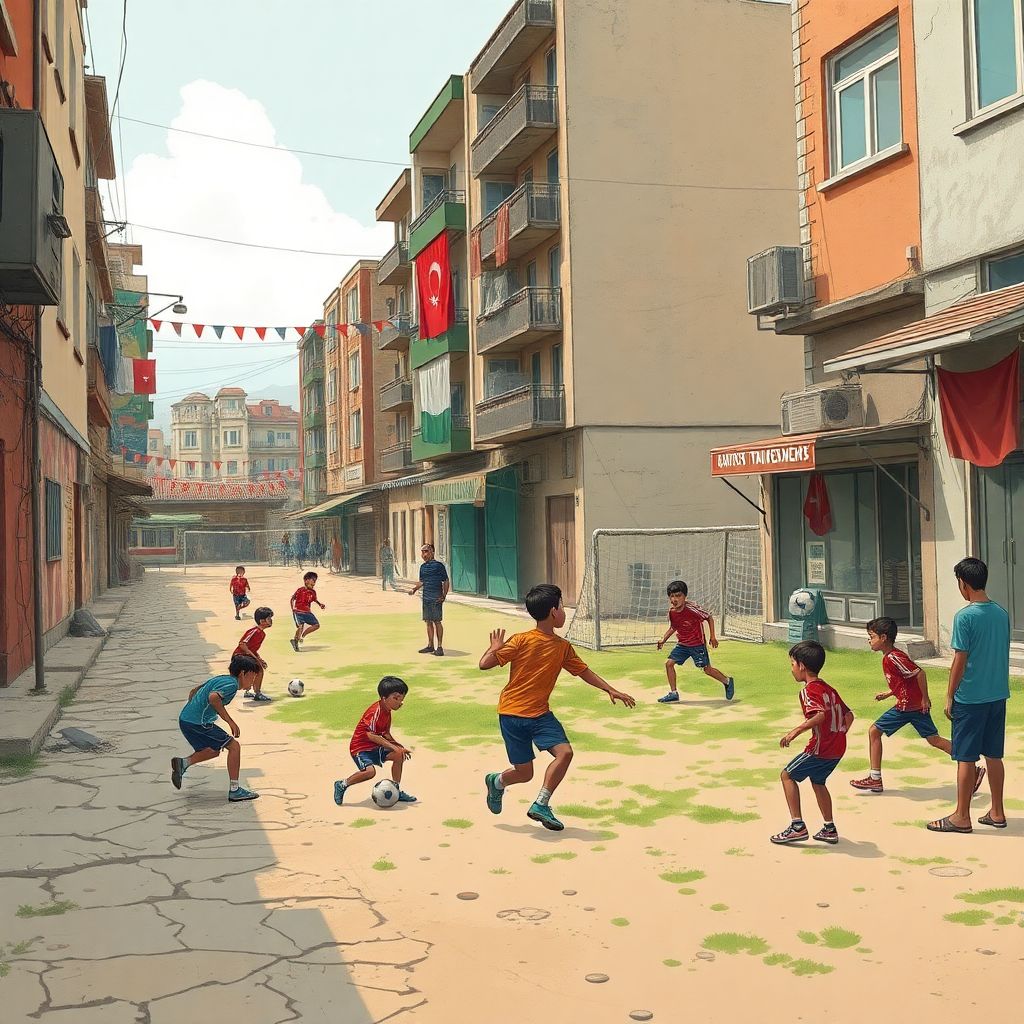
From the outside it can look like Turkish footballers appear overnight: one week a teenager scores for the U19s, and the next he’s being linked with a move to the Premier League. In reality, the path from academy to superstar in Turkey is a long, layered process that mixes street football, systematic training, fierce competition and, in the last decade, a much more scientific approach to youth development. Let’s walk through how that path looks in 2026, and what really happens between a kid’s first trial and a packed stadium chanting his name.
—
Historical background: от дворового футбола к академиям
If you rewind to the 1980s and 1990s, youth development in Turkey was far less structured than today. Big clubs like Galatasaray, Fenerbahçe and Beşiktaş had youth teams, but the pipeline was patchy, and many players came through amateur clubs or were picked up late. The national team’s breakthrough at Euro 2000 and the 2002 World Cup bronze forced a hard look at how talent was being produced. After those successes, federation officials and club directors started asking how to become a professional footballer in Turkey in a way that wasn’t based on chance meetings or a single good tournament.
Throughout the 2000s, academies began to formalize scouting networks, sports schools grew in number, and UEFA licensing requirements pushed clubs to invest seriously in youth. The tragedies of lost “street football” spaces in big cities also played a role: as empty lots turned into shopping malls, the informal school of concrete pitches gave way to synthetic turf and scheduled sessions. By the mid‑2010s, turkish football academy training programs began to resemble those in Western Europe, with age‑group periodization, GPS tracking, and individual development plans. The story from 2020 to 2026 is mainly about refinement: more data, more specialized coaches, and a clearer bridge from U15 to first team, especially in clubs that regularly sell to top‑five leagues.
—
Базовые принципы современной подготовки
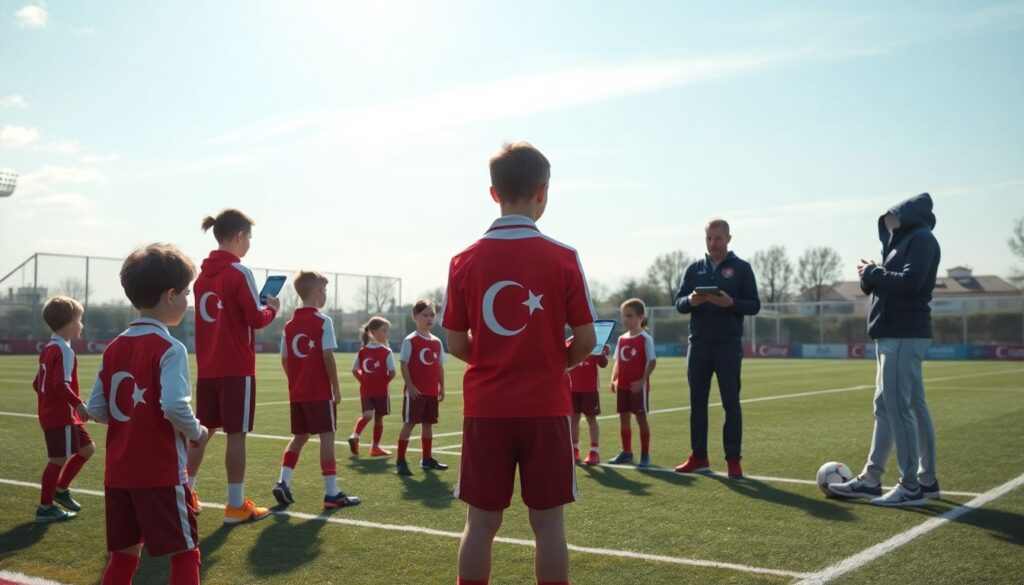
The modern development path in Turkey rests on a few core ideas. First, talent identification has moved earlier. Scouts now look seriously at players from age 10–11, monitoring them over several years instead of betting on a single trial. turkish football scouting and talent development today use not just old‑school “eye test” methods, but also growth prediction charts, psychological profiling and injury‑risk analysis. Second, academies emphasize versatility: even if you’re clearly a winger, you’ll likely spend time learning to play as an attacking midfielder or wing‑back, because coaches know tactical flexibility is vital if you want to survive in different systems and leagues.
Third, the best football academies in turkey for youth don’t separate technique and decision‑making anymore. Instead of endless cone dribbling, kids are put into small‑sided games with constraints: two‑touch limits, pressing triggers, specific positional rules. That means a 14‑year‑old isn’t just learning how to pass, but when and why. All of this is backed by sport science. Sleep tracking, nutrition plans and strength programs are now common even in mid‑tier academies, not only in Istanbul’s giants. It’s a long way from the era when a “fitness plan” meant running laps and doing a few push‑ups after training.
—
Практические шаги: как выглядит путь снизу вверх
If we break down the path from a kid’s first session to professional contract, it roughly looks like this:
1. Первое знакомство с мячом и локальным клубом – most boys and an increasing number of girls start in neighborhood clubs or school teams. At this stage, enjoyment and basic coordination matter more than fixed positions or tactics. Good grassroots coaches focus on fun, confidence and creativity.
2. Переход в академию профессионального клуба – around 11–14, standout kids are invited for trials. turkish football academy training programs then evaluate not only current level, but growth potential: physical maturity, mentality under pressure, ability to learn. This is where many families first face the cost of joining elite football academies in turkey, from travel to city‑center facilities to private tutoring needed to balance school and training.
3. Интенсивное развитие в юношеских командах (U15–U19) – this is the make‑or‑break period. Players move from general training to role‑specific work: pressing angles for forwards, build‑up patterns for center‑backs, orientation body shape for midfielders. Video analysis enters the picture, and players start to understand that being “talented” isn’t enough; consistent habits and resilience become decisive.
4. Профессиональный контракт и аренды – a small group signs their first pro deals at 17–19. However, not many immediately jump into the first team of a big Süper Lig club. Instead, loans to 1. Lig or even 2. Lig sides are common, giving them real minutes against men. The step from U19 to senior football is brutal: less time on the ball, more physical duels, and far less patience for mistakes.
5. Закрепление и возможный трансфер за рубеж – those who adapt can become regular starters. For a growing number, the next step is a move abroad: Bundesliga, Serie A, Premier League, or increasingly Belgium and the Netherlands as “bridge leagues.” At that point the question isn’t just how to become a professional footballer in Turkey, but how to transform into a player who thrives in any European environment, from language to tactical culture.
—
Примеры реализации: от Текин до Арда Гюлер
Consider the generation that exploded onto the scene in the early 2020s. Players like Arda Güler symbolize the new model: discovered early, immersed in a structured academy setting, then carefully managed in terms of minutes and exposure. At Fenerbahçe’s setup, he benefited from individualized plans and early tactical education, which made his transition to Real Madrid in 2023 less shocking than it would have been for a Turkish teenager 20 years earlier. Similar stories can be told about defenders and goalkeepers who quietly moved to Bundesliga clubs and established themselves as reliable starters by 24–25.
Outside the big three of Istanbul, clubs like Altınordu have become case studies in long‑term planning. They intentionally focus on youth rather than expensive foreign signings, showing how turkish football scouting and talent development can support an entire club strategy. Their graduates, once dismissed as “small club kids,” have gone on to Süper Lig and European squads. Even in Anatolia, academies now copy elements from abroad: periodized conditioning, video feedback sessions, and education programs teaching players media skills and financial literacy. In 2026, we also see more collaboration with European clubs—joint camps, friendly tournaments, and shared data platforms that help the best football academies in turkey for youth benchmark themselves against their peers in Spain or Germany.
—
Частые заблуждения и скрытые подводные камни

One common myth is that success is guaranteed if you just enter a big‑name academy. In reality, attrition rates are brutal: only a small fraction of U14 players in top setups ever sign a pro contract, and even fewer become regulars. Another misconception is that money alone opens the door. While the cost of joining elite football academies in turkey can indeed be a barrier—for travel, gear, or after‑school tutoring—pure pay‑to‑play slots are increasingly rare at the highest level, because clubs know reputational damage from obvious nepotism can be severe. Talent and work rate still decide most outcomes, even if the playing field isn’t perfectly equal.
There’s also a romanticized belief that “street football” automatically produces better players than structured work. It’s true that unorganized play helped earlier generations gain flair and improvisation, and coaches now try to simulate that with free‑play segments in training. But without modern load management, nutrition, and injury prevention, many gifted kids simply break down or stagnate. On the other side, some parents dream of sending their child to Europe at 14, assuming foreign academies are always superior. In practice, turkish football academy training programs at top clubs are now good enough that a rushed move abroad can backfire—language issues, homesickness, and cultural shock can stall development more than any tactical benefit gained. The key is timing: going abroad when the player is psychologically and physically ready, not just when the first offer appears.
—
In 2026, the path from academy to superstar for a modern Turkish footballer is more structured, data‑driven and demanding than ever, but it’s also clearer. A talented child no longer relies solely on being “discovered” by chance on a dusty pitch; there is a recognizable ladder of steps, from grassroots and regional scouting to professional contracts and international transfers. Success still depends on countless variables—coaches, injuries, luck—but the system around the player is far more intentional than it was a generation ago. For kids dreaming in Kadıköy, Trabzon or Diyarbakır, that means the journey from first pair of boots to global stage isn’t easy, yet it’s more realistically mapped out than at any time in Turkish football history.