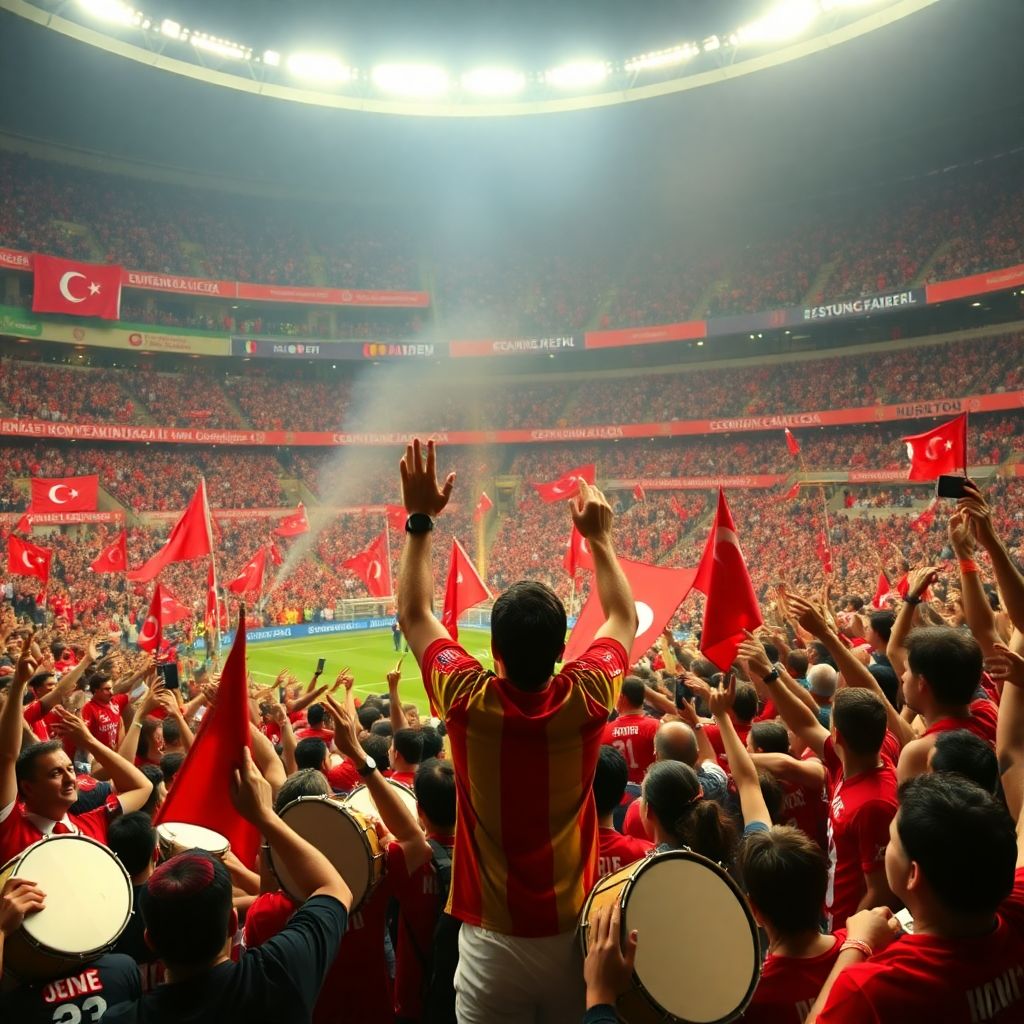
Turkish football fans are considered among the most passionate because support is tied to identity, neighborhood, politics and everyday social life, not only to winning. Chants, colours, drums, banners and strict matchday rituals turn stadiums into emotional theatres, where loyalty, pride and belonging are performed week after week across Turkey’s football landscape.
Core Drivers of Turkish Fan Passion
- Football is intertwined with national history, urban rivalries and class identities, which makes club loyalty deeply personal.
- Highly organized groups and ultras coordinate chants, banners and journeys, sustaining intense turkish football fans culture.
- Music, rhythms and terrace poetry transform matches into collective performances rather than simple sports events.
- Visuals, flares, scarves and flags create immersive experiences that reward commitment and group discipline.
- Clubs and stands function as informal community centers, mobilizing fans around social and political causes.
- Commercialization, media and online ticketing amplify reach, while sometimes clashing with traditional fan values.
Historical Roots: Football and National Identity in Turkey
To understand why Turkish fans are perceived as exceptionally passionate, it helps to start with how football arrived and evolved in the country. From the late Ottoman period and early Republic years, the game became a space where new urban identities and national pride could be expressed in a relatively open way.
Clubs such as Galatasaray, Fenerbahçe and Beşiktaş grew alongside Istanbul’s modernization, representing not only sports teams but also particular districts, schools and social circles. Supporting them meant taking a side in emerging urban rivalries and broader debates about Westernization, secularism and social class. This background still shapes how derbies are felt today.
During key historical moments, stadiums turned into arenas of collective emotion: expressions of national pride after international successes, reactions to economic crises, and symbolic protests. Football crowds became one of the few large-scale settings where people experienced being part of a national “we”, reinforcing the strong emotional charge around matches.
As the Turkish Super Lig professionalized, this legacy deepened. Local clubs outside Istanbul began to carry city identities – for example, Trabzonspor for the Black Sea region. This means a match is rarely “just a game”. It is a visible, weekly test of local strength, dignity and endurance, which fuels the intensity of support and the willingness to sacrifice time and money to be present.
Supporter Culture: Ultras, Local Clubs and Matchday Rituals
Passion in the stands is not spontaneous chaos; it is organized, rehearsed and coordinated by fan groups with clear internal structures. For organizers, journalists and researchers, understanding this machinery is essential to working with Turkish fans effectively.
- Ultras groups and capos
Many major clubs have ultras who lead the stand through “capos” (chant leaders) with megaphones or drums. These groups control the main choreography, decide when to raise scarves or flags, and negotiate with club management about allocations, turkey football fan merchandise and sometimes galas. - Hierarchies and roles
Within an ultras group, roles include chant writers, banner designers, logistics coordinators and social media admins. New members often prove loyalty by attending away games or helping with night-long tifo preparations. - Matchday journeys
Supporters meet in specific neighborhoods or cafés hours before kick-off. They travel together to the stadium by public transport, buses or walking marches, singing continuously. For a Galatasaray vs Fenerbahce derby, these journeys are intense, with police-mandated routes and strict timings. - Gate entry and sector culture
At turnstiles, fans enter sectors where micro-cultures exist: some areas focus on nonstop chanting, others on analysis of tactics, others on family-friendly experiences. Understanding these zones helps security and marketing teams segment their approaches. - Post-match debrief
After the whistle, groups often gather again to discuss the game, analyze choreography quality and plan next actions. Social media posts and videos are published to reinforce narratives of loyalty and superiority over rivals. - Digital coordination
WhatsApp and Telegram groups, plus fan forums, are used to distribute song lyrics, dress codes (for example “all black” or “only club colours”) and guidance on buying turkish super lig match tickets online or offline.
Everyday scenarios for practitioners
For ticketing managers, the organized nature of ultras is crucial. If you misallocate a block of season tickets to non-ultras in a historically vocal sector, coordinated atmosphere collapses and conflict may arise. Offering ways for recognized groups to secure contiguous seats can stabilize the stand.
For journalists covering derbies, pre-match gatherings offer context and quotes that explain mood and expectations better than stadium-only reporting. Visiting pubs, local associations or schools connected to a club can show how deep loyalties shape everyday talk and behavior.
For researchers, observing travel rituals on buses or trains – songs, symbols, conflict resolution – often reveals norms that are invisible once people are seated. These micro-rituals are key to understanding turkish football fans culture on and off the terraces.
Chants and Music: How Sound Shapes Collective Identity
Sound is the main tool that turns thousands of individuals into a single emotional body. Turkish stands use a rich mix of chants, songs and rhythmic patterns that are carefully chosen for different phases of a match and different emotional goals.
- Pre-match identity chants
Before kick-off, long songs referencing club history, neighborhoods and legends reinforce identity. For example, Galatasaray, Fenerbahçe and Beşiktaş each have signature anthems played in the stadium and then continued by the stands without music. - Pressure-building rhythms
During attacking phases, fast clapping patterns and percussion-like chanting are used to pressure the opponent and energize home players. Capos adjust tempo based on match momentum. - Defensive solidarity songs
When the team is under stress, slower, louder songs are chosen that emphasize unity, sacrifice and never giving up. These are designed less for intimidation, more for emotional support. - Rivalry and banter
Special lyrics target rival clubs, often referencing previous derbies or geography. During heated weeks when fans chase Galatasaray vs Fenerbahce derby tickets, these songs circulate online first, then are tested in smaller matches before being used in the big game. - Political and social references
Occasionally, chants comment on politics, economy or local events. These moments signal that the stand is more than a consumer crowd; it is a social actor. - Digital echo
Clips of chants travel on YouTube and TikTok, influencing how younger fans learn lyrics and rhythms. This online echo extends stadium culture into daily playlists and phone ringtones.
Stadium Atmosphere: Visuals, Pyrotechnics and Group Dynamics
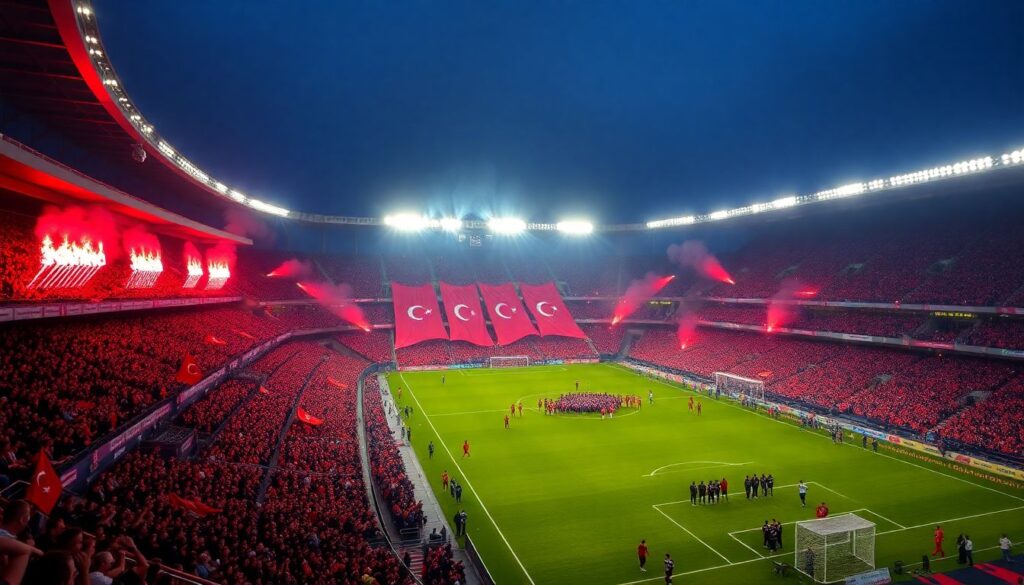
Alongside sound, visuals define how Turkish stadiums are perceived worldwide. Colour-coordinated sectors, enormous banners, flares and coordinated movements produce images that circulate globally, shaping the reputation of local fans and clubs.
Mini-scenarios of practical application
Scenario 1 – Designing a family sector: A club wants more families without killing atmosphere. They keep the ultras behind one goal, invest lighting and sound systems there, and create a side-stand family zone without pyrotechnics but with organized scarf-waving and printed song leaflets.
Scenario 2 – Managing a high-risk derby: Security staff map where ultras turkey football scarves and flags usually concentrate, then plan separate entrances and exit routes. They allow large visual displays but restrict flares to pre-agreed moments, balancing safety and expression.
Scenario 3 – Sponsorship integration: A sponsor co-creates a giant tifo featuring club symbols but keeps logo presence subtle, respecting group aesthetics. They also release limited-edition turkey football fan merchandise that mirrors terrace designs instead of generic corporate branding.
Atmosphere strengths for clubs and organizers
- High noise levels and synchronized chants create a genuine home advantage and compelling broadcast product.
- Powerful visuals encourage fan-generated content, boosting organic marketing and international interest.
- Shared rituals strengthen fan loyalty, supporting season ticket sales and long-term engagement.
- Rich culture around scarves and flags supports local artisans and official club shops.
Constraints, risks and operational challenges
- Pyrotechnics and overcrowding can cause safety incidents, forcing clubs to pay fines or close stands.
- Ultra groups may resist commercial initiatives they see as disrespectful, complicating sponsorship deals.
- Intense rivalry can escalate into verbal or physical conflict, especially around high-risk fixtures.
- Complex visual setups require coordination with stadium management, broadcasters and safety officers.
Political and Social Dimensions: Fans as Community Actors
Football fans in Turkey are often misrepresented as either pure hooligans or pure consumers. In reality, stands function as flexible communities that respond to social issues, support local causes and sometimes confront authorities or club owners.
- Myth: Fans only care about results
In practice, fans often protest club management, ticket prices or scheduling decisions even after victories. For example, changes in policies for turkish super lig match tickets online can trigger coordinated chants and boycotts. - Myth: Ultras are always violent
While some clashes occur, ultras also organize blood donation drives, charity matches and relief campaigns after disasters. Ignoring this side leads to shallow risk assessments. - Myth: Commercialization has “killed” passion
Many groups selectively accept certain sponsorships or official turkey football fan merchandise while rejecting others. Passion adjusts to new economic realities rather than disappearing. - Myth: Politics is always unwanted in stadiums
Sometimes authorities and clubs tolerate or even encourage nationalistic or unifying messages because they stabilize the crowd. The problem is less “politics” and more whether messages polarize or unify. - Myth: Fans are not relevant outside matchdays
Supporter groups maintain constant activity via social media, local meetings and away-trip planning. They influence youth identity, city branding and even local business networks.
For policymakers and club directors, treating fans purely as security risks or customers misses their role as stakeholders. Structured dialogue – fan councils, consultation meetings, transparent decisions – often lowers tension and improves compliance with regulations.
Modern Pressures: Commercialization, Safety and Global Influence
Today, Turkish fan culture lives in tension between tradition and modernization. Clubs need revenue, safe stadiums and international brands; fans want authenticity, affordable access and respect for their rituals. How these pressures are negotiated will shape the next generation of terraces.
Consider a simplified “mini-case” around a major derby:
// Objective: Keep atmosphere intense but safe during a high-profile match
Club sets: dynamic pricing for derby, online-only sales, strict ID checks.
Fans react: complain about cost, fear loss of core sector identity.
Solution path:
1) Reserve blocks for recognized groups at stable prices.
2) Co-design entrance choreography and tifo timing.
3) Communicate early via social channels and fan liaisons.
4) Debrief after the match and adjust future policies.
In such a case, ticketing teams must understand the symbolic weight of certain sections. When you change pricing for a long-standing singing sector or limit traditional flags, you are not only changing logistics; you are changing meaning. Consulting trusted fan representatives before rolling out new systems, especially when shifting more sales to turkish super lig match tickets online platforms, often prevents backlash.
Global influence also flows both ways. International media highlight intense atmospheres, making more visitors search for galatasaray vs fenerbahce derby tickets or local games during Istanbul trips. This tourism can help clubs financially but also adds pressure to accommodate visitors who do not know local norms. Clear pre-match guidance in English – on what to wear, where to sing, and how to respect ultras turkey football scarves and flags zones – can protect the core culture while welcoming newcomers.
Practical Questions on Turkish Fan Behavior
How should a first-time visitor behave in a Turkish stadium?
Follow the lead of locals in your sector: stand, clap and sing when they do, avoid filming ultras too closely and do not wear rival colours. If unsure, choose a side stand or family sector rather than the most intense curva behind the goal.
What should organizers know before a high-risk derby?
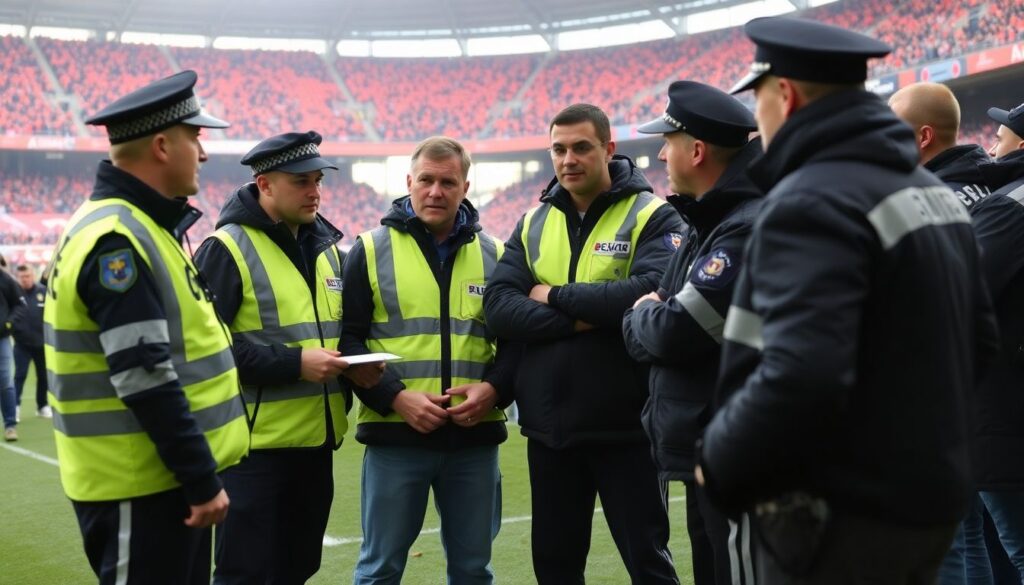
Map historical seating patterns of ultras, coordinate early with fan leaders and police, and clarify rules on banners, drums and pyrotechnics. Communicate all decisions transparently; surprises at the gate create frustration and tension that could have been avoided.
How can clubs commercialize without alienating fans?
Involve recognized groups when designing turkey football fan merchandise and pricing strategies, especially for core sectors. Limit overt branding on sacred symbols, and reinvest a visible portion of commercial gains into fan projects such as youth programs or choreographies.
Why are chants so important for Turkish supporters?
Chants provide structure to emotion, turning individual feelings into coordinated energy that players and rivals can sense. They also transmit history, values and inside jokes across generations, making them a moving archive of club culture.
Is online ticketing good or bad for passionate fan culture?
Online systems for turkish super lig match tickets online make access easier for many fans but can disadvantage older supporters or those without digital tools. A hybrid approach, with quotas for traditional points of sale and clear digital support, usually works better.
How can researchers study turkish football fans culture ethically?
Spend time building trust, be transparent about your goals and avoid treating fans only as “subjects”. Share findings back with communities in accessible language, and be careful with sensitive information that could stigmatize specific groups.
What role do scarves and flags play beyond decoration?
Scarves and flags mark belonging, signal sub-group identities and help coordinate visual performances. For ultras, details of design, colour and text carry layered meanings; copying them without permission into commercial products is often viewed as disrespectful.