
Why the Süper Lig Keeps Blowing Up Everyone’s Predictions
The Turkish Süper Lig has a strange superpower: just when you think you’ve “figured it out”, it makes you look foolish.
Big clubs exist, budgets differ wildly, and yet underdogs keep sneaking into title races, mid-table sides regularly stun giants, and even the best analysts have to add an extra layer of humility to their models.
Below we’ll unpack *why* this league is so chaotic, and compare different approaches fans, bettors, and clubs use to cope with — or even exploit — that unpredictability.
—
1. Historical Volatility: Not Just a Feeling, It’s in the Numbers
1.1. Champions That “Shouldn’t” Have Been Champions
Even by European standards, the Süper Lig has a rich history of surprise winners.
In 2010, Bursaspor broke the “Big Three” monopoly (Galatasaray, Fenerbahçe, Beşiktaş), winning the title with a smaller budget and squad depth that would’ve been laughed at in England or Spain. Much later, Başakşehir took the 2019–20 title despite modest fan support and a tiny brand footprint compared to Istanbul’s giants.
Then, in 2021–22, Trabzonspor dominated the league and sealed the title with weeks to spare, after nearly four decades without lifting the trophy.
Each of these seasons, pre-season title odds from major European bookmakers put these teams well behind the traditional giants. The pattern is clear: in Turkey, the “established hierarchy” is real — but frequently broken.
> Tech detail: Title race volatility (simplified)
> – Since 2009–10, *three* non–Big Three clubs (Bursaspor, Başakşehir, Trabzonspor) have won the league.
> – Over the same period, the Premier League had Leicester as essentially the only true outlier champion.
> – Average pre-season odds for these surprise champions were typically in the 10.00–25.00 decimal range at many books.
1.2. Tight Margins and Wild Swings
Short paragraph:
Many seasons are decided by tiny margins. Goal difference, head-to-head records, or final-day drama are common rather than exceptional.
Look at seasons where multiple teams enter the final month of fixtures still in genuine contention, and you’ll see why turkish super lig betting odds often swing violently week to week. In statistical terms, the standard deviation of points among the top 6 is relatively low compared with some other European leagues — fewer runaway leaders, more clustered contenders.
—
2. Tactical Chaos: Why Game Models Struggle
2.1. Styles Colliding Every Weekend
The Süper Lig is a melting pot: veteran local coaches, imported European tacticians, South American managers, even short-term “firefighters” from all over.
One weekend you’ll see a compact 4‑1‑4‑1 blocking central zones; the next you’re watching an ultra-direct, transition-heavy 4‑2‑3‑1, followed by a possession-obsessed coach trying to imitate positional play seen in La Liga.
Result: continuity is rare.
Longer-term tactical identities — like those you find at Brighton, Atalanta, or Union Berlin — are harder to maintain because coaches rarely last long enough to build them.
> Tech detail: Coaching churn
> – It’s common for 10–12 clubs per season to change their head coach at least once.
> – Some clubs cycle through 2–3 coaches in a single campaign.
> – Each switch changes pressing schemes, line heights, and even preferred player profiles, confusing both opponents and data models.
2.2. Why xG Models Don’t Always Translate Cleanly
Expected goals (xG), non-penalty xG, field tilt, PPDA — all the modern metrics that drive super lig predictions and tips today — still have value, but they hit specific limitations in Turkey.
Short paragraph:
The sheer variability of playing conditions and styles introduces noise:
– Pitches can vary in quality more than in top‑5 leagues.
– Weather swings and local microclimates influence game tempo.
– Refereeing lines (how strictly physical play is punished) differ more match to match.
Together, this means that “clean” models built on stable, high-volume data (like Premier League datasets) often overfit when applied directly to the Süper Lig.
—
3. Financial Instability and Roster Turnover
3.1. Clubs Building Short-Term, Not Long-Term
Financial imbalances are not unique to Turkey, but the way they manifest is.
Many clubs depend heavily on short contracts, loan deals, and late-window bargains. Payroll issues and late payments are not unheard of. So even when a team builds a good squad, keeping it together is another story.
One season you get a coherent core: a reliable striker, two creative midfielders, experienced full-backs. The next season, three key players are gone, replaced by late-August arrivals who need weeks to integrate. That gap in cohesion inevitably shows up in results — and surprises.
> Tech detail: Roster volatility pattern
> – Double-digit player turnover per summer window is common.
> – Loaned players may form 20–30% of a starting XI in certain clubs.
> – Financial Fair Play and local economic fluctuations push clubs into short-term fixes rather than stable multi-year planning.
3.2. Aging Stars and Hidden Gems
Another quirk: many Süper Lig sides rely on aging but famous players (often ex–top-five league names) mixed with undervalued local or African/South American talent.
Short paragraph:
On paper, star power suggests stability. In practice, fitness and motivation issues for older stars combine with the learning curve of young imports. When it clicks, the team looks like a Europa League side. When it doesn’t, they can lose badly to a relegation candidate on a cold Tuesday night in Anatolia.
—
4. Hostile Atmospheres and Massive Home Advantage
4.1. Stadium Culture as a Wildcard
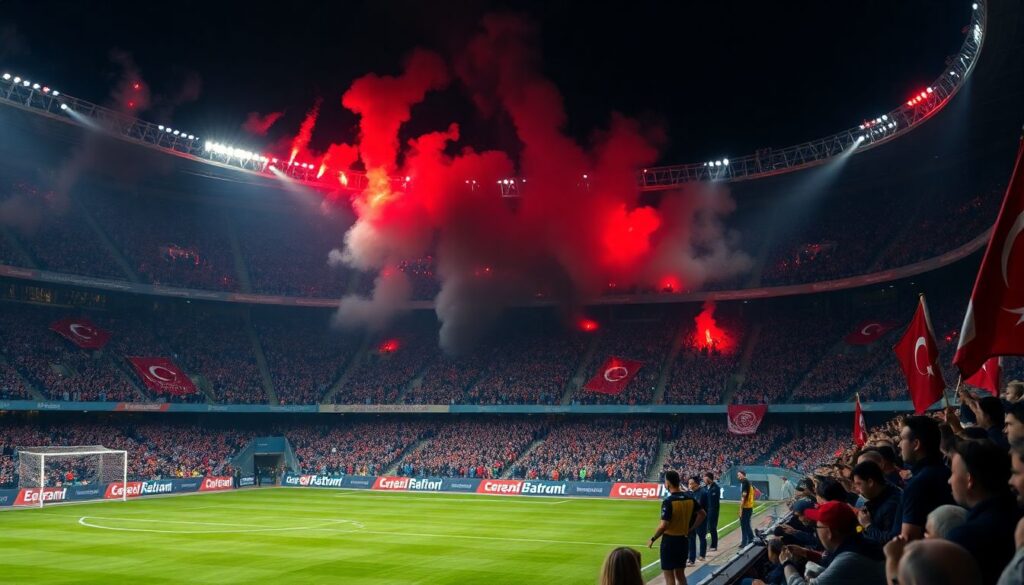
If you’re used to sanitized, family-friendly stadiums, parts of the Süper Lig are a shock. Ultra groups, political undertones, and intense local rivalries create real, measurable pressure.
Noise levels, pyrotechnics, banners, and choreographies don’t just “add color”; they influence referee decisions, opponent psychology, and game tempo.
Academic work on home advantage in Turkey (pre‑pandemic, 2010s) often found higher home-win percentages than in some Western European leagues. Even after the pandemic dip, home advantage in Turkey remains significant.
4.2. Travel and Micro‑Climates
Turkey’s geography matters. Trips from Istanbul to Trabzon, Gaziantep, or Erzurum involve not just distance, but different climates, altitudes, and pitch conditions.
> Tech detail: Contextual factors
> – Long travel often compressed into tight schedules.
> – Altitude and weather variation across regions.
> – Smaller clubs using “difficult” home surfaces to slow down technical sides.
For analysts, this makes it harder to benchmark performance: a team might look “bad” away from home in tough environments but perfectly solid on neutral or good pitches.
—
5. Refereeing, VAR, and Perceived Inconsistency
5.1. A League Where Whistles Matter More
Refereeing in the Süper Lig is constantly under the microscope. Clubs, fans, and media dissect every major decision — and that pressure feeds back into how matches are managed on the pitch.
Short paragraph:
When the same type of contact is a foul in one match and allowed in another, players adapt by exaggerating, surrounding the referee, and breaking rhythm more often. That volatility in decision-making adds another layer of unpredictability on top of already chaotic tactical dynamics.
5.2. VAR as a Double-Edged Sword
VAR was meant to reduce controversy, but in Turkey it often changes the *type* of controversy instead of eliminating it.
Borderline offside calls, penalty reviews, and red card checks frequently swing games. The psychological aftershock — a goal disallowed, a red card upgraded — can turn a quiet match into a storm instantly.
> Tech detail: Game state shock
> – VAR interventions often occur at key emotional moments (goals, penalties).
> – Teams that rely heavily on emotion and crowd energy are especially sensitive to these swings.
> – Quantitatively, you see sharp shifts in shot volume and pressing intensity in the 10–15 minutes after major VAR decisions.
—
6. Different Approaches to “Solving” the Unpredictability
Here’s where it gets really interesting. Different actors in and around the league try to control (or leverage) the chaos in different ways.
6.1. The Analyst’s Approach: More Data, Smarter Models
Data analysts — whether working for clubs, betting firms, or independent projects — try to tame unpredictability with:
1. Contextual xG: adjusting for pitch, weather, and opposition style.
2. Stability metrics: tracking lineup continuity, coach tenure, and system consistency.
3. Game-state analysis: splitting performance by scoreline (0‑0, leading, trailing).
This approach accepts that pure, “clean” models from other leagues will underperform, and retools them to handle noise.
Pros:
– Helps identify undervalued teams and players over a full season.
– Can spot when a team is overperforming finishing or set-pieces unsustainably.
Cons:
– Requires detailed data that isn’t always easily available in lower-budget environments.
– Still struggles with sudden shocks: coaching changes, financial turmoil, or mid-season roster overhauls.
6.2. The Narrative Approach: Intuition, Insiders, and Context
Short paragraph:
Many local journalists, scouts, and seasoned bettors rely more heavily on “soft” information: dressing room mood, upcoming board elections, delayed salaries, or a coach who’s lost the dressing room.
They build mental models rather than statistical ones:
– “This coach always stabilizes defenses in his first 5 games.”
– “This stadium on a night match is a nightmare for big clubs.”
– “These players are mentally fragile after European travel.”
Pros:
– Picks up signals that are invisible to spreadsheets (morale, politics, local rivalries).
– Often ahead of the market right after coaching changes or internal crises.
Cons:
– Prone to bias, recency effect, and overvaluing anecdotes.
– Hard to quantify, hard to replicate, and even harder to backtest.
6.3. The Hybrid Approach: Where the Edge Usually Lives

The most successful approach tends to be a hybrid: data-driven baselines combined with local knowledge and narrative filters.
For instance, when looking at turkish super lig betting odds, some of the savvier bettors and modelers will:
– Start with a core probabilistic model (xG, shot quality, possession zones).
– Adjust for travel, pitch, and weather with simple but robust penalties/bonuses.
– Overlay insider context: rumors of a coach being sacked, players unpaid, or a key defender fasting, injured, or suspended.
In practice, this means accepting that your model is *wrong* in some structural way, then continuously reshaping it instead of chasing fake precision.
—
7. How Fans and Bettors Navigate the Chaos
7.1. From Streaming to Stadiums: Following the Mayhem
For fans, unpredictability is part of the appeal.
Some invest in a super lig live streaming subscription precisely because games tend to be dramatic: late goals, wild comebacks, and emotional derbies. Others prefer to feel that chaos live and will happily buy super lig match tickets online for mid-table clashes, knowing they may get 4–3 thrillers instead of cautious 1–0s.
Short paragraph:
This emotional volatility makes the Süper Lig entertainment-heavy, but also mentally draining for supporters. Every winning streak comes with the fear of an imminent collapse.
7.2. Bettors, Bookmakers, and Edges That Don’t Last
From a betting perspective, the Süper Lig is both opportunity and trap.
The best bookmakers for turkish super lig often shade lines carefully because they know local specialists keep an eye on injuries, politics, and travel conditions. Yet, because information flow isn’t as standardized and transparent as in top‑five leagues, pricing errors still appear — especially early or in less televised fixtures.
For casual bettors relying on generic super lig predictions and tips today from broad European sites, this is dangerous. Those models may not fully understand the league’s quirks, leading to overconfident picks on “big” teams in tough away fixtures or post‑European fatigue spots.
—
8. Club Strategies: Stabilize or Embrace the Chaos?
8.1. The Stabilizers: Long-Term Projects
Some clubs explicitly try to *reduce* variance:
– Longer contracts for the core squad.
– Committing to a tactical identity (pressing or possession) and hiring coaches that fit it.
– Investing in youth academies and domestic scouting systems.
These teams aim to become the “Atalanta of Turkey” — always competitive, rarely in crisis. Trabzonspor’s title run, or Başakşehir’s gradual build-up to their championship, reflected elements of this approach.
Upside:
– More predictable performances over multiple seasons.
– Better player development and resale value.
Downside:
– Requires patience from boards and fans in a culture where instant success is expected.
– You can still be dragged into chaos by external factors (refereeing, VAR, politics).
8.2. The Gamblers: Short-Term Power Plays
Other clubs choose volatility:
– Heavy reliance on loans and veteran stars.
– Frequent coaching changes as a motivational tactic.
– Aggressive, attacking football that magnifies swings in both directions.
This is a “boom or bust” model. One year you’re in Europe; the next you’re flirting with relegation.
Upside:
– Possibility of rapid ascents in the table.
– Ideal when a window of opportunity appears (rivals mismanaging, a talented coach available).
Downside:
– Financial and sporting instability.
– Hard to sustain success, easy to spiral downward.
—
9. So, Why Is the Süper Lig So Unpredictable — And Is That a Problem?
In the final analysis, the Süper Lig’s unpredictability is the product of multiple interacting systems:
– Tactical diversity and coaching churn.
– Financial volatility and squad turnover.
– Intense atmospheres and geographical diversity.
– Refereeing inconsistency and VAR drama.
– A cultural tolerance for risk and short-term decisions.
From a purist’s standpoint, you could argue that this instability prevents Turkish clubs from building long-lasting, exportable models like those in Germany or England.
But from the standpoint of drama — for fans, neutrals, and even analysts who enjoy a challenge — this is precisely what makes the league irresistible. Predicting it is hard; understanding *why* it defies prediction is the real intellectual game.
In other words, the Süper Lig isn’t broken because it’s chaotic. It’s chaotic by design, and that’s exactly why the rest of Europe keeps watching.