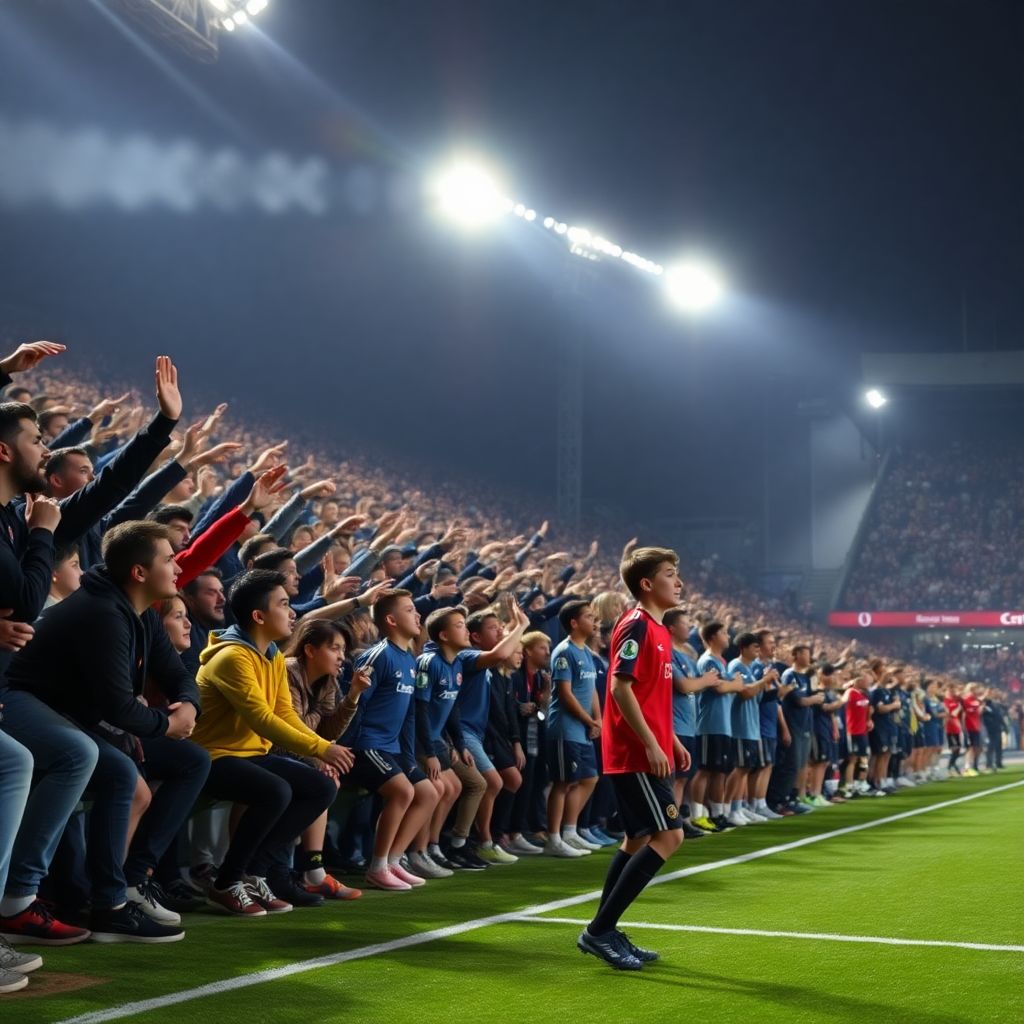
Genç yetenekler in Turkish football are high-upside players, usually under 21, who show above-average technique, game intelligence and mentality compared to their age group. For fans, they are the next big Turkish football stars to follow; for clubs, they are strategic assets that impact transfers, tactics and long‑term squad building.
Essential Insights on Genç Yetenekler
- “Wonderkid” is not just about age; it combines technical quality, physical tools, decision-making and mentality in competitive matches.
- The best Turkish wonderkids 2025 will come from both big‑club academies and well‑run Anatolian projects, not just İstanbul giants.
- Objective, role-specific metrics matter more than viral clips when judging top Turkish football talents to watch.
- In Türkiye, early senior minutes and stability often beat glamorous but rushed moves driven by Turkish wonderkids transfer news.
- For practical use, think in 5‑year development paths: role, league level and minutes per season, not only headline transfers.
- Gamers tracking Turkish wonderkids FIFA career mode can borrow real scouting ideas: traits, growth windows and risk profiles.
Myths and Misconceptions about Turkish Wonderkids – what doesn’t hold up
The word “genç yetenek” gets used for almost any young player who scores a nice goal or appears in a highlight reel. In practice, a Turkish wonderkid is a prospect with repeatable strengths, role clarity and progression curve, not just one impressive moment in a derby or youth tournament.
Myth 1: “If he is not in a big İstanbul club, he cannot be elite.” Modern scouting and data show that the next big Turkish football stars can emerge from smaller academies, regional schools and diaspora clubs abroad. Big clubs still matter, but they are no longer the only entry point to top‑level football.
Myth 2: “A true wonderkid must dominate from his very first senior match.” Transition from youth to professional football is volatile. Many top Turkish football talents to watch show flashes, then regress, then adapt. Steady improvement in decision-making, pressing discipline and off‑ball movement is far more predictive than an explosive debut.
Myth 3: “High market value equals high potential.” Fees depend on contract length, club pressure to sell, agent leverage and hype cycles in Turkish wonderkids transfer news. Real potential is a combination of tools (pace, first touch, scanning), context (coach, league level) and psychological resilience, which are not fully visible in the fee.
Myth 4: “If a player is great in Turkish wonderkids FIFA career mode, he must be great in real life.” Game databases are useful starting points, but they simplify context: tactical role, dressing-room fit and adaptation to new cultures. Treat them as inspiration, then validate with match footage and role‑specific metrics.
Who Counts as a Genç Yetenek: objective criteria and scouting metrics
To turn the vague label “genç yetenek” into a useful concept, you can apply structured criteria. Below are practical filters and metrics that coaches, analysts and serious fans in Türkiye can use.
- Age and development window
- Usually under 21, with clear room for physical and tactical growth.
- Biological age (body development) and minutes played often matter more than calendar age.
- Role clarity over position label
- Ask “What problem does he solve?” rather than just “Is he a 10 or a winger?”.
- Examples: wide 1v1 specialist, deep playmaker, penalty‑box striker, aggressive ball‑winning 6.
- Technical execution under pressure
- First touch when pressed, quality of weak foot, pass or shot after contact.
- Repeatability of actions: can he find the same solution multiple times per match, not just once.
- Game intelligence and scanning
- Frequency of checking shoulders before receiving the ball.
- Ability to choose between dribble, pass, or hold based on teammates’ and opponents’ positions.
- Physical profile aligned with role
- Acceleration and agility for wingers; stamina and dueling power for midfielders; timing and leap for centre‑backs.
- Growth potential: frame suggests he can add strength without losing mobility.
- Mentality and resilience
- Reaction after mistakes: hides from the ball or asks for it again.
- Consistency of effort in pressing, tracking runners, and defensive transitions.
- Progression trajectory
- Upward steps: from youth to U19, to reserves, to senior minutes, possibly to European competitions.
- Evidence of learning: fewer repeated mistakes, better timing of runs, improved decision-making.
Where they come from: academies, agents, competitions and data pipelines
Genç yetenekler do not appear by magic. In Türkiye, they move through several typical pathways that combine academies, agents, competitions and emerging data tools.
- Big‑club academies (Süper Lig giants)
- Structured coaching, regular youth league competition and internal benchmarks against older age groups.
- Accelerated exposure: training with the first team, early bench appearances, domestic cup minutes.
- Regional and Anatolian projects
- Smaller clubs offering early senior minutes in lower leagues or relegation‑battle teams.
- Often less pressure from media, giving time to make and correct mistakes on the pitch.
- Diaspora and European academies
- Turkish-background players in Germany, the Netherlands, France and elsewhere.
- These players may choose to represent Türkiye and quickly become next big Turkish football stars in the national setup.
- Agent and network‑driven moves
- Youngsters pushed to foreign clubs too early, attracted by promises of fast moves.
- Success depends on match between player profile and tactical needs of the buying club, not only on the agent’s reach.
- Data‑assisted scouting pipelines
- Clubs and agencies using video platforms and event data to find undervalued talents in domestic U19, Reserve and lower leagues.
- Shortlists generated by metrics (e.g., progressive carries, key passes, successful pressures) before in‑person checks.
- National youth teams and tournaments
- UEFA youth qualifiers, elite rounds and friendlies as cross‑checks vs foreign peers.
- Strong performances here often trigger Turkish wonderkids transfer news and interest from bigger European leagues.
Promising names to watch: comparative table of top prospects
The names below illustrate how to think about genç yetenekler in a structured way. Instead of arguing over who is “the best Turkish wonderkids 2025”, use comparative profiles: role, context, strengths and realistic projection over the next five years.
This table is not a definitive ranking of top Turkish football talents to watch, but a practical template you can adapt as new players emerge or situations change.
| Player | Primary position | Current club context | Age bracket | Key strengths (scout view) | 5-year projection snapshot |
|---|---|---|---|---|---|
| Arda Güler | Attacking midfielder / inverted winger | Major European club fighting for titles | Early 20s | First touch, vision between lines, set‑piece quality | Regular starter at top‑5 league level, creative hub for A Milli Takım if development remains on track |
| Kenan Yıldız | Second striker / hybrid 10 | Top Italian club with strong tactical discipline | Early 20s | Link play, close control in tight spaces, pressing work rate | Versatile forward in European competitions, key connector between midfield and attack for club and country |
| Semih Kılıçsoy | Centre forward | Big Turkish club with demanding fanbase | Late teens | Penalty‑box instincts, powerful finishing, aggressive pressing | Leading Süper Lig striker with potential step to top‑5 league if shot selection and link‑up improve |
| Can Uzun | Attacking midfielder / forward | German club giving regular minutes to youngsters | Late teens | Ball striking, off‑ball runs into box, composure in final third | Attacking focal point in a strong European mid‑table side if he refines decision‑making vs compact blocks |
| Yunus Akgün | Winger | Top Turkish club with loan spells abroad | Early‑mid 20s | 1v1 dribbling, delivery from wide, energy in pressing | Reliable rotation winger at European level, with peak years dependent on end‑product consistency |
Projected development paths over the next 5 years – realistic scenarios
Forecasting young careers is about mapping ranges of outcomes, not guessing a single “destiny”. For practical planning, consider best‑case, solid‑case and risk‑case scenarios for each player profile.
- Arda Güler: creative playmaker trajectory
- Best‑case: Establishes himself as a regular starter in a Champions League contender, becomes primary chance creator and set‑piece taker, central figure for Türkiye in major tournaments.
- Solid‑case: Rotational player at a top club, starting regularly in domestic games, with impactful cameos in Europe; national team starter in certain game plans.
- Risk‑case: Recurrent injuries or role misfit lead to limited minutes; needs a step down to a slightly smaller club to reset and recover rhythm.
- Kenan Yıldız: tactical forward evolution
- Best‑case: Becomes first‑choice second striker or advanced midfielder in Serie A, valued for pressing and link play, used as a structure‑giver in complex tactical systems.
- Solid‑case: Reliable squad player who can cover multiple attacking roles, starting in rotations and specific matchups.
- Risk‑case: Struggles to lock down a defined role; bounces between positions, which slows development and may require a move to a club with clearer fit.
- Semih Kılıçsoy: modern 9 development
- Best‑case: Dominant Süper Lig striker, then moves to a top‑5 league mid‑table or Europa League side, leading the line and scoring consistently.
- Solid‑case: Long‑term starter for a big Turkish club, alternating between starting and impact sub roles in European matches.
- Risk‑case: Overexposure and pressure reduce confidence; stagnates if he does not diversify finishing and combination play, becoming too predictable.
- Can Uzun: attacking wildcard path
- Best‑case: Becomes an all‑round attacking midfielder/forward, trusted to decide games with late runs and shots from edge of box in a strong Bundesliga or similar‑level team.
- Solid‑case: Key player in a mid‑level European side, delivering double‑digit goal contributions across competitions.
- Risk‑case: Struggles against deeper blocks; ends up as a streaky player who shines only in transition‑heavy games.
- Yunus Akgün: winger maturity curve
- Best‑case: Stabilises as starting winger for a club regularly in European group stages, with improved decision‑making in the final third.
- Solid‑case: Valuable rotation option for strong squads, trusted especially in games that need directness and width.
- Risk‑case: If end product does not develop, becomes labelled as “impact sub only”, limiting contract leverage and upward mobility.
- Common planning mistakes with genç yetenekler
- Focusing on social‑media highlights instead of full matches and off‑ball work.
- Rushing to transfer abroad without mastering domestic league decision‑making.
- Ignoring role fit: signing players because they are hyped, not because the coach has a clear tactical plan for them.
Economic and national-team impact: transfers, valuations and squad integration
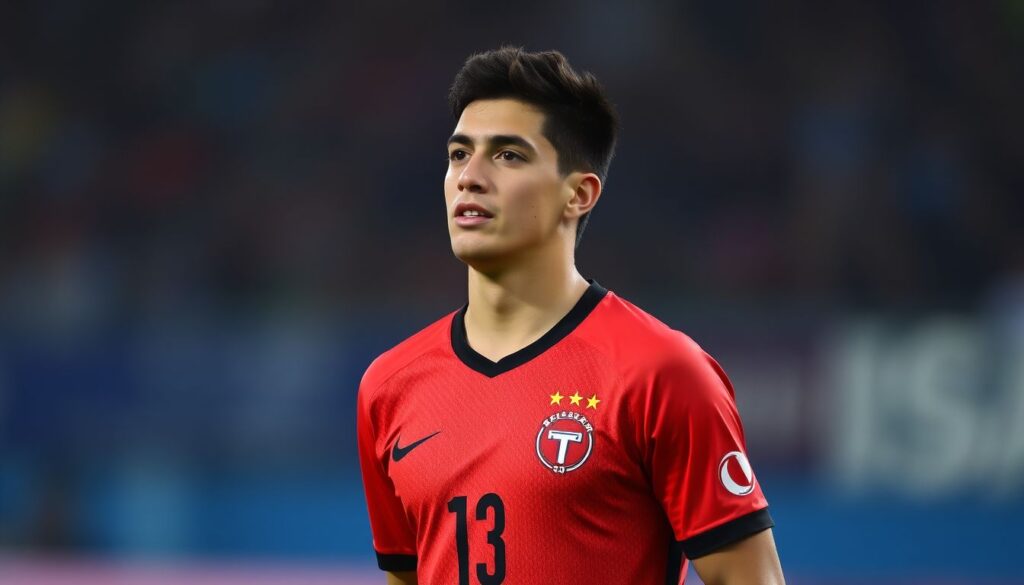
Genç yetenekler affect clubs and the national team far beyond their on‑ball actions. Used correctly, they can balance budgets, energise fanbases and raise the ceiling of A Milli Takım.
Think of a simplified “decision flow” for a promising 19‑year‑old striker at a big Turkish club:
- Assess readiness
- Is he among the top three options at his position in training intensity, pressing reliability and finishing drills?
- If not, can a loan to a lower‑pressure Süper Lig or 1. Lig side provide guaranteed minutes?
- Map economic upside
- Project two parallel lines: value if he stays as rotation (slower but safer appreciation) vs value if he plays 90 minutes weekly elsewhere (higher but riskier appreciation).
- Factor sell‑on clauses, bonus structures and image value with fans into the decision.
- Align with national‑team needs
- Coordinate with youth and senior national‑team staff about positional gaps in upcoming cycles.
- If the national team lacks his profile (e.g., pressing 9, left‑footed winger), prioritise contexts where he can practice that role weekly.
- Re‑evaluate annually
- Every summer, re‑check role, performance trend and market interest, instead of reacting impulsively to single‑match highs or lows.
- This modular review keeps decisions updated as new data, coaching changes and competition levels shift.
Applied consistently across a generation, this approach can turn a wave of genç yetenekler into sustainable club revenue streams and a deeper, more flexible national squad, rather than a short‑lived cycle of hype around isolated next big Turkish football stars.
Common doubts and clarifications about Türkiye’s young talents
How can I practically evaluate if a young Turkish player is a real wonderkid or just hyped?

Watch two or three full matches, not just clips, and focus on repeatable actions: first touch under pressure, off‑ball movement, pressing effort and decision-making in key zones. Compare these behaviours with older teammates in the same role rather than with highlight reels.
Is it better for a genç yetenek to stay in Süper Lig or move to Europe early?
It depends on guaranteed minutes and tactical fit. A stable starting role in a mid‑level European league is usually better than sitting on the bench at a big club, but regular Süper Lig minutes with a good coach can be ideal for certain profiles.
Do video games give a reliable picture of Turkish wonderkids’ real potential?
Games and databases behind Turkish wonderkids FIFA career mode can be useful as a first filter but they are simplifications. Always verify with live or full‑match video and context: injuries, coach preferences and adaptability to different systems.
Which positions among Turkish youngsters tend to attract the most transfer interest?
Attacking positions with clear output-creative 10s, wingers and strikers-usually generate the most transfer noise. However, intelligent full‑backs and ball‑playing centre‑backs are increasingly valued when clubs build long‑term squads.
How often do highly rated youth players in Türkiye actually become senior stars?
The conversion rate is low everywhere, not just in Türkiye. This is why clubs plan in portfolios: work seriously with several genç yetenekler, knowing that only a smaller group will reach true star level.
What should fans look for in Turkish wonderkids transfer news to judge if a move makes sense?
Check three things: the buying club’s recent use of young players, tactical role the coach needs, and realistic path to minutes. A smaller fee to the right club is often better than a huge fee to a club where the player is the fourth option.
Can a player still be considered a wonderkid after age 21?
The label usually fades after 21-23, but development can continue much longer. At that point, it is more accurate to call him a “late‑developing starter” or “prime‑ready player” rather than a wonderkid.