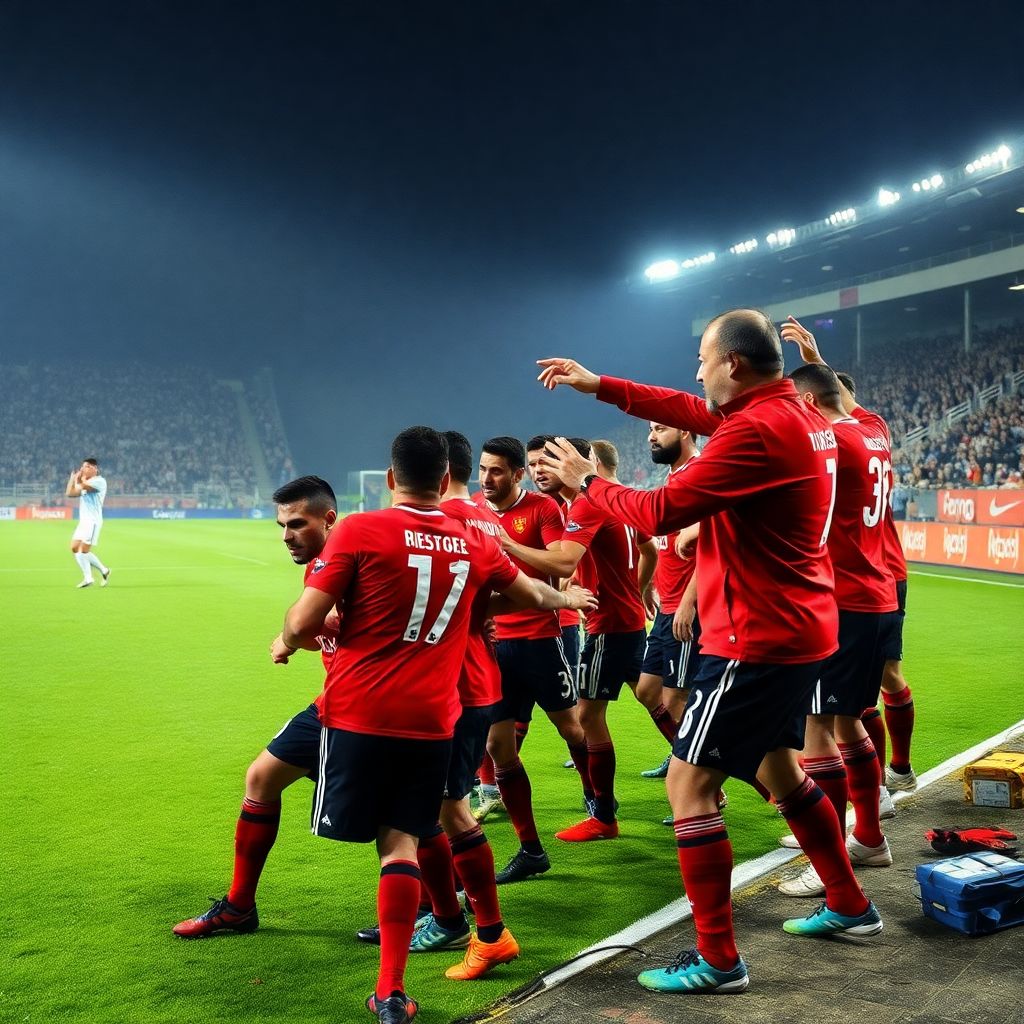
Turkish coaches in Europe stand out for blending emotional intensity, flexible shapes and aggressive transitions with pragmatism. Their tactical approach is unique because it is easier to implement in passionate, high‑tempo environments but carries higher risk: defensive distances can stretch, pressing can become chaotic and player fatigue appears earlier if load is mismanaged.
Core Tactical Claims from Turkish Coaches
- Use emotion and crowd energy deliberately as part of the game model, not just as a side effect.
- Prioritise rapid vertical transitions over sterile possession, especially after regaining the ball.
- Build game plans around opponents’ weaknesses rather than one fixed ideological style.
- Accept controlled defensive risk to keep more players high for counters and second balls.
- Rely on adaptable hybrid roles (e.g., full‑back/winger) instead of rigid positional play.
- Train resilience for chaotic match phases, not only for ideal, rehearsed structures.
Historical Roots: How Anatolian and Ottoman Football Shaped Modern Methods
The rise of turkish football coaches in europe is rooted in a domestic culture shaped by intense derbies, politically charged stadiums and the geographical bridge between East and West. For decades, Turkish clubs absorbed influences from Italian defensive organisation, Balkan physicality and Brazilian flair, then re‑exported a hybrid style.
Historically, major Istanbul clubs brought in foreign managers, while Turkish assistants handled daily work: session intensity, emotional management and adapting instructions to local players. Over time, those assistants became head coaches, carrying forward a philosophy that values adaptability, matchday fire and tactical opportunism more than rigid long‑term systems.
This background explains why you often see modern turkish football tactics in europe combining: compact mid‑blocks learned from Italian mentors, direct counter‑attacks reminiscent of English football and technically gifted playmakers influenced by South American imports. The “Ottoman” part is less about formations and more about accepting volatility: games swinging quickly, momentum treated as a tool.
In practical terms, this history makes Turkish methods relatively easy to introduce in clubs used to emotional atmospheres and big‑match pressure, but riskier in calmer, highly structured environments such as some Scandinavian or Dutch academies, where players expect clear, stable patterns rather than frequent game‑to‑game tactical shifts.
Philosophy in Practice: Possession, Transition and Controlled Aggression
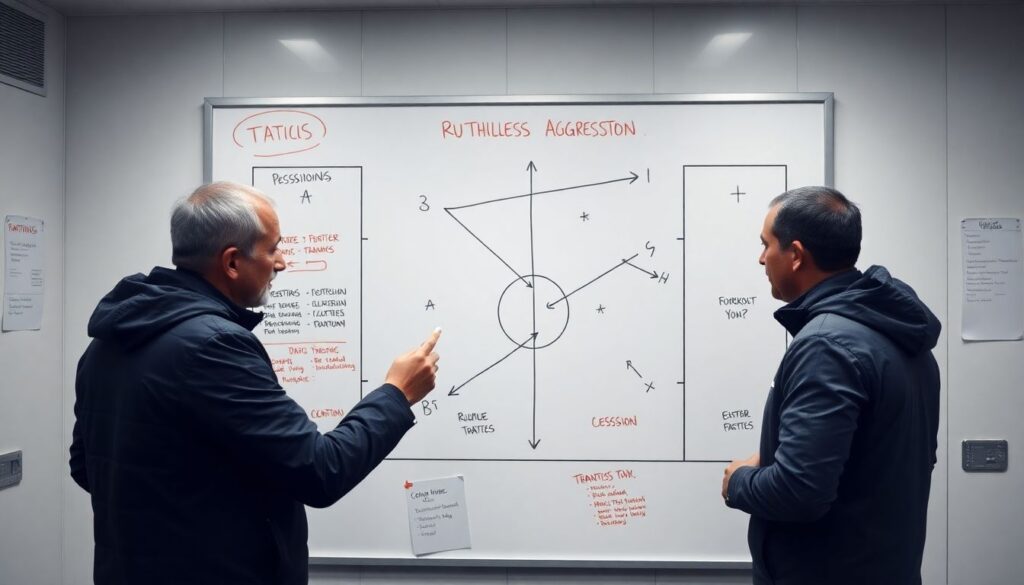
When people want turkish tactical football philosophy explained, they usually discover three pillars: situational possession, ruthless transitions and “controlled aggression” in duels and pressing. Below is a simplified breakdown useful for turkish coaching methods tactical analysis.
- Situational, not dogmatic, possession
- Ball retention is a tool to unbalance the rival, not a target KPI.
- Coaches shift from short build‑up to longer, more direct play depending on opponent’s press and match state.
- Compared with Spanish positional play, there is less insistence on fixed zones and more freedom for playmakers.
- Transition‑first thinking
- Training time prioritises winning and exploiting second balls, counter‑attacks and defensive reorganisation after losing possession.
- Counter‑press triggers are simpler and more emotional: “ball lost in our half – sprint back”, “ball lost in theirs – three closest jump”.
- Controlled aggression in pressing
- Pressing is calibrated not to look perfect on video, but to disturb the rival’s key build‑up players.
- Lines may appear slightly stretched compared with Italian schools, but that is accepted in exchange for more pressure on the ball.
- Context‑based adaptability
- Game plans change heavily by opponent: different pressing schemes and build‑up patterns across the same week.
- This can be easier to sell to players who like “specific plans” but risk confusing younger squads without strong tactical references.
- Emotion embedded in the game model
- Intensity peaks are planned around crowd moments: early high press at home, more control away.
- Unlike some German methodologies, emotional spikes are not simply by‑products but desired phases of the match.
Mini match scenarios for understanding the mechanics
Scenario 1 – Home game vs stronger rival: Turkish coach sets a medium block, invites wide build‑up, then presses aggressively when the ball reaches the full‑back. On regain, immediate vertical pass to a target forward or a half‑space 10, with three players sprinting to attack the box.
Scenario 2 – Away game vs weaker rival: Early sustained high press to force errors and silence the crowd, then a phase of calmer possession on the rival half, using rotations between full‑back and winger to create 2v1 overloads on the flanks before crossing or cutting back.
Implementation checklist for coaches
- Define 2-3 simple transition rules (on regain, on loss, on throw‑ins) and repeat them every session.
- Design at least one weekly game where emotional intensity is artificially raised (score handicaps, time pressure, crowd noise).
- Limit your build‑up patterns to two clear variants so players can adapt quickly without confusion.
Defensive Organisation: Press Triggers, Lines and Compactness
Defensively, Turkish coaches in European leagues tend to blend mid‑block compactness with situational high pressing. Compared with Italian schools, the back line may step out more aggressively; compared with German ones, pressing structures are often simpler but more tailored to specific opponents.
- Scenario: Derby with emotional crowd
- Block height: starts mid, quickly shifts to high after good offensive moments.
- Press trigger: backward pass to centre‑back facing own goal.
- Risk: if first pressing wave is bypassed, large spaces appear behind midfield; requires athletic double pivot.
- Scenario: European away tie vs possession‑dominant team
- Block height: compact low-mid, wingers narrow to protect half‑spaces.
- Press trigger: sideways pass to full‑back; winger jumps, striker cuts inside lane, nearest midfielder shifts wide.
- Risk: full‑back can be isolated 1v1 if winger presses late or without cover.
- Scenario: League game vs direct opponent for top spots
- Block height: flexible – high press after own chances, otherwise mid.
- Press trigger: loose first touch from pivot; central midfield swarms, back line steps up bravely.
- Risk: one misjudged step can leave back line exposed to runs in behind.
- Scenario: Protecting a narrow lead late in the match
- Block height: deeper, but forwards still instructed to chase certain passes to prevent free crosses.
- Press trigger: ball played to non‑dominant foot of rival centre‑back.
- Risk: players may misinterpret “controlled aggression” as going all‑in, creating fouls and restarts near their own box.
Short defensive training checklist
- Choose a maximum of three pressing triggers and link each to a simple shout cue for players.
- Run wave‑press drills: if first wave is beaten, practice instant drop into compact block instead of chaotic chasing.
- Record 10-15 defensive sequences each game; review how often players reacted to agreed triggers versus improvising.
Attacking Patterns: Overloads, Verticality and Set‑Piece Innovation
On the ball, many of the best turkish football managers in european leagues rely on wide overloads, quick vertical passing and creative set pieces. These ideas are powerful and often easier to implement than rigid positional structures, but they come with identifiable risks if the squad lacks fitness, decision‑making or aerial strength.
Typical application scenarios in attack
Wide overload vs flat back four: Full‑back, winger and nearest midfielder create a triangle. Winger receives wide, midfielder underlaps, full‑back overlaps. Decision is made based on the full‑back’s body orientation: if inside, play outside; if outside, attack inside half‑space.
Vertical counter after clearance: When the ball is cleared from defence, the first attacker is instructed to play one‑touch into a running midfielder instead of holding. This keeps the tempo high and stresses unbalanced rival lines but requires strong timing and cooperative runs.
Set‑piece routines: Turkish coaches often design corner and free‑kick plays to target second balls at the far post or cut‑backs to edge‑of‑box shooters, accepting more bodies in the area and less cover against counters.
Advantages for implementation
- Attacking patterns are intuitive: wide overloads and fast counters are quickly understood even by players with limited tactical schooling.
- Verticality energises fans and players, creating a feedback loop that suits passionate Turkish and Balkan‑style crowds.
- Set‑piece focus provides a clear edge in tight European knockout ties where open play chances are limited.
- Compared with elaborate Spanish structures, these patterns demand less memorisation and can be installed in shorter pre‑seasons.
Risks and structural limitations
- Heavy reliance on vertical play can make the team predictable against deep blocks that defend well in their box.
- Committing many players to wide overloads or set pieces can leave large spaces for counters if rest‑defence is poorly drilled.
- High emotional tempo may lead to rushed decisions, low shot quality and technical errors in the final third.
- Without strong physical conditioning, repeated high‑intensity sprints for overlaps and counters increase risk of late‑game collapse.
Simple attacking drill checklist
- Train “3‑player wide overload” patterns on both flanks with clear rules for who finishes in the box.
- Include at least two vertical‑counter games per week where forwards must play one‑touch lay‑offs by rule.
- Maintain a small playbook of 3-4 set‑piece variants and track which ones fit your current squad profile.
Player Development and Mentality: From Academy Habits to European Demands
The success of turkish football coaches in europe also depends on how they adapt player mentality from domestic habits to European tactical expectations. Misconceptions around intensity, discipline and freedom often slow this process and increase risk when transferring a Turkish‑style game model abroad.
Common mistakes and myths in applying Turkish methods
- Myth: “Intensity solves all tactical problems”
Reality: Without compact distances, pressing just exposes spaces. Intensity must be channelled through clear triggers and cover rules.
- Mistake: Over‑rotating line‑ups to reward emotion over structure
Frequent changes to “send messages” can prevent defensive automatisms from forming, leading to constant re‑learning of basic tasks.
- Myth: “Creative players cannot be tactically disciplined”
Turkish models often prove the opposite: giving stars clear responsibilities in pressing and transition actually frees them psychologically in possession.
- Mistake: Importing domestic training loads directly into European calendars
Higher match tempo and travel demands in European leagues mean the same emotional sessions may result in fatigue and injuries.
- Myth: “Chaos is the identity”
The effective Turkish style is not random chaos; it is rehearsed reactions to chaotic phases. Skipping the rehearsal part leaves only the chaos.
- Mistake: Ignoring communication styles
Loud, confrontational feedback common in some Turkish environments may backfire in more individualist dressing rooms if not adjusted.
Development‑focused checklist for coaches
- Define non‑negotiable tactical rules for every role before adding “freedom” instructions.
- Introduce match‑like emotional drills gradually, monitoring recovery and performance data where available.
- Clarify with each player how their pressing and transition tasks actually increase their attacking opportunities.
Adapting Tactics Across Leagues: Balancing Flexibility with Cultural Identity
As modern turkish football tactics in europe spread, coaches must adjust between preserving identity and fitting into local cultures. The core concepts-transition intensity, opponent‑specific planning, emotional momentum-remain, but their expression is tuned to league tempo, refereeing style and squad profile.
Mini case: Turkish coach moving to a balanced, possession‑oriented league

Imagine a Turkish coach hired in a mid‑table club in a technically strong European league. The board expects more aggressiveness than the previous conservative coach, but also fears defensive chaos. The coach designs the following simple “algorithm” to phase in his approach over three months:
- Month 1 – Stabilise
- Keep existing 4‑2‑3‑1 structure but add one main pressing trigger: backward pass in opponent’s half.
- Introduce just one vertical counter pattern with the 10 and striker.
- Month 2 – Intensify
- Raise defensive line slightly, add a second pressing trigger (bad touch from pivot).
- Work on wide overloads twice per week, keeping rest‑defence with three players behind the ball.
- Month 3 – Personalise
- Analyse which patterns players execute best; remove one that does not fit and expand the successful ones.
- Introduce emotional peak periods (first 10 minutes, post‑goal) with planned high press waves.
This staged integration respects the cultural identity of the coach while reducing risk for the club. For analysts doing turkish coaching methods tactical analysis, it also provides clear checkpoints to evaluate whether the style actually improves results or just increases volatility.
Ease of implementation vs risk: comparison snapshot
| Aspect | Turkish‑influenced approach | Typical Italian approach | Typical Spanish approach |
|---|---|---|---|
| Ease of first‑phase implementation | Medium-high: concepts are intuitive but need fitness and emotional buy‑in. | Medium: more classroom work on spacing and line behaviour. | Low-medium: complex positional rules require time and repetition. |
| Risk of defensive exposure | Higher, especially during failed presses and transitions. | Lower: compactness and control are prioritised. | Medium: strong in settled phases, vulnerable to counters. |
| Suitability for underdog teams | High: disrupts stronger opponents and leverages emotion. | Medium: can neutralise but not always threaten. | Medium: needs technical quality to function fully. |
| Adaptation to fixture congestion | Challenging: emotional and physical loads must be carefully managed. | Manageable: controlled tempo eases physical stress. | Manageable if squad has depth and technical stability. |
Cross‑league adaptation checklist
- Map league characteristics: tempo, refereeing, travel, typical formations.
- Decide which two or three Turkish identity elements (e.g., transitions, set pieces, emotional peaks) are non‑negotiable.
- Phase in extra intensity only after team shows basic stability in distances and rest‑defence.
Practical Questions on Applying Turkish Tactical Methods
How quickly can a club adopt a Turkish‑inspired tactical model?
Most clubs can implement basic pressing triggers and vertical transitions within a few weeks. Full integration of emotional peaks, set‑pieces and flexible structures usually takes a full pre‑season plus several competitive matches of refinement.
Are Turkish tactical ideas suitable for youth academies?
Yes, but youth programmes should first hard‑wire spacing, basic build‑up and decision‑making. Then coaches can introduce simplified transition rules and emotional drills without sacrificing long‑term technical development.
What types of players benefit most from this approach?
Athletic midfielders, aggressive defenders comfortable defending large spaces and attackers who like direct play benefit most. Highly structured, risk‑averse players might need more time and video work to feel secure in such models.
How do Turkish coaches balance emotion and discipline on matchday?
They often channel emotion into pre‑planned intensity windows and specific triggers rather than constant chaos. Clear, repeated cues in training help players understand when to “go wild” and when to stabilise the game.
Can a possession‑dominant team integrate Turkish transition principles?
Yes. The key is not abandoning possession but adding sharp, rehearsed patterns after regains and losses. A team can still keep the ball while using Turkish‑style explosiveness in key match moments.
What is the biggest risk when copying Turkish methods without adaptation?
The main danger is importing the high emotional and physical load without the underlying structure. That leads to stretched teams, inconsistent results and dressing‑room fatigue, both mental and physical.
How should analysts evaluate a Turkish coach’s impact in a European club?
Track transition efficiency, pressing success after triggers, set‑piece output and late‑game stability. Comparing these indicators before and after the coach’s arrival gives a clearer picture than possession percentages alone.