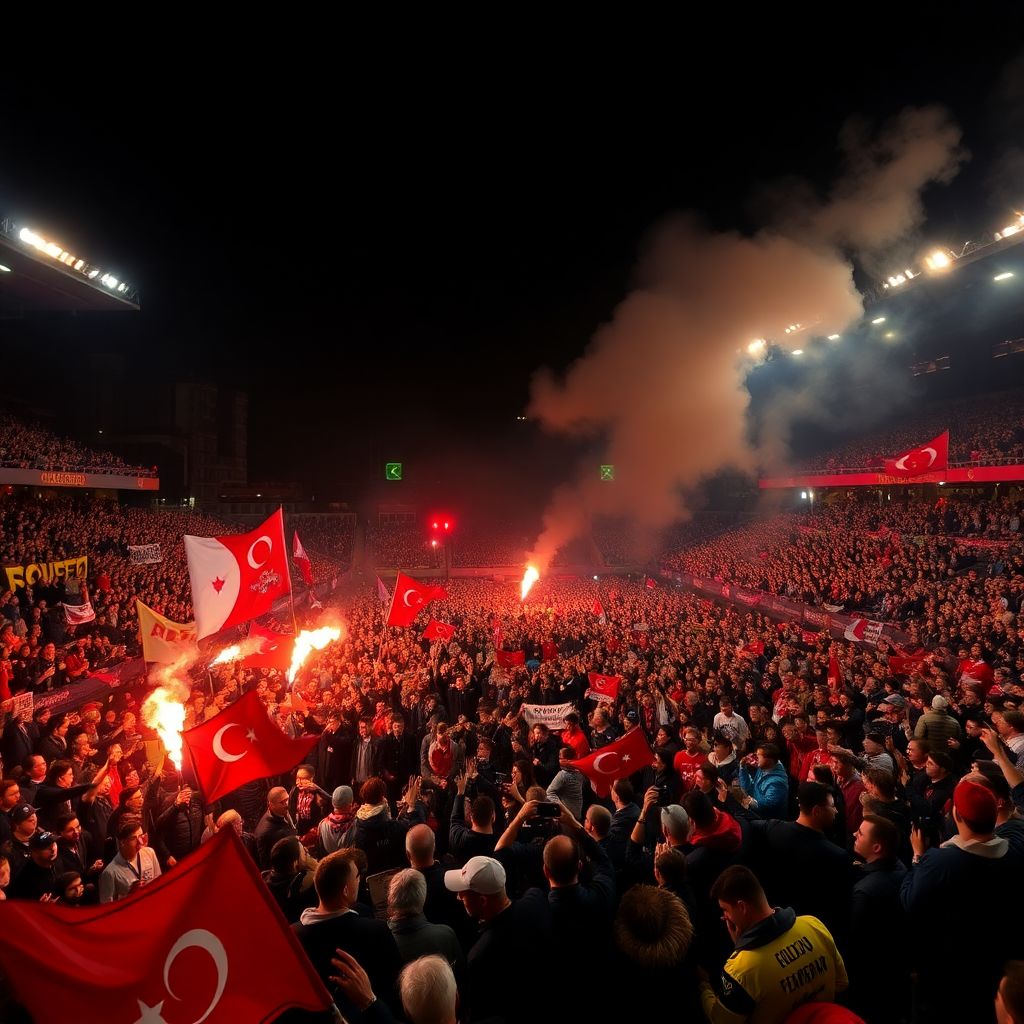
For raw intensity, embedded identity and emotional volatility, the Galatasaray-Fenerbahçe derby belongs in the absolute top tier of European rivalries. For coaches and safety officers it is also one of the hardest to manage. If you want to study derby psychology in practice, Istanbul is usually the best “laboratory”.
Core psychological drivers in derby rivalries
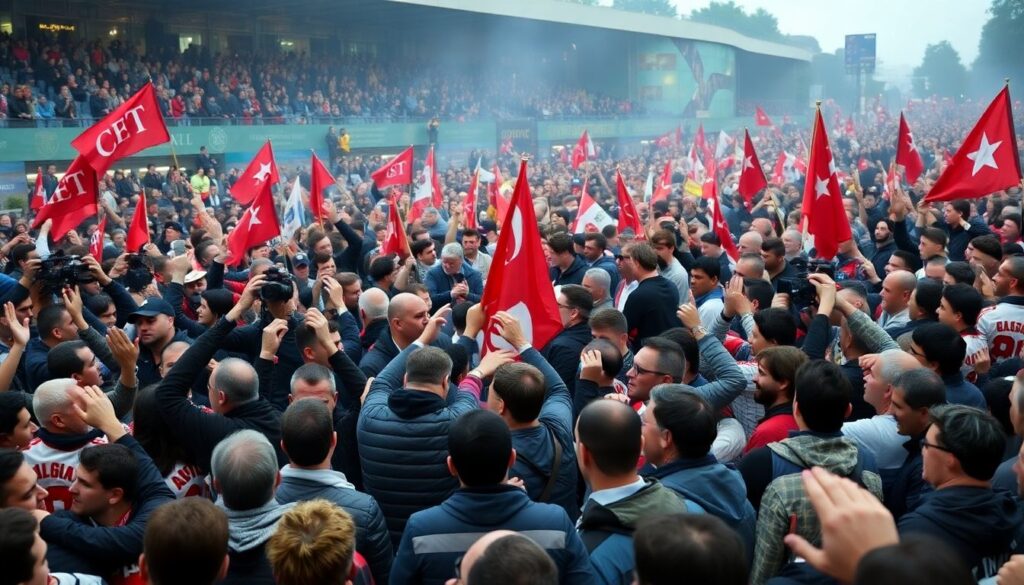
- Derbies fuse local identity, history and perceived injustice into a single emotional narrative.
- Symbolic rituals (chants, banners, marches) turn individual emotion into coordinated group behaviour.
- Perceived disrespect from opponents or media escalates aggression far faster than objective events.
- Spatial factors (stadium acoustics, segregation, away allocation) can flip mood within minutes.
- Uncertainty (team form, injuries, refereeing narratives, Galatasaray Fenerbahce derby odds) amplifies pre‑match tension.
- Policing style and club-ultra relations can either contain or ignite flashpoints.
Local identity and the Galatasaray-Fenerbahçe emotional economy
Primary criteria when comparing Istanbul’s derby with Europe’s other giants:
- Depth of local identity split: Class, geography, education and political stereotypes attached to each club.
- Intertwined daily life: Mixed families, shared workplaces and neighbourhoods increasing constant contact.
- Historical turning points: Title deciders, controversial refereeing, and remembered “betrayals”.
- Symbolic ownership of the city: How strongly each side claims Istanbul, Glasgow, Madrid or Milan as “theirs”.
- Cross‑sport and cross‑institution reach: Schools, universities, business networks and media aligned with each side.
- Perceived external recognition: Whether fans feel their derby is respected among the best European football derbies to watch live.
- Emotional economy of victory and loss: How far results spill into next week’s work, family and social media life.
- Ticket access and hierarchy: How Galatasaray vs Fenerbahce tickets are distributed among ultras, members and corporates.
Coach’s lens: The Istanbul derby’s emotional economy is unusually “total” – defeat feels like status loss in daily life. Training needs stronger emotion-regulation routines, scenario planning for early setbacks and clear substitution protocols when players emotionally overload.
Fan-sociologist’s lens: Galatasaray-Fenerbahçe encapsulates modern Turkish urban identity politics. Unlike some European rivalries that have partially cooled through gentrification, this one still fuses class, prestige education and regional migration patterns, making symbolic humiliation particularly sensitive.
Safety officer’s lens: Mixed friendship groups and families mean post‑match city‑wide dispersal is riskier than in more segregated rivalries. Risk plans must map metro lines, ferry routes and nightlife hotspots, not just the stadium’s immediate footprint.
Rituals, chants and collective memory shaping fan behavior
Rituals are the most visible difference between Galatasaray-Fenerbahçe and other elite derbies. They encode memory into action and guide when crowds escalate or self‑regulate.
| Variant | Best suited for | Pros | Cons | When to prioritise this style |
|---|---|---|---|---|
| Ultras capo-led chanting and drums | Clubs with strong ultra groups and clear internal hierarchy | High coordination, can calm or ignite crowd on command, strong identity reinforcement | Risk of over-concentration of power; if capos are angry, de‑escalation is harder | When tension is high and authorities maintain strong liaison with ultra leaders |
| Whole‑stadium anthems and slow songs | Clubs like Galatasaray and Liverpool with iconic pre‑kickoff rituals | Creates unity across age groups; channels anxiety into catharsis instead of aggression | Can flip to mass booing if early events are perceived as unjust | For pre‑match and half‑time emotional containment in high‑risk derbies |
| Call‑and‑response insults at rival sectors | Derbies with strong visual separation between home and away ends | Offers “safe” outlet for hostility across distance; clear sound direction makes policing easier | Can rapidly escalate to object throwing when separation lines are weak | Only when physical segregation and netting are robust |
| Choreographed tifos and pyrotechnic displays | Ultra cultures in Istanbul, Rome, Belgrade and similar cities | Powerful identity signalling to TV audiences; can delay or displace aggression | Safety hazards, smoke, masking of movements, potential for legal sanctions | When safety officers have clear pre‑agreed limits and enforcement plans |
| Family‑friendly fan marches and civic rituals | Clubs seeking to rebrand or de‑escalate historically violent derbies | Broad participation dilutes ultra dominance; improves public legitimacy | Seen as artificial if not co‑created with existing fan groups | After major incidents or sanctions when reputation repair is strategic |
Coach’s lens: Rituals directly affect warm‑up arousal. In Istanbul, choreos and ultra chants can push players into “too hot” territory. Matchday routines must include controlled breathing, anchored cues and rehearsal of worst‑case crowd reactions.
Fan-sociologist’s lens: Chants transmit a derby’s unofficial history, including perceived injustices. Comparing Istanbul with other best European football derbies to watch live shows that Turkish fan culture carries more explicit political and institutional references, which deepens grievances.
Safety officer’s lens: Every ritual is also a risk channel. Pyro, flags, and megaphones are not just visual-acoustic tools but logistical ones. Mapping who owns which ritual (which group, which capo) is as important as counting stewards.
Comparative intensity: metrics for passion across Europe’s top derbies
Intensity can be compared only if you define clear indicators and data sources instead of relying on myth.
| Metric | What it indicates | How to measure | Primary data sources |
|---|---|---|---|
| Acoustic peak and average noise | Moment‑to‑moment emotional arousal and crowd synchrony | Stadium decibel tracking with time‑stamped events | Club performance teams, broadcast audio tracks, academic crowd‑noise studies |
| Volatility of in‑play behaviour | How quickly teams switch between control and chaos | Event data: fouls, cards, duels, turnovers clustered around flashpoints | Opta/Wyscout style databases, internal match reports |
| Ticket demand and price resilience | Strength of symbolic value regardless of table position | Tracking Galatasaray vs Fenerbahce tickets demand vs comparable fixtures | Club sales systems, secondary market scraping, fan surveys |
| Pre‑match and post‑match incident rates | How often passion spills into disorder | Standardised reporting per 10,000 attendees | Police records, hospital data, stadium safety logs |
| Media and social spike index | Derby salience beyond local market | Volume and sentiment analysis around match days | News APIs, platform analytics, club digital teams |
If your goal is tactical learning, then:
- If you want to stress‑test player composure, choose Galatasaray-Fenerbahçe or similar Balkan/Latin derbies where volatility is high.
- If you want more controlled intensity, El Clásico‑type fixtures provide passion with less crowd‑driven chaos.
- If you want to study religious and community‑based splits, the Old Firm offers a distinct psychological profile.
- If you prioritise travel plus learning, select the best European football derbies to watch live with well‑developed safety protocols (e.g. German or some English rivalries).
Coach’s lens: Translate these metrics into training: simulate noise peaks, referee controversy and sudden momentum swings. Treat Galatasaray Fenerbahce derby odds not just as betting data but as aggregated expectation pressure that players feel.
Fan-sociologist’s lens: Comparing derbies through shared metrics exposes how different societies legitimise aggression, protest and celebration. Istanbul scores highly on emotional “stickiness” – derby results stay politically and socially relevant longer.
Safety officer’s lens: Incident‑rate metrics should feed risk categorisation. If Istanbul or another city shows high pre‑match clustering of incidents, you adjust ingress timing, alcohol policy and away‑fan escort design.
Media narratives and social platforms: escalation and framing effects
- Define your narrative risk map: List sensitive topics (referee bias, institutional favouritism, historic injustice) that inflame Galatasaray-Fenerbahçe and comparable derbies.
- Set pre‑match communication anchors: Clubs, leagues and police should release clear, neutral messages that emphasise sporting stakes over identity wars.
- Monitor emotional spikes in real time: Use dashboards to track keywords, viral clips and influencer posts that can tip mood inside and outside the stadium.
- Intervene with credible voices: When temperature rises, activate ex‑players, respected fan leaders and commentators to reframe narratives away from humiliation or conspiracy.
- Align internal briefings: Ensure coaches, players and stewards know the current media climate; a single provocative comment can undo hours of preparation.
- Post‑match cooling phase: Structure mixed‑zone interviews and official posts to validate emotion but close the conflict, especially after controversial decisions.
Coach’s lens: Players must understand that a throwaway quote can fuel days of hostile coverage before the next derby. Media‑training sessions should be as standard as set‑piece drills, especially in the week when Galatasaray vs Fenerbahce tickets go on sale and hype spikes.
Fan-sociologist’s lens: Modern derbies are co‑produced by TV, influencers and fans. Meme culture compresses complex histories into shareable images that can either normalise hostility or deradicalise it, depending on framing choices.
Safety officer’s lens: Online rumours about ticket scams, bus ambushes or police bias can move groups rapidly. Pre‑agreed information channels and quick myth‑busting are central tools, not optional extras.
Stadium dynamics: crowd psychology, home advantage and tipping points
- Over‑relying on “home advantage will save us”: In hyper‑charged derbies like Galatasaray-Fenerbahçe, home pressure can freeze players if the first 15 minutes go badly.
- Ignoring micro‑geography: Coaches often forget specific “hot” zones – tunnel exits, away‑corner proximity – when planning warm‑ups and substitutions.
- Underestimating acoustic asymmetry: Some stands project far more sound; conceding near those sectors can double psychological impact.
- Poor use of substitutions under noise: Replacing a struggling player without preparing him for the reaction can damage squad trust, especially in hostile derbies.
- Neglecting steward body language: Visible anxiety from staff signals danger to fans and can trigger copy‑cat panic or aggression.
- Static segregation strategies: Copy‑pasting plans from league matches to derby days ignores different movement patterns and choreos.
- No plan for momentum swings: Teams that score early sometimes relax mentally, while the crowd expects a rout; the emotional mismatch creates mistakes.
Coach’s lens: Treat stadium layout like a tactical variable. Rehearse communication under peak noise and plan which players cope best facing the loudest sectors at critical phases.
Fan-sociologist’s lens: Physical architecture shapes whether fans express anger vertically (towards institutions) or horizontally (towards rival fans). Renovations and safe‑standing areas can subtly redirect aggression patterns.
Safety officer’s lens: Map tipping‑point zones and overstaff them with experienced stewards. Use CCTV and spotters to detect early signs of crowd “hardening” – clustering, coordinated chants, object pooling.
Conflict management: policing, ultras, and practical safety measures
For learning and observation, Galatasaray-Fenerbahçe is the best choice if you want to experience extreme emotional stakes, complex ultra politics and high‑level policing in one event. For a more balanced mix of safety and intensity, other best European football derbies to watch live – especially in leagues with strong all‑seater stadium norms – are preferable. If your priority is deep theoretical understanding, combining live observation with a good football rivalry psychology book or a structured sports psychology course football rivalries will give you a broader, more transferable picture.
Coach’s lens: Istanbul offers unmatched case studies in pressure management and collective emotion; supplement with data‑rich but safer environments like some German derbies.
Fan-sociologist’s lens: Choose Galatasaray-Fenerbahçe for rich fieldwork on identity, but triangulate with rivalries that reflect different religious and class structures.
Safety officer’s lens: Observe Istanbul to understand worst‑case complexity, then benchmark protocols against countries that have reduced derby risk over time.
Practical queries from coaches, analysts and safety officers
How can a coach prepare players specifically for the Galatasaray-Fenerbahçe atmosphere?
Use noise simulations, referee‑bias scenarios and rapid momentum‑change drills. Build individual coping plans for emotionally vulnerable players and rehearse communication routines for when the crowd turns hostile.
Which derby is best to study if I am designing a sports psychology course on football rivalries?
Combine Galatasaray-Fenerbahçe for intensity, El Clásico for global media framing and the Old Firm for religion‑infused identity. That mix covers most mechanisms you would teach in a sports psychology course football rivalries module.
What should analysts focus on when comparing derby performances across leagues?
Normalise for intensity by tracking volatility metrics: fouls, cards, pressing drop‑offs and decision errors around flashpoints. Link those patterns to crowd‑noise peaks and controversial incidents instead of treating performance dips as purely tactical.
How do ticketing policies influence derby psychology and safety?
Access to Galatasaray vs Fenerbahce tickets shapes who fills the stadium: hardcore ultras, families or corporate guests. That mix alters acceptable norms for aggression and should directly inform policing style and steward briefings.
Can media training really reduce derby‑day incidents?
Yes, if coordinated. When players, coaches and club channels avoid humiliation narratives and conspiracy language, it narrows the space for extreme interpretations among highly aroused fans.
What is the safest way for a neutral fan to experience high‑intensity derbies live?
Prioritise leagues with strong safety infrastructure, buy tickets through official channels, avoid ultra sectors and follow local police and club guidance on routes and meeting points.