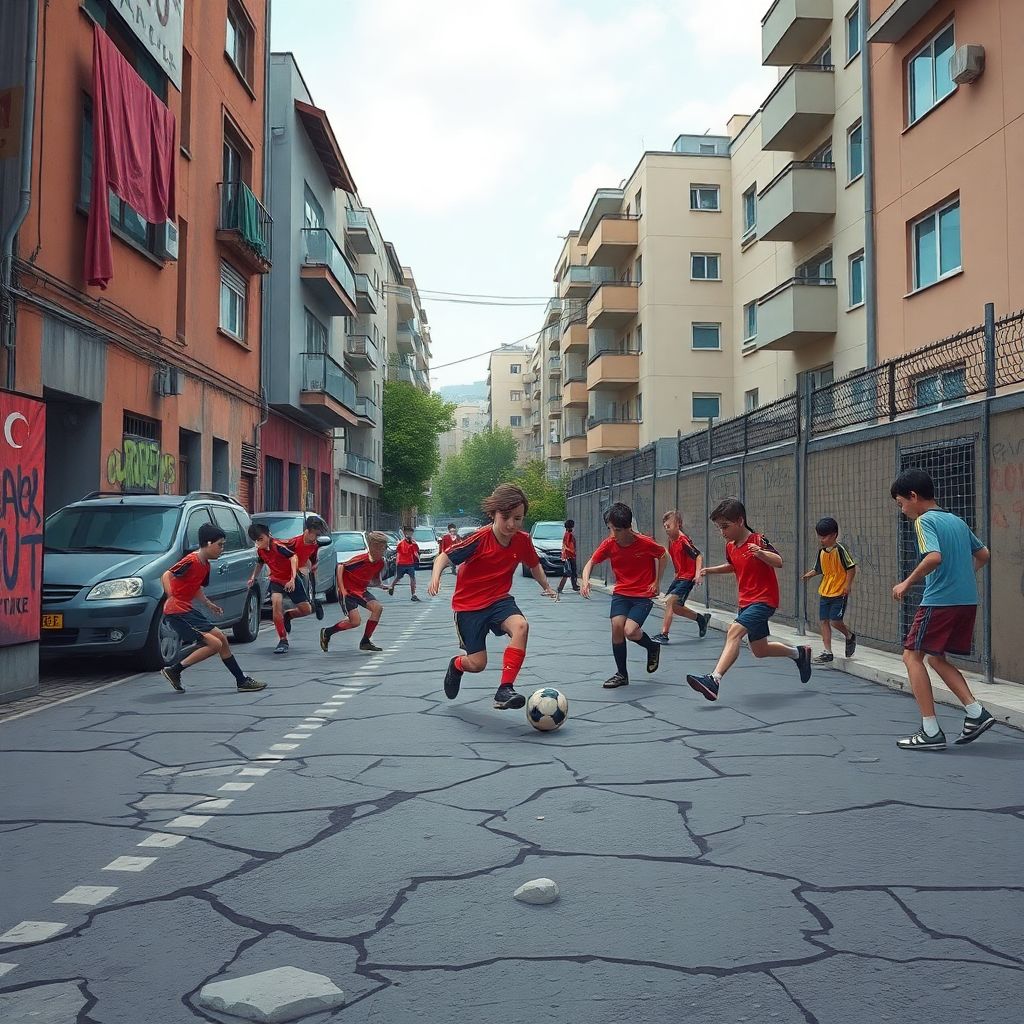
From Asphalt to Arenas: How Turkish Football Culture Shapes the Game
What We Mean by “Culture of Football”
Before diving into the streets of Istanbul or the stands of Trabzon, let’s define a few terms so we’re on the same page:
– Football culture – the mix of habits, values, emotions, rituals and unwritten rules around football: where people play, how they talk about the game, what they expect from players and referees, how they celebrate or protest.
– Playing style – the characteristic way a team or an entire country tends to play: tempo, risk‑taking, preferred formations, level of aggression, typical patterns of attack and defence.
– Micro-culture – smaller environments that shape a player: the neighbourhood, school yard, local club, family.
– Macro-culture – the broader national context: media narratives, federation policies, league economics, fan traditions.
When people talk about *turkish football culture*, they’re really talking about how all these layers interact in Turkey: from kids juggling a ball in an alley to ultras choreographing a tifo for a derby.
—
Street Football as the “Operating System”
The Typical Turkish Street Environment
If you zoom into a random neighbourhood pitch in Izmir or Ankara, you’ll usually see:
– Uneven surface: asphalt, gravel, maybe a sloping schoolyard
– Improvised goals: backpacks, stones, whatever is handy
– Crowded space: too many players for a tiny area
– Flexible rules: “no offside”, “three corners = penalty”, winner-stays-on
This environment acts like an informal training lab. It rewards specific skills and mindsets.
Key definition:
> Constraint – in sport science, a factor that limits or directs behaviour (space, time, rules, physical ability). Street football is basically a bundle of constraints that push players to adapt.
Diagram: How Street Constraints Shape Skills
Imagine a simple cause-and-effect diagram in text form:
– Small space
→ players constantly under pressure
→ fast decisions + close control
– Rough surface
→ unpredictable ball bounces
→ softer first touch + better balance
– Many players
→ crowded central areas
→ creative dribbling to escape pressure
– Flexible rules
→ constant negotiation
→ leadership skills and emotional resilience
Put together:
> Street constraints → Technical improvisation + bravery in 1v1 → Foundation of turkey football style of play
You can actually see this DNA later in professional matches: wingers who love to take on their man, midfielders who try that risky through ball instead of the safe back pass.
—
Emotion as a Tactical Resource
Why Matches Feel Like Dramas, Not Just Games
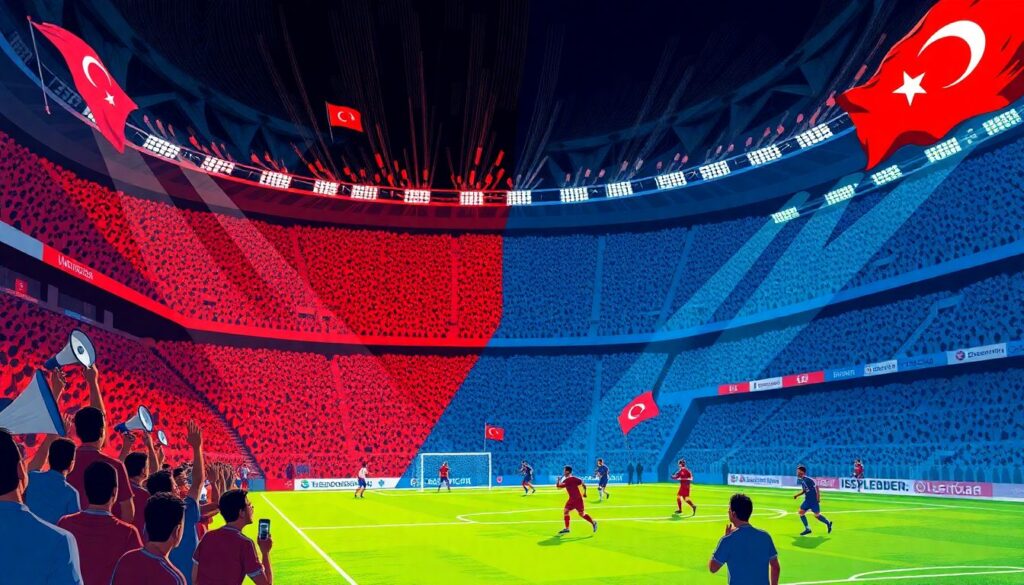
In Turkey, football is rarely “just sport”. It’s:
– A local identity badge (Black Sea vs Aegean, Anatolia vs Istanbul)
– A political and social loudspeaker
– A weekly emotional release valve
That emotional charge doesn’t stay in the stands; it spills onto the pitch and becomes a tactical factor.
Coaches in Turkey know that:
– If the crowd senses passivity, the team will get whistled and anxiety spreads.
– If the team presses aggressively and chases every ball, the stadium noise multiplies that energy.
So the emotion → tempo loop looks roughly like this:
> Crowd expectation for “warrior spirit”
> → Players press harder, tackle more, sprint more
> → Game becomes physically intense and high tempo
> → Crowd noise rises
> → Players keep pushing, even when tired
This is why you so often see Turkish clubs turning around games at home in the last 20 minutes. The emotional environment makes “crazy comebacks” almost normal.
—
Core Features of the Turkish Style of Play
Technical and Tactical Profile
If we summarise the typical modern Turkish approach (knowing every club and coach is different), we get a few recurring traits:
– High emotional intensity – reactive surges in tempo, especially after a goal or controversy
– Wing-focused attacks – traditional love for wide players who dribble and cross
– Physical duels – strong emphasis on winning second balls and aerial challenges
– Moments of improvisation – individuals allowed to “break the plan” when they sense an opening
In other words, the average turkey football style of play is less about calm, sterile control and more about waves of pressure, especially in big matches. It’s not chaos; it’s controlled volatility.
Comparison: Turkey vs. Other Football Cultures
To see what’s unique, it helps to compare:
– Versus Spain:
– Spain tends toward structured possession, short passes, and patience.
– Turkey leans more on vertical passes, direct transitions and quick switches to flanks.
– Versus Germany:
– German teams emphasise systematic pressing and automatised patterns.
– Turkish teams often press in emotional bursts, with less mechanical synchronisation but huge crowd-driven energy.
– Versus Brazil:
– Brazil’s creativity is often tied to flair and rhythm.
– Turkish creativity is closer to “street survival”: nutmegs, body feints, drawing fouls in dangerous areas.
Street football and heated stadium atmospheres have combined to produce a style that’s risk‑friendly and emotionally charged, even if modern analytics are slowly pushing it to be more controlled.
—
Stadium Culture: Architecture of Noise
How Turkish Stadiums Amplify the Street
Modern arenas in Istanbul, Trabzon, Konya and elsewhere are deliberately designed to trap sound:
– Steep stands
– Roofs that reflect noise back down
– Supporter groups placed in acoustically powerful spots
Textual “sound diagram”:
– Old open stadium
→ Sound escapes upward and outward
→ Crowd feels loud, but pitch-level noise is moderate
– Modern bowl stadium
→ Sound hits the roof, bounces down
→ Players feel surrounded by noise, even at 60–70% capacity
That architectural choice means street-level passion doesn’t dilute when it reaches the elite level; it gets amplified.
Tickets, Tourism and Globalisation
As Turkish football has become more global, another layer appeared: visitors who come specifically for the atmosphere.
– People planning turkey football tours and stadium visits often care less about the match result and more about *feeling* that famous noise.
– Rising demand for turkish super lig football tickets has nudged clubs to improve fan services, security, and matchday shows, without completely softening the raw edge of the stands.
This tourism wave adds money and visibility, which in turn:
– Attracts better foreign coaches and analysts
– Exposes local fans and players to different tactical ideas
– Creates a mild tension between “show” football and traditional “fight” football
—
Clothing, Identity and the Digital Street
Shirts as Portable Flags
In Turkey, wearing your club’s shirt isn’t just merch; it’s a soft declaration of allegiance. Digital life has taken this even further:
– Fans abroad can now buy turkish football shirts online, join watch parties, and be part of local rivalries from thousands of kilometres away.
– Social networks have turned celebration rituals (chants, choreography, street marches) into globally shared content.
You can think of this as a second street, a virtual alley where culture keeps evolving. Young players grow up consuming highlight clips, tactical breakdowns, and fan-made videos as much as they grow up playing on asphalt.
That “digital street” subtly reshapes their football imagination: they copy not only the dribbles of their heroes, but also the body language, celebrations and even the way they argue with referees.
—
Coaching Meets Asphalt: Modernising Without Losing the Soul
Data and Sports Science Enter the Scene
Since the early 2020s, and especially by 2026, Turkish clubs have invested more in:
– GPS-tracked training loads
– Video and data analysis
– Nutrition, sleep and recovery protocols
– Youth academies with standardised methodologies
Where a decade ago the local stereotype was “great passion, limited structure”, now more and more teams blend:
– Street creativity – 1v1 skills, courage to try the unexpected
– European structure – synchronised pressing, compact defensive blocks, set-piece routines
This has a few practical outcomes:
– Fewer wild tactical swings within a match
– Better game management in away games
– More conscious load control, avoiding burnout from “all-out” pressing for 90 minutes
Short vs. Long-Term Tension
There’s still a cultural tug-of-war:
– Fans expect drama, intensity, visible “heart”.
– Analysts and modern coaches push for patience, strategic pressing, and calculated risks.
When a coach tilts too far toward sterile control and passes sideways for 70 minutes, the stands often rebel. So the most successful managers in Turkey tend to:
– Offer visible aggression without constant chaos
– Build attacks with some structure but allow freedom to certain players
– Use emotional peaks (after a goal, a referee decision, or a big save) to trigger specific high-pressing phases
—
Looking Ahead from 2026: Where Is Turkish Football Culture Going?
Trend 1: Smarter Intensity
From the 2026 vantage point, the main forecast is smarter use of emotion:
– Clubs will increasingly schedule “emotional” training scenarios: simulated hostile crowds, artificial time pressure, role-played referee injustices.
– Players will be coached in emotional self-regulation:
– How to use anger to sharpen focus instead of losing control
– How to respond to crowd whistles with clarity rather than panic
The goal isn’t to mute passion, but to channel it more efficiently.
Trend 2: Street Football 2.0
Urban planning and safety concerns have already reduced some traditional street playing spaces. But the culture is adapting:
– Cage pitches and mini-arenas in malls and housing complexes imitate street conditions in a safer, more organised way.
– Clubs and municipalities co-run “open pitch hours” where coaches mingle with free play instead of replacing it.
So instead of disappearing, the “asphalt academy” is being partially institutionalised:
same creativity, but with better injury prevention and some soft guidance.
—
Trend 3: Tactical Hybrids and Player Profiles
From 2026 onwards, expect to see more Turkish players with a distinct hybrid profile:
– Technically shaped by crowded, improvised games
– Tactically educated through academy structures influenced by Germany, Spain and Italy
– Psychologically toughened by high-pressure stadiums and social media scrutiny
On the club level, likely developments:
– More flexible formations – e.g. 4‑2‑3‑1 that morphs into 3‑2‑5 in attack, supported by video-based learning.
– Better pressing coordination – replacing pure “run harder” mentality with triggers: specific cues that tell the team when to press or drop.
If the federation and top clubs align their youth programmes, Turkey could see:
– Fewer technically gifted but tactically naive players
– More complete midfielders capable of dictating tempo in Europe’s top leagues
—
Trend 4: Globalisation Without Cultural Dilution
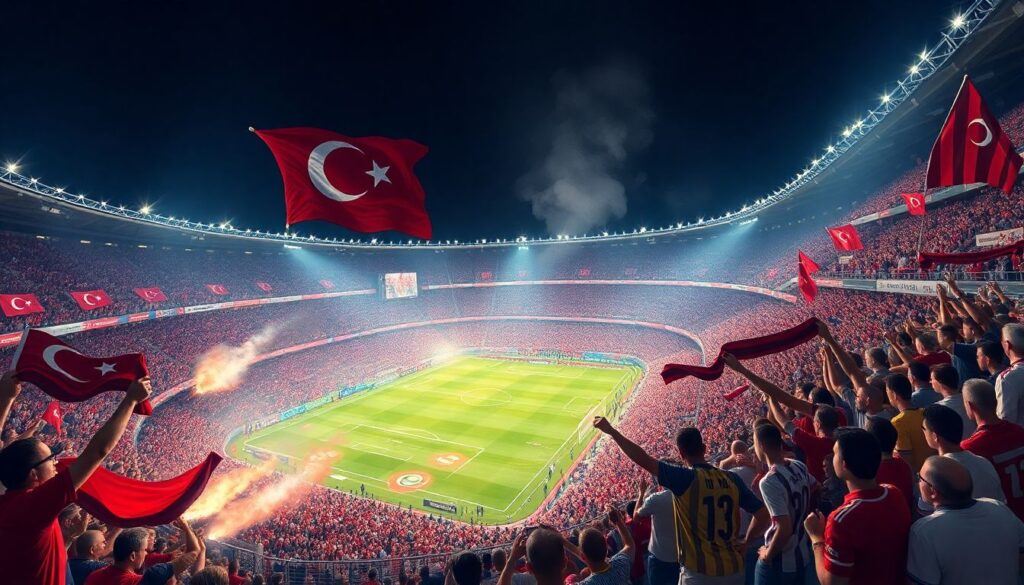
As more foreigners attend games, more kids watch European leagues, and more global brands sponsor clubs, there’s reasonable concern:
will the unique edge of turkish football culture fade?
Several indicators suggest evolution rather than erasure:
– Core derby rituals remain intense and highly local.
– Supporter groups adapt new songs but keep the old symbolism.
– Even the most modern coaches quickly learn that ignoring the emotional expectations of the stands is a career-limiting move.
So the likely scenario for the next decade is:
> More tactical sophistication, better physical preparation and global marketing
> without losing the street-born courage, dramatic match narratives and intimidating home atmospheres.
—
Why This Culture Still Matters
In a football world drifting toward tactical homogeneity, Turkey remains a test case for a key question:
> Can a country professionalise and globalise its football
> without sacrificing the raw, unpredictable flavour that made it special?
The answer, as of 2026, looks cautiously positive. From kids dodging parked cars to stars under stadium floodlights, the same basic traits persist:
– Love of the duel
– Appetite for risk
– Emotional honesty – for better and for worse
Whether you’re analysing match data, planning a derby trip, or simply deciding which club’s colours to wear after you buy turkish football shirts online, you’re touching a living ecosystem. It started on dusty streets, grew in thunderous stands, and is now negotiating its place in a global, hyper-analysed game—without forgetting where the ball was first kicked.