
Why Set Pieces Matter More Than Ever in the Süper Lig
If you follow Turkish football closely in 2026, you’ve probably noticed how often games in the Süper Lig are now decided by one well‑worked corner or a sneaky free‑kick routine. The league has become faster, more transitional and more chaotic, which means clear chances from open play are harder to manufacture against well‑drilled blocks. As a result, coaches are treating corners and free kicks almost like separate phases of the game, with their own playbooks, data dashboards and specialists. Set‑piece mastery is no longer an add‑on; for many mid‑table clubs it’s the central way to close the gap on the traditional giants.
Current Numbers: How Big Is the Set-Piece Edge?
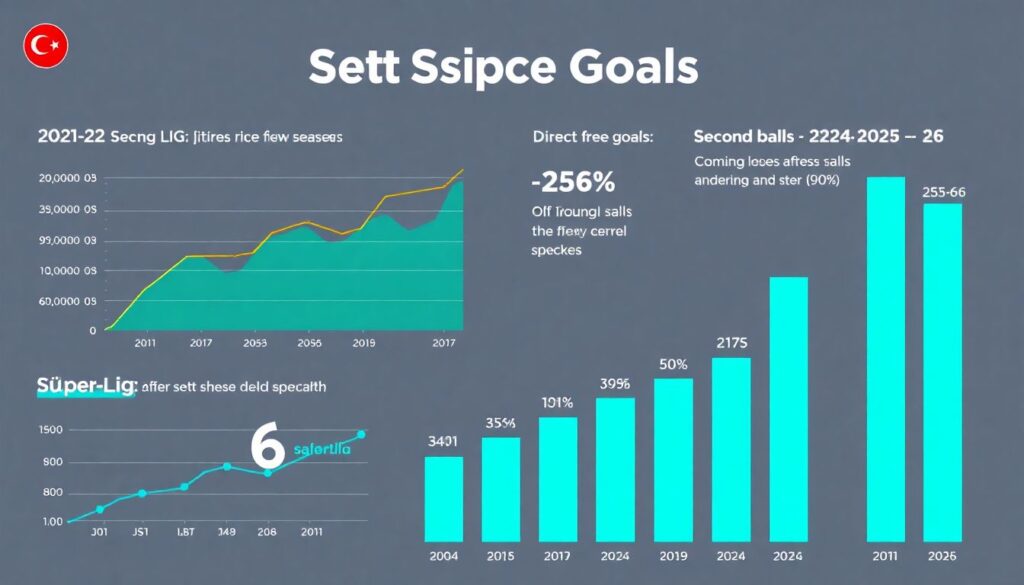
If we zoom into Süper Lig set piece goals statistics from the last few seasons, a clear trend emerges. In 2021–22, roughly 25–26% of all goals came from corners, direct free kicks or second balls after dead‑ball situations. By the 2024–25 campaign that share edged closer to 30%, and early 2025–26 data hovers in the same band, but with a twist: top‑half teams account for a growing chunk of those goals. That suggests the bigger clubs are not just relying on superior talent in open play; they’re actively weaponising dead‑ball situations with pre‑planned patterns and video‑based micro‑adjustments week after week.
Süper Lig Teams Corners and Free Kicks Analysis: What the Data Shows
When analysts talk about Süper Lig teams corners and free kicks analysis these days, they break it down far beyond “how many goals from corners.” Clubs track expected goals from set pieces (SP‑xG), types of delivery, starting positions of the blockers and runners, even which referees are more tolerant of contact in the box. A typical club now knows which of its centre‑backs generates the highest xG per 90 from near‑post flick‑ons, and which winger delivers the most dangerous outswingers against mixed zonal‑man schemes. This level of granularity has turned routine dead‑balls into repeatable, trainable attacking patterns rather than opportunistic chaos.
The Tactical Revolution: From Chaos to Scripted Theater
The biggest shift in Turkish Süper Lig tactical analysis set pieces over the past five years is the move from ad‑hoc improvisation to scripted sequences. Teams rehearse three to five core routines each week, tailored to the opponent’s marking system and the referee profile. For example, against a team that uses pure zonal marking, attackers bunch together in tight clusters, then explode into pre‑defined channels that disrupt the zones. Against man‑marking sides, coaches favor blockers and decoy runs, dragging markers out of the prime zones around the penalty spot. Every run, screen and rebound position is mapped out on video and drilled until it becomes second nature.
Best Set-Piece Coaches in the Süper Lig: The New Specialists
Not long ago, the idea of hiring a dedicated set‑piece coach in Turkey sounded extravagant. In 2026 it’s almost a requirement for ambitious clubs, and the best set piece coaches in Süper Lig have started to build serious reputations. Some arrived with backgrounds in analytics or even futsal, bringing fresh ideas about timing and spacing. Others are former defenders who understand the pain points of marking in a crowded box. Their job is not just to design clever routines but to ensure perfect execution under pressure: synchronised timing of runs, blocking without fouling, and rehearsed responses when the ball is half‑cleared into the “second phase” zone at the edge of the box.
How Training Grounds Have Changed
Walk into a modern Süper Lig training session in 2026 and you’ll notice the dead‑ball obsession immediately. There are mini‑sessions with analysts holding tablets, GPS vests tracking acceleration on near‑post runs, and keepers joining outfield drills to practice starting positions and communication during corners. VR tools are sometimes used to show players how a routine should “look” from their perspective in a crowded box. Younger full‑backs and wingers are coached to think of their delivery as a high‑value shot creation skill, not just “put it in the mixer,” which raises the technical bar for who gets set‑piece duties.
Modern Trends in Corners: Crowding, Screens and Late Runners
Corner kicks in the Süper Lig have developed a distinct flavour compared to other European leagues. One trend is heavy clustering around the keeper, where attackers crowd the six‑yard box to limit the goalkeeper’s movement and line of sight while one or two players lurk slightly deeper around the penalty spot. Another evolution is the rise of choreographed screens: attackers setting subtle picks to free a main header who attacks a specific zone. Late runners from the edge of the box, especially box‑to‑box midfielders, add an extra layer, arriving at full speed as the defense reacts to the first wave. This blend of traffic, misdirection and timing forces defenders into split‑second decisions they rarely get right consistently.
Short Corners and “Second-Phase” Creativity
There has also been a noticeable increase in short corners, not just as a way to keep the ball but as a method to manipulate defensive shape. Teams pull one or two defenders out of the box, change the angle of the cross by 5–10 degrees and then target custom‑built zones where their aerial threats attack diagonal deliveries. The goal isn’t always a direct header; lots of routines now target rebounds and cut‑backs, counting on poor clearances from panicked defenses. These second‑phase moments are quietly responsible for a meaningful share of set‑piece xG, even if they don’t always get tagged as “from a corner” in highlight reels.
Free Kicks: From “Hopeful Shot” to Designed Scenario
Direct free kicks used to be associated with one or two star technicians and a bit of magic. In 2026, they’re part of structured planning. Yes, teams still work on knuckleballs and whipped shots from specialists, but the bigger innovation is in indirect free‑kick routines. Teams use disguise—lining up as if going for goal, then sliding the ball to the opposite side for a late cross—or opposite‑side overloads, where the near‑side players act as decoys while runners attack the far post. Wall manipulation has become an art: players stand in offside positions, then step back onside right before the kick, or use wall jump feints to obscure the keeper’s view just as the ball is struck.
Player Profiles for the Set-Piece Era
One under‑discussed trend is how recruitment profiles have shifted to support this set‑piece boom. Clubs now assign extra value to tall, strong centre‑backs not only because they defend crosses but because they add 3–4 set‑piece goals per season. Midfielders with accurate long‑range passing double as free‑kick specialists. Even strikers are assessed partly on their ability to block, disturb and create space for others on corners. Agents know this and frame their clients’ highlight reels around aerial duels, blocked shots in the box and key headers from dead‑balls, because these moments translate into measurable points for their future employers.
Economic Aspects: Set Pieces as a Return-on-Investment Tool
From a financial standpoint, the obsession with set pieces in the Turkish top flight is very rational. Hiring a specialised coach and investing in a bit of tracking tech is cheap compared to signing another high‑wage forward. Yet a handful of extra goals from corners and free kicks across a season can mean the difference between mid‑table and a European spot, with all the prize money and visibility that come with it. For relegation‑threatened clubs, the math is just as compelling: survival bonuses, future TV revenue and player resale value often hinge on a margin of just three or four points, which a strong set‑piece strategy can realistically deliver.
Transfer Market and Wage Structure Effects
This logic seeps into the transfer market as well. Players who bring clear value in set‑piece situations—dominant aerial defenders, left‑footed specialists, long‑throw experts—can command higher wages than their “technical equivalent” without those skills. Sporting directors routinely ask analysts how many goals a new signing is likely to add or prevent from dead‑balls, effectively building a mini business case for each transfer. A centre‑back who adds +0.05 SP‑xG per 90 through attacking headers and reduces opponent set‑piece xG by the same margin becomes an undervalued asset compared with a more glamorous but less impactful alternative.
Betting, Media and the Commercial Side of Set Pieces
Outside the clubs, this tactical evolution has reshaped the surrounding industry. Broadcasters and data companies highlight set‑piece metrics during live coverage, from delivery zones to duel win‑rates in the box. Analysts publish in‑depth Süper Lig set piece goals statistics ahead of big derbies, using graphics to explain how one team’s strengths match up with another’s weaknesses. This data‑first mindset fuels fan debates and, increasingly, informs betting markets. Bookmakers adjust odds not just on overall goal totals but on corner counts and likely set‑piece scorers, because these events have become more systematic and less random than before.
How Set Pieces Influence Betting Markets
For those who study odds, Süper Lig betting tips corners and free kicks now regularly mention things like a team’s average SP‑xG per game or how often they win first contacts on attacking corners. Bettors who understand which sides are aggressively chasing dead‑ball opportunities—by pushing centre‑backs forward even when protecting a lead, or loading the box in stoppage time—can spot mispriced markets on corner totals or “goal from a set piece” props. As more historical data accumulates and models get refined, these angles become sharper, which in turn pressures clubs to keep innovating so they stay one tactical step ahead of both opponents and bookmakers.
Predictions for 2026–2030: Where Set-Piece Innovation Is Heading
Looking ahead, we can expect set‑piece tactics in Turkey to get even more granular. Tracking data is becoming cheaper, and AI‑driven video analysis is starting to suggest “optimal” runs and blocks based on thousands of historical examples. Over the next four seasons, it’s realistic to foresee a small but steady increase in conversion efficiency from dead‑balls, even if the total share of goals from set pieces stabilises. Teams will likely prioritise adaptable routines—plays with built‑in reactions depending on how the opponent lines up—so that the first seconds after the referee’s whistle become a live tactical battle, not a pre‑recorded script.
Youth Development and Coaching Education
Another forecasted shift concerns academies and coaching licenses. As the federation and top clubs recognise the competitive and financial payoff, set‑piece training will trickle down to youth levels. Under‑17 squads will rehearse corners with the same seriousness as pressing triggers, and young coaches will need to pass modules on dead‑ball design during their certification. This institutional focus should raise the baseline quality of routines across the league, making it harder for any one club to dominate purely through simple tricks, and pushing the arms race toward more subtle, creative solutions that require better coordination and game intelligence.
Impact on the Wider Football Industry
The set‑piece boom in Turkey doesn’t exist in a vacuum; it feeds into a broader industry cycle. European scouts now pay closer attention to how Süper Lig players perform in high‑traffic dead‑ball moments, because success there often translates well across leagues. Tech companies selling tracking and analysis tools use Turkish clubs as case studies when pitching to other markets, showcasing how targeted set‑piece work led to improved league positions or European qualification. In this way, the Süper Lig becomes both a laboratory and a showroom for applied set‑piece analytics, influencing how other competitions think about squeezing value from every stoppage.
From Marginal Gain to Core Identity
In the end, what started as a marginal‑gains project has evolved into a core part of the Süper Lig’s tactical identity. While open‑play strategies—pressing, build‑up schemes, transitions—still dominate most conversations, many tight matches in 2026 are effectively decided by who treats corners and free kicks with more seriousness and imagination. As clubs, analysts, bettors and media continue to refine how they understand and exploit these situations, mastery of set pieces will keep acting as a powerful equaliser, allowing smart planning and detailed coaching to punch above pure budget and star power in Turkish football.