
Set-piece innovation in the Süper Lig is deciding titles because it turns low‑margin games into controllable situations: rehearsed, data‑driven routines that reliably generate shots and xG when open play is blocked. Clubs that treat corners, free kicks and throw‑ins as structured attacking phases consistently convert pressure into points across the full league season.
Set-piece impact summary for title races
- Modern Süper Lig champions treat set-pieces as a separate phase with its own playbook, staff and KPIs.
- Data-informed routines improve shot quality and repeatability instead of relying on vague crosses “into the mixer”.
- Well-coached dead balls are a cost‑effective edge for clubs that cannot outspend rivals in open‑play talent.
- Opponents now study you via every super lig set piece analysis subscription, so constant micro-innovation is mandatory.
- Clear training design, role clarity and defensive countermeasures decide tight title‑race moments in the Süper Lig.
Evolution of set-piece strategies in the Süper Lig
Set-piece strategy in the Süper Lig has evolved from basic “big man attacks the ball” routines to structured, multi‑layered patterns. Top clubs now build dedicated playbooks for corners, wide free kicks, long throws and even indirect free‑kick second balls. These routines are rehearsed as carefully as open‑play combinations.
The turning point came when analysts started tracking not only goals but also shots, xG and second‑phase pressure from dead balls. Coaches realised that a small improvement in set-piece efficiency could swing close title races. As a result, many staff rooms now treat dead-ball phases as a core part of their tactical identity.
In this context, a football data analytics service set piece routines package is no longer a luxury but a standard tool. Clubs subscribe, tag every corner and free kick, then iterate designs weekly. The best sides combine this data with pitch‑side observations of opponent behaviour: body orientation, blockers, zonal lines and goalkeeper starting spots.
Checklist: understanding the evolution
- Define set-pieces as a separate game phase with its own KPIs and language inside your staff room.
- Audit your last season: how many distinct routines did you actually repeat with intention?
- Decide who owns the process: analyst, assistant, or a dedicated specialist for dead balls.
Data-driven routines: analytics, tracking and expected goals
Data‑driven set-piece routines in the Süper Lig start with systematic tagging of every dead ball. Analysts code delivery type, target zone, blockers, runs, outcome and opponent scheme. Over time, this creates a performance database that shows which patterns repeatedly generate shots and which only waste pressure.
- Shot and xG profiling: Track how different delivery zones, speeds and angles affect shot quality. Instead of obsessing over raw goal counts, focus on how often a routine leads to a clean header or volley from central areas.
- Opponent vulnerability scouting: Use video and event data to map where each opponent concedes most chances from set-pieces. Some teams struggle with far‑post switches, others with cut‑back zones at the edge of the box.
- Runner and blocker optimisation: Analyse who actually wins duels, who screens best and who distracts goalkeepers effectively. Replace traditional “tallest player near penalty spot” habits with evidence‑based role assignments.
- Second‑phase planning: Tag what happens after the first contact: clearances, loose balls and recycled crosses. Many Süper Lig goals in tight games come from rehearsed reactions to half‑cleared corners.
- Iterative routine testing: Introduce new patterns gradually, evaluate them over a sample of games, then keep or drop them. The goal is a compact playbook of high‑yield routines rather than a bloated library nobody remembers under pressure.
- Integration with recruitment: When you buy detailed super lig set piece stats, you can profile potential signings not only by aerial ability but also by timing, blocking skill and delivery variety.
Checklist: building a data process
- Agree on a minimum tagging framework for every corner and free kick your team takes and concedes.
- Set monthly review meetings where staff decide which routines to keep, tweak or retire based on evidence.
- Align scouting reports with your preferred set-piece patterns before recruiting key targets.
Tactical designs: roles, formation adjustments and trigger plays
Set-piece tactics in the Süper Lig revolve around clear role design. Attackers are divided into screeners, decoy runners, primary targets, secondary targets and edge‑of‑box controllers. Each role has precise starting spots, timing cues and responsibilities both if the ball is won and if the ball is lost.
Teams also adjust base formations to maximise dead-ball impact. Full‑backs might stay deeper to secure rest defence, while a creative midfielder moves to the edge for cut‑backs and rebounds. Coaches script where each player transitions immediately after first or second contact, reducing chaotic sprints in defensive transition.
Trigger plays are pre‑agreed signals that change the routine based on what defenders show. For example, if opponents over‑protect the near post, the taker may switch to a delayed, flat ball to the far‑post overload. These triggers are subtle: a hand gesture, eye contact or adjusted starting position, rehearsed in detail during the week.
- Near‑post overload with screen: Two attackers start central, then sprint towards near post, using a legal block to free the main header.
- Far‑post isolation: One forward drifts away from the pack to attack a floated cross against a smaller full‑back.
- Edge‑of‑box cut‑back: Several runs clear the central lane so a late-arriving midfielder can finish a rolled or chipped ball around the penalty arc.
- Short‑corner 3v2: Winger and full‑back combine to force a new angle once they recognise a passive block of two defenders.
Checklist: clarifying roles and triggers
- Assign every player a named role (screener, decoy, primary, edge, safety) for each routine in your playbook.
- Teach 1-2 simple visual triggers per routine that modify the pattern based on defensive behaviours.
- Record and review your set-piece structure weekly to check whether players keep positions and timings.
Training methodologies that produce reliable dead-ball goals
Effective set-piece training in the Süper Lig blends repetition with variability. Instead of mindless re‑serving of crosses, coaches script focused blocks: specific routine, defined objective, and immediate feedback. The intensity and time budget are managed so dead-ball work does not overload players but still receives consistent attention.
Position‑specific coaching is crucial. Screeners practise legal blocking angles and body orientation, while primary targets rehearse timing against live defenders. Takers work on delivery trajectories and disguises, often using video to compare their strike mechanics with best‑practice clips collected through a super lig set piece analysis subscription or internal database.
Benefits of structured set-piece training
- Improves automaticity so players can execute under pressure late in tight title‑deciding fixtures.
- Creates shared references between analyst room and pitch, making video feedback more actionable.
- Builds squad belief that the team can score even when open play is blocked or tired.
Limitations and practical constraints
- Time competition with open‑play tactics and physical conditioning in crowded Süper Lig calendars.
- Player turnover can disrupt choreographed routines, especially if key blockers or takers are sold.
- Opponents quickly adapt, so routines must evolve faster than defensive scouting reports.
Checklist: designing weekly training blocks
- Allocate a fixed, non‑negotiable time slot each week solely for attacking and defending set-pieces.
- Run position‑specific drills before full‑team rehearsals to refine details for takers, blockers and runners.
- Link every training block to 2-3 recent match clips so players see direct match relevance.
Case studies: title-deciding moments from recent Süper Lig seasons (2018-2024)
Recent Süper Lig title races have featured decisive goals from corners and wide free kicks in direct head‑to‑head clashes. Typically, these moments come late in the season when nerves are high and open‑play chances shrink. Set-pieces then become controlled, repeatable opportunities created on the training ground weeks in advance.
Imagine a tactical diagram from a top‑four clash: four attackers form a tight box around the penalty spot, two defenders marking zonally. On the whistle, one attacker sprints across the near post, the second delays then loops to the back post, while a screener subtly checks the main marker. The resulting free header from the looped run turns a drawn match into a title‑shaping win.
In another scenario, a team fighting for the championship uses a rehearsed short‑corner to attack a conservative block. Picture three attackers near the corner flag in a small triangle: short pass, return, then a third‑man run into the half‑space. The ball is cut back along the ground to the penalty spot for a late arriving midfielder, finishing unmarked because the block had sunk too deep.
A wider lesson from these 2018-2024 examples is that defensive fatigue and mental pressure often erode marking discipline late in games. Title‑winning sides exploit this with calm execution of well‑known patterns, not by inventing new routines on the day. Coaches who treat set-pieces casually often discover too late that they lost the title on one avoidable dead ball.
Typical mistakes and persistent myths
- Believing that taller squads will automatically dominate set-pieces without specific role coaching and repetition.
- Overloading the penalty box while ignoring second‑phase structure, leaving the team exposed to counters.
- Rotating routines every week so players never build the confidence that comes from repeating proven patterns.
- Assuming that one viral routine from abroad will work unchanged in Süper Lig defensive contexts.
Checklist: learning from high‑pressure examples
- Clip and categorise all set-piece actions from your last five “big games” and discuss them with players.
- Identify one corner and one free‑kick routine that you trust most for high‑pressure moments.
- Rehearse those two “A routines” every week so they become automatic under title‑race stress.
Constraints and countermeasures: defending modern set-pieces
Defending set-pieces in the Süper Lig is constrained by squad profile, goalkeeper style and limited training time. Coaches must choose between pure zonal, pure man‑marking or hybrid schemes, then add clear responsibilities for blockers, posts and edge‑of‑box players. The objective is to reduce free headers and second‑phase chaos, not to win every first ball.
Many clubs now seek tactical consultancy for set piece coaching super lig clubs specifically to tighten defensive structures. Specialists analyse conceded chances, then propose hybrid models: a zonal line in key spaces plus man‑markers on main threats. The detailed work involves body orientation, grab‑free duels and synchronised starting steps to prevent blockers from opening free corridors.
Consider a mini “pseudocode” for a hybrid corner defence: one central zonal defender attacks any ball into the six‑yard line; two auxiliary zonal players cover near and far channels; three man‑markers track primary aerial threats; one player guards the edge; two stay high to deter opposition from committing all players forward. This scripted logic ensures predictable reactions even under pressure.
On the staffing side, some clubs now explore professional set piece coach services for football teams to unite attacking and defensive dead‑ball planning. When the same specialist designs both phases, rest‑defence and counter‑attack threats are embedded into every routine. This holistic view reduces the trade‑off between aggression and safety in title‑race matches.
Checklist: shoring up defensive set-pieces
- Decide on a primary defensive scheme (zonal, man or hybrid) and teach its principles consistently.
- Drill the first three steps after the taker strikes the ball for every player in your scheme.
- Review every conceded shot from set-pieces to classify whether the problem was structure, duel or concentration.
Self-audit checklist before the next Süper Lig campaign
- Do we have a clearly documented attacking and defensive set-piece playbook for the first half of the season?
- Are analysts, coaches and players aligned on how we measure set-piece success beyond just goals?
- Have we assigned ownership for updating routines as opponents adapt and as new players arrive?
- Do our recruitment and data tools support the way we actually design and train routines?
- Have we prepared 1-2 “go‑to” routines for decisive title‑race fixtures and rehearsed them under fatigue?
Practical clarifications for coaches and analysts
How many set-piece routines should a Süper Lig team maintain during a season?
Most squads function best with a compact playbook of a few core routines per zone rather than dozens. Aim for enough variety to punish different defensive schemes, but not so many that players hesitate or forget details under pressure.
Do I need an external analytics provider to improve our set-pieces?
You can start with internal tagging and video review, but a specialised football data analytics service set piece routines package speeds up insight. External tools add league‑wide benchmarks, opponent profiles and searchable databases that are hard to replicate manually.
What is the first step before investing in a super lig set piece analysis subscription?
Clarify your internal questions: which routines work, where you concede chances and which roles need upgrading. With clear questions, any subscription becomes a focused tool instead of an expensive video library you rarely open.
How should smaller Süper Lig clubs prioritise set-piece work with limited training time?
Focus on two attacking corner routines, one wide free‑kick pattern and a solid hybrid defensive setup. Rehearse these every week so they become a sustainable competitive edge against stronger squads.
When is it worth hiring specialised consulting or coaching for set-pieces?
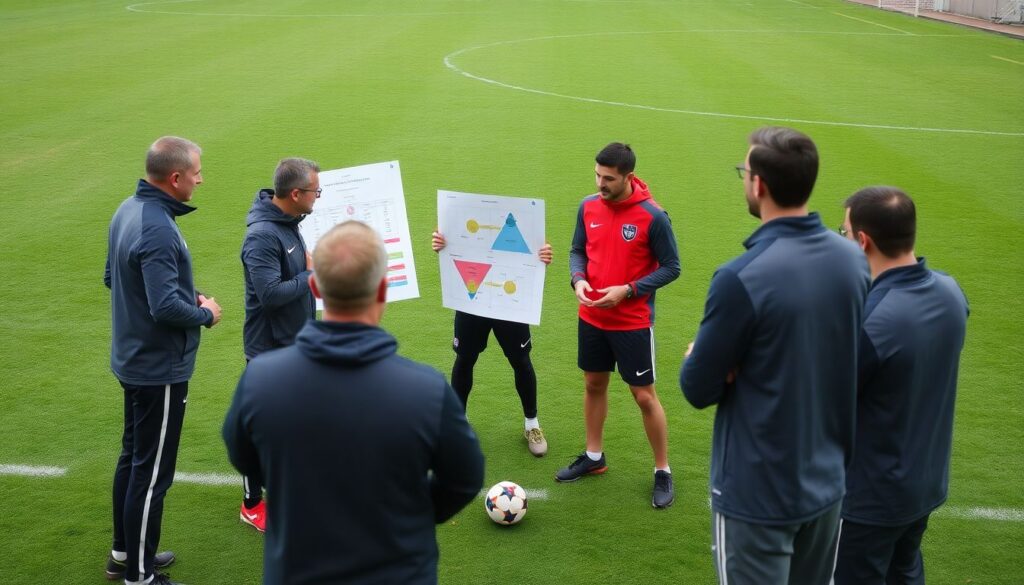
Consider tactical consultancy for set piece coaching super lig clubs when your data shows recurring problems or untapped aerial strengths. A short, targeted project can establish structures and training habits that your own staff then maintain.
How do we evaluate whether professional set piece coach services for football teams are paying off?
Track not only goals but also shots, xG, first‑contact win rate and conceded chances from dead balls. Improvement across these indicators over a block of matches shows that coaching changes are taking effect, even if goals fluctuate.
Should we change routines often to surprise opponents?
Minor variations are useful, but constant change harms execution quality. Keep core patterns stable, then build small adjustments for different opponents based on scouting and data.