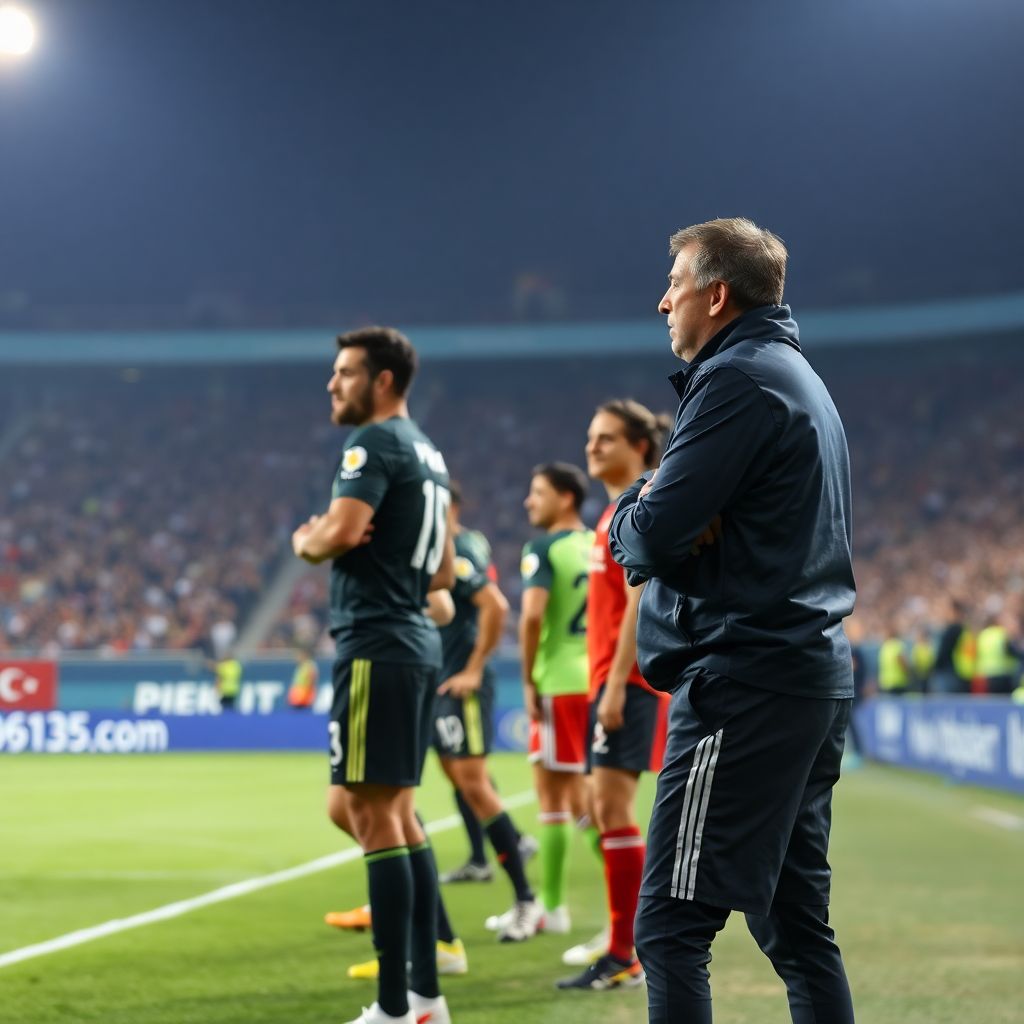
Derby pressure narrows attention, speeds up decisions, and amplifies emotion; unmanaged, this causes errors, cards, and wasted chances. Managed well, it sharpens focus and competitiveness. This guide gives practical, safe steps that Turkish coaches, analysts, and players can use before and during big matches to stabilise mindset and decision-making.
Core Psychological Factors to Monitor Before Kickoff
- Level and quality of arousal: is the player flat, optimal, or over-activated?
- Thought patterns: constructive task focus versus rumination about fans, media, or mistakes.
- Emotional triggers: provocation, refereeing decisions, or crowd chants that hijack focus.
- Decision style under stress: rushed, risk-averse, or balanced.
- Communication tone: clear and calm versus blaming and frantic.
- Body signals: breathing, muscle tension, and fatigue before and after warm-up.
Pre-match Mental Prep: Routines, Visualization and Readiness Checklist
Pre-match mental routines are most useful for players starting or likely to come on in the first half, and for staff directly influencing the dressing room. They are less suitable for injured players, very young academy players in stands, or anyone with untreated anxiety disorders; those cases need personalised, clinical guidance.
For context like Istanbul derbies, sports psychology for professional football players focuses on turning noise and expectation into stable routines. A short, repeatable script beats complex methods. It also improves the quality of turkish derby predictions and betting tips work inside clubs because analysts can assume more stable player behaviour under stress.
Build a three-layer pre-match routine: body, attention, and scenario planning.
- Body activation: Finish warm-up with one repeatable micro-ritual: same breathing pattern, same final stretch or jump sequence. This signals the nervous system that you are ready to compete rather than still training.
- Attention anchor: Choose one controllable focus cue (first pass, first duel, first press). Repeat it silently while walking out, during the anthem, and in the team huddle.
- Scenario visualization: Spend 2-3 minutes imagining three specific derby situations: aggressive press, going a goal down, and a bad refereeing call. See yourself responding with calm body language, quick scan, and simple pass or recovery run.
- Role clarity phrase: Create a short line describing your job in this match: “Win second balls and connect first pass forward” or similar. Coaches should repeat this to each player one-on-one.
Quick readiness marker: Ask each starter to rate from 1-5: “How clear is your first action after kick-off?” Aim for 4-5; below 3 means you revisit focus cues.
Pre-match checklist (players and staff)
- Confirm each player can state their first action and role phrase in one sentence.
- Ensure every starter has one physical and one mental routine element.
- Rehearse one “goal down” and one “goal up” reaction in the tactical talk.
- Coach assigns one staff member to watch body language during anthem and line-up.
Crowd, Noise and Home Advantage: Managing Cognitive Load in Full Stadia
Full Turkish stadia overload players with sound, colour, and movement. This compresses thinking time and can distort decisions. To manage cognitive load, prepare tools that simplify what each player has to track and how they communicate under noise.
In big fixtures, especially used for galatasaray vs fenerbahce derby analysis and odds, the crowd effect is often misread as pure “passion”. In practice it is a working-memory challenge: can the player keep tactical instructions online while processing chants, lasers, and banners?
Use concrete tools that reduce complexity:
- Signal system: Agree 3-4 hand or arm signals for pressing triggers, tempo changes, and time-wasting control. Practice them in training with loud speaker noise.
- Short commands: Replace long tactical phrases with one-word codes (“squeeze”, “rest”, “screen”). Goalkeeper and holding mid use them most.
- Noise training: Once per week before a big derby, run 10-15 minutes of game-like play with crowd noise at realistic volume; stop and ask players to repeat last instruction to check understanding.
- Bench bandwidth: Assign one assistant to watch only emotional swings (crowd peaks, controversial calls) and remind the head coach to slow decisions in those moments.
Quick load marker: In one noisy training block, ask 3-5 players immediately after a stoppage to repeat the last tactical cue. If fewer than half can repeat it precisely, your information load is too high for derby conditions.
Checklist for managing stadium pressure
- Limit on-pitch codes to maximum four, all rehearsed under loud noise.
- Confirm goalkeeper and captain share the same one-word commands.
- Simulate at least one training block with crowd audio before derbies.
- Designate an assistant to track emotional momentum from the stands.
Derby Rivalry Dynamics: Identity, Provocation and Emotional Contagion
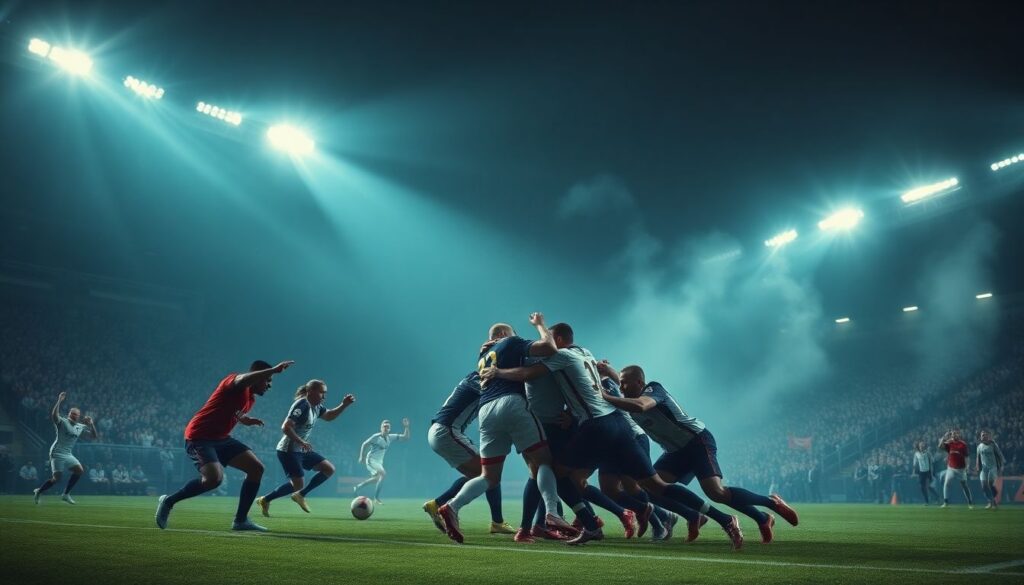
Derbies tap identity, history, and sometimes hostility. Without structure, this produces cards, rushed tackles, and loss of tactical discipline. The aim is not to remove emotion but to channel it safely into controlled aggression and stable concentration.
Before the step-by-step process, prepare with this short checklist:
- List typical provocation patterns (verbal, small fouls, off-the-ball contact) from recent derbies.
- Identify two or three players per side most likely to be targeted or to overreact.
- Agree team standards for response: who talks to referee, who walks away, who calms.
- Prepare one calm-down cue for captain and goalkeeper to use (phrase or gesture).
- Frame rivalry as challenge, not threat: In the dressing room, describe the match as a test of control under fire, not as a “must win for honour”. Emphasise proving superiority through discipline and repeated execution of game plan.
- Pre-assign emotional roles: Give clear tasks: one captain as main communicator with referee, one senior player as internal “firefighter”, and one staff member watching bench emotion. This prevents everyone shouting at once.
- Rehearse provocation scripts: In training, simulate common triggers (late tackle, trash talk, crowd booing). Have players practise three-step responses: pause one breath, turn away, speak a short task cue (“next ball”).
- Control emotional contagion on the bench: Instruct substitutes that their body language is part of the team’s emotional climate. No visible arguing with the fourth official; one assistant manages communication instead.
- Use micro-resets after flashpoints: After any brawl, booking, or controversial goal, captain and coach enforce a 10-15 second reset: deep exhale, regroup line, one simple instruction before restart.
Quick rivalry marker: Count visible overreactions in the first 15 minutes (arms thrown up, surrounding referee, shouting at teammates). If more than three incidents, instruct captain to slow tempo and emphasise two-touch play for five minutes.
Rivalry control checklist during match
- Captain is the only player consistently speaking to referee in heated moments.
- At least one player is seen pulling teammates away from conflict, not into it.
- After each flashpoint, team shape is restored before restart whistle.
- Bench remains seated and controlled during big decisions, with one staff member communicating.
Decision Pressure on the Pitch: Split-second Choices and Risk Aversion
Under derby pressure, many players become either too cautious (avoiding forward passes and shots) or too reckless (forcing low-percentage plays). Understanding how pressure affects players in big football matches helps staff set clear decision rules that survive adrenaline spikes.
Match analysts doing turkish derby predictions and betting tips work often overemphasise tactics and undervalue this decision-style swing. For coaches, the key is to create simple heuristics that players can recall in half a second.
Use this checklist to evaluate whether your decision framework is holding during the game:
- Players in your own half mostly use two-touch play, not panicked clearances without scanning.
- Attacking players take shots when inside agreed zones rather than overpassing in fear of missing.
- Centre-backs maintain pre-agreed line height instead of dropping too deep after conceding.
- After a clear mistake, the same player takes the next basic action (simple pass, duel) within two minutes.
- Risk-taking patterns match the plan (e.g., full-backs still overlap when space is there, not retreating).
- On the ball, players look up at least once before any long pass or switch under pressure.
- Substitutes enter the game making one safe early action before attempting higher-risk plays.
Quick decision marker: During any 10-minute spell, count back-passes from attacking half when a forward option exists. A sudden spike suggests risk aversion; respond with a touchline reminder of agreed shooting and passing zones.
Physiological Signals of Stress: Monitoring Fatigue, Arousal and Recovery
Derby pressure shows in the body before it shows in the scoreline. Breathing, muscle tightness, and heavy legs can all reflect stress, not only physical fatigue. Staff should learn to read these signals safely and adjust intensity or instructions early.
In mental performance coaching for soccer players, stress monitoring is a basic skill: players learn their own patterns (dry mouth, shaky legs, over-sweating) so they can intervene with breathing and self-talk. Coaches in Turkey can integrate this without medical-level tools.
Avoid these common mistakes:
- Confusing adrenaline rush for “great intensity” when players are actually burning out concentration early.
- Ignoring players who say they feel “empty” in warm-up, assuming it is just nerves.
- Failing to adjust pressing demands when multiple players show heavy legs and slower recovery runs.
- Substituting only based on GPS metrics without watching breathing patterns and facial tension.
- Overusing stimulants (excess caffeine gels or energy drinks) close to kick-off, increasing jitters.
- Skipping short half-time breathing resets because “there is no time”.
- Letting players stretch aggressively when they are cramping from stress rather than true tightness.
Quick body-state marker: In the first 10 minutes and around the 60th minute, staff should scan 3-4 key players and rate breathing: 1 = relaxed, 2 = moderate, 3 = gasping during low-intensity phases. Consistent 3s suggest over-arousal or fatigue; adjust tactics or make changes.
Stress signal checklist for staff
- Observe breathing and posture of centre-backs and holding mid during stopped play.
- Note any player repeatedly stretching or shaking legs early in each half.
- Track time to recover jog after long sprints; if it lengthens, consider tactical tweaks.
- Ask one or two players at half-time for a quick 1-5 energy rating and compare with GPS data.
Interventions for Staff: Briefs, Substitutions and On-the-fly Psychological Anchors
Coaches and staff must adjust psychology in real time: through brief messages, substitution timing, and simple anchors that stabilise the team. These tools should be safe, non-invasive, and easy to execute from the touchline or dressing room.
Alternative or complementary options to full-scale psychological programmes include:
- Micro-briefs at natural stoppages: Use injury breaks, VAR checks, and water breaks to give one-line reminders: “Two-touch build”, “Calm first pass”, “Protect back post”. Avoid new tactics; reinforce anchors.
- Psychology-informed substitutions: When a player is emotionally unstable (arguing, late tackles, withdrawn), consider an earlier change even if physically fit. Tell the substitute their first three actions to keep focus clear.
- Leadership rotation: If the captain is overwhelmed, quietly shift in-game leadership to another senior player for specific phases (defensive set-pieces, pressing cues) without creating drama.
- Simple team anchor rituals: Before each half and after goals, repeat the same short huddle script led by one player. This becomes a psychological “reset button” under pressure.
These low-risk tools are often easier to install quickly than full sports psychology for professional football players programmes, but they can be integrated with such work for long-term gains.
Quick intervention marker: After any intervention (speech, sub, huddle), observe the next three minutes: has spacing, communication, or foul rate improved? If not, your message was too complex or mis-timed; simplify further.
Staff intervention checklist
- Limit each touchline message to one clear instruction.
- Plan substitution scripts (first actions) before the match for likely scenarios.
- Decide in advance which senior players lead which types of huddles.
- Review video after matches focusing on moments right after interventions to see what changed.
Practical Concerns Coaches and Players Commonly Raise
How can we train derby pressure without wasting physical load?
Use short, high-intensity game scenarios (5-10 minutes) with loud noise, rivalry language, and refereeing decisions, but limit total duration. The goal is to train reactions and routines, not fitness, so keep these blocks brief and focused.
What should a player do after an early mistake in a big match?
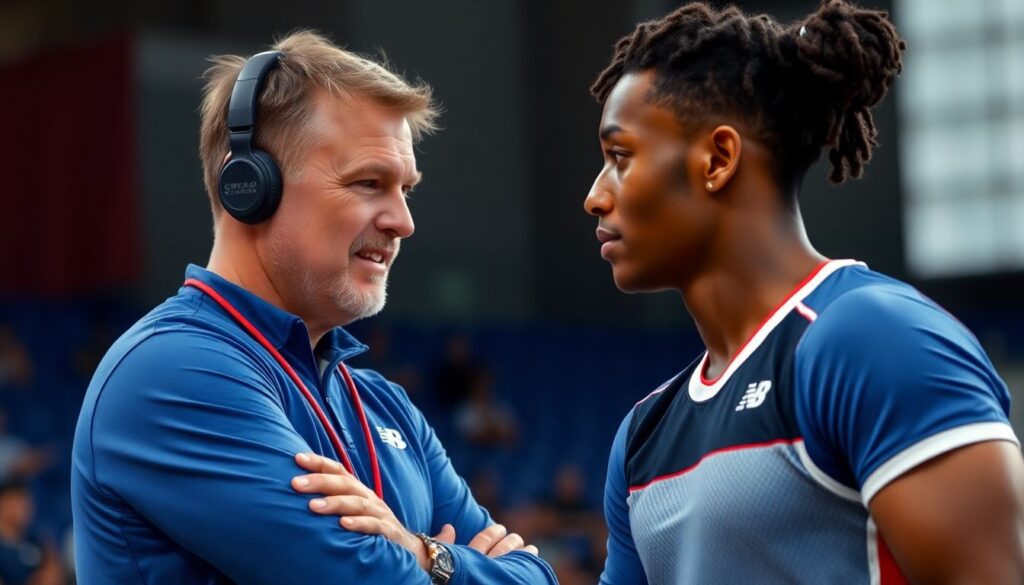
Use a three-step script: accept (“it happened”), reset (one deep breath and strong body posture), then act (simple next pass or duel). Coaches should reinforce this by praising quick recovery, not perfection.
How do we protect younger players in their first major Turkish derby?
Give them a narrowed role and one or two clear tasks, avoid using them as primary emotional leaders, and pair them on the pitch with an experienced player who can talk them through early phases. Consider introducing them after the initial storm has passed.
Can psychological routines really influence derby results?
They cannot guarantee wins, but they improve decision quality, discipline, and resilience under swings in momentum. Over a season, that usually means fewer self-inflicted setbacks and better execution of tactical plans in high-pressure moments.
How should analysts integrate psychology into tactical and odds work?
When doing galatasaray vs fenerbahce derby analysis and odds internally, include metrics like cards after provocation, decision quality under press, and late-game concentration errors. These indicators often explain outcomes better than formation diagrams alone.
What if a key player refuses to engage with mental preparation?
Start by adjusting environment rather than the player: simplify their role, structure communication around them, and manage triggers from teammates and staff. Often, as they experience benefits indirectly, they become more open to targeted mental tools.