Why Pressing in the Süper Lig Looks (and Feels) Different
Прessing in Turkey’s Süper Lig has its own flavor: chaotic at times, emotional, and strongly influenced by the atmosphere and tempo swings in matches. When you compare it to the more structured, system‑driven approaches in Germany or England, you quickly see why a proper football pressing styles comparison Süper Lig and Europe is useful not just for analysts, but for coaches and scouts too. In practice, pressing is not about “running a lot”; it’s about when, where and how you apply collective pressure to the ball and the nearby passing lanes.
For staff working in recruitment or match preparation, understanding these nuances is crucial. A winger who looks like a pressing monster in the Bundesliga might struggle with the transitional chaos in Istanbul, while a Süper Lig forward who thrives in broken games can look tactically undisciplined in a more rigid European system. This article focuses on how to read and apply Süper Lig vs European leagues tactics analysis in real work: defining training priorities, adapting game plans and choosing the right players for each environment.
—
Measuring Pressing: How to Turn Chaos into Numbers
Key Metrics You Actually Need
To compare pressing styles, you must move from impressions (“they press high”) to numbers. The most used indicator is PPDA – Passes Allowed Per Defensive Action. Roughly speaking, PPDA shows how many passes the opponent can play in your defensive 60% of the pitch before you attempt a challenge, interception or tackle. Lower PPDA = more intense pressing.
In recent seasons, public advanced football stats pressing intensity Süper Lig data shows many clubs sitting in the 11.5–13.5 PPDA range, while the best European leagues for high pressing football, especially the Bundesliga and some Premier League sides, often have top teams close to 7.5–9.5 PPDA. That gap reflects not only fitness or intent, but also structural differences: European top sides usually press with tighter lines, better synchronised triggers and shorter distances between players.
> Technical note: Basic pressing metrics
> – PPDA: Opponent passes allowed in your defensive 60% / your defensive actions there.
> – High turnovers: Ball recoveries within 40 m of the opponent’s goal.
> – Shot-ending high turnovers: High turnovers that lead to a shot within ~20 seconds.
> – Counterpressing intensity: Number of defensive actions in 5 seconds after losing the ball.
Why the Same Numbers Mean Different Things
Here’s the catch: a PPDA of 10 in a rigid, “positional play” league is not the same as a PPDA of 10 in a league with wide open transitions. In the Süper Lig, pressing often appears in violent bursts around key emotional moments: a near‑miss, a referee decision, a big crowd reaction. These surges produce clusters of high-intensity actions but may not be sustained over 90 minutes. In contrast, in top European leagues, pressing is usually more stable, tied to tactical cues like back passes, flat body orientation of the centre-back or an isolated full-back.
For practitioners, that means you should always watch a few matches instead of trusting the dashboard blindly. If you see a Süper Lig side with “decent” PPDA, check first whether their pressing is structured (wide cover shadow, clear trap zones) or based on chaotic chasing triggered by emotion and crowd noise. The first travels well to Europe; the second often doesn’t.
—
Structural Differences: How Pressing Is Organised
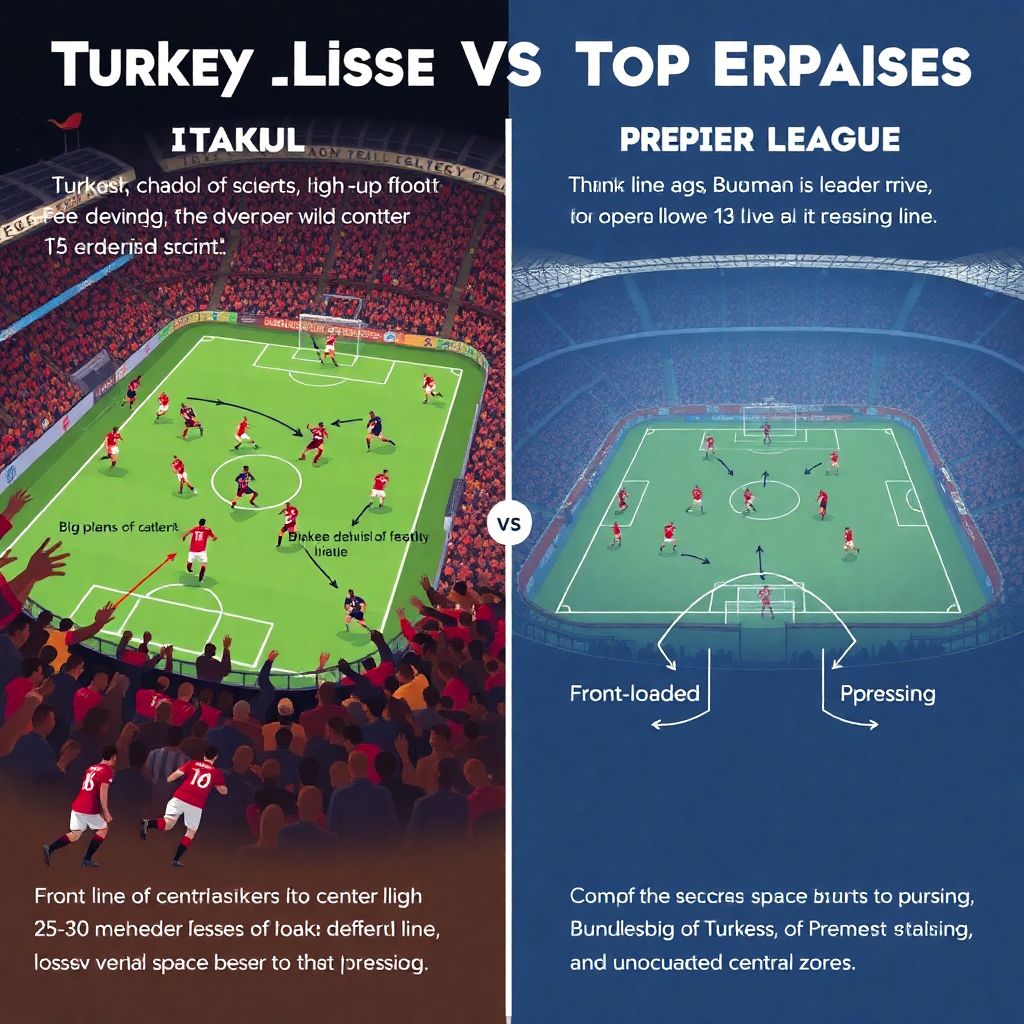
Süper Lig: Front-Loaded, Emotion-Driven Pressure
Many Turkish teams press hardest with their front three or four, relying on individual sprints and aggressive body language to force mistakes. The back line, however, often stays deeper than you’d see in Germany or Spain, leaving a vertical gap of 25–30 metres between forwards and defenders. This gap kills compactness and makes counterpressing harder, because second balls drop into uncontested zones.
You’ll often see: a striker and winger jump onto the centre-backs, the 10 follows the pivot “man to man”, but the double pivot behind them hesitates to advance. The press looks dangerous for a few seconds, but one clean vertical pass or a diagonal switch breaks it. In live Süper Lig tactical analysis subscription services, this usually shows up as “first line aggressive, rest reactive”. For coaches, the lesson is simple: if you want a sustainable press, push the back line higher and train your midfield to close the vertical channels at the same time.
> Technical note: Typical Süper Lig pressing structure
> – 4-2-3-1 or 4-1-4-1 base shape.
> – First line presses on cues like back pass to CB or “bad touch”.
> – Midfield line often late to squeeze, creating 3+ passing options for opponent.
> – Back four reluctant to step into opposition half, big distance to forwards.
Europe’s Top Leagues: Compactness as a Non-Negotiable
In the top European leagues, pressing is usually built around compactness first, aggression second. Elite teams keep vertical distances of 10–15 metres between lines, so when the striker jumps, the midfield is already halfway there. You’ll regularly see winger and full-back pressing in pairs, centre-back stepping into midfield to follow a dropping striker, and holding midfielder sliding into the back line to cover.
This means that even when the first pressing action fails, the second and third waves are ready. It also explains why the same player can show higher running numbers but fewer outright sprints: a good European press is about anticipation and small adjustments, not just about explosive rushes. When doing a Süper Lig vs European leagues tactics analysis, it’s vital to distinguish “running more” from “pressing better”; they don’t always go together.
—
Typical Pressing Triggers: Süper Lig vs Europe
Common Triggers in the Süper Lig
In Turkish football, triggers are frequently more visual and emotional than system‑based. Coaches do articulate principles, but in practice players often react to obvious cues: risky ball, bouncing ball, back pass under pressure. You’ll notice:
– Back pass to centre-back with closed body shape under crowd noise.
– Poor first touch by full-back near the touchline.
– Loose ball after long clearance – everyone sprints at once.
This style can be extremely effective at home, especially when the stadium pushes the team to press. However, it makes game control fragile. Once the initial wave is broken, the team may fall into a low block with big distances and poor counterpressing. For practitioners, this means you must design training exercises that re-create these high-emotion moments but overlay them with clear role definitions: who jumps, who covers, who screens the six.
Triggers in Top European Leagues
In Europe’s pressing powerhouses, triggers are more tightly coded. Instead of “press when the touch is bad”, you’ll often see complex, rehearsed chains like: “If the ball goes from left CB to right CB, right winger presses inside-out, striker covers pivot, 8 locks on full-back, holding midfielder shifts to lane 10.” This is where detailed football pressing styles comparison Süper Lig and Europe becomes useful for player development: some players can execute these chains, others get lost.
For staff transitioning a player from Istanbul to, say, Leipzig or Brighton, the key is to test pattern recognition and decision-making under fatigue. Can the player remember and execute three-linked triggers? If not, you’ll need a progression plan: start with simple cues (back pass, sideways pass), then add more complex rotations as their understanding grows.
—
Practical Coaching Takeaways
Training Pressing in the Süper Lig Environment
If you work in Turkey and want to raise your pressing level, your first job is not to copy Liverpool; it’s to reduce chaos, one rule at a time. Start with clear, coachable principles that fit your squad’s physical and mental profile:
– Fix your starting positions: where does each player stand when the ball is at the opponent’s right centre-back?
– Define one or two universal triggers (back pass, lateral pass to full-back under pressure).
– Set a minimum line height for your defence so the team stays compact enough to counterpress.
In practice, you can use 7v7 or 8v8 pressing games on half a pitch, with strict constraints: goal allowed only after a high turnover within 6 seconds, or extra points for recovering the ball in the half-spaces. Over a month, you’ll see PPDA gradually drop, but more importantly, you’ll notice fewer “broken” presses where three players sprint and seven watch.
Adapting Süper Lig Players to European Pressing
When you move a player from the Süper Lig into a top European pressing system, the main challenge is usually tactical, not physical. Many Turkish-based players are used to explosive, reactive pressing, but not to consistent micro-adjustments without the ball. To bridge the gap, focus on:
– Video feedback with freeze-frames highlighting distances between lines.
– Small-sided games with strict “pressing tasks” by role (e.g., winger must always block inside pass first).
– Conditioning combined with pattern drills, so the player learns to think while tired.
From a scouting standpoint, look for behaviours that scale: does the player check his shoulder before pressing? Does he curve his run to cut a passing lane, or sprint straight at the ball? Those little details often matter more in a Süper Lig vs European leagues tactics analysis than raw distance covered or sprint counts.
—
Data for Practitioners: Using Numbers Without Drowning in Them
How to Read Pressing Data Across Leagues
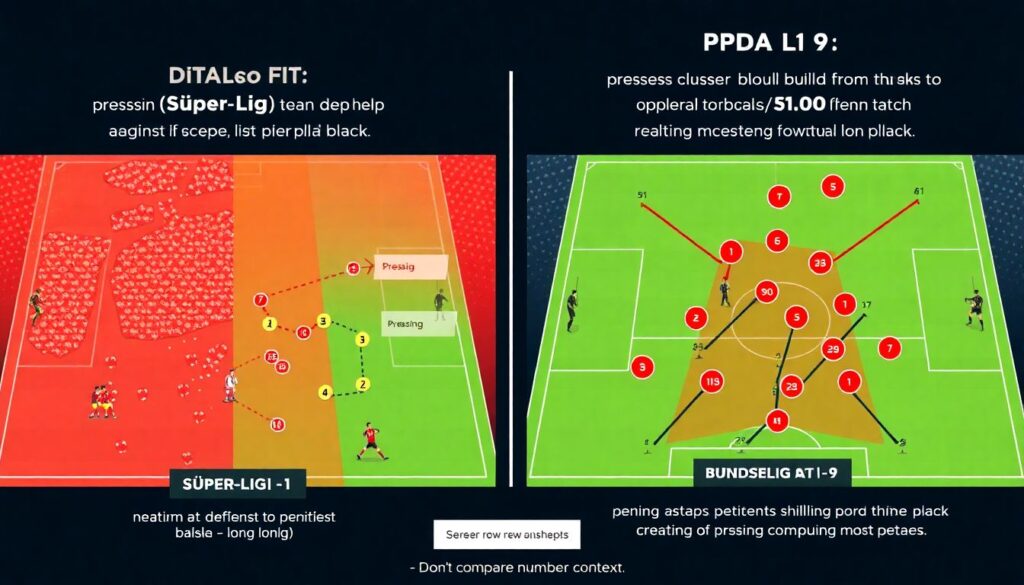
For analysts, the risk is to compare raw numbers across leagues without context. A Süper Lig team with PPDA around 11 may look less aggressive than a Bundesliga side at 9, but if the Turkish team faces more deep blocks and longer balls, their pressing opportunities are simply fewer. The solution is to combine PPDA with:
– Zone-based recoveries (how many balls won in the final third).
– Rate of high turnovers leading to shots.
– Opponent build-up style (short vs long).
> Technical note: Sample benchmarks (recent seasons)
> – Pressing elites in Europe: PPDA ~ 7–9, 8–12 high turnovers per match, 2–3 shot-ending high turnovers.
> – Top Süper Lig pressers: PPDA ~ 10–11.5, 5–8 high turnovers, 1–2 leading to shots.
> – Passive Süper Lig sides: PPDA > 13, minimal high turnovers, rely on low block and counters.
This kind of advanced football stats pressing intensity Süper Lig view lets you set realistic targets. If your current PPDA is 14 with just three high turnovers per match, don’t dream of hitting “Liverpool numbers” in one pre-season. Aim to shave off 1–1.5 PPDA and add two extra high recoveries first; build from there.
Turning Analytics into Concrete Game Plans
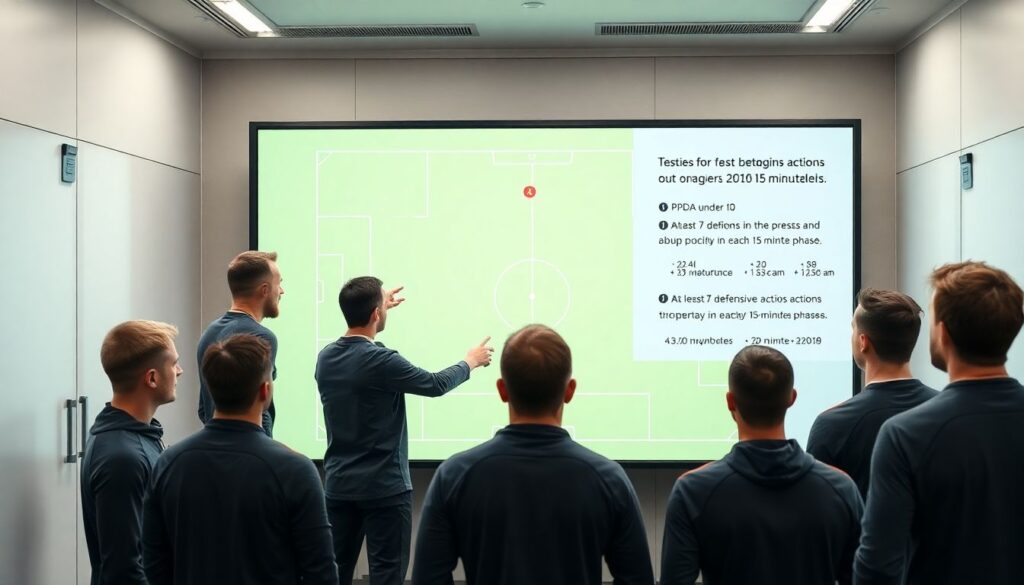
The final step is translating data into coaching language. Instead of telling your head coach, “We need PPDA under 10”, frame it as: “We want at least 7 defensive actions in the opponent’s half in each 15-minute phase.” Then design game plans: maybe you press full throttle for the first 15 minutes of each half and for 5 minutes after scoring or conceding.
If you’re using a Süper Lig tactical analysis subscription or similar scouting platform, build consistent reports: same metrics, same pitch zones, same definitions of “high press” vs “mid block”. Over a season, patterns emerge: which opponents crumble under a coordinated press, which like to bait your first line and then play long. That’s where tactics move from theory to points on the board.
—
Choosing the Right League for Your Pressing Identity
In the end, pressing style is a compatibility test between coach, players and environment. The best European leagues for high pressing football favour teams with precise structures and reliable athletes who can repeat sprints while staying tactically disciplined. The Süper Lig, on the other hand, rewards coaches who can harness emotion without losing shape, using selective, well-timed pressing waves rather than 90 minutes of full-throttle pressure.
For clubs, agents and players, a careful Süper Lig vs European leagues tactics analysis is not a luxury, but a risk-management tool. Before moving a “pressing forward” from Istanbul to a top-4 Bundesliga side, ask: is he good at reading triggers or just good at chasing lost causes? Before importing a continental playmaker into Turkey, check whether he can survive 20 minutes of wild, end-to-end pressing spells. Marrying style and context is where careers are made – or broken.