
Why Money Shapes the Game More Than Tactics
If you care about Turkish football, you’ve probably felt it: the Süper Lig produces passion, drama and huge fanbases, but when its clubs step into Europe, the financial gap hits like a cold shower. Money doesn’t replace tactics or talent, but it decides how deep your squad is, how modern your academy looks, and whether you keep your best players past one breakout season. That’s exactly why “Money and Power: The Financial Gap Between Süper Lig and Europe’s Top 5 Leagues” is not just a catchy title, but a daily reality for every club director, coach, agent and even fan who wants to understand how to turn potential into sustainable success.
How Big Is the Gap? Let’s Translate It Into Real Life
You don’t need to memorize every report to feel the difference, but it helps to frame it with numbers and simple logic. When we talk about European football league revenues comparison, we’re basically comparing what each league earns from TV, sponsorship, matchday and commercial deals. The Premier League, La Liga, Bundesliga, Serie A and Ligue 1 are in a different financial universe: their broadcasting deals alone often exceed the overall revenues of entire smaller leagues. That means an average mid‑table club in a top league can afford transfer fees, analytics staff and sports science infrastructure that, in Turkey, are usually luxury items only for title contenders.
TV Money: The Engine Behind the Super Gap
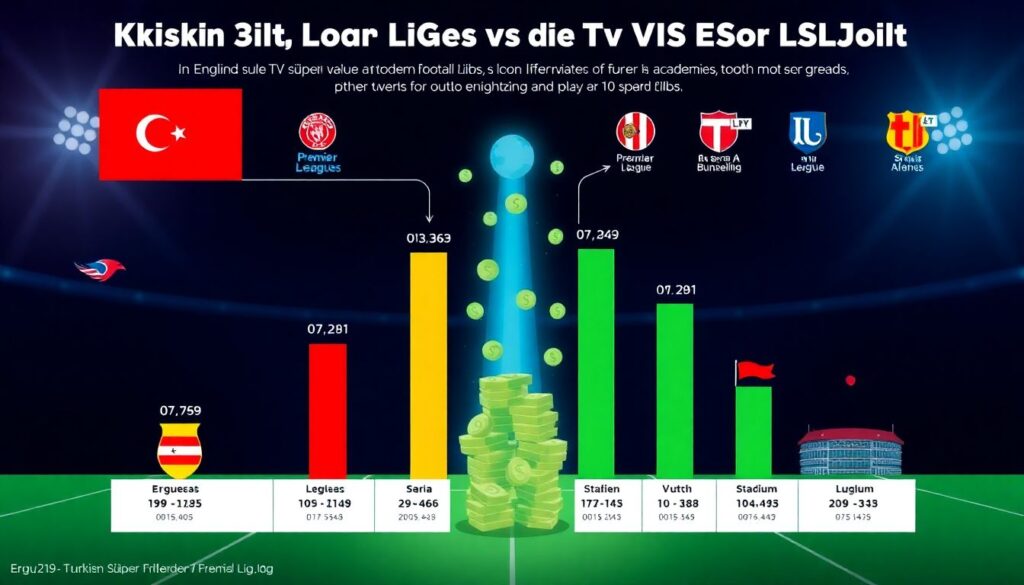
Super Lig vs top 5 leagues TV rights value is the heart of the story. TV rights are like oxygen for modern clubs: they fund wages, transfers, academies, stadium upgrades and digital projects. In England, even a relegation‑threatened team can outbid most Süper Lig clubs for a player, simply because their TV cheques are massive and guaranteed. In Turkey, TV deals have been volatile, renegotiated, and sometimes devalued in real terms by currency swings and economic instability. Practically, this means Süper Lig clubs must be sharper with scouting, smarter with contracts, and more disciplined with risk, rather than hoping a giant TV deal will fix everything.
Where the Money Actually Comes From
It’s easy to say “we need more revenue” and move on, but if you break down the football clubs revenue ranking Europe reports, a clear pattern emerges. Big clubs usually have four pillars: broadcasting, matchday (tickets, hospitality), commercial (sponsors, naming rights, partnerships) and “other” (player trading, merchandising, content). While TV money is largely controlled at league level, the other three pillars are heavily influenced by club strategy. Süper Lig clubs often under‑monetize matchday, rely too much on short‑term transfer profits, and react instead of plan in the commercial space. The gap isn’t just about how much you earn; it’s about what you can directly control and how responsibly you manage it.
Inspiring Examples: How Underdogs Punch Above Their Weight
The good news: budget gaps don’t automatically mean defeat. Look at clubs like Atalanta, Sevilla or even Brighton as case studies. In any detailed sports business analysis European football leagues, these teams consistently outperform their wage bills thanks to clear identity and smart structures. They invest heavily in scouting networks, data‑driven decision‑making and stable coaching philosophies. These clubs show that if Süper Lig sides can’t match the richest leagues euro for euro, they can still close the performance gap through systems, not just star signings. The lesson is blunt: you may not control your league’s TV deal, but you fully control how you build your sporting model.
Practical Recommendations for Clubs: Turning Limitations Into Strategy
Let’s move from theory to concrete, usable ideas. If you were running a Süper Lig club with limited cash compared to the Premier League La Liga Bundesliga Serie A Ligue 1 financial statistics giants, what would you do tomorrow morning? The priority is to design a model that turns financial constraints into a filter for smarter choices, rather than an excuse. That starts with discipline in wage structures, a clear transfer strategy, and a long‑term view on player development. Instead of chasing short‑term glory with aging stars on massive salaries, aim for younger, resale‑able assets and a coherent playing style that makes scouting and recruitment more precise.
– Define a clear sporting identity and hire coaches who fit it instead of constantly changing styles.
– Cap wages as a percentage of revenue and avoid “desperation contracts” after a few good games.
– Build a core of players with resale value (23–26 years old), complemented by a few experienced leaders.
Recommendations for Players and Agents: Using the Gap, Not Fighting It
For players and agents, the financial gap is not just a problem; it’s an opportunity. Süper Lig can be a launchpad into bigger markets or a stable home for a well‑managed career. Use the league’s visibility—European competition, passionate fan culture, big derbies—to build a profile. Then, instead of chasing the first big offer, think in phases: settle at a club that gives minutes, choose environments with good coaching, and treat contracts like strategic tools rather than lottery tickets. Agents, in particular, should treat the league as part of a broader European network, not an isolated marketplace.
– Choose clubs that have a reputation for player development, not just big names and pressure.
– Negotiate clauses that protect your upside: resale percentages, realistic release fees, performance bonuses.
– Invest part of your income in education and financial literacy, so short careers don’t lead to long‑term problems.
Club Case Studies: What “Success” Looks Like in Practice

When you examine cases of successful projects, real change rarely comes from one transfer window. Think about clubs that rebuilt through strategy: a Turkish club that upgrades its academy and starts exporting talent to Europe for solid fees; another that modernizes its stadium, boosts matchday experience, and turns empty seats into a waiting list. These stories share common threads: data‑informed decisions, realistic budgets, and continuity. In practice, this might mean hiring a sporting director with a five‑year plan, setting clear KPIs (minutes for academy players, transfer profits, wage‑to‑revenue ratios), and resisting the urge to blow the budget after one good season.
From Chaos to System: How to Build a Modern “Small‑Big” Club
Even if you can’t suddenly join the top of the football clubs revenue ranking Europe, you can act like a “small‑big” club—one that thinks like a giant but spends like a realist. The first step is governance: transparent structures, clear roles, and fewer emotional decisions. The second is infrastructure: analytics, medical teams, and youth development. You don’t need a Premier League‑level budget to use video analysis properly or to track training loads. The third is culture: rewarding process, not just results, so coaches and scouts aren’t punished for short‑term dips when the long‑term plan is sound. Over time, this kind of discipline turns volatility into predictability.
Inspiring Süper Lig Stories: Proof That It’s Possible
We’ve already seen glimpses of what’s possible when Turkish clubs think beyond quick fixes. Runs to European quarter‑finals or deep group‑stage campaigns quietly bring more than prestige; they improve coefficients, raise visibility, and attract sponsors who were previously hesitant. Clubs that bet early on digital engagement—strong social media, English‑language content, creative sponsorship activations—have already noticed that international fans translate into new revenue pockets. These inspiring examples show that, even inside a tough economic setting, brave and coherent projects can break the narrative that the Süper Lig is only a “selling league” with no say in Europe.
Learning Resources: How to Educate Yourself on Football Finance
If you’re serious about understanding money in football, you need to treat it like any other field: study it. There’s a growing pool of resources for anyone who wants to dive into European football league revenues comparison, wage structures, and investment strategies. Start with annual financial reports of clubs and leagues, move into analytical blogs and podcasts on football business, and complement that with broader reading on sports economics. Even if you’re “just” a fan, this knowledge helps you judge transfers, coaching changes and board decisions with more nuance than “buy better players”.
– Read independent reports and blogs focused on sports business analysis European football leagues.
– Use public financial documents (club annual reports, league revenue summaries) to track trends over 3–5 years.
– Follow analysts and practitioners on LinkedIn and X who specialize in football finance and data.
What Fans and Local Communities Can Actually Do
Fans might feel powerless in the face of billion‑euro TV deals, but they’re not. Stable attendance, responsible supporter culture, and constructive pressure on club governance all shape the long‑term health of a team. When supporters demand transparency in budgeting, resist short‑term populism, and back youth projects even during bumpy periods, they indirectly support smarter financial policies. Local businesses can also step in with creative partnerships, helping clubs diversify revenue beyond the central TV pot. Over time, this kind of bottom‑up pressure can nudge clubs toward more sustainable, data‑backed decision‑making instead of pure emotion.
Closing the Gap: Not Overnight, But Step by Step
The financial chasm between Süper Lig and the five big leagues won’t disappear in a season or two. Structural factors—market size, legacy brands, global TV appeal—give the Premier League, La Liga, Bundesliga, Serie A and Ligue 1 a clear head start. Yet the point of understanding Super Lig vs top 5 leagues TV rights value and other metrics is not to sigh and give up; it’s to see where the controllable levers are. Smarter recruitment, better academies, digital‑first commercial strategies, and more professional governance can’t fully erase the money gap, but they can narrow the performance gap. And in modern football, where one good European run can change a club’s trajectory, that difference is everything.