
Choose a regista when your team needs controlled build-up, tempo setting and precise distribution from deep. Choose a box-to-box midfielder when you need vertical runs, defensive coverage and constant presence in both boxes. Modern midfields usually combine both: one deeper regista-type plus one or two box-to-box players attacking and defending aggressively.
Core Distinctions Between Regista and Box-to-Box
- Regista prioritises vision, scanning and tempo control; box-to-box prioritises coverage, pressing and forward runs.
- Regista operates mainly behind the first press; box-to-box constantly breaks lines with and without the ball.
- Regista’s main output is progression and chance creation from deep; box-to-box impacts ball recoveries, entries into the box and high-intensity sprints.
- Regista is more technique- and decision-heavy; box-to-box is more physically and athletically demanding.
- Regista fits possession-dominant, structured teams; box-to-box shines in transition-heavy, high-tempo systems.
Defining the Regista: Vision, Tempo and Distribution
A regista is a deep-lying playmaker who dictates rhythm, connects phases and progresses the ball from the base of midfield. When designing a midfield coaching course regista role module, anchor it around the following selection criteria:
- Scanning and awareness: Consistently checks shoulders before receiving; recognises pressing triggers and free men early.
- First touch and body orientation: Opens up to play forward; can receive under pressure on the half-turn.
- Passing range and disguise: Plays firm vertical passes, diagonals and switches; uses feints to unbalance blocks.
- Tempo management: Knows when to slow the game to stabilise and when to accelerate with one-touch combinations.
- Press-resistance: Escapes pressure with small touches, angles and wall passes rather than risky dribbles.
- Positional discipline: Maintains access to centre-backs and full-backs; rarely vacates the central build-up zone.
- Defensive positioning: Anticipates counters, blocks central lanes and directs pressing rather than sprinting everywhere.
- Leadership and communication: Organises distances between lines; calls for specific movements to open passing lanes.
For coaches using soccer coaching books regista playmaker chapters, constantly link every technical drill to these criteria, so players understand why a regista’s decisions look different from a classic number 8.
Defining the Box-to-Box: Stamina, Transition and Impact
A box-to-box midfielder covers large distances, links defence to attack and repeatedly arrives in both penalty areas. In a box to box midfielder training program, you usually work across several sub-profiles rather than a single template. The table below compares common deployment variants in modern systems.
| Variant | Best For | Advantages | Drawbacks | When to Choose |
|---|---|---|---|---|
| Classic Box-to-Box 8 | Balanced teams needing energy, pressing and late runs into the box. | High work rate, supports both full-backs, contributes goals and tackles. | Can be positionally loose; may leave pivots exposed if timing is poor. | Use when you want vertical running and extra presence in the final third. |
| Defensive-Minded Box-to-Box | Teams protecting central zones but still needing forward support. | Strong duels, ball-winning, cover for full-backs, still offers second-line shots. | Less creative under pressure; may under-occupy half-spaces in attack. | Use when opponents have strong 10s or inside forwards attacking your half-spaces. |
| Attacking Box-to-Box 8/10 | Sides relying on second-line runners instead of a pure 10. | Arrives in the box, creates overloads, strong link with striker. | Can leave midfield under-manned in defensive transitions. | Use when full-backs provide width and you want extra runners in the box. |
| Hybrid 6/8 Shuttler | Double pivots needing one player to step out or drop in situationally. | Flexible role, supports build-up and press, closes half-spaces. | Role complexity; requires high game intelligence to avoid confusion. | Use when you alternate between low build-up and high pressing within games. |
| High-Pressing Box-to-Box | High-intensity pressing sides focusing on regains near the opponent’s box. | Triggers press, forces turnovers, generates quick chances in transition. | May struggle in long defensive phases or deep blocks. | Use when your main weapon is counter-pressing and fast attacks. |
In an online football tactics course midfield roles module, contrasting these variants directly with a regista helps players and analysts understand who should hold and who should break lines in each phase.
Tactical Roles Across Formations: How Each Midfielder Is Deployed
Use simple if-then rules to choose between a regista and one or more box-to-box midfielders in common shapes:
- If you play 4-3-3 with one pivot, then use a regista as the single 6 and pair with two box-to-box 8s who can press high and attack the box.
- If you play 4-2-3-1 against a strong pressing side, then select a regista in a double pivot with a defensive-minded box-to-box 8 to secure build-up and protect transitions.
- If you play 3-5-2 with wing-backs high, then favour two box-to-box midfielders covering half-spaces plus, optionally, a regista dropping between centre-backs to start play.
- If your squad lacks an elite passer but has runners, then structure the midfield around box-to-box profiles, using centre-backs and full-backs to handle progression instead of a pure regista.
- If your striker likes to drop as a false nine, then let the regista stay deeper and instruct a box-to-box partner to run beyond into the spaces the striker vacates.
- If you often defend in a mid/low block, then prioritise at least one box-to-box midfielder with strong duels and clearances, while the regista focuses on first pass out of pressure.
When planning a midfielder development camp box to box and playmaker focus, simulate each of these shapes so players experience how the same profile behaves differently as structures and partners change.
Skill Sets and Training Priorities: Technical and Physical Benchmarks
Use this quick checklist to decide whether to invest more training time into regista or box-to-box development for a given player:
- Evaluate natural strengths: If the player shows exceptional awareness, calmness and passing detail, lean regista; if they show relentless running, aggression and box entries, lean box-to-box.
- Assess physical ceiling: For players with average pace and explosiveness but good endurance and coordination, regista is often more realistic; for high-speed, powerful athletes, box-to-box offers higher impact.
- Match club game model: In a possession-first club, invest in regista development; in a transition-based team, emphasise box-to-box habits and a tailored box to box midfielder training program.
- Gap analysis vs squad: If your squad already has strong ball-playing centre-backs and 10s, prioritise box-to-box runners; if it lacks first-phase passers, develop at least one regista.
- Learning style and decision speed: Players who absorb video detail and adapt positioning fast can handle regista demands; instinctive competitors who thrive in chaos often excel box-to-box.
- Injury and longevity considerations: For players with recurring hamstring or overload issues, regista may be more sustainable than the high-volume sprints of a box-to-box role.
- Educational support: If you or the player can access a structured online football tactics course midfield roles module, use it to deepen understanding of regista patterns; if not, simplify responsibilities and bias toward physical, box-to-box tasks.
Recommendations by Persona: Head Coach
As a head coach, start from your game model. If build-up stability and control in tight Turkish Super Lig pitches are your priority, recruit or retrain a regista first, then add one box-to-box. If your edge is transitions and crowd energy, prioritise two high-level box-to-box midfielders.
Recommendations by Persona: Data Analyst
As a data analyst, define separate dashboards. For the regista, emphasise progressive passes, receptions under pressure and on-ball value. For box-to-box players, track high-intensity runs, deep touches, counter-press regains and penalty-box actions. Use this split to advise coaches where each profile truly adds value.
Recommendations by Persona: Central Midfielder
As a central midfielder, pick a main track for the next season instead of trying to master everything. Study targeted clips and soccer coaching books regista playmaker content if you lean deeper, or high-intensity box to box midfielder training program drills if you lean more vertical, then communicate clearly with your coach.
In-Game Decision Making: When to Hold, When to Drive
Typical decision mistakes when mixing regista and box-to-box roles:
- Both central midfielders vacate the six-space, leaving centre-backs exposed to counters after losing the ball.
- The regista dribbles forward unnecessarily instead of releasing early to runners, slowing potentially dangerous transitions.
- A box-to-box player jumps to press alone without cover, opening a straight pass into the 10-space or channel.
- Regista follows the ball laterally towards the wing, breaking central connections and making switches impossible.
- Box-to-box midfielders arrive too early in the box, ending up on the same line as the striker instead of timing late runs.
- Confusion over who picks up opposition 10s and who screens passing lanes, leading to free shots at the edge of the area.
- Miscommunication in rest defence: box-to-box player sprints forward while full-back also pushes, leaving no cover behind.
- Regista constantly demands the ball from centre-backs even when tightly marked, instead of rotating position with a partner.
Measuring Effectiveness: Metrics, Video Cues and Positional Data
Regista profiles are usually best when your key success factor is clean build-up, central control and chance creation from deeper zones; box-to-box profiles are usually best when matches are open, transitions frequent and you need volume of runs, regains and penalty-box impact rather than pure passing control.
Practical Concerns Coaches and Analysts Ask
How do I know if my team needs a regista or more box-to-box midfielders?
Review game footage: if you frequently lose the ball in build-up or struggle to progress centrally, prioritise a regista. If you are stable in possession but lose transitions and penalty-box control, you likely need stronger or additional box-to-box profiles.
Can one player combine regista and box-to-box roles effectively?
Very few players can sustain both workloads at a high level. At intermediate level, clearly prioritise one role per player and per phase. You can allow situational freedom but must define who stays and who goes in each structure.
How should I train a young midfielder who could become either profile?
Build both technical quality and physical base up to a certain age, then specialise gradually. Use games and constraints to test whether their natural impact comes more from passing and positioning or from pressing and running, and decide their main track from there.
What are simple metrics I can track without advanced data tools?
For registas, count successful forward passes, progressive passes and instances of breaking the first press. For box-to-box players, track high-intensity runs, box entries, ball recoveries in midfield and direct goal involvements from late runs.
How can I integrate this into a local coaching or education plan?
Use a small curriculum: one unit on regista build-up patterns, one on box-to-box pressing and running, and one on combined roles. Whether in a local clinic or a midfielder development camp box to box and playmaker focus, repeat these themes consistently across drills and games.
Do I need different session designs for youth and adults?
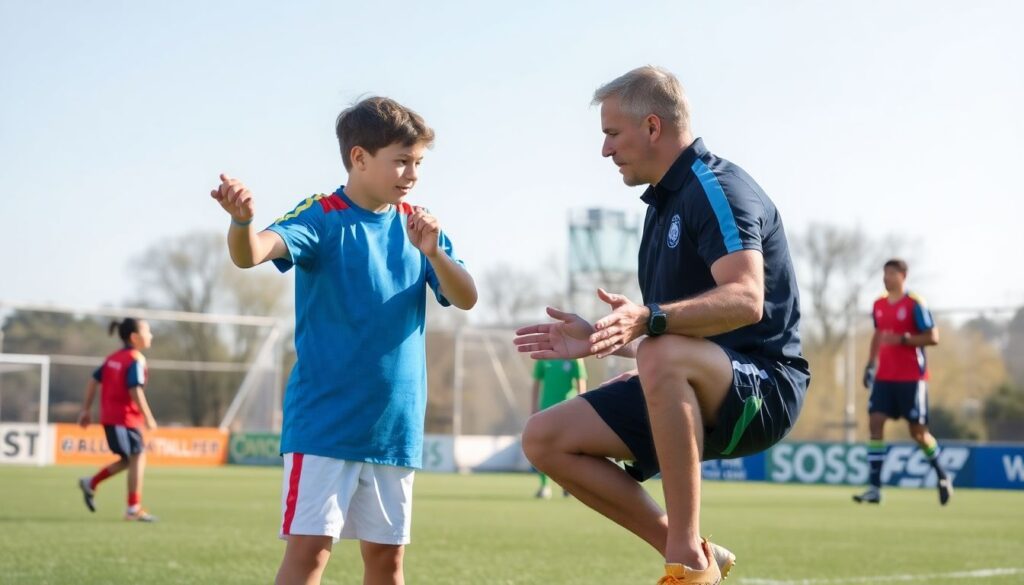
The core principles are the same, but intensity and complexity differ. With youth, simplify decisions and pitches; with adults, use more realistic distances and tactical detail. In both cases, keep clarity about who holds and who drives in each exercise.
How can self-learners improve their understanding of these roles?
Combine match video study with structured resources such as an online football tactics course midfield roles module, then test your understanding by writing short role descriptions and checking them against how top teams actually use their registas and box-to-box midfielders.