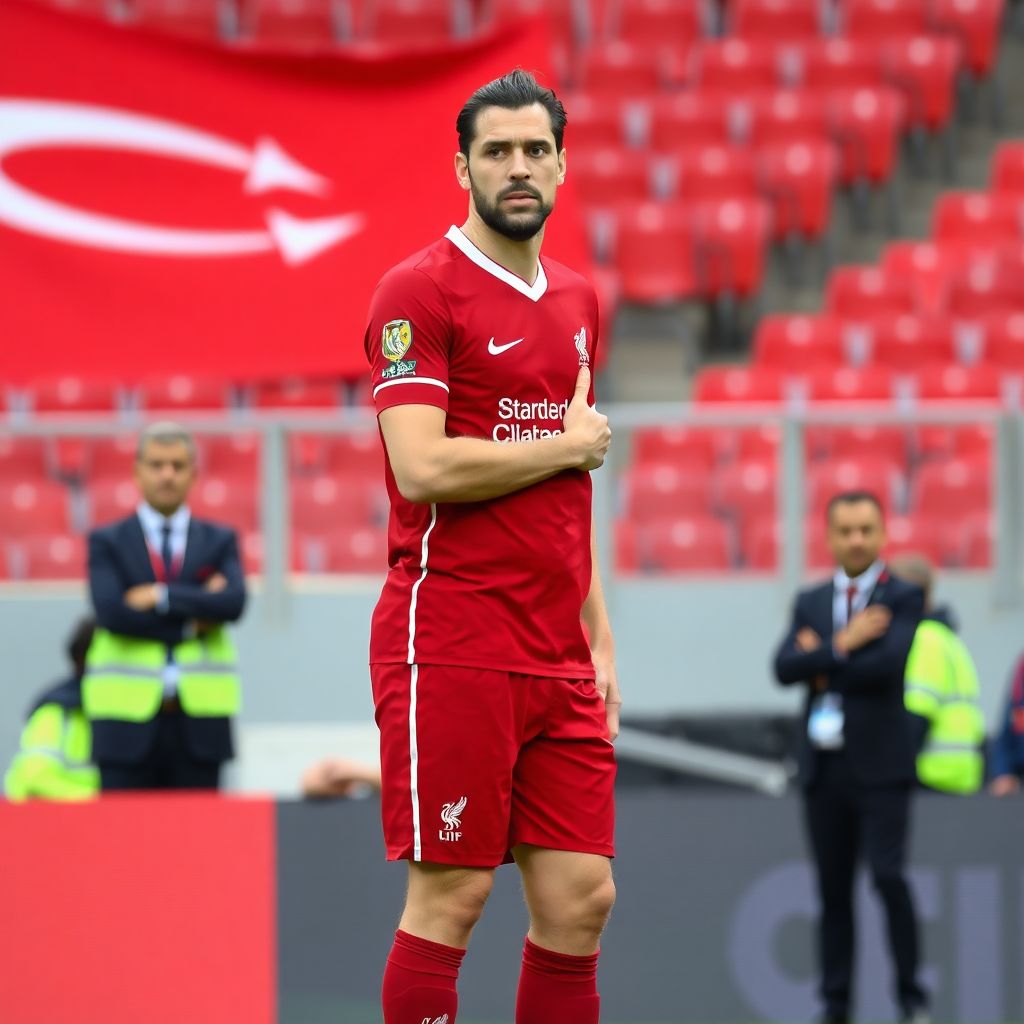
Liverpool shut door on Virgil van Dijk exit despite Galatasaray interest
Turkish champions Galatasaray have been dealt a major setback in their attempts to prise Virgil van Dijk away from Liverpool, with the Premier League club making it clear they have no intention of allowing their captain to leave.
The Dutch defender is understood to feature prominently on Galatasaray’s shortlist as they plan a high-profile reinforcement at the heart of their defence. The Istanbul side believe Van Dijk’s mix of physical dominance, aerial prowess and leadership would instantly elevate their backline and send out a statement both domestically and in Europe.
Despite that ambition, Liverpool’s stance is firm: Van Dijk is not for sale. The club hierarchy have reportedly rejected the idea of entertaining offers, regardless of the financial package that might be put on the table. For the Merseyside side, his value on the pitch and in the dressing room outweighs any potential transfer fee.
Van Dijk has been a cornerstone of Liverpool’s modern era since his arrival from Southampton in early 2018, in what was then a record fee for a defender. That bold move reshaped Liverpool’s defensive structure, turning a previously fragile backline into one of the most feared in Europe. His presence has underpinned the club’s surge to domestic and continental success over the years.
Now 34 and approaching his 35th birthday, Van Dijk is undeniably past the peak of his athletic prime, yet he remains integral to Liverpool’s plans. Last season he started all 38 Premier League matches, an impressive feat of consistency and durability at his age, and even contributed six goals from centre-back – a reminder of his set-piece threat and knack for delivering in decisive moments.
The centre-back’s future was a major talking point in the summer of 2025. With speculation swirling about a potential departure and questions over how long he could continue at the top level, his situation was closely monitored across Europe. Ultimately, Van Dijk opted to commit his immediate future to Anfield by signing a new two-year contract. That deal now has just one year remaining, naturally inviting fresh interest in his services.
Galatasaray, fresh from winning the Turkish Super Lig, view this as a rare opportunity. Their ambition is not merely to dominate domestically but to become a consistent presence in the latter stages of European competitions. To achieve that, they want a marquee defensive signing-someone who brings experience of Champions League nights, title races and high-pressure environments. Van Dijk fits that profile perfectly.
From Galatasaray’s perspective, the logic is clear. Signing a defender of Van Dijk’s stature would instantly improve their defensive structure, raise standards on the training ground and boost their profile to attract further high-level recruits. His authority, game-reading and organisational skills at the back could help solidify a team that often looks to outscore opponents rather than shut games down.
However, Liverpool’s current circumstances make a sale almost unthinkable. The club is already absorbing significant change this summer, with key figures Mohamed Salah and Andrew Robertson departing. Losing another cornerstone in the same window would risk destabilising both the dressing room and the team’s on-field coherence. The leadership void created by multiple exits would be extremely difficult to fill in a single off-season.
Compounding this is the defensive reshuffle already underway. Ibrahima Konaté is leaving as a free agent and is close to joining Real Madrid, further thinning Liverpool’s central defensive options. With one first-team centre-back already on his way out, Liverpool are focused on adding depth and quality at the back, not sanctioning the exit of their most reliable and experienced defender.
For Andoni Iraola, tasked with guiding Liverpool through a period of transition, Van Dijk is far more than just another senior player. His influence stretches across every line of the team: setting the tempo in build-up, directing the high defensive line, organising pressing traps and serving as a reference point for younger players. In a new tactical era, continuity in the spine of the side is crucial, and Van Dijk is at the heart of that.
Although age is starting to show in certain aspects of his game-such as recovery sprints and the frequency with which he can play at full intensity-Van Dijk’s positional sense and experience often compensate. He picks his moments to attack the ball, marshals the defensive line with precision and remains a dominant presence in aerial duels at both ends of the pitch. These attributes are extremely hard to replace, especially in a single transfer window.
From a strategic standpoint, Liverpool also have to consider the broader message any sale would send. Letting their captain leave with a year left on his contract could be interpreted as a willingness to cash in on veterans, potentially unsettling other senior players. By refusing to sell, they signal that experience and leadership are valued commodities, not expendable assets.
Financially, it also makes sense to keep him for at least another season. Any fee Galatasaray could realistically offer would not guarantee a like-for-like replacement. Top-level centre-backs with Van Dijk’s blend of qualities are rare and command significant transfer fees and wages. Liverpool might prefer to allow him to run down his contract rather than risk an expensive and uncertain reshuffle in a critical area of the pitch.
For Galatasaray, the likely failure of this pursuit may force a change in strategy. Instead of going all-in on a single superstar name, they may need to spread their budget across two or three defensive recruits, blending experience with younger options. While that approach lacks the glamour of a Van Dijk signing, it could provide greater long-term balance and depth for a team juggling domestic and European commitments.
There is also the question of adaptation. Even if Liverpool softened their stance, Van Dijk would face a significant change in environment. Moving from the intense weekly demands of the Premier League to the Super Lig would alter the competitive rhythm of his career. While Galatasaray are a massive club with a passionate fanbase and huge expectations, the day-to-day level of opposition and tactical culture differs markedly from what he has grown used to in England.
From Van Dijk’s point of view, staying at Liverpool for now appears the most logical choice. He retains the captain’s armband, remains at the centre of the project under a new manager and continues to compete in what is widely considered the toughest league in the world. Unless the sporting project took a drastic negative turn or contract talks collapsed in the future, there is little incentive for him to push for a move at this stage.
Looking ahead, the real turning point could arrive next year as his contract approaches its final months. Liverpool will then have to decide whether to extend his stay again, plan for a phased transition with a younger signing, or accept that a new chapter awaits their long-serving defender. Galatasaray and other interested clubs will be watching closely, aware that the dynamics could shift once contractual pressure increases.
For now, though, the situation is straightforward: Liverpool see Virgil van Dijk as indispensable to their short-term ambitions and to the stability of a squad already undergoing notable change. Galatasaray’s admiration and intent are clear, but admiration alone is not enough. With the Anfield hierarchy resolute and their captain still central to the project, a move to Istanbul remains highly improbable in the current window.