
Modern Galatasaray doesn’t just win games; they script them from the first pass of the goalkeeper. When people talk about *galatasaray tactical analysis* now, they usually start with how calmly this team plays out from the back under pressure. To really understand it, you need to blend stats from the last three seasons with what actually happens on the pitch: who moves where, who attracts the press, and who quietly appears in space. Let’s walk through the whole process step by step, as if you were on the touchline trying to copy it for your own team.
Context and stats: why build-up became a weapon
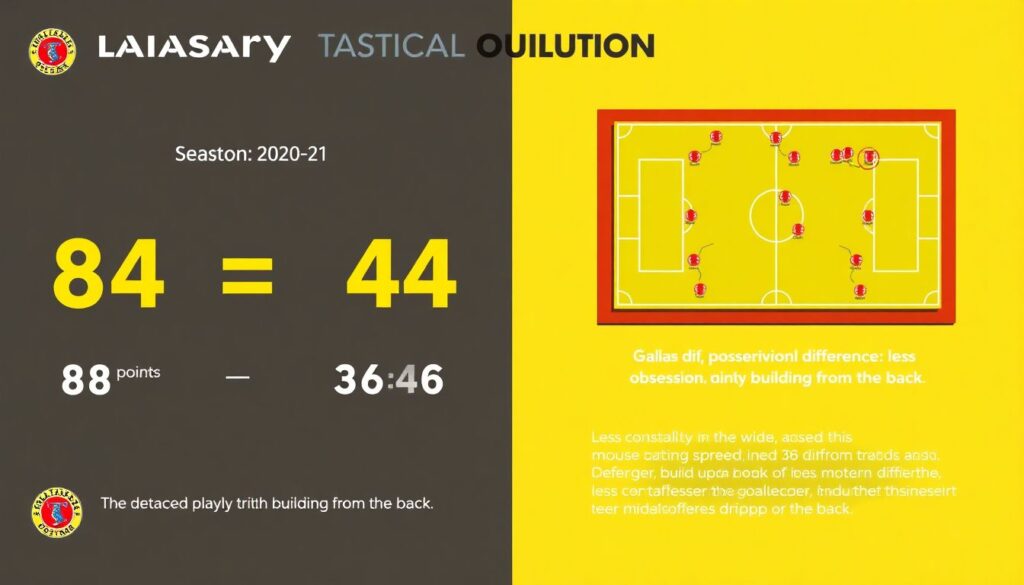
Before looking at the details of galatasaray build up play from the back, it helps to see how the numbers shifted. In 2020–21, Galatasaray fought for the title with 84 points and a +44 goal difference (80 scored, 36 conceded), but the possession was more balanced and they were not yet as obsessed with methodical circulation. The huge dip in 2021–22, when they slumped to mid‑table with just 52 points and a negative goal difference, pushed the club toward a clearer positional style. Under Okan Buruk in 2022–23, they bounced back to the championship with 88 points, 77 goals scored and only 27 conceded, sitting in the mid‑50s for average possession and clearly using controlled build-up as a base, not just transitions or wing crosses.
Okan Buruk’s blueprint: structure before creativity
When people say “galatasaray tactics under okan buruk”, they often focus on the front four, but the real magic starts much deeper. Buruk usually works from a 4‑2‑3‑1 or 4‑1‑4‑1 that morphs in possession: one pivot dropping close to the centre-backs, one full-back stepping high, the other tucking inside. Over the last three seasons, Galatasaray have consistently ranked near the top of the Süper Lig for passes per possession and for sequences starting in their own third that end with a shot, which is exactly the metric that rewards patient build-up. The key isn’t just having the ball; it’s how they use the first three passes to unbalance the press and open the middle, instead of panicking into long clearances.
Step 1: goalkeeper and centre-backs – luring the press
The first stage of their build-up is deceptively simple: goalkeeper plus two centre-backs forming a triangle, the pivot just ahead as an extra outlet. In many games since 2022–23, Galatasaray have taken more than half of their goal-kicks short, specifically to trigger the opponent’s press and create space behind the first line. The keeper is encouraged to hold the ball, wait that extra second and force the pressing striker to commit to one centre-back. Once that happens, the far centre-back and the pivot automatically “open the fan” – stepping wider and deeper to create new passing angles. If you’re copying this, the error to avoid is a static back line; if the three players don’t constantly adjust their distances, any half-pressing opponent will lock you on one side and trap you.
Step 2: full-backs and pivot – turning a back four into a back three
The next piece of galatasaray attacking patterns analysis sits in the role of the full-backs. Very often, when the ball moves to one side, that full-back pushes up almost like a winger, while the opposite full-back slides inside to become a third centre-back. The pivot then chooses: drop alongside the centre-backs to form a temporary back three plus one, or stay just ahead of them to act as the “wall” pass into midfield. Over the last three seasons, you can see in event data how often Galatasaray switch play via that inside full-back; it’s not random, it’s coached. Beginners often copy only the shapes on a tactics board and forget the timing: the full-back must move early, before the ball travels, otherwise the pass lane closes and the keeper is forced long.
Step 3: finding the free eight and the half-spaces
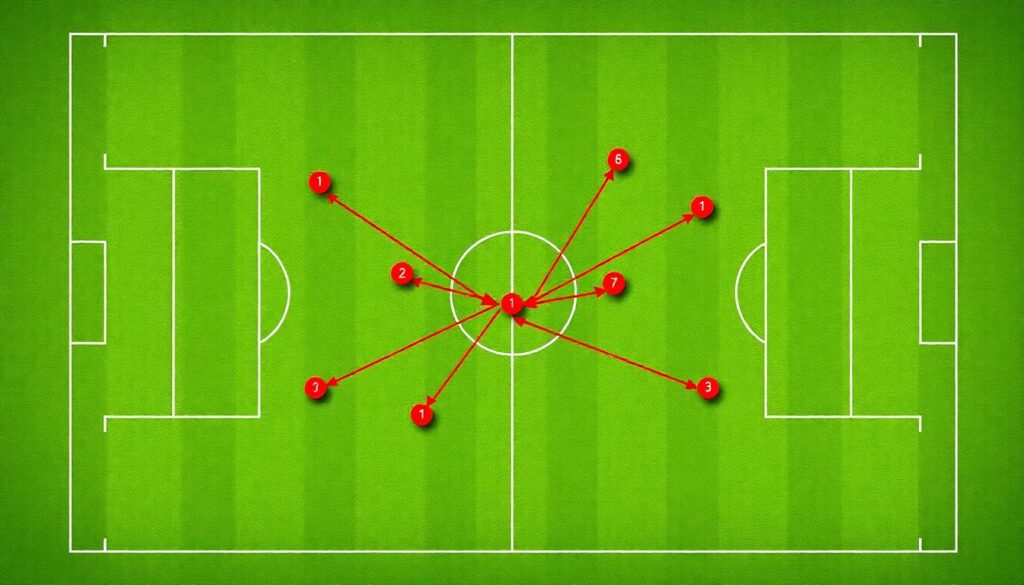
Once the first line is beaten, galatasaray build up play from the back flows into the half-spaces. The advanced midfielder (the “10” or free eight) sets up between the opposition lines, often on the blind side of the rival holding midfielder. Statistical trends from 2021–22 to 2023–24 show an increasing share of Galatasaray’s progressive passes travelling through central and half-space zones rather than pure wing channels, which matches what you see on video: quick bounce passes from pivot to eight, then out to the winger or overlapping full-back. The mistake less experienced teams make is forcing vertical passes into a marked number ten; Galatasaray usually create a prior overload, using two or three short passes to drag a defender away before threading that ball inside.
Step 4: from middle third to box – repeating attacking patterns
If you read any galatasaray football analysis blog, you’ll notice the same patterns in the final third: wide overloads, cut-backs, and late box arrivals. What links this to the initial build-up is the insistence on entering the attacking phase with control, not chaos. In the last title-winning season, a large chunk of Galatasaray’s goals came from sequences of eight or more passes, which is high for a league that often rewards direct play. They love to create 3v2s on the wing: full-back, winger, and the dropping striker or attacking midfielder. After clean build-up through the middle, the ball goes wide, and the opposite winger attacks the far post. For coaches just starting out, a common trap is to improvise this part; Galatasaray repeat the same movements until they become muscle memory.
Press resistance and typical errors to avoid
Any solid galatasaray tactical analysis has to address what happens when the press is too intense. Even under Buruk, there are games where the team struggles if the pivot is tightly marked and the centre-backs don’t dare carry the ball forward. One warning sign is the number of long, aimless clearances: when that percentage rises, Galatasaray lose their identity and their pass completion out of the defensive third drops noticeably. If you’re implementing a similar model, you must build “escape routes”: coached patterns like the goalkeeper chipping into the full-back, or the striker dropping very deep to create a bounce option. The worst mistake is stubbornness; there are days when going long for ten minutes to calm things down is smarter than gifting chances by overplaying.
Tips for beginners: how to train Galatasaray-style build-up
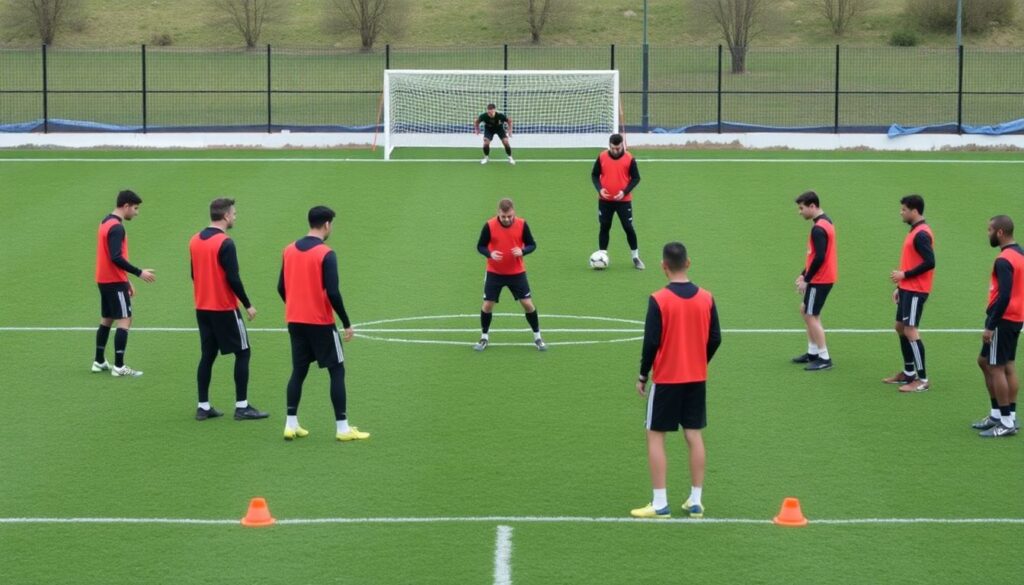
For coaches and players new to this, the best way to learn from galatasaray tactics under okan buruk is to strip them into simple exercises. Start with 4v2 rondos where the “keeper” is allowed to use hands, making it obvious when the support angles are wrong. Gradually add wide players and a pivot until you recreate a full back line plus midfield. Track one or two basic stats over a month, just like the pros: how many short goal-kicks you keep, and how many of those reach at least the halfway line under control. Over time, you should see the controlled exit percentage climb. Don’t obsess over copying every detail from a galatasaray football analysis blog; focus on principles: always offer three passing lanes, always move before the ball, and always know your safe long option if the press wins the duel that day.
Pulling it all together: numbers, ideas, and adaptability
In summary, galatasaray attacking patterns analysis over the last three seasons shows a club that consciously turned build-up into a competitive edge: more controlled possessions, more sequences starting at the back and ending with shots, and titles returning to the cabinet. Exact stats for the very latest season after 2023–24 will update these trends, but the underlying logic won’t change. They use the goalkeeper and centre-backs to lure pressure, reshape the back line with intelligent full-backs and pivots, attack through half-spaces, then overload wide to finish. If you’re stealing their ideas, remember that even Galatasaray tweak their approach depending on form and opponents. The method is not a rigid script, it’s a toolbox – and the real skill lies in knowing which tool fits which game.