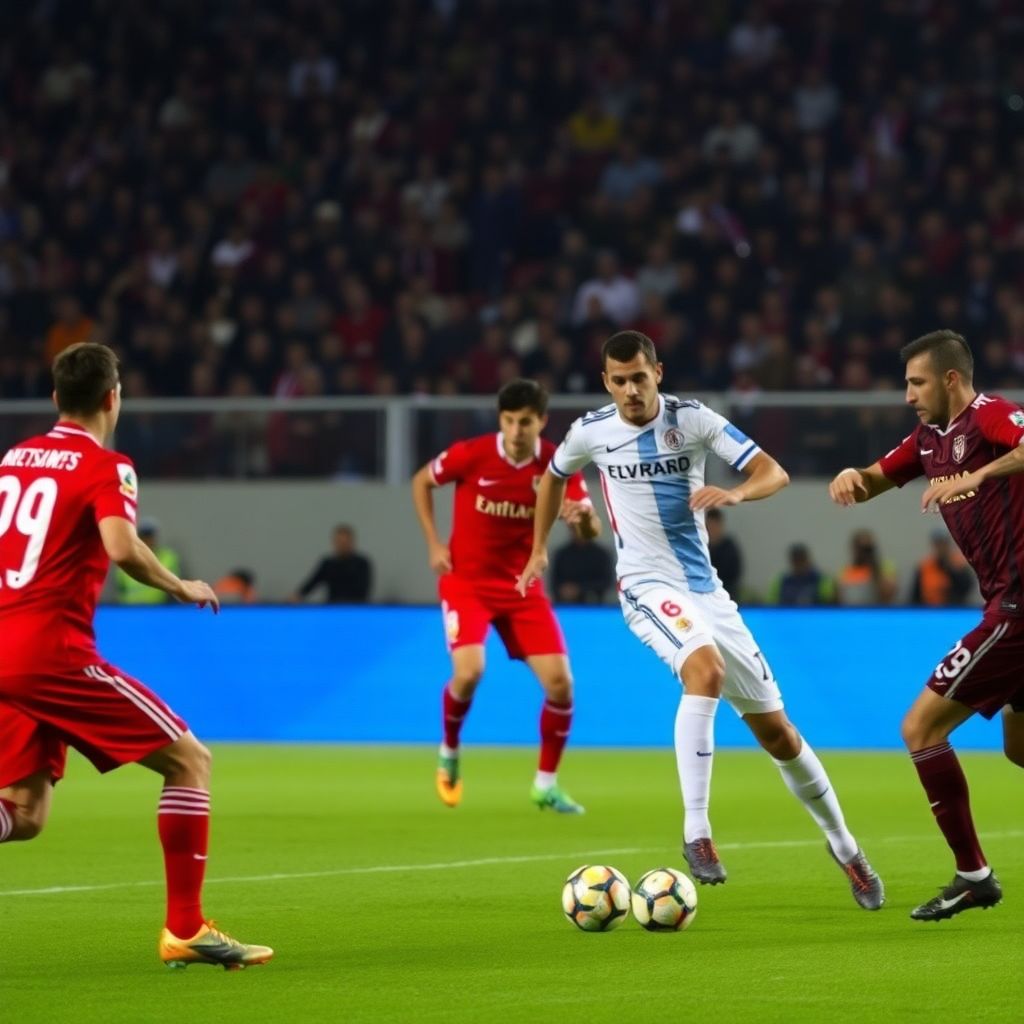
Galatasaray vs. Fenerbahçe in this derby can be read as a clash between a structured, possession-heavy approach and a more direct, risk-averse model. Galatasaray’s positional play is harder to drill but offers higher control and chance creation; Fenerbahçe’s compact, transition-focused plan is simpler to implement but heavily exposed if the first press is broken.
Tactical snapshot: core observations
- Galatasaray prioritised stable possession with a clearly defined 4-2-3-1/3-2-5 structure, demanding rehearsed automatisms and high technical quality.
- Fenerbahçe leaned on a compact mid-block and fast transitions, tactically easier to install but very dependent on individual duels and timing.
- Pressing height and risk profiles differed: Galatasaray pressed higher with more space behind; Fenerbahçe protected depth but ceded central zones.
- Wide overloads and half-space occupation gave Galatasaray better territorial control, while Fenerbahçe’s direct runs offered quicker, but fewer, high-value attacks.
- Set-pieces became a leveller, where execution details rather than overall game model decided moments.
- Substitutions shifted pressing energy and rest-defence; coaching choices directly altered the balance between control and transition risk.
Formations, roles and how the XIs matched up
In structural terms, the derby is best understood as a duel between Galatasaray’s flexible 4-2-3-1 (often morphing into a 3-2-5 in possession) and Fenerbahçe’s more conservative 4-4-2 / 4-2-3-1 hybrid. The core definition of the matchup: one side sought to dominate zones through occupation; the other sought to control moments through compactness and transitions.
Galatasaray’s double pivot anchored circulation, allowing the full-backs to stagger their positioning. One full-back tucked in as a third centre-back, while the opposite side pushed high to create a wide lane for the winger to move inside. This structure is complex to coach, requiring clear role clarity and constant communication about who forms the back three and who attacks the last line.
Fenerbahçe’s organisation revolved around two banks of four, with a ten or second striker tasked with screening the opposition pivot. The wide midfielders had dual roles: track Galatasaray’s full-backs but also be ready to explode forward. This is simpler to implement: the cues are more binary (drop or jump), but the risk is that one mistimed press opens a large diagonal passing lane.
| Aspect | Galatasaray approach | Fenerbahçe approach | Implementation difficulty | Risk profile |
|---|---|---|---|---|
| Base shape | 4-2-3-1 to 3-2-5 in possession | 4-4-2 / 4-2-3-1 mid-block | Higher (role rotations, automatisms) | Medium-High (space behind defence) |
| Pressing height | High, ball-oriented counter-press | Medium, line-oriented pressing traps | High (requires synchronised jumps) | Medium (concedes territory, protects depth) |
| Attacking focus | Wide overloads, half-space combinations | Fast counters, early forward passes | Higher (patterned movements) | High variance (few but big chances) |
| Defensive organisation | Rest-defence in a 2-3 or 3-2 structure | 4-4-2 compact block | Medium-High (positional awareness) | Medium (vulnerable if pivot bypassed) |
| In-game flexibility | Many micro-adjustments without subs | More dependent on substitutions | High (players must read cues) | Medium-High (misreads open central gaps) |
For coaches and analysts looking at Galatasaray vs Fenerbahce match analysis and stats, the key takeaway is not only who created more, but how repeatable the patterns are. Galatasaray’s structure is built to reproduce similar chance types; Fenerbahçe’s model amplifies the power of individual actions and pressing wins.
Pressing systems, transitional moments and defensive organisation
- Galatasaray’s high press definition. The forwards pressed centre-backs from inside to outside, steering play to one flank. The ten locked the pivot, while the ball-near winger jumped to the full-back. This system is effective but fragile: if the first line arrives late, the pivot can turn and hit the weak side.
- Fenerbahçe’s mid-block and trigger-based jumps. Fenerbahçe preferred to hold a compact 4-4-2 shell, jumping aggressively only on specific cues: a bad touch to a full-back, a backwards pass, or a vertical ball into Galatasaray’s dropping ten. This makes training simpler: few, clear triggers, but it depends on shared recognition and sprint capacity.
- Transition from attack to defence for Galatasaray. Upon losing the ball, the nearest three players immediately counter-pressed, while the rest-defence (usually two centre-backs plus a pivot) protected central corridors. This is high risk if the attacking spacing is poor: a simple one-two can release a Fenerbahçe runner into open field.
- Transition from defence to attack for Fenerbahçe. The first pass after recovery targeted either the striker’s feet or the far-side winger running into space. Galatasaray’s advanced full-backs made that channel inviting. The method is low-complexity, but a heavy reliance on first-pass quality and timing means it can be neutralised by fouls and counter-press organisation.
- Last-line defensive organisation comparison. Galatasaray held a relatively high line, betting on coordinated offside traps and aggressive stepping out. Fenerbahçe dropped earlier towards their box, accepting more crosses but reducing the space behind. For many coaches, teaching a deep, narrow block is tactically easier than a precise, high line with constant communication.
- Risk management and fatigue. High pressing like Galatasaray’s demands peak fitness and bench depth: as legs tire, spaces open unpredictably. Fenerbahçe’s approach spreads the physical load more evenly, but long spells without the ball can increase concentration errors, especially in the half-spaces.
Build-up play, wide overloads and attacking patterns
In possession, Galatasaray’s build-up aimed to stretch Fenerbahçe’s 4-4-2 horizontally, then exploit the interior gaps. The first line used a goalkeeper-plus-three structure, with the pivot dropping between centre-backs only when pressed by two strikers. This positional discipline is demanding but crucial to prevent pressing traps.
- Wide overload to half-space penetration (Galatasaray). Full-back, winger and ten combined on the flank to attract Fenerbahçe’s wide midfielder and full-back. The pivot then found the half-space runner (often the eight) between lines. This is a rehearsed pattern that pays off if timing is perfect; poorly executed, it leads to counters.
- Third-man runs beyond the last line. Galatasaray often used the striker as a wall player: centre-back into ten, ten into striker, striker laying off to a late-arriving eight running beyond. Coaching this requires repeated pattern drills but makes the attack less predictable and harder to defend one-versus-one.
- Fenerbahçe’s direct outlet strategy. In contrast, Fenerbahçe frequently bypassed the first build-up phase with longer passes to the striker’s chest or into the channel. This reduces structural mistakes in deep build-up but increases dependence on aerial duels and second-ball reactions.
- Switches of play and diagonal balls. When Galatasaray were blocked centrally, they relied on diagonal switches from the pivot to the far-side winger. This not only attacks isolated full-backs but also challenges the lateral shifting capacity of Fenerbahçe’s midfield line.
- Crossing profiles. Galatasaray’s crosses were more often cut-backs from the byline, a product of their wide overloads. Fenerbahçe, attacking earlier and from deeper, delivered more early crosses. From a coaching standpoint, teaching structured cut-back patterns is harder but creates higher-quality shooting positions.
- Impact on chance quality and consistency. For people following Galatasaray vs Fenerbahce odds and best bookmakers markets, these attacking patterns matter: structured, repeatable moves typically produce more stable chance profiles over a season, while direct, high-variance attacks generate more volatile outcomes from game to game.
Set-piece strategies: execution and recurring weaknesses
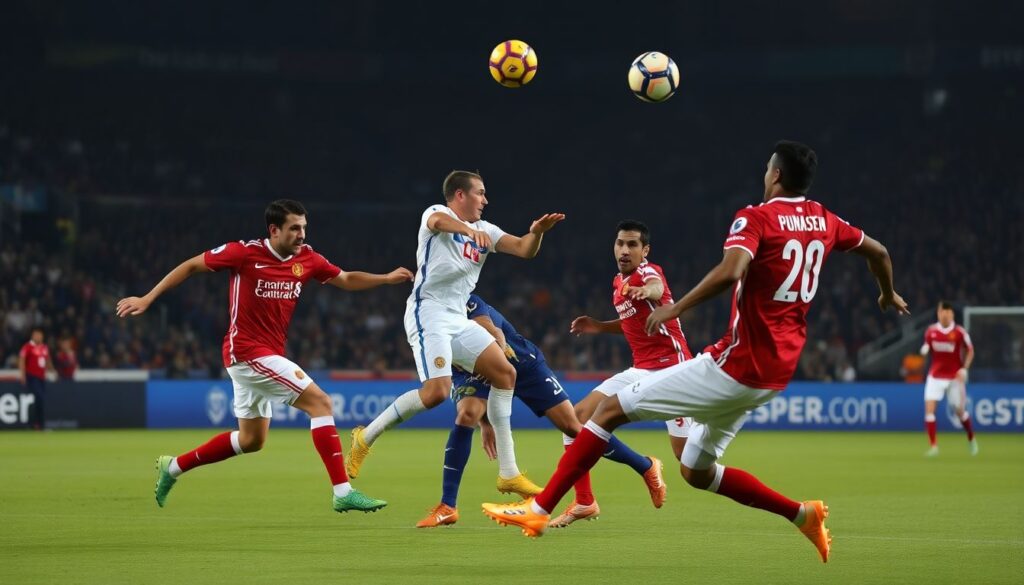
Set-pieces in this derby serve as a microcosm of the broader tactical philosophies. Galatasaray preferred complex routines designed to free a late runner or isolate a key header. Fenerbahçe emphasised strong first-contact players and second-ball reactions, easier to implement but reliant on physical superiority.
Offensive set-piece strengths and practical upsides
- Galatasaray’s rehearsed movements. Short corners, blocked runs, and decoy movements are choreographed, demanding more training time but allowing the staff to influence outcomes directly through design.
- Layered delivery zones. Variations between near-post flicks, outswingers to the penalty spot, and cut-backs keep defences uncertain, ideal when opponents mark zonally.
- Fenerbahçe’s simplicity and clarity. Clear targets (best headers), clear zones, and straightforward instructions make execution more robust under pressure, especially in hostile atmospheres.
- Transition protection. Both teams typically left at least two players high to deter counters, but Galatasaray’s more aggressive rest-defence structure better supported immediate counter-pressing if the delivery broke down.
Recurring vulnerabilities and risk factors
- Zonal marking gaps. Galatasaray’s mixed marking can be hard to teach: if even one player misjudges the flight, a free header appears at the far post.
- Screening the goalkeeper. Fenerbahçe sometimes overloaded the keeper’s zone with screens; if mistimed, this not only concedes fouls but also leaves them exposed to quick throws and counters.
- Second-ball organisation. Over-committing tall players forward means slower reactions if the clearance falls to the edge of the box; this is a shared risk, but especially damaging for teams whose midfield line is already fatigued from defending deep.
- Fouls and cards. Aggressive blocking routines carry disciplinary risk. Poor timing on blocks can draw the referee’s attention, a significant factor in a heated derby context.
Head-to-head duels: key player matchups that decided space
Beyond structures, the derby is shaped by how individual duels tilt key zones. Wide channels and half-spaces become battlegrounds where win rates in one-on-ones can confirm or undermine a team’s entire game plan.
- Full-back vs winger asymmetries. Galatasaray’s advanced full-backs often faced Fenerbahçe wingers in large spaces. A common error is assuming the structurally superior team will automatically dominate these duels; in reality, a few lost one-on-ones can entirely flip territory and momentum.
- Pivots under pressure. The myth is that technically secure pivots are safe under any press. In practice, if Fenerbahçe’s second striker and ten coordinate their press lanes well, even a high-level pivot will be forced backwards, slowing Galatasaray’s rhythm and encouraging rushed long balls.
- Striker hold-up play. Coaches sometimes underestimate how much a striker’s ability to secure first balls under pressure affects the feasibility of a direct transition plan. If Fenerbahçe’s striker consistently loses duels with Galatasaray’s centre-backs, the entire counter-attacking idea collapses.
- Interior midfield duels. Galatasaray’s eights must win both sides of the ball: creative half-space play and aggressive counter-pressing. A typical mistake is overloading them with creative tasks, leading to late reactions in defensive transitions.
- Psychological myths in derbies. It is often claimed that form and tactics do not matter in derbies, only emotion. The reality: emotion amplifies both strengths and weaknesses. Poorly trained structures break down faster under pressure; well-drilled mechanisms remain reliable reference points.
- Impact on markets and expectations. Those looking at Galatasaray vs Fenerbahce predictions and betting tips should factor in these head-to-head tendencies. Individual matchup histories, not just team form, influence how risky each tactical choice becomes.
Coaching choices: substitutions, tactical tweaks and momentum shifts
In-game management in this derby typically revolves around three levers: adjusting pressing height, refreshing wide runners, and reshaping the midfield line. Each choice changes both ease of execution and exposure to specific risks.
- Substitutions to refresh pressing. When Galatasaray’s front line begins to tire, a coach may introduce fresh forwards to maintain the high press. This is relatively simple conceptually (run, press, trap the ball wide), but complicated to synchronise with a weary midfield that may no longer step up on time.
- Shifting shapes: from 4-2-3-1 to 4-4-2. A common tweak is moving the ten alongside the striker, creating a 4-4-2 to mirror or disrupt Fenerbahçe’s build-up. The pseudo-code idea is straightforward: two up, four across, stay compact. The risk: losing a central link player, reducing Galatasaray’s ability to circulate and rest with the ball.
- Fenerbahçe’s late attacking gambles. Trailing, Fenerbahçe might add a second striker and push full-backs higher, effectively turning transitions into sustained pressure. This is easier to implement (more attackers, more crosses) but significantly increases vulnerability to counters, especially against Galatasaray’s pace in wide areas.
- Rebalancing rest-defence. Coaches often adjust how many players stay behind the ball during attacks. Keeping three versus two defenders behind looks like a small tweak but completely changes the risk calculus: three provides a safety net; two opens space but can fuel a winning push.
- Game-state driven risk taking. Leading teams tend to lower pressing intensity and prioritise compactness; trailing teams accept more chaos. From a practicality standpoint, simplifying instructions (“stay compact, clear wide”) is usually easier than installing complex possession patterns under fatigue and time pressure.
For fans planning to watch a Galatasaray vs Fenerbahce live stream HD or even travel and buy Galatasaray vs Fenerbahce tickets online, recognising these shifts makes the game more understandable: the ball is a result of choices in structure, not just random swings in momentum.
Actionable tactical checklist for coaching and analysis
- Map your own team’s capacity: can players execute complex positional play like Galatasaray, or is a simpler transition game like Fenerbahçe’s more realistic?
- Define clear pressing triggers and decide how much space you are willing to leave behind your back line.
- Design at least two rehearsed set-piece routines and one fallback “simple” delivery pattern for high-pressure moments.
- Identify three key individual matchups where you must at least break even in duels to sustain your overall game model.
- Plan substitution patterns in advance: when to refresh pressing, when to add a striker, and when to lower your block to secure a result.
Tactical clarifications and concise explanations
How does this derby analysis help with practical coaching decisions?
The comparison between Galatasaray and Fenerbahçe highlights which ideas are complex but high-reward (structured possession) and which are simpler but higher variance (direct transitions). Coaches can choose concepts that match their squad’s technical level, fitness and training time, rather than copying a game model blindly.
Why is pressing height such a critical risk decision in this matchup?
Pressing high, as Galatasaray often do, can suffocate build-up but leaves large spaces to defend behind. A deeper block, like Fenerbahçe’s mid-block, concedes territory but protects depth. The choice directly affects fatigue, chance quality conceded and the type of errors that become decisive.
What should analysts focus on beyond possession percentages and shot counts?
Look at how chances are created: via structured combinations, wide overloads, or chaotic transitions. Also track which individual duels shape key zones. This gives a clearer picture than raw totals and better informs any Galatasaray vs Fenerbahce match analysis and stats discussion.
How do tactical styles influence betting and odds evaluation?
Structured, repeatable attacking patterns tend to produce more stable performance, which can matter for those examining Galatasaray vs Fenerbahce odds and best bookmakers offers. High-variance, transition-heavy plans create more unpredictable outcomes, making short-term results harder to project.
Does watching on TV or via streaming limit tactical understanding?
Not necessarily. A good Galatasaray vs Fenerbahce live stream HD feed allows you to track spacing, pressing triggers and line heights. The key is to sometimes watch off the ball: defensive line movement, pivot positioning and how wingers react when possession changes.
Are set-pieces really worth significant training time in a derby context?
Yes. In tight, emotionally charged games, open-play patterns can be disrupted by nerves and fouls. Set-pieces remain controllable scenarios where rehearsed routines can tilt the balance, especially when overall xG and chances are otherwise close.
How do ticket and stadium factors affect tactical risk choices?
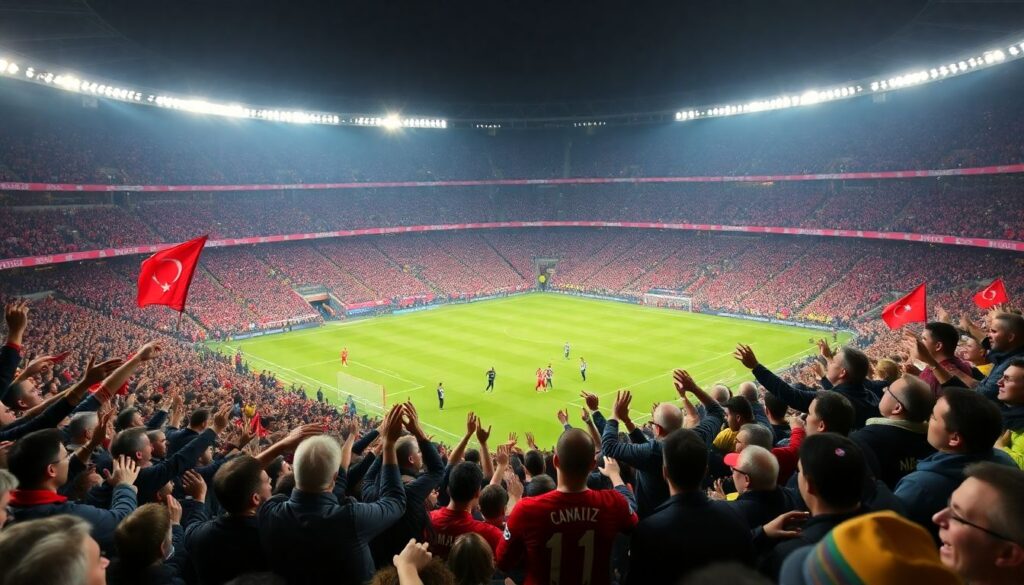
A full, intense stadium, filled by supporters who secured Galatasaray vs Fenerbahce tickets online, usually amplifies emotional swings. Coaches may choose simpler, clearer instructions under such pressure, preferring robust defensive organisation over experimental possession structures.