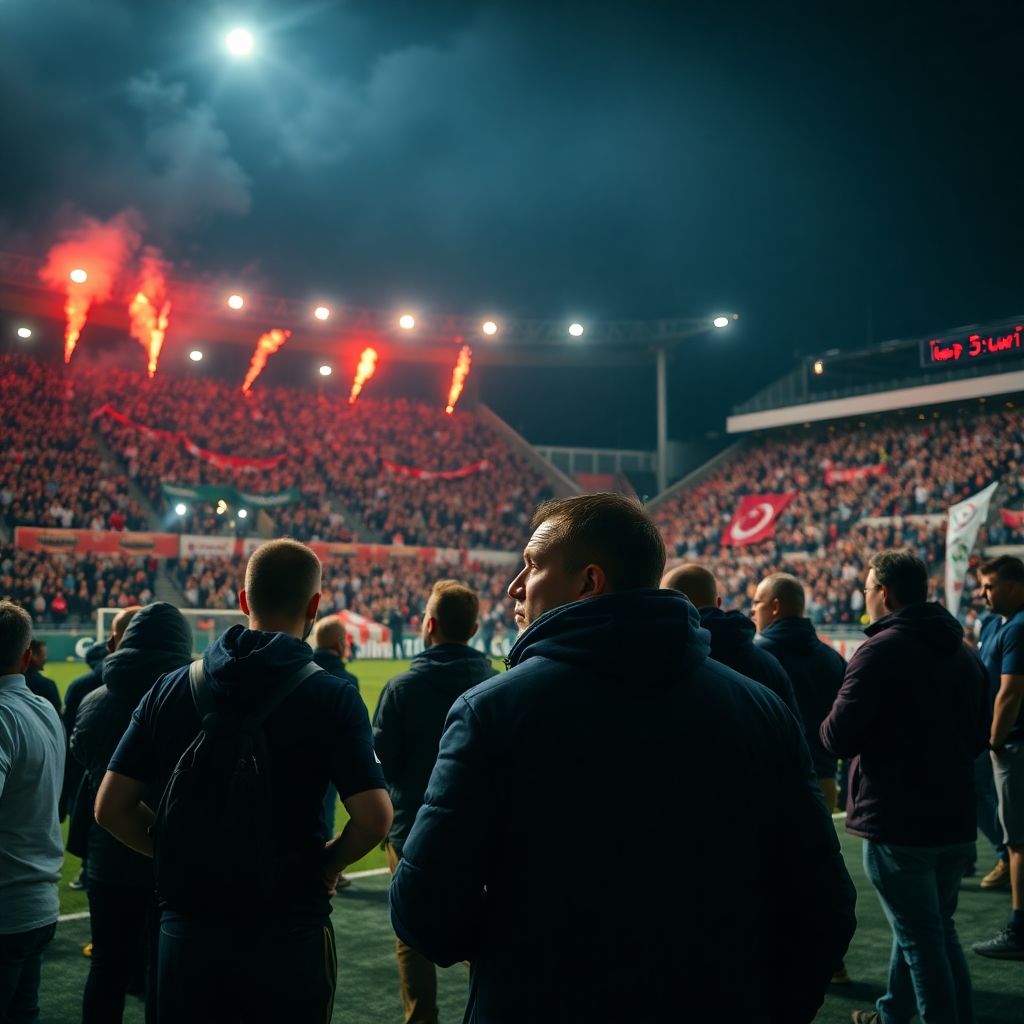
European nights in Istanbul create a uniquely hostile, high-adrenaline environment driven by intense crowds, acoustics and city culture. Visiting squads gain an edge by rehearsing noise, codifying on-pitch signals, tightly planning travel and warm-ups, and running structured post-match recovery, rather than treating each Galatasaray, Fenerbahce or Besiktas game as just another away day.
Psychological takeaways for visiting squads
- Hostility is predictable and can be mapped; surprise is optional if you prepare deliberately.
- Noise management is a tactical skill: pre-agreed signals and scripts keep structure under pressure.
- Operational discipline (travel, entry, warm-up) reduces mental fatigue before kick-off.
- Short, repeated mental routines beat long speeches in the tunnel or dressing room.
- Post-match decompression and debrief protect confidence for the next fixture.
- Use Istanbul’s intensity as a rehearsal for future European away ties, not as an exception.
Anatomy of Istanbul match atmospheres
Istanbul’s European nights are defined by packed stands, choreographed noise and a sense of occasion that starts hours before kick-off. The psychological edge comes from sustained pressure on decision-making: every touch is judged, every mistake is amplified, and long spells of defensive play are common for visiting sides.
This guide is suited to professional and semi-professional squads, analysts, and staff preparing for high-stakes fixtures at Galatasaray, Fenerbahce, Besiktas or other intense Turkish grounds. It is still relevant whether you arrive independently or via sports travel agency Istanbul European football matches packages.
Do not copy this approach blindly if you are dealing with safety-critical unrest, political demonstrations around the stadium, or severe travel disruptions; in those cases, club security officers and local authorities must lead with updated protocols that override any generic checklist.
Sensory mapping: sound, sight and crowd dynamics
Before working on players’ heads, map the environment they will face. Treat the stadium like an “opponent” you can scout and prepare for.
- Video and audio scouting
- Collect full-match footage of recent European nights in the same stadium, ideally including crowd shots and tunnel cams.
- Clip sequences showing crowd reactions to goals, fouls, time-wasting and referee decisions.
- Include commercial clips from Champions League packages Istanbul stadium experience offers, if they show pre-match build-up and fan routines.
- Noise-profile analysis
- Identify when noise peaks: walkout, first 15 minutes, after controversial fouls, corners, substitutions.
- Note “quiet windows” (injuries, VAR delays) where your side can reset mentally and reorganise.
- Visual triggers and pyrotechnics
- Document common visual stressors: choreographies, banners, laser pens, flares outside the stadium.
- Prepare players for floodlight glare, smoke and camera flashes during team walkout.
- Spatial and bench layout
- Use stadium plans from club liaison or trusted sports travel agency Istanbul European football matches partners.
- Mark where home ultras stand, where away sector opens to the pitch, and nearest 4th official / security points.
- Ticket and crowd composition signals
- Ask club officers about galatasaray fenerbahce besiktas match tickets istanbul allocations, buffer zones and mixed seating areas.
- Plan messaging for players if away fans are heavily outnumbered or placed high and far from the pitch.
- City and approach route
- Log typical arrival routes and fan gathering spots, including any Turkey football stadium tour Istanbul booking points used by visiting groups.
- Flag pinch-points where the team bus is likely to be slowed or surrounded by vocal crowds.
Pre-match mental and tactical preparation checklist
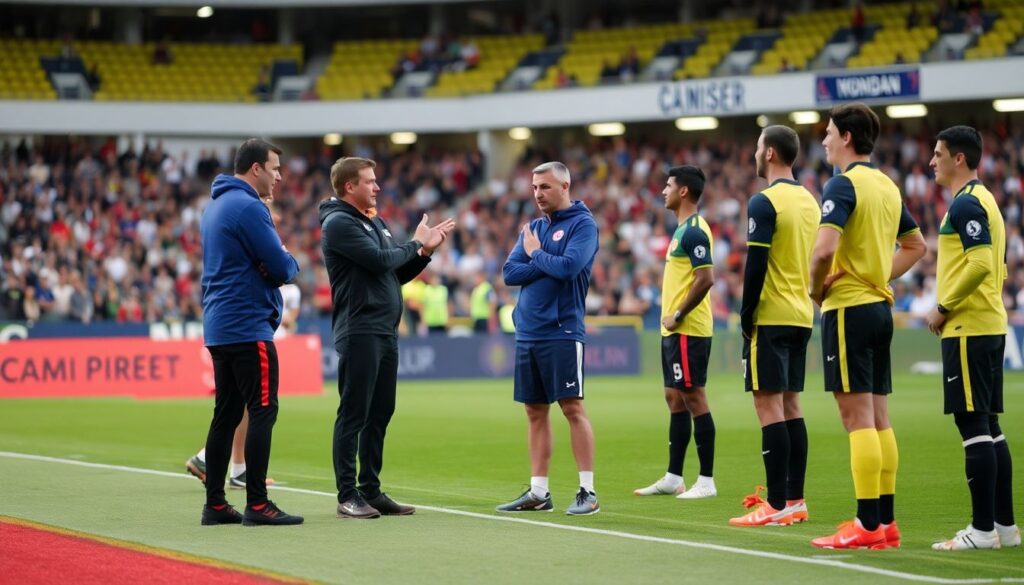
Use this preparation mini-checklist first:
- Assign a single staff lead for psychological preparation and communication protocols.
- Schedule at least one full training under simulated crowd noise.
- Agree three on-pitch signal systems: visual, gestural and positional.
- Prepare a short pre-match video briefing focused on environment, not opponents.
- Define specific roles for captain, goalkeeper and defensive midfielder as “stability anchors”.
- Clarify objectives for the night
Define what success looks like beyond the scoreline, so players have controllable targets.- Examples: “No cards for dissent”, “Maximum three unforced errors in own third”, “Complete first five passes after regains”.
- Share these targets in writing and repeat them in the final meeting.
- Run noise-based training sessions
At least once in the week before travel, run a full session with stadium-level crowd noise.- Use speakers to play Istanbul crowd audio from past European nights.
- Test how quickly players recognise hand signals and shout-calls under this noise.
- Coach must deliberately “ignore” players who shout for explanations; force them to use agreed signals.
- Build a compact communication code
Create a limited set of verbal and non-verbal cues for key game states.- Verbal micro-scripts (simple, repeatable): “Reset shape”, “Two passes then long”, “Slow tempo”.
- Gestures: arm raised and circling for tempo up, both palms down for calm, finger to temple for “think, no fouls”.
- Positional cues: full-backs tuck in = defend deep; both wingers high and wide = press trigger.
- Rehearse set-pieces under stress
Istanbul crowds react strongly to corners and free-kicks; treat these as mental drills.- Train with accelerated routines: ball placed, run-up started within a strict count.
- Assign one voice per unit (attacking and defending) to call the routine name; others stay silent.
- Rotate one “disturbance” per drill: delayed whistle, extra noise, second ball on the pitch.
- Prime leaders for emotional control
Brief captain, goalkeeper and one outfield leader on specific scripts and behaviours.- Captain: calm body language with referee, move team away from confrontation, use short phrases like “Next ball”, “Walk away”.
- Goalkeeper: hand signals to back four, visible deep breaths before goal kicks to slow tempo.
- Outfield leader: position near any teammate who reacts emotionally, physically guide them away.
- Lock in pre-match mental routines
Give each player a simple routine they can execute the same way every high-pressure night.- Example: three slow breaths, one cue word (e.g. “calm”, “focus”), quick scan of nearest options before kick-off and restarts.
- Ask players to write their cue word on wrist tape or in notebook; repeat it in the tunnel.
- Align analysts, coaches and medical staff
Off-pitch staff shape the emotional climate; align them on tone and behaviour.- Agree no public arguments with officials or opposition bench.
- Decide who speaks during half-time and for how long; avoid multiple competing voices.
- Medical staff rehearse calm, unhurried entries to the pitch regardless of crowd pressure.
On-pitch adaptations: communication, set-pieces and momentum control
- Team can execute at least three pre-agreed visual signals without confusion under high noise.
- First 10 minutes show clear risk management: no unnecessary dribbles in own third, minimal backpasses under pressure.
- On defensive set-pieces, one designated voice calls the line; players respond without looking to the bench.
- On attacking set-pieces, routines start promptly; no visible arguments over roles or delivery.
- After conceding, captain gathers team into a quick huddle within seconds, with one or two repeatable phrases.
- Fouls near your box: two players immediately pull the emotional teammate away, while one speaks to the referee.
- In spells of heavy pressure, goalkeeper and holding midfielder visibly slow the game at legal restarts.
- Substitutions occur with clear handovers: outgoing player gives a two-word briefing (“tight 10”, “press wide”) to the incoming one.
- Body language remains composed: minimal arm-waving at teammates, no long debates after referee decisions.
- Bench reactions are controlled: no mass protests, rapid return to seats after key incidents.
Operational checklist: travel, stadium entry and secure warm-ups
- Underestimating travel friction – treating Istanbul like any other away city; ignore that football trips to Istanbul European nights tickets and fan flows can heavily affect traffic and arrival times.
- Late or rushed arrival – reaching the stadium too close to warm-up time, compressing mental and physical preparation into a stressful window.
- Poor bus approach planning – no agreed response if fans surround or slow the team bus; staff become visibly anxious, players follow.
- Unclear security liaison – no single staff member responsible for contact with security, police and match delegate.
- Chaotic dressing-room environment – uncontrolled access, phones ringing, visitors entering; players cannot settle focus.
- Warm-up not adapted to noise and space – using standard routines without considering smaller warm-up zones or proximity to home ultras.
- No plan for tunnel interactions – staff and players react emotionally to opposition’s chants, stares or gamesmanship in the tunnel.
- Overlong pre-match talks – last-minute speeches become lectures, increasing tension and reducing clarity.
- Ignoring bench and staff seating – staff placed randomly, making in-game communication and role execution harder.
- No contingency for delays – no scripts or routines if kick-off is delayed due to crowd or technical issues.
Immediate recovery and debrief routines after hostile fixtures
Use structured options after the match to protect players’ mental state and extract learning from the Istanbul experience.
- Rapid “cool-down plus narrative” debrief
Short, factual debrief in the dressing room (5-10 minutes) combined with light physical cool-down. Best when travel departure is soon and emotions are high but manageable. - Delayed video-based review
Minimal talk on the night; main debrief happens next day with clips focusing on communication, body language and reaction to pressure. Use this when the result was extreme (heavy defeat or dramatic win). - Individual support check-ins
Quiet one-to-one conversations for players who received abuse or made high-profile errors. Schedule within 24 hours with coach or psychologist, focusing on specific behaviours, not personal blame. - Use as rehearsal for future ties
Frame the night as preparation for later European away games. Log what worked and what failed in a simple document and integrate it into future planning for any high-intensity ground.
Common concerns and practical answers for away teams
How early should we arrive at the stadium for an Istanbul European night?
Plan to be inside the stadium significantly earlier than your usual domestic away match, allowing extra buffer for traffic, security and fan-related delays. Coordinate timings with local liaison officers rather than relying solely on generic club routines.
Is it useful to experience the stadium the day before the match?
Yes, if logistics allow, a short walk on the pitch and visual scan of the stands helps players normalise the environment. Keep it calm and business-like, not a photo opportunity, and integrate any observations into your final briefing.
Do commercial packages like Champions League packages Istanbul stadium experience help with preparation?
They can provide useful logistical insight into routes, access points and typical fan behaviour. However, psychological and tactical preparation must be driven by your staff; treat commercial material as background, not as your main scouting tool.
How do we handle players who are excited by the atmosphere rather than intimidated?
Channel excitement into clear roles and early tasks, such as first press or first simple pass. Emphasise sticking to routines, so enthusiasm does not turn into reckless decisions, fouls or positional indiscipline.
What if we concede early and the crowd becomes even louder?
Use a pre-agreed reset protocol: quick team huddle, one or two key phrases from captain, and a conservative next few minutes focused on secure possession and field position. Avoid tactical overhauls in the immediate emotional aftermath.
How can non-playing staff contribute to emotional control on the bench?
Assign specific roles: one coach focused on tactical details, one on emotional regulation, and one in charge of communication with officials. Ask all staff to model calm body language and avoid arguing among themselves.
Does arranging Turkey football stadium tour Istanbul booking for staff or players help preparation?
A stadium tour can help staff understand layout, access and sightlines, which is useful for planning. For players, keep pre-match visits short and focused; prolonged tours risk draining concentration before the real event.