
For choosing “the best” attacking environment, use Süper Lig if you want chaotic, transition-heavy football that amplifies individual flair, and pick a specific top league if you need a more structured attacking lab: Premier League for high-tempo verticality, La Liga for width and rotations, Bundesliga for transitions, Serie A for patterns, Ligue 1 for finishing talent.
Essence of attacking philosophies
- Süper Lig favours open, emotionally driven attacking with big swings in momentum and high transition volume.
- Top European leagues channel attacking play through clearer tactical frameworks and repeatable patterns.
- For player development, the Premier League and Bundesliga sharpen tempo and pressing, Serie A refines decision-making, La Liga and Ligue 1 sharpen creativity and duels.
- For clubs, Süper Lig is ideal to exploit individual brilliance; elite leagues demand stable structures and squad profiles.
- Choosing a “best” league depends on whether you value entertainment, system learning, or showcasing star attackers.
Historical roots of offensive approaches in the Süper Lig
- Derby culture and emotional momentum – Istanbul derbies shaped a mentality where comebacks, long shots and direct surges are normal, encouraging risk-taking over control.
- Influence of foreign 10s and wingers – Decades of importing creative number 10s and dribbling wingers anchored attacks on individual genius rather than strict automatisms.
- Coaching turnover and tactical volatility – Frequent coaching changes reduced long-cycle tactical projects, favouring adaptable, simple attacking principles (get the ball quickly to the best players).
- Fan expectations for “attacking football” – Supporters often demand visible attacking intent: more shots, more crosses, aggressive substitutions, even at the cost of compactness.
- Defensive organisation gap versus top leagues – Less consistent high-level defending compared to the most attacking football leagues in Europe naturally increases shot volume and box entries.
- Set-piece and crossing heritage – Historically strong target forwards and aerial specialists led to heavy crossing, early entries and second-ball attacks.
- Late tactical modernisation – Systematic pressing and build-up trends reached Turkey later than Germany or England, keeping a longer window for end-to-end, broken-play attacking.
Persona guidance
For head coaches: lean into the historic strengths: train structured chaos (quick counters, second balls, late-box runs) instead of copying fully controlled positional play before defensive standards rise.
For performance analysts: track momentum swings (xG spikes after turnovers, shot streaks after goals) to understand how emotional context shapes Süper Lig tactics vs top European leagues.
For informed fans: expect more drama and wild scorelines than in a typical European football leagues attacking styles analysis; the league’s history rewards risk and flair.
Ball progression and build-up: Süper Lig versus Premier League
Süper Lig vs Premier League attacking style comparison starts with contrasting build-up: Turkish teams oscillate between short build-up phases and sudden long passes; Premier League sides more consistently link structured first-phase circulation with explosive vertical bursts.
Qualitative metrics table: Süper Lig vs Premier League
| Metric | Süper Lig trend | Premier League trend |
|---|---|---|
| xG | Often volatile game to game, boosted by transition flurries | More stable, with many teams generating steady high-quality chances |
| Passes into final third | Spikes via direct balls and early crosses rather than long settled phases | High volume through structured build-up and rotations between lines |
| PPDA | Generally higher (less aggressive pressing) with big variation between clubs | Often lower, reflecting intense pressing and counter-pressing |
| Touches in box | Created in bursts after turnovers and wide deliveries | Mix of box overloads from combinations and repeated cut-backs |
Build-up variants comparison table
| Variant | Best for | Pros | Cons | When to choose |
|---|---|---|---|---|
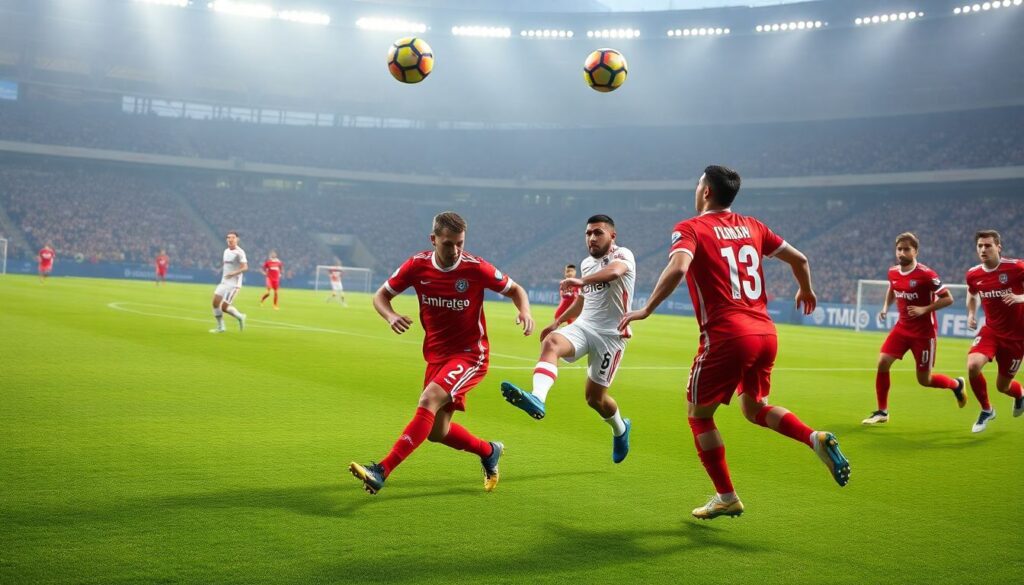
| Direct build-up with target forward | Süper Lig clubs with strong 9 and creative second-line runners | Simple to coach; fits emotional, end-to-end Süper Lig games; quickly reaches attackers. | Invites long-ball exchanges; can bypass midfielders; harder to control rhythm. | When your centre-backs struggle under pressure but you have aerial dominance. |
| Hybrid short build-up plus sudden vertical balls | Teams bridging Süper Lig style with Premier League-like intensity | Balances control and penetration; limits risky passes in own third; suits mixed squads. | Requires good decision-making from pivots; can become predictable if vertical timing is poor. | When you face mid-blocks and want to lure pressure before striking in behind. |
| Structured positional play from back | Premier League-style sides with technical defenders and press-resistant 6 | Creates reliable passing lanes; supports sustained pressure and counter-press. | High turnover risk in leagues where pressing quality is strong; needs time to ingrain. | When your squad is technically secure and you aim to dominate territory and ball. |
| Fast vertical transitions after minimal circulation | Underdogs in both Süper Lig and Premier League | Maximises counter-attacking threat; simple triggers; suits athletic forwards. | Low possession; fewer controlled chances against deep blocks. | When facing stronger opponents who commit full-backs high and leave space. |
| Wing-focused early progression | Clubs with powerful wingers but average central midfield | Plays to 1v1 strengths; reduces central turnovers; natural fit for Turkish atmospheres. | Risk of hopeful crosses; midfield can be bypassed; harder to create central tap-ins. | When central areas are physically dominated and you trust your wide players. |
Persona guidance
For head coaches: in Turkey, prefer the hybrid or wing-focused variants; if you aspire to export players to England, gradually add structured positional play so they survive a Premier League pressing wave.
For performance analysts: in any statistics comparing Süper Lig and top European leagues, track how many passes precede box entries; Süper Lig tends to create more “short chains”, Premier League more “long chains” of passes before shots.
For informed fans: expect Süper Lig build-up to swing from patient to chaotic; in England, chains are more rehearsed, so attacks feel quicker yet more deliberate.
Wide play and full-back responsibility: comparisons with La Liga
La Liga full-backs usually combine in triangles and underlaps, while Süper Lig wide play leans on classic overlaps and direct crosses, with less systemic occupation of half-spaces.
Qualitative metrics table: Süper Lig vs La Liga wide play
| Metric | Süper Lig | La Liga |
|---|---|---|
| xG from wide attacks | Often from volume of crosses and transition raids down flanks | More from cut-backs and low crosses after positional rotations |
| Passes into final third | Earlier, more direct to wingers or overlapping full-backs | More combinations through interior channels before releasing wide |
| PPDA related to wing presses | Press intensity varies, wide traps less consistently used | More structured wing pressing traps, especially by top sides |
| Touches in box | Many from classic crosses aimed at a central 9 | Many from late runs and cut-backs to second line |
Scenario-based recommendations
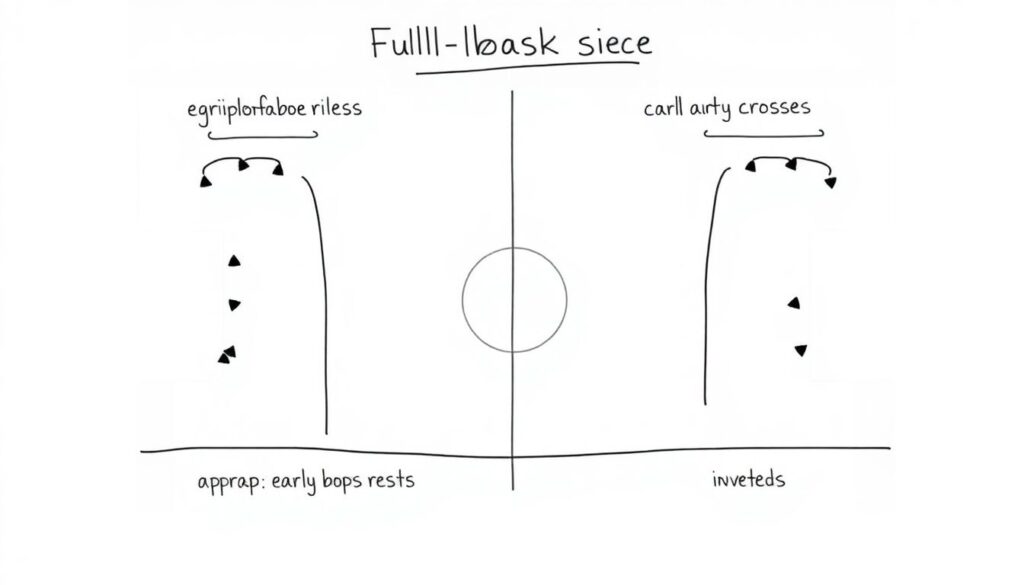
- If your full-backs are strong athletes but limited technicians, then adopt Süper Lig-style overlaps and early crossing, and protect them in build-up with a holding midfielder dropping in.
- If your wingers prefer to come inside, then copy La Liga patterns: underlapping full-backs, third-man runs, and low cut-backs instead of hopeful aerial balls.
- If opponents sit in a deep 4-4-2 block, then use La Liga-style patient circulation, switch play frequently and target the far-side full-back arriving on the blindside.
- If your league environment rewards chaos and crowd energy, then widen your wingers, encourage 1v1s and crossing waves in classic Süper Lig fashion.
- If you are preparing a player for a move to Spain, then train him to read wide overloads, underlaps, and interior support angles rather than pure up-and-down runs.
Persona guidance
For head coaches: build two wide gameplans: a direct Turkish version (overlap and cross) and a La Liga version (inside winger plus underlap). Switch based on opposition full-back quality.
For performance analysts: log where wide chains end: cross, cut-back or reset. This clarifies whether your wide strategy is Süper Lig-like or closer to Spain.
For informed fans: in Turkey, watch for big overlaps and aerial duels; in Spain, enjoy elaborate triangles and low crosses aimed at late runners.
Pressing triggers, counter-pressing and transition speed versus the Bundesliga
Bundesliga sides are benchmarks for fast, co-ordinated pressing and transitions; Süper Lig shows selective, more individual pressing with slower team compactness recovery.
Qualitative metrics table: Süper Lig vs Bundesliga transitions
| Metric | Süper Lig | Bundesliga |
|---|---|---|
| xG from transitions | High-impact but inconsistent, relying on mistakes and open games | Consistently high due to well-drilled pressing traps and counters |
| Passes into final third after regain | Often 1-2 direct passes, but with less team support | Quick but supported by multiple lanes and runners |
| PPDA | Generally indicates more mid/low blocks with situational presses | Reflects aggressive high press in many clubs |
| Touches in box from counters | Arrive in waves when games break open | Regular pattern, especially against high defensive lines |
Checklist to choose your pressing and transition model
- Define your squad profile: if you lack collective sprint capacity, avoid full Bundesliga-style high pressing; choose compact mid-block with targeted traps.
- Assess league officiating and pitches: in more chaotic Süper Lig conditions, prioritise simple pressing triggers (back-pass to CB, poor first touch to full-back).
- Decide your risk level: if you are a big club, press higher and counter-press aggressively; if you are an underdog, prioritise deep compactness and lethal counters.
- Map your key pressers: build your pressing scheme around forwards and 8s who can sprint repeatedly; others cover passing lanes rather than chase.
- Set clear transition rules: after regain, decide whether the first idea is “forward within three seconds” or “secure and switch”; write this into training drills.
- Align with club identity: if fans demand front-foot football, commit to a higher line and more Bundesliga-like counter-press; if results-first, blend Süper Lig pragmatism with selective pressure.
Persona guidance
For head coaches: steal the structure from Germany but lighten the volume: two or three clear pressing traps instead of pressing everything.
For performance analysts: monitor PPDA, regains in the attacking third and xG from counters to see if your approach is moving towards Bundesliga benchmarks.
For informed fans: when a Turkish team looks “German”, you will see compact lines, instant pressure on loss and three or four players sprinting together after regains.
Chance creation patterns and creative hubs: Serie A contrasts
Serie A builds chance creation through rehearsed combinations and intelligent occupation of half-spaces, while the Süper Lig often relies on star individuals and quick-fire combinations around them.
Qualitative metrics table: Süper Lig vs Serie A creativity
| Metric | Süper Lig | Serie A |
|---|---|---|
| xG from structured attacks | Good when big clubs dominate, but volatile in mid-table games | Steady, with many sides using repeatable patterns to find free shooters |
| Passes into final third | Direct and often aimed at marquee 10 or winger | Layered, often using wall passes and third-man runs |
| PPDA versus build-up | Pressing on creative hubs can be inconsistent | Many teams design schemes to deny creators time and options |
| Touches in box from patterns | More random: crosses, rebounds, solo dribbles | More systematic: cut-backs, overloads, pre-planned rotations |
Frequent mistakes when choosing your creative approach
- Assuming a “Serie A-style” 10 will automatically dominate Süper Lig without adjusting to faster, less controlled transitions and looser pressing structures.
- Overloading chance creation on one superstar, which inflates his usage but makes the team predictable and easier to nullify with man-marking.
- Copying patterns from Italy (e.g., specific third-man runs) without matching profiles, leading to sterile possession and few deep box touches.
- Ignoring set-pieces as a creative hub, despite Turkish environments where delivery quality and aerial threats can decide big games.
- Neglecting wide creators, focusing solely on central 10s and ignoring that many Süper Lig defences struggle to defend isolated wingers.
- Underestimating the importance of the holding midfielder as a “rhythm setter”, especially when trying to implement more sophisticated Serie A patterns.
- Failing to integrate data (final-third passes, key pass zones) into your European football leagues attacking styles analysis before changing your system.
- Judging creativity only by highlight assists, not by pre-assist actions and space-opening movements.
Persona guidance
For head coaches: mix Serie A-style rehearsed combinations with the Süper Lig’s natural chaos: script 3-4 patterns per side, but leave room for individual improvisation.
For performance analysts: cluster xG by pattern type (cross, cut-back, combination) to see whether your “creative hub” is a player, a zone, or a pattern.
For informed fans: in Italy, creativity looks methodical; in Turkey, it looks explosive and star-driven.
Final-third execution, finishing profiles and lessons from Ligue 1
Ligue 1 offers powerful, fast forwards and disciplined block-breaking wingers; Süper Lig finishing is more varied, with older stars, box strikers and high-risk shooters.
Qualitative metrics table: Süper Lig vs Ligue 1 finishing
| Metric | Süper Lig | Ligue 1 |
|---|---|---|
| xG per shot profile | Many low-to-medium quality shots from distance and tight angles | More focus on higher-quality shots following fast breaks and cut-backs |
| Passes into final third before shot | Can be very short chains, often 1-2 passes from regain | Mix of rapid direct attacks and build-up before release |
| PPDA impact on shot quality | Opponents’ loose pressing can invite speculative efforts | Higher defensive intensity forces more precise shot selection |
| Touches in box per attack | Often one decisive touch before a shot after crosses | Multiple touches, feints and cuts before finishing |
Pragmatic league choice summary
For pure entertainment and superstar expression, Süper Lig remains a great attacking showcase. For future-proof tactical education, the Bundesliga or Premier League are strong, depending on whether you prioritise transitions or pressing. For creative and structural nuance, La Liga and Serie A excel. For refining physical and finishing profiles, Ligue 1 is a powerful environment. Your “best” choice must align with your players’ next-step ambitions and your club’s tactical identity, not abstract rankings of the most attacking football leagues in Europe or raw statistics comparing Süper Lig and top European leagues.
Persona guidance
For head coaches: send intense, transition-ready attackers to Germany or England; refined playmakers to Spain or Italy; explosive dribblers and finishers to France; players who thrive in chaos and emotion can maximise themselves in Turkey.
For performance analysts: map each player’s strengths against league profiles rather than names; a well-matched move beats a big-brand mismatch.
For informed fans: “best” attacking league depends on what you enjoy: wild swings (Turkey), speed and power (England, Germany), brainy patterns (Spain, Italy), or athletic duels and finishing (France).
Common tactical clarifications
Is the Süper Lig more attacking than the top European leagues?
It is often more open and chaotic, which produces more visible attacking moments, but that does not always mean higher quality or better-structured attacks. Top leagues channel their attacking through more consistent patterns and higher collective intensity.
Which league best prepares an attacker for the Premier League?
The Bundesliga and Ligue 1 usually provide the closest mix of tempo, duels and space. However, a star attacker dominating the Süper Lig can still step up if he adds pressing intensity and decision-making speed.
Should Turkish clubs copy a single European model?
No. Blending elements works better: German-style pressing triggers, Italian or Spanish chance-creation patterns, and local strengths in emotional momentum and wide play.
Where should a creative number 10 move: Spain, Italy or Turkey?
Spain and Italy refine structure and tactical intelligence; Turkey maximises freedom and responsibility. The best choice depends on whether the player needs discipline and education, or a platform to carry a team.
Do data metrics fully capture attacking style differences?
Metrics like xG, PPDA or passes into the final third are essential, but they miss context: emotional swings, stadium pressure and coaching stability. Use numbers alongside video and tactical understanding.
Is there a single best league for developing young wingers?

Ligue 1 and La Liga are strong for structured development, while the Süper Lig is strong for building resilience in chaotic, high-pressure games. Ideally, a player experiences both structures across his career.
How useful is a Süper Lig stint before moving to a top-five league?
It can be very useful for learning to handle pressure, big atmospheres and responsibility. The key is then adapting to the higher tactical and physical demands of the destination league.