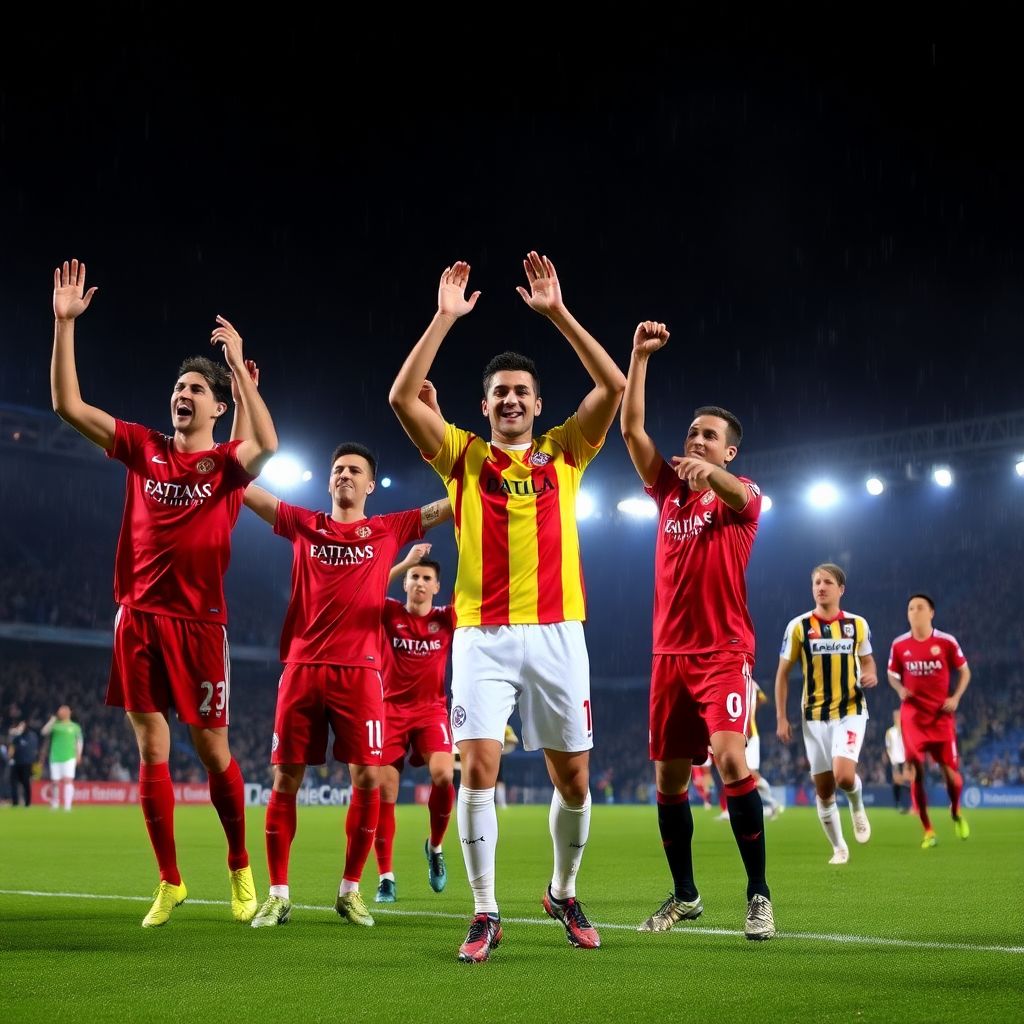
Champions League playoff rounds are supposed to be the stage where hierarchy is restored: giants absorb a scare in the first leg, tighten the screws in the second, and move on. This season, that script was shredded. Instead of cautious two-legged chess, we got three seismic shocks that have not only redrawn the bracket, but also hinted at a new balance of power in Europe.
In three very different settings – the Arctic chill of northern Norway, the boiling intensity of Istanbul and Turin, and the tactical cauldron of Bergamo – Bodo/Glimt, Galatasaray and Atalanta refused to play the underdog. They did not wait for mistakes; they imposed themselves, tactically and emotionally. Each upset came with its own storyline, but together they sent one clear message: reputation no longer guarantees safety in the Champions League.
—
Bodo/Glimt vs Inter Milan: Anatomy of an ambush
This was not just a “good night out” for Bodo/Glimt. It was a dismantling of last season’s finalists and current Serie A leaders that cannot be dismissed as a quirk of weather, travel fatigue or rotation. Inter did not simply lose; they were stripped of the control that usually defines their European performances.
Bodo/Glimt’s greatest strength was their refusal to be awed by the occasion. They approached Inter as a tactical puzzle, not an untouchable superpower. Rather than sliding back into their own box and hoping to survive, they went after Simone Inzaghi’s build-up from the opening whistle. Their pressing was coordinated, not chaotic: forwards curved their runs to block passing lanes into midfield, wingers pinched in to deny access to the half-spaces, and midfielders stepped up aggressively whenever an Inter player received the ball with their back to goal.
This forced Inter into uncomfortable decisions. The usual calm, patterned progression through the thirds was replaced by hurried long balls and sideways passes that invited more pressure. Every time Inter tried to rebuild their rhythm, Bodo/Glimt responded by shifting the ball quickly into wide zones, then exploiting the gaps created as Inter’s back line and wing-backs were dragged out of their usual structure.
The Norwegian side’s continuity as a club played a major role. They looked less like a team of individuals peaking for a big night and more like a rehearsed system that has drilled its movements and combinations over years. Patterns were automatic: third-man runs, underlapping full-backs, and midfield rotations all worked in sync. Against a heavyweight managing minutes across competitions, that level of cohesion became a weapon.
Conditions amplified those advantages. The long trip to northern Norway, the surface, the climate – all of that contributed to making the game feel alien for Inter and totally familiar for Bodo/Glimt. But it would be simplistic to reduce the upset to geography. The intensity, tactical discipline and confidence on the ball would have translated in any stadium.
The obvious question now is whether Bodo/Glimt are a one-off shock or a genuine dark horse for the knockout rounds. Their profile suggests the latter. Their game model – high-energy pressing, quick transitions, well-rehearsed set pieces – is portable. You do not need global superstars to press as a unit or attack space aggressively when you win the ball.
The real test will come when opponents adjust. Fame brings a different kind of match: rivals will sit deeper, deny the open-field transitions that Bodo/Glimt thrive on, and challenge them to unlock low blocks with patience and precision rather than adrenaline and chaos. How they adapt to slower, more controlled games – and how they handle being favourites rather than underdogs – will determine whether this was a shock or the start of a run.
—
Galatasaray vs Juventus: Old giant, new reality
If Bodo/Glimt’s win was a tactical ambush, Galatasaray’s elimination of Juventus felt like a verdict on where both clubs stand in the modern European hierarchy. This was not about one lucky night. It was a two-leg tie in which the Turkish champions showed they could win in more than one way – and Juventus revealed structural flaws that grow sharper under pressure.
In Istanbul, Galatasaray turned the atmosphere into a strategic asset. The crowd did not just create noise; it added fuel to a game plan built on aggression and verticality. Gala crowded Juventus’s midfield, swarming second balls and shrinking the spaces in which Juve’s deeper playmakers usually operate. Every loose touch was treated as a trigger: one player pressed the ball, two more anticipated the next pass, and the counterattack was launched the moment possession was turned over.
They didn’t stop at raw intensity. Galatasaray showed tactical clarity in transitions. Instead of random long balls, their counters were structured: one wide outlet stretching the pitch, a central runner attacking the channel between centre-back and full-back, and a late-arriving midfielder to exploit cutbacks or rebounds. Juventus spent long stretches running towards their own goal, unable to slow the game down.
The second leg in Turin told a different but equally revealing story. Many expected Galatasaray to bunker in and simply survive. Instead, they defended with composure and stayed in the game mentally. Their lines remained compact, distances between units short, and they chose their moments to push out rather than sinking ever deeper. Juventus had more of the ball, but struggled to convert territory into high-quality chances.
When the decisive moment came late on, it encapsulated the tie: hesitation from Juventus, decisiveness from Galatasaray. A pause on the ball, a slow reaction to second balls, a failure to track a runner – and then a ruthless finish. The psychological swing was enormous. Juventus, once masters of controlling knockout ties, looked stuck between identities: neither the aggressive pressing side some fans demand, nor the airtight defensive block of their peak years.
From a structural perspective, Juventus’s defeat exposed familiar issues. Their build-up play often stalled against an organised press, forcing them into hopeful diagonals. In the final third, a lack of collective tempo made every attack feel ponderous. When they conceded or even just lost control of duels, frustration crept in. Passes were rushed, shots were forced, and distances on defensive transitions grew bigger, allowing Galatasaray to attack with more space.
For Galatasaray, this is more than a famous scalp; it is an opportunity to reframe how they see themselves in Europe. Wins of this magnitude change the internal narrative. Instead of merely “hanging on” against big clubs, players start to view these ties as stages where they can dictate parts of the script. That psychological shift can be as important as any tactical tweak.
To build on this, Galatasaray must preserve what made them dangerous while refining the edges. Defensively, they need to maintain compactness without sliding into disorganisation when the tempo rises. Offensively, they will require more consistent end-product: smarter decisions on counters, better final passes, and a higher conversion rate at set pieces. If they can match their emotional intensity with repeated tactical discipline, Juventus will not be remembered as a one-off upset but as the starting point of a deeper run.
—
Atalanta vs Borussia Dortmund: Swing tie or full-blown upset?
Atalanta’s triumph over Borussia Dortmund was different in tone. On paper, overturning a first-leg deficit against a side of Dortmund’s calibre is never “expected”, but Gian Piero Gasperini’s team have spent the last few years building a reputation as knockout specialists who play without fear. Even so, after losing in Germany, they were widely treated as a team whose time was running out.
The second leg rewrote that narrative. Atalanta did not simply chase the game with reckless abandon; they turned it into their own kind of chaos. Their trademark man-oriented pressing across the pitch unnerved Dortmund’s build-up. Every time a yellow shirt received the ball, an Atalanta player was close enough to make contact. That pressure might not always have resulted in direct ball recoveries, but it constantly disrupted Dortmund’s rhythm and timing.
In possession, Atalanta embraced the frantic, vertical style that has become their hallmark. Centre-backs were willing to carry the ball into midfield, wing-backs attacked high and wide, and midfielders made aggressive forward runs that forced Dortmund’s defence into a series of uncomfortable decisions. Do you track runners and risk losing shape, or hold your position and allow shots from the edge of the area? Dortmund often managed neither.
What made the comeback particularly impressive was Atalanta’s emotional control. They needed goals, but they did not panic after missed chances or spells of Dortmund pressure. The structure remained recognisable: lines stayed high, distances compact, and their automatisms in the final third – cutbacks, late runs, rotations around the box – kept creating opportunities. The tie felt like it had been dragged out of Dortmund’s comfort zone and into Atalanta’s.
For Dortmund, the defeat revived a troubling pattern. Once again, a talented squad struggled in a high-intensity knockout environment. When pressed, their first phase of build-up creaked. When forced to defend crosses and second balls under consistent pressure, their concentration wavered. And in transition, they vacillated between pushing numbers forward recklessly and being too cautious to hurt Atalanta on the break.
Looking ahead, Atalanta emerge as one of the most awkward possible opponents in the knockout bracket. Few teams relish facing a side that is so physically demanding, tactically aggressive, and psychologically fearless. Their ceiling might still depend on how well they manage defensive transitions against even stronger opposition, but no one will be happy to draw them now.
—
Are we seeing a shift in European power?
Taken individually, each upset can be explained: tactical miscalculations, off nights, hostile atmospheres. Seen together, they feel like a broader trend. The Champions League is increasingly hostile to complacency. Well-coached, high-intensity sides from so-called “secondary” leagues are no longer satisfied with participating; they are built to hurt giants.
Several factors are converging to make these shockwaves more frequent:
– Tactical literacy has spread. Coaches in Norway, Turkey, and Italy’s provincial powerhouses study the same trends as those in England or Spain. Pressing schemes, build-up patterns and set-piece designs are globalised.
– Squads are more balanced. While the very top clubs still hoard elite talent, the gap in athleticism and tactical schooling between a top-5 league side and a strong club from outside that circle has narrowed significantly.
– Data and analysis are democratised. Detailed opponent scouting, tailored match plans, and in-game adjustments are not exclusive to the richest teams anymore.
– Psychology has flipped. Traditional giants carry the weight of expectation; one bad half can trigger anxiety and self-doubt. Emerging clubs play with freer minds, using perceived inferiority as fuel rather than a burden.
—
What it means for the knockout stages
The presence of Bodo/Glimt, Galatasaray and Atalanta in the latter stages will distort the usual bracket logic. They are not just “easy draws” for established powers. Each brings a distinct tactical problem:
– Bodo/Glimt will test teams that struggle under pressure or dislike high-tempo, transition-heavy matches. Any complacent side could be run off the pitch.
– Galatasaray combine emotion with structure. They can turn home legs into hostile, fast, physical affairs, then manage away ties with far more maturity than stereotypes about them suggest.
– Atalanta force high-variance games. Their intensity can drag even controlled teams into wild contests where structure breaks open and individual errors are punished hard.
For neutral fans, that is extremely good news. For coaches of traditional giants, it is a warning. The margin for error is shrinking. A slow start, a poorly set up press, a misjudged rotation – all of that can now be exploited by opponents who are tactically and mentally ready to capitalise.
—
What favourites must change to avoid the same fate
Inter, Juventus and Dortmund’s exits are not just isolated embarrassments; they are case studies in what big clubs must fix:
1. Build-up resilience. Too many heavyweights still look vulnerable when opponents press in numbers. Working on press-resistant structures – from goalkeeper decisions to midfield support angles – is now non-negotiable.
2. Game-state management. Once they fall behind or lose control, giants often rush. The best modern sides maintain their principles at 0-0, 1-0 or 0-1. Emotional stability is as important as tactical flexibility.
3. Athletic readiness. High-intensity opponents are the norm, not the exception. Rotation, conditioning, and squad balance must reflect that reality. You cannot cruise through a two-legged tie at 80%.
4. Tactical humility. Reputation does not win duels or solve overloads. Underestimating the opponent’s structure – as seemed the case at stages in all three ties – is no longer survivable at this level.
—
Dark horses or new contenders?
Labeling Bodo/Glimt, Galatasaray and Atalanta as “dark horses” might already be outdated. What they have shown is closer to contender behaviour: clear identities, strong collective habits, and the courage to impose their football on opponents with bigger budgets and brighter spotlights.
That does not mean they are favourites to win the competition. Depth, experience and sheer individual quality still tend to decide the final stages. But it does mean that any giant hoping for a “comfortable” playoff or quarterfinal draw should think again. The days when pedigree alone protected the elite are over.
As the Champions League moves into its knockout phase, the aftershocks of these playoff nights will continue to shape the tournament. The bracket looks more open, the paths to the final more unpredictable. For some clubs, that is a threat; for Bodo/Glimt, Galatasaray and Atalanta, it is an invitation.