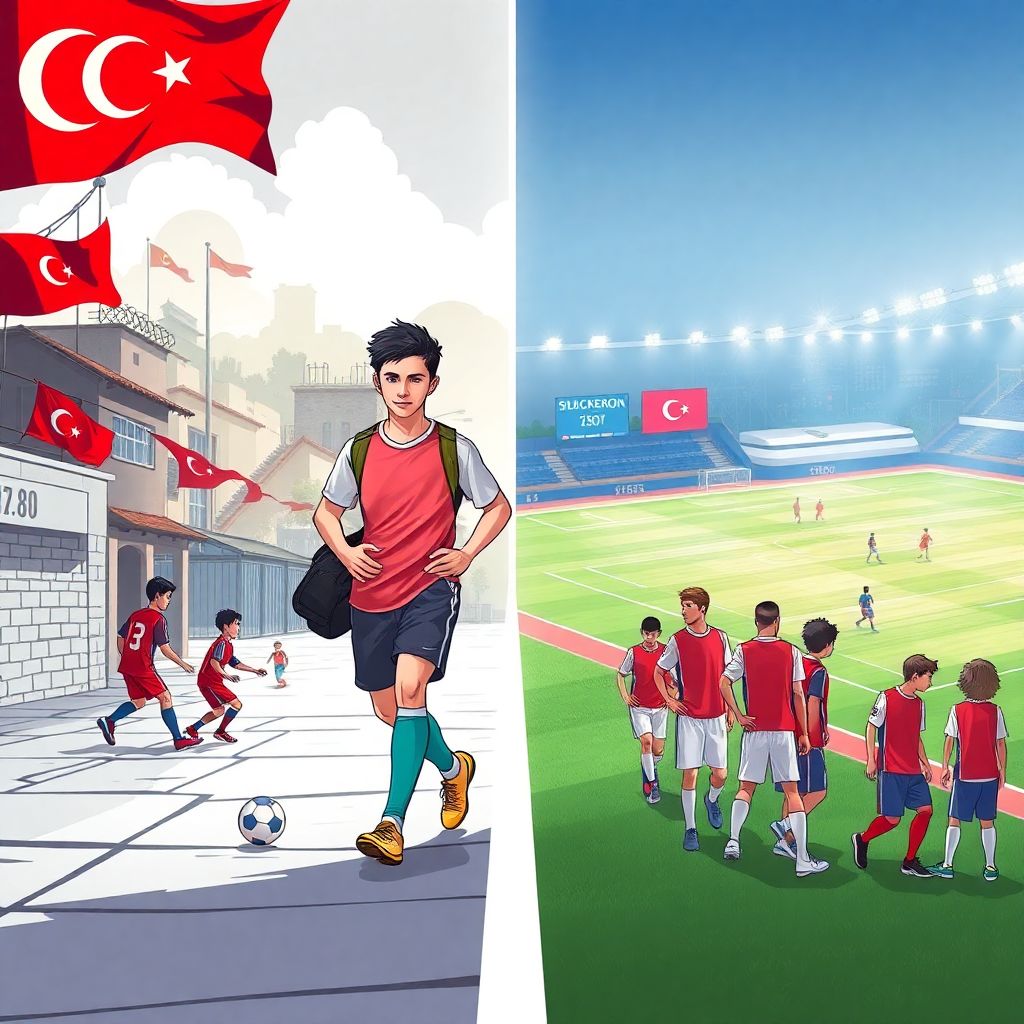
Why so many young Turkish players are packing their bags for Europe
If you follow football even a little, you’ve probably noticed a clear trend: more and more young Turkish talents are growing up or moving into European academies instead of staying at home.
We’re talking about two big groups here:
– Kids born and raised in Europe with Turkish roots (Germany, Netherlands, Belgium, France, etc.)
– Kids who start in Türkiye, then move abroad as teenagers to join a professional setup
Both groups are changing the landscape of Türk genç yetenekler Avrupa akademileri and quietly building the next generation of stars.
Let’s break down how this actually works in real life, what’s different in Europe, and what you can copy from their journeys — whether you’re a young player, a parent, or a coach trying to guide the next talent.
—
What’s really different in European academies?
The gap between a good Turkish youth setup and a top European academy isn’t just money or shiny facilities. It’s the daily system.
Here’s what players usually notice first:
– Structure – fixed weekly plans, individual development plans, clear KPIs (speed, strength, weak foot, position-specific tasks).
– Specialisation – fitness coach, position coach, video analyst, psychologist, nutritionist; not just “one coach for everything”.
– Competition level – every training is intense because there are 2–3 quality players in each position.
– Data and video – sessions recorded, stats tracked, weaknesses highlighted with clips, not just with shouting.
That’s why so many Türk yıldız adayları Avrupa futbol akademileri içinde hızla öne çıkabiliyor — the environment forces you to grow or get left behind.
—
Case 1 – Arda Güler: from Fenerbahçe prodigy to Real Madrid project
Arda is a perfect example of a hybrid path.
– Started in Türkiye, learned street-style creativity and freedom.
– Broke into Fenerbahçe’s first team very early.
– Then made a huge jump to Real Madrid as a teenager.
What changed when he arrived in Spain?
1. Micro-management of his body
In Madrid, every minute on the pitch is tracked. GPS vests, recovery protocols, gym work tailored specifically to his injury history. It’s not “go lift some weights”; it’s “today we fix this specific imbalance in your hip and ankle”.
2. Tactical education
At Fenerbahçe he was already smart on the ball. In Madrid’s environment, he’s learning:
– Positioning between the lines
– Defensive pressing triggers
– When to keep it simple vs. when to go for the killer ball
3. Mental pressure
Wearing Real Madrid’s shirt at 18 is not a normal experience. But this kind of psychological load, with professional help around him, accelerates maturity.
Takeaway you can copy:
You might not join Real Madrid, but you can copy the mindset:
– Track your own load (minutes played, sprints, fatigue).
– Watch your games back and note *specific* tactical habits.
– Treat each match as data, not just “good/bad game”.
—
Case 2 – Kenan Yıldız: Turkish roots, European schooling
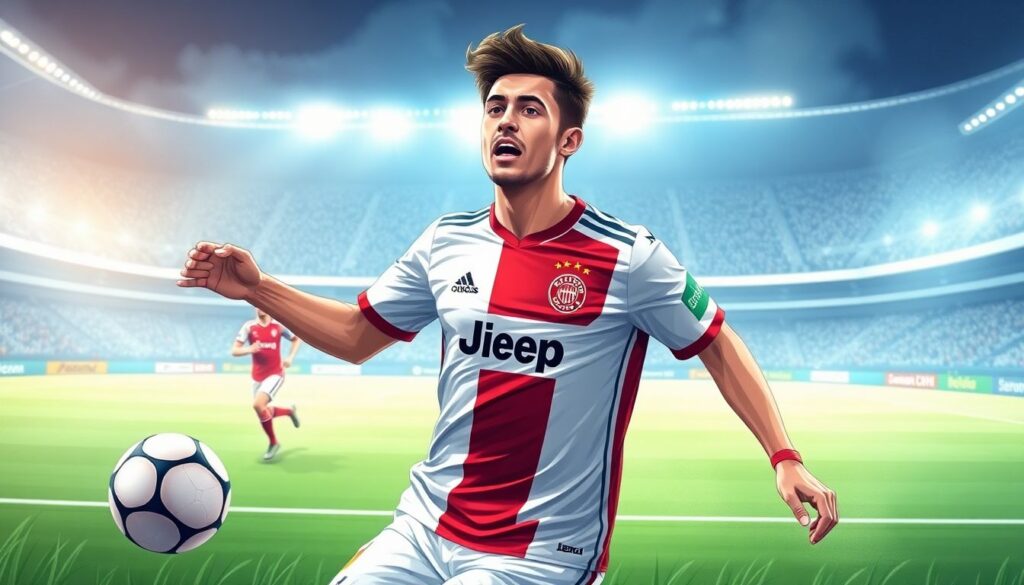
Kenan’s story is classic Avrupa’da yetişen Türk futbolcu genç yetenekler:
– Born in Germany, developed at Bayern Munich’s academy.
– Moved to Juventus Next Gen and pushed into the first team.
– Chose to represent Türkiye at international level.
Why did he adapt so smoothly at Juventus?
– Multi-role training – in the youth teams he played as winger, 10, false 9. That flexibility makes it easy for coaches to trust him.
– Early tactical discipline – German academies insist on pressing schemes and positioning from a very young age.
– Language and culture flexibility – he already spoke multiple languages and was comfortable changing environments.
What players in Türkiye can learn from him:
– Don’t lock yourself into one position at 13–15. Learn at least two roles.
– Use languages as a performance tool. English at a basic level is non-negotiable if you dream about Europe.
– Get used to discipline early. Turning up on time, eating right, sleeping enough — these are “silent skills” European clubs expect automatically.
—
Why European academies love Turkish talent

Scouts don’t sign passports; they sign profiles. And Turkish players often bring a special mix:
– Technical flair (street football, tight-space creativity)
– Competitive mentality (big city rivalries, passionate fan culture)
– Physical potential (especially after structured S&C work)
– Dual identity and adaptability (for those raised abroad)
That’s why Avrupa altyapısında oynayan Türk genç futbolcular are everywhere from Germany’s Regionalliga to Serie A Primavera and beyond.
Clubs see an opportunity: if they polish that raw edge with European structure, they might discover the next Nuri Şahin, İlkay Gündoğan, or Hakan Çalhanoğlu.
—
The less glamorous side: what most people don’t see
Behind every success story, there are 10 others who struggled.
Common problems:
– Homesickness and cultural shock
– Language barriers and school issues
– Agents pushing moves too early
– Injuries without proper support network
A 16-year-old leaving Türkiye for a mid-level European club often imagines instant success. In reality:
– You’re sharing a small apartment or dorm with 2–3 players.
– Training is harder than anything you’ve seen.
– You might not play for weeks while you adapt.
Genç Türk futbol yetenekleri yurt dışı transferleri sometimes fail not because of talent, but because of poor planning and no long-term view.
—
Practical roadmap if you’re a young player with European dreams
Forget the fantasy version. Here’s what you can actually do, step by step.
1. Build a “European-ready” profile at home
– Train your weaker foot seriously, not just “for fun”.
– Improve your first touch under pressure (tight rondos, small-sided games).
– Get used to high tempo: short rest, small spaces, quick decisions.
– Learn at least basic English football vocabulary (press, drop, shoulder, man on, switch).
2. Make video your best friend
– Record games (even with a phone from the stands).
– Cut 4–5 minute highlight clips by position: passes, pressing, movement.
– Keep a simple online link portfolio you can update easily (YouTube, private link, etc.).
3. Choose the right moment to move
Moving too early to “any European club” can be worse than staying:
– Before 16: focus on development, not transfers.
– 16–18: consider trials and short camps to test yourself.
– After 18: move only if you’re genuinely ready to compete for minutes.
If a random agent promises you “trial in Spain” but can’t name the academy director or show previous success stories, be careful.
—
What parents should do (and what to avoid)
Parents can be the biggest support or the biggest pressure. There’s rarely an in-between.
Helpful things parents can do:
– Keep school as a serious backup, not a joke.
– Encourage languages (online lessons, exchange programs, football camps abroad).
– Ask clubs clear questions:
– Who is responsible for my child’s development plan?
– What happens if he gets injured?
– How many players in his position made it to the first team?
Things that usually backfire:
– Comparing your kid publicly to famous players (“he’s the new Arda Güler”).
– Posting every small success on social media and then attacking coaches when he doesn’t play.
– Forcing a transfer abroad just to show off, not because it’s the right step.
—
How to copy the best parts of European academies without leaving home yet
Not everyone can move abroad at 14 — and that’s fine. You can still “import” some of the logic.
Try to add these habits:
– Self-analysis after every game
– What did I do well?
– What did I do badly?
– What is one thing I’ll change in the next match?
– Position-specific study
– If you’re a full-back: watch how top modern full-backs position their body in 1v1s.
– If you’re a 6: study how they receive under pressure and scan the pitch.
– Mini-professional routine
– Simple warm-up and cool-down every session.
– Stretching or mobility work at home.
– Consistent sleep schedule, especially before matches.
You’re basically acting like you’re already in one of the big Türk genç yetenekler Avrupa akademileri, even if you’re still in your local club.
—
More real cases you can learn from
Let’s look at a few more paths, quickly.
– Ferdi Kadıoğlu – Dutch-born, developed at NEC Nijmegen in the Netherlands before becoming a key player at Fenerbahçe and for the Turkish national team. His European education gave him:
– Position fluidity (full-back, wing-back, midfield)
– Comfort playing out from the back
– Tactical flexibility in different systems
– Salih Özcan – Grew up in Germany, came through Köln’s academy, now at Borussia Dortmund. Known for:
– Discipline without the ball
– Simple, effective passing
– High work rate
– Ozan Kabak – Schalke, Liverpool, now Hoffenheim. A rare example of a defender who left Türkiye young and had to adapt very quickly to European tempo.
Each story shows the same pattern: raw Turkish mentality and technical base, sharpened by systematic European training.
—
How scouts actually look at you

Scouts don’t care about Instagram followers or TikTok skills. When they watch Avrupa’da yetişen Türk futbolcu genç yetenekler, they look at things like:
– First touch under pressure
– Decision-making speed
– Body language after losing the ball
– Reaction to coaching feedback
– Consistency over multiple games, not one highlight reel
Your job is to make their decision easy: be reliable, coachable, and intense every time they see you.
—
Putting it all together: a realistic plan
If you’re serious about following the path of Avrupa altyapısında oynayan Türk genç futbolcular, here’s a simple but honest checklist:
– Train with intention, not just volume.
– Build a body that can handle high-intensity football.
– Learn at least basic English, ideally a second European language.
– Keep a clean, updated highlight video.
– Target the *right* level of club, not just the most famous badge.
– Surround yourself with at least one honest adult (parent, coach, mentor) who will tell you the truth, not just what you want to hear.
Türk yıldız adayları Avrupa futbol akademileri sayesinde artık sadece hayal değil; but the road is tougher than it looks on social media.
If you combine the dedication of Turkish football culture with the structure and discipline of European academies, you give yourself a real shot — not just at a transfer, but at a sustainable career.