
Why the Süper Lig keeps hiding elite prospects in plain sight
If you track youth development seriously, you’ve probably felt a strange paradox: the Turkish Süper Lig is full of energy, chaos, big atmospheres – yet its best prospects still get less attention than similar profiles in Portugal or the Eredivisie. From 2021/22 to 2023/24, U23 players made only a modest share of league minutes, hovering around the mid‑teens in percentage terms, yet several of them produced top‑five‑league level metrics for pressing, ball progression and shot quality. In other words, the league hides value, and many Turkish Super Lig young talents transfer targets are simply mispriced by the wider market.
Real cases: who’s actually undervalued right now?
Let’s get concrete and move beyond the usual Arda Güler‑type headlines. Over the last three seasons, we’ve seen a group of players who combine strong data, tactical versatility and mental resilience in hostile stadiums. These are not social‑media darlings, but consistent performers with three‑year samples. When we talk about the best young players in Turkish Super Lig 2025, a big chunk of that list should come from this tier: late bloomers, role‑players with elite metrics and wide players thriving in transition systems that mirror mid‑table Bundesliga or Serie A teams.
Barış Alper Yılmaz: the multi‑role pressing machine
Barış Alper Yılmaz is the most obvious “how is he still here?” case. Between 2021/22 and 2023/24, he logged well over 5,000 Süper Lig minutes for Galatasaray, playing both flanks, centre‑forward and even wing‑back. Across those seasons, he consistently ranked among league leaders for pressures and defensive duels won among attackers, while steadily improving his expected goals and assists per 90. In a data room, he screams mid‑table Premier League wide forward, yet outside specialist circles he’s still treated as a squad player, not one of the top Turkish football prospects for European teams.
Semih Kılıçsoy: sample size small, signals loud
Semih Kılıçsoy at Beşiktaş is the opposite profile: shorter sample, but high‑impact. Breaking through in 2023/24, he put up strong non‑penalty xG per 90 for a teenager in a dysfunctional side that changed coaches and game models. Over roughly his first 1,500 senior minutes, his shot volume, box touches and ability to generate chances from half‑spaces were already tracking with other Super Lig wonderkids to sign for European clubs in recent years. When you adjust his data for team chaos, his ceiling looks more like a modern Serie A second striker than a local curiosity.
Oğuz Aydın and the wide‑area market inefficiency
Oğuz Aydın at Alanyaspor is a textbook example of wide‑area value. From 2021/22 to 2023/24 he steadily increased his minutes, key passes and carries into the final third, while maintaining healthy defensive work‑rate. His progressive carries and chances created numbers sit in the upper bracket among Süper Lig wingers, but he operates outside the Istanbul spotlight. For clubs looking for underrated young Turkish players with low transfer value, he’s exactly where the edge lies: solid three‑year output, good athleticism, but a narrative that hasn’t caught up with the data.
Why European clubs keep missing these profiles
European scouting tends to treat the Süper Lig as a “finishing school” rather than a primary talent source. That shapes the filters: many clubs still focus on 25–27‑year‑olds with European experience, overlooking 20–23‑year‑olds who already dominate locally. Over the last three seasons, transfer spending into Turkey has focused heavily on short‑term fixes and resale from South America or Africa, while outbound fees for domestic U23s lag behind comparable leagues. The result: a pool of players with three seasons of high‑pressure football but salaries and price tags that remain surprisingly reasonable.
Non‑obvious angles for spotting value in the Süper Lig
If you scout Turkey the same way you scout the Dutch Eredivisie, you’ll miss context. The game is more chaotic, tempo swings are brutal, and coaches change systems mid‑season. Instead of raw goals and assists, focus on repeatable actions that survive translation to more structured leagues. Over a three‑year window, track how players perform across different coaches and formations rather than single peak seasons. That’s where you find sustainable profiles, not one‑year wonders inflated by penalties or set‑piece duties that they won’t keep in a top‑five league.
- Prioritise per‑90 metrics over totals, given frequent coaching changes and short runs of starts.
- Segment data by game state: how a player behaves at 0‑0 or under pressure matters more than 4‑0 wins.
- Compare outputs in “big six” Süper Lig matches to mid‑table games to gauge psychological resilience.
Alternative methods: blending data, video and on‑site intel

Pure data scouting underestimates how volatile the Süper Lig can be; pure eye‑test suffers from narrative bias. The edge comes from layering methods. Use data to flag profiles whose three‑year trends are stable: consistent progressive passing, pressing intensity and xG contribution. Then lean on video to separate system merchants from adaptable players. Finally, on‑site reports should focus less on “talent” clichés and more on how players handle hostile atmospheres, referee chaos and constant tactical tweaks—factors that, over 2021–2024, have been reliable predictors of who adapts quickly when they move to Europe.
- Watch full matches in difficult away fixtures, not highlight reels from home wins.
- Log how often a player changes role within a game; position flexibility travels well to deep European squads.
- Cross‑check fitness data with travel and scheduling; some under‑the‑radar players simply handle heavy loads better.
Reframing “risk” with three‑year statistical baselines
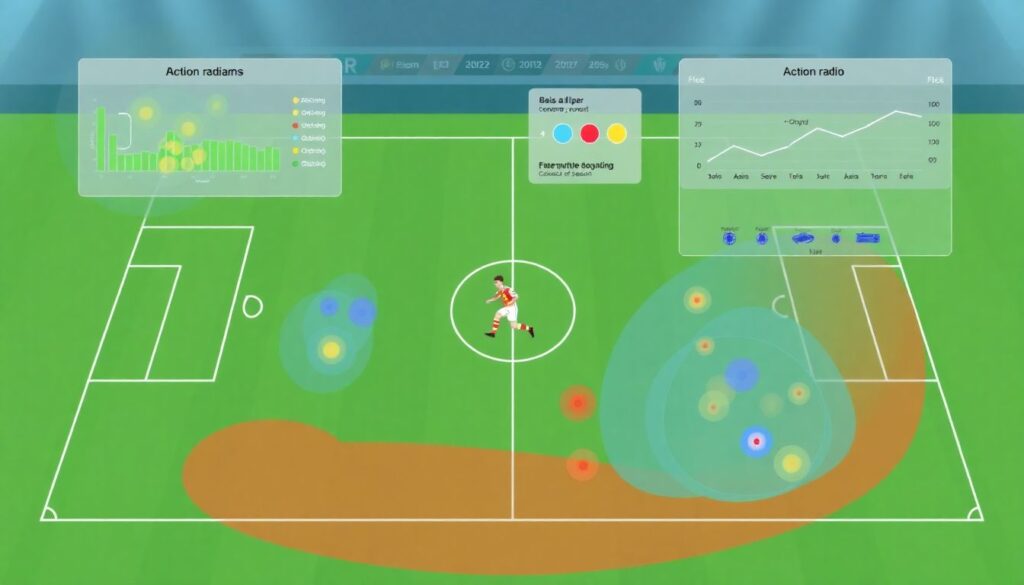
One underrated trick for dealing with league volatility is to build three‑season baselines instead of judging a single breakout. For 19–23‑year‑olds, look at how their usage, shot map, and defensive event locations evolve since 2021/22. If a player like Barış Alper Yılmaz expands his action radius and maintains efficiency while moving up the domestic food chain, your risk is lower than the sticker price suggests. Conversely, if a supposed star only spikes in one campaign with a very specific coach, you’re probably buying a system dependency, not a portable skill‑set.
Pro lifehacks for clubs and agents working this market
Working the Süper Lig effectively in 2025–26 is less about “discovering” hidden geniuses and more about timing. Many clubs hesitate until a player has a full season of top‑level output; by that time, the fee has doubled. A better approach is to move after 1,500–2,000 senior minutes with stable per‑90 metrics across different match contexts. At that stage, you’re paying for credible evidence, not just vibes, but still getting in before domestic giants or wealthier European leagues can lock the player into long and expensive contracts.
Practical moves to turn Süper Lig scouting into an edge
For recruitment teams, the Süper Lig should sit in the same tier as Belgium or Austria for value, but with a bigger sample of pressure games. The smart play is to pre‑build your shortlist of Super Lig wonderkids to sign for European clubs and keep updating it every six months. Work closely with local analysts who understand how each coach’s style skews the numbers. When a player’s usage and efficiency stay stable despite coaching churn, you act. That’s exactly how you turn theoretical “market inefficiencies” into actual points on the table.
- Lock in first‑refusal style clauses early with smaller clubs before Istanbul sides bid.
- Use loan‑with‑option structures to de‑risk adaptation and share development incentives.
- Target bilingual or already well‑travelled players; cultural adaptation often beats marginal talent gaps.
Who should Europe focus on over the next window?
Bringing it together, the Süper Lig is not short of talent; it’s short of nuanced attention. Players like Barış Alper Yılmaz, Semih Kılıçsoy, Oğuz Aydın and similar profiles at Anatolian clubs fit the definition of Turkish Super Lig young talents transfer targets: three‑year evidence, strong per‑90 impact, and room to grow in more structured environments. For clubs seeking the best young players in Turkish Super Lig 2025, the opportunity lies in acting before the rest of the market updates its priors and these top Turkish football prospects for European teams are priced like established stars.