
The Süper Lig’s tactical story: from rigid lines to fluid shapes
If you watched the Süper Lig in the early 2000s, you remember the dominance of classic 4‑4‑2 and 4‑2‑3‑1: big target man, second striker, real wingers hugging the line, and lots of crosses into the box. The league was built on emotion and chaos, with pressing more about pride than structure. Fast‑forward to 2026 and it feels like a different competition. Coaches now talk about rest‑defence, optimal pressing triggers and occupation of half‑spaces almost as much as they talk about passion. The tactical evolution of the Süper Lig is basically the shift from “who wants it more” to “who controls space better”, and the journey in between is what makes the league tactically fascinating today.
From classic 4‑4‑2 and 4‑2‑3‑1 to flexible bases
The old-school 4‑4‑2 in Turkey was direct and ruthless: two strikers, wide midfielders bombing forward, and a double pivot that mostly protected the centre-backs. It suited the tempo of the league, where transitions were wild and individual flair was almost a game model in itself. Over time, foreign coaches and data‑driven directors of football pushed teams toward 4‑2‑3‑1 and 4‑3‑3, bringing more compact blocks and structured pressing. What changed after about 2018 is that the formation on paper stopped telling the real story. By 2026, most Süper Lig sides start in something like a 4‑3‑3 or 4‑2‑3‑1, but morph into a 2‑3‑5 or 3‑2‑5 with the ball, depending on which full-back inverts and how the six guides the build‑up.
Positional play, Turkish-style
Positional play used to sound like a buzzword thrown around in Champions League broadcasts, but it has quietly seeped into the Süper Lig. The top clubs have begun to value “occupation of zones” more than traditional positions, especially in the half‑spaces between opposition full‑back and centre‑back. You can see this when nominal wingers drift inside and the full‑back provides width, or when a number ten drops to form a three‑man midfield in the first phase of build‑up. The Turkish twist is that coaches still make room for dribblers and risk‑takers; they don’t want sterile possession. So you end up with hybrid systems where, on paper, it’s a 4‑3‑3, but in practice there are five lanes in attack and at least two players permanently ready for counter‑pressing if the ball is lost.
Comparing approaches: chaos football vs. controlled aggression
If you compare the old Süper Lig style with the 2026 approach, the contrast is clear. The “chaos football” of the past relied on second balls, crowd energy and individual quality, especially at intimidating away grounds. Now the best teams seek controlled aggression: they still play fast and direct at times, but they plan exactly where they want turnovers to happen. Some mid‑table sides, however, keep elements of the old identity, pressing like mad for 20 minutes and then dropping off. This mix of philosophies in one league means that on any given weekend you might see a pure 5‑4‑1 low block facing a high pressing 4‑3‑3 that turns into a 2‑3‑5 with the ball, while another match features a more traditional 4‑4‑2 that tries to kill transitions with sheer physicality.
High press, mid block, or deep shell?
The key tactical choice in today’s Süper Lig is not just the formation but the height of the defensive block. High pressing, now far more structured, is popular among title contenders and European hopefuls: they script pressing triggers, like backward passes to the keeper or sideways balls to full‑backs with a weak first touch. Others opt for a compact mid block around the halfway line, letting opponents have sterile possession then trapping them in central areas. Smaller teams that struggle with build‑up and fitness often fall back into a deep shell, 5‑4‑1 or 4‑5‑1, trying to survive long stretches without the ball. The evolution is visible in how even defensive sides now work on coordinated shifts and clear counter patterns, instead of just clearing the ball and hoping for a miracle.
The tech revolution: data, video and real‑time feedback
Behind this tactical shift sits a quiet revolution in technology. Clubs that once based decisions mainly on intuition now rely heavily on tracking data and video analysis. Widespread use of football analytics software for Super Lig teams has changed how coaches prepare weekly plans: they study pressing efficiency, pass networks, and player load to fine‑tune game models. Training sessions feature live GPS feedback, and analysts cut clips on the fly so that, at half‑time, coaches can show players how the press is either functioning or falling apart. This isn’t just for the giants; even modest clubs rent access to tracking platforms, pooling resources and sometimes working with universities to interpret the numbers in a context that suits the uniquely emotional rhythm of Turkish football.
Pros and cons of modern analytics tools
The upside of these tools is obvious: better understanding of space, more objective evaluation of players, and support for risk‑management in recruitment. Super Lig advanced stats and data platform solutions help clubs answer questions like whether a box‑to‑box midfielder actually covers the right zones or just runs aimlessly, or if a centre‑back’s aerial dominance offsets his weakness when dragged into the channels. The downside is the temptation to over‑fit to data. Some coaches complain that executives fall in love with dashboards and forget dressing‑room dynamics, local rivalries or how a player reacts in high‑pressure derbies. Another risk is copying models from bigger European leagues without adapting to Süper Lig refereeing standards, pitch quality or climate, which still heavily shape match tempo and tactical feasibility.
Subscriptions, education and the rise of the “laptop coach”
A big change since around 2022 is how easy it’s become to access structured tactical content. Young assistants and even semi‑pro coaches now share logins to a Super Lig tactical analysis subscription service that provides breakdowns of pressing traps, rotations and set‑piece routines tailored specifically to Turkish teams. On top of that, local federations and private academies offer Super Lig coaching courses modern tactics oriented, where modules cover build‑up structures under high press, rest‑defence organization with advanced analytics, and match‑day data interpretation. This has produced a new generation of so‑called “laptop coaches” who are comfortable jumping from video to training pitch, translating complex patterns into simple drills, while still understanding the emotional demands of packed Turkish stadiums.
Using information without drowning in it
The challenge in 2026 isn’t access to knowledge; it’s filtering it. Coaches can watch endless webinars, subscribe to multiple analysis platforms, and read detailed blogs, but players have limited cognitive bandwidth. The best staff use the tech to clarify, not complicate: two or three key principles, reinforced with two training exercises and one short video clip, tend to stick better than a 40‑slide presentation. There’s also a shift toward involving senior players in the process, showing them expected‑goals charts or pressing maps to explain why the team is pressing differently this week. Done well, analytics become a shared language inside the squad; done badly, they feel like external noise and players revert to instinct, which often means chasing the ball instead of controlling space.
Tactical evolution and the betting/analytics ecosystem

Outside the stadiums, the way fans and professionals engage with the league has also changed. Detailed tactical previews and data‑driven match models power some of the best Super Lig betting tips and predictions, as punters look beyond basic form and league position. They study line‑up structures, pressing styles, and the impact of fixture congestion on high‑intensity systems. This doesn’t just influence betting; content creators use similar models to explain why a coach might switch from a 4‑4‑2 mid block to a 3‑4‑2‑1 to gain one extra man between the lines. As public understanding of tactics grows, pressure on coaches increases too, because fans can now spot when a game plan is incoherent or when a substitution breaks the team’s spacing.
How clubs react to smarter outside analysis
Interestingly, some clubs have reacted to this smarter environment by tightening information flow: fewer open training sessions, more generic pre‑match quotes, and sometimes tactical surprises on match day. But others embrace it, realizing that informed supporters are more patient when a project clearly has a tactical identity. When the public can grasp why a team is suffering early teething problems with an aggressive 3‑2‑5 build‑up structure, they are more likely to give the coach time. Analysts outside the clubs, armed with data from public and commercial platforms, often highlight under‑the‑radar improvements—like better field tilt or reduced opponent xG—that might not yet show in the table, which in turn influences how media talk about “crisis” or “progress.”
Choosing a tactical identity in the 2026 Süper Lig
For current Süper Lig coaches, the big decision is which identity fits their squad and resources. A possession‑based 4‑3‑3 with inverted full‑backs and constant high press demands technically secure centre‑backs and a goalkeeper comfortable outside the box, plus superb physical conditioning. A more direct 4‑4‑2 or 3‑4‑3 that focuses on verticality and second balls might suit teams with tall forwards and hard‑running wingers but less technical depth. When clubs review options with their analysts, they balance player profiles, fan expectations, pitch conditions and fixture density. The smartest ones accept that they can’t copy‑paste the top clubs; instead, they define two or three core principles—like aggressive counter‑pressing or deep compactness—and build a system that the squad can repeat under pressure.
Practical recommendations for different club profiles
For smaller clubs fighting relegation, a compact mid or low block with sharp counter‑attacks is usually more realistic than an elaborate positional game. They can still be modern by organizing clear pressing triggers and set‑piece routines backed by data. Mid‑table sides with a mix of experienced locals and talented loanees often benefit from hybrid systems: 4‑2‑3‑1 out of possession, transitioning to a 2‑3‑5 in attack, where full‑backs know exactly when to invert or overlap. Big clubs, with deeper squads and sports‑science support, can pursue more complex rotation patterns and tempo changes during a match. Whatever the level, the consistent advice in 2026 is to use analytics to test ideas, then simplify them into repeatable habits that survive the chaos of a crowded, noisy Süper Lig weekend.
Current tactical trends shaping the 2026 Süper Lig
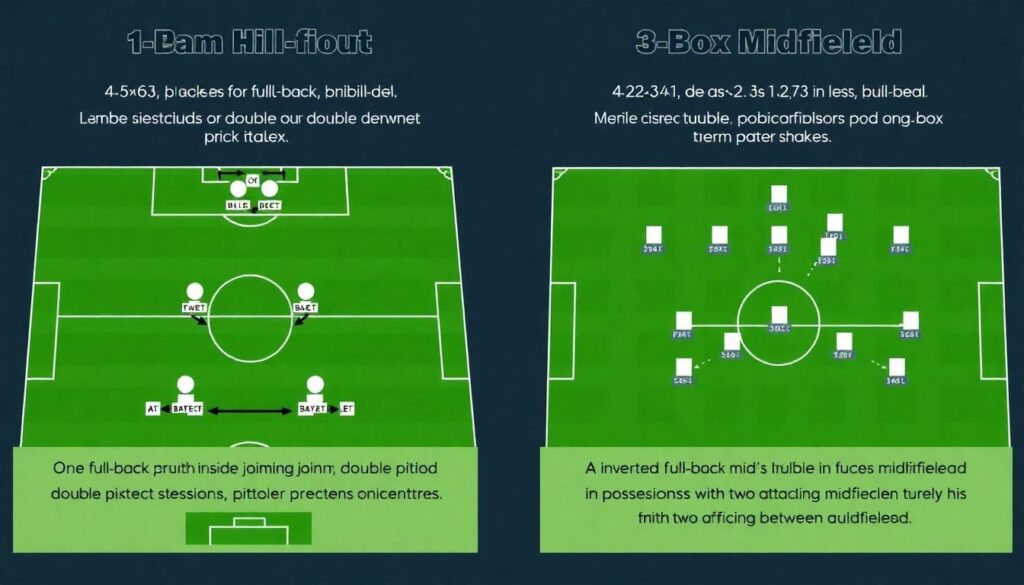
Several patterns now show up almost every week. First, more teams push one full‑back inside to form a double pivot in build‑up, creating a 3‑2 structure that protects against counters. Second, there’s a noticeable rise in box midfields: a 4‑2‑3‑1 becomes a 3‑2‑2‑3 in possession, with two attacking midfielders between the lines and wingers stretching high and wide. Third, pressing is more selective: instead of chaotic chasing, teams often sit in a mid block and spring man‑oriented presses toward the touchline. Set‑pieces are meticulously rehearsed with the help of data, from crowded near‑post routines to short‑corner patterns that target specific aerial mismatches. All this is monitored and refined through Super Lig advanced stats and data platform tools that feed back into weekly training plans.
What’s likely next in the tactical evolution?
Looking a bit ahead, the next frontier is probably better integration between physical data and tactical design. With improved tracking and more granular load management, clubs will design game models that peak intensity in specific 15‑minute windows, rather than trying to press wildly for 60 minutes and fading. Also expect more flexible in‑game shape‑shifting, as players become accustomed to changing roles based on match state—3‑4‑3 when chasing, 5‑3‑2 when protecting a lead, all rehearsed in detail. Another likely shift is deeper collaboration between clubs and universities, turning raw tracking information into customized metrics that reflect the unique style of the Süper Lig, not just imported benchmarks. For fans and coaches alike, that means the tactical evolution of the Süper Lig is far from over; the league is still learning how to turn its trademark passion into consistently intelligent football.