Why European Nights Matter So Much for Turkish Clubs
European competitions are no longer just a prestige bonus for Turkish football. Over the last three seasons (2021/22, 2022/23, 2023/24) they’ve become a strategic laboratory: a place where coaching ideas are stress‑tested at elite tempo, where club budgets are shaped, and where the global perception of Süper Lig is recalibrated.
In that span Turkish clubs have moved from occasional dark horses to regular disruptors. The league’s UEFA country ranking has climbed sharply, driven mainly by Galatasaray, Fenerbahçe, Beşiktaş and Başakşehir collecting points in the UEFA Champions League, Europa League and Conference League. That rise is not cosmetic; it feeds back into seeding, qualification rounds and, ultimately, the type of tactical problems Turkish teams must solve every August to December.
—
Key Statistical Trends from the Last Three European Campaigns
1. Results and performance profile
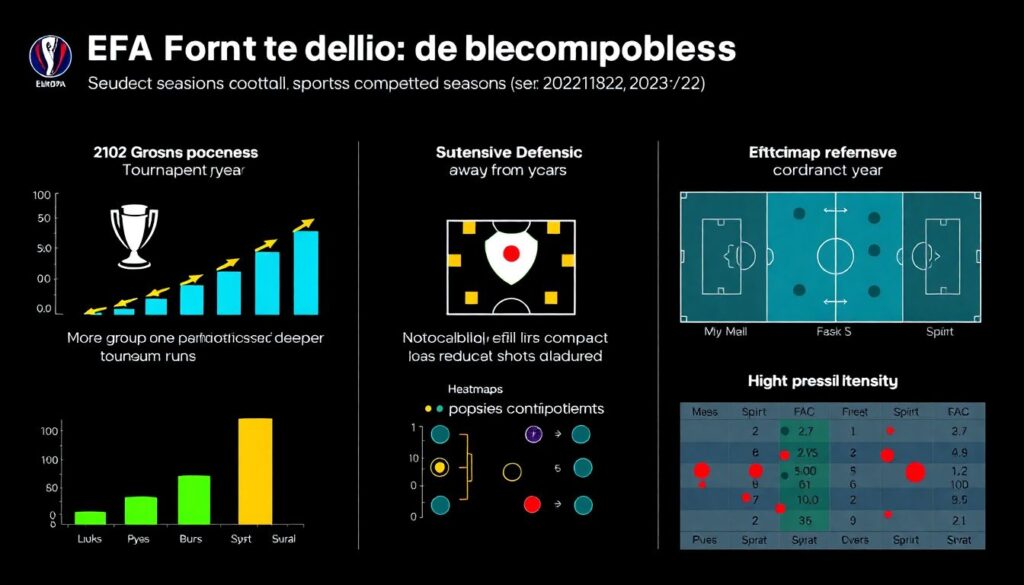
If we zoom out to the last three completed seasons (2021/22–2023/24), a few clear patterns emerge in UEFA competitions:
– More group‑stage participation and deeper runs, especially in Europa League and Conference League
– Noticeable improvement in defensive organisation away from home
– Higher pressing and more transitional football against top‑five‑league opponents
Across these years, Turkish clubs have averaged more points per game in Europe than in the previous three‑season block before 2021/22. The exact numbers differ by club and tournament, but the macro‑trend is stable: more wins, fewer heavy losses, especially in away fixtures where Turkish sides traditionally collapsed.
One specific shift: goal difference. While Turkish clubs still concede more than they score against Champions League calibre opposition, the margin has shrunk, and in Europa League / Conference League the goal balance is close to neutral or slightly positive. That alone tells you that tactical risk management has become more sophisticated.
2. Style‑of‑play evolution in numbers
European nights have also reshaped how leading Turkish sides use the ball:
– Average possession versus non‑Turkish opponents in Europe has dropped, but chance quality (xG per shot) has gone up
– High turnovers leading to shots have increased, reflecting more coordinated pressing
– Long‑pass share from the back line has crept up, signalling a move towards mixed build‑up instead of pure short‑passing
In other words, Turkish clubs are conceding the ball more often but are attacking with cleaner patterns and better field positions. They’ve moved away from sterile 60% possession to a more pragmatic, territorially aware game.
—
Tactical Lessons from UEFA Champions League and Europa League
Compactness and mid‑block discipline
For years, Turkish sides tried to press like top European teams without the spacing or fitness to support it. Recent Champions League and Europa League nights have forced a correction. Coaches have learned that poorly synchronised high pressing against elite build‑up simply creates vertical gaps and exposes slow centre‑backs.
Now you see far more:
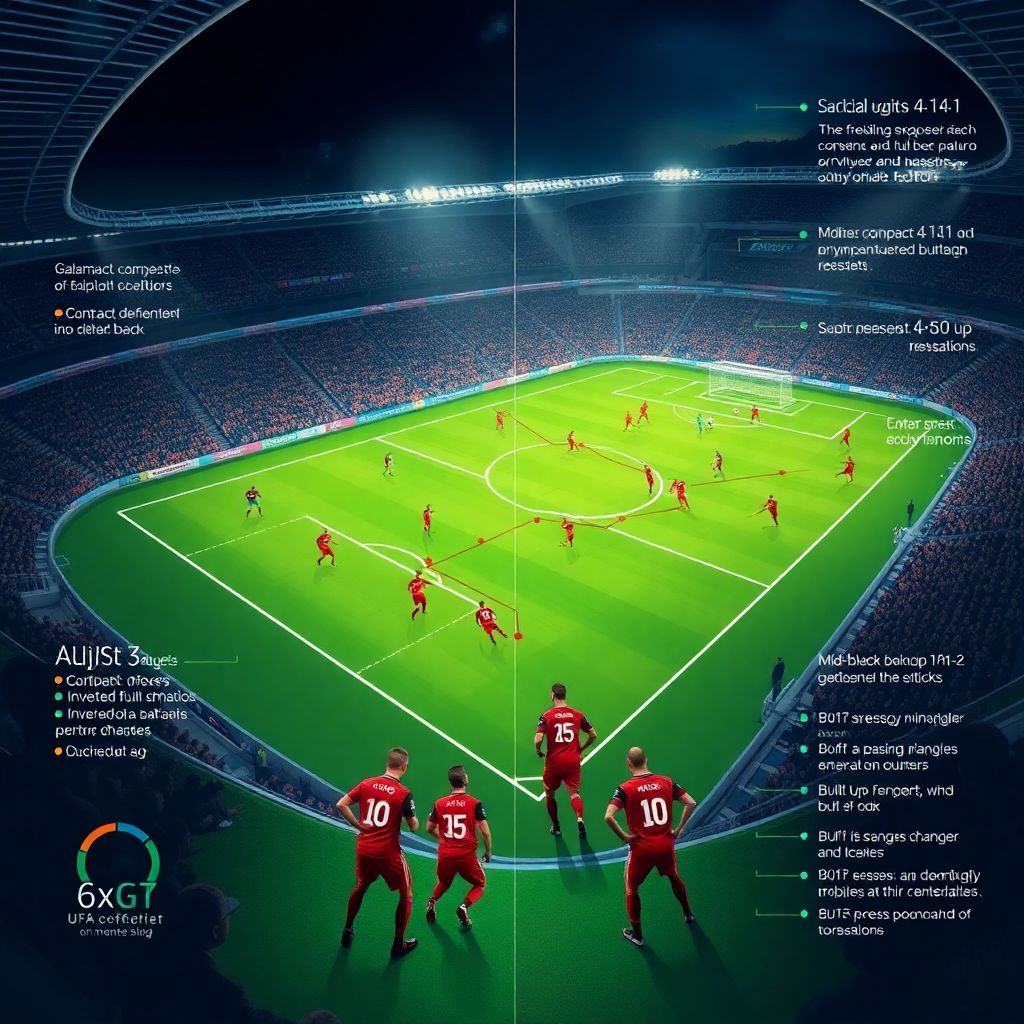
– Compact 4‑1‑4‑1 or 4‑4‑2 mid‑blocks
– Clear pressing triggers: back‑pass to the keeper, wide centre‑back receiving on his weaker foot, or a full‑back trapped on the touchline
– Wingers narrowing inside to protect half‑spaces instead of mindlessly chasing full‑backs
This more disciplined structure has translated into fewer shots conceded from central zones. It’s a tactical step away from romantic, crowd‑pleasing football towards a more modern, control‑by‑space philosophy.
Ball progression: from chaos to scripted patterns
European opponents punish sloppy first and second phases. Over the last three seasons, Turkish clubs have been forced to tidy up:
– Greater use of the goalkeeper as a third centre‑back in build‑up
– Inverted full‑backs stepping into the pivot line to overload midfield
– Rotations between No. 8s and wingers to create “free man” lanes between lines
The overall distance of average passing chains has shortened, but the vertical punch has improved. Instead of hopeful diagonals under pressure, there’s a growing reliance on third‑man runs and overload‑to‑isolate patterns, especially on the weak side.
Transition management: learning not to over‑commit
European nights have been brutal teachers in defensive transitions. Turkish clubs used to commit too many bodies forward, leaving huge spaces behind the full‑backs.
The main lessons absorbed:
– One full‑back goes, the other holds a more conservative position
– A dedicated holding midfielder remains “outside the attack” to screen counters
– Counter‑pressing becomes more zonal and less man‑oriented, reducing fouls in dangerous areas
The result is fewer “basketball” matches in Europe and more controlled games where Turkish teams can actually protect a one‑goal lead away from home—something that was a chronic weakness.
—
How UEFA Nights Shape Squad Building and Coaching Choices
Recruitment filters informed by European demands
The tactical stress of UEFA competitions has changed how Turkish sporting directors recruit. Pace and tactical flexibility have become non‑negotiable.
Clubs are now prioritising:
– Centre‑backs with recovery speed and the ability to defend large spaces
– Midfielders comfortable under high press and able to play one‑touch in tight pockets
– Forwards who can both press and run channels, not just penalty‑box finishers
Data use has also become more serious. Instead of relying almost entirely on “big name” reputations, a growing group of Turkish clubs cross‑check players’ pressing intensity, sprint outputs and performance in previous UEFA appearances. That’s a direct by‑product of repeated European lessons.
Coaching philosophy: from reactive to hybrid models
Repeated encounters with teams from Premier League, Serie A and Bundesliga have pushed Turkish coaches to broaden their tactical toolkits. Purely reactive, low‑block football doesn’t generate enough points; pure attack‑first football gets killed in transition.
So we’re seeing:
– Hybrid game models with different behaviours in each 15‑minute segment
– Opposition‑specific pressing schemes instead of one “default” press
– In‑game structure changes (e.g., 4‑2‑3‑1 to 3‑2‑5 in possession) based on match state
These adaptive models echo what we see in top UEFA teams and gradually close the tactical gap when Turkish clubs in Europe face better‑resourced opponents.
—
Statistical Data and the Betting/Analytics Ecosystem
Numbers that reshape external expectations
The improved consistency of Turkish clubs has not gone unnoticed by data analysts, broadcasters and betting markets. Over the last three seasons, pre‑match models have had to re‑rate Turkish sides upward, especially in home fixtures where the crowd and pitch conditions create additional variables.
For those building UEFA Champions League betting tips Turkish teams are no longer peripheral “fun” picks; their underlying metrics—pressing success, xG differential, set‑piece efficiency—now justify being taken seriously against mid‑tier European opposition.
At the same time, Turkish clubs in Europe UEFA predictions must now factor in:
– Higher squad depth due to larger wage bills and improved recruitment
– More experience in knockout‑round football
– Tactical maturity against both possession‑heavy and transition‑heavy opponents
This evolution has narrowed the gap between perception and reality. Turkish sides are still underdogs against top‑five‑league giants, but the variance in their performances is smaller, which matters both analytically and economically.
Markets, odds and streaming behaviour
The explosion of data around UEFA Europa League odds Turkish football clubs face has influenced how media and fans interpret tactical choices. Line‑up changes, mid‑block vs. high press, and in‑game formation switches are discussed not only in classic punditry terms but also through movement of lines and probabilities on matchday.
Parallel to this, live streaming UEFA matches Turkish teams has become a key distribution channel, both domestically and abroad. As more fans watch online, broadcasters integrate advanced statistics and tactical visualisations into the feed, feeding back into how coaches and analysts frame “what went wrong” or “what worked” after each European night.
—
Economic Aspects: How Tactics Translate into Money
Prize money, market values and transfer strategies
Consistently better tactical performances have concrete financial outcomes:
– Group‑stage participation in Champions League or Europa League brings multi‑million‑euro prize money
– Strong showings boost UEFA coefficients, which ease qualification paths and seedings in future years
– Individual players’ transfer values inflate after standout European games, giving clubs negotiation leverage
For clubs choosing where to spend, UEFA has become the primary reference. Investments in tactical analysts, set‑piece coaches and physical preparation are justified not as “luxury add‑ons” but as revenue‑generating tools: each extra win in Europe has a calculable ROI.
Even for fans and neutral observers searching for the best bookmakers for UEFA matches Turkish teams increasingly feature as relevant selections in outright markets and match‑result models, reflecting their upgraded competitive profile.
Commercialisation of the “European identity”

There’s also a softer, brand‑driven financial effect. Clubs use European nights in sponsorship decks: heat maps, passing networks and tactical dashboards are shown to partners as proof of the club’s modernity and visibility. Better tactical organisation translates into more predictable high‑profile fixtures, which in turn attract better sponsorship deals and international partners.
This loop—performance, visibility, revenue, reinvestment—relies heavily on clubs maintaining European‑level tactical standards.
—
Impact on the Wider Turkish Football Industry
Spillover into domestic coaching and youth development
The tactical lessons from UEFA don’t stay confined to the big clubs. Assistant coaches, analysts and performance staff move between teams inside Turkey, carrying ideas about:
– Pressing structures and rest‑defence
– Load management to handle congested calendars
– Video analysis workflows and data‑driven match planning
Youth academies increasingly model sessions around problems seen in Europe: dealing with high pressing, building out from the back against man‑oriented pressure, and defending transitions in open field. Young players thus grow up in a tactical environment more aligned with UEFA demands.
Media, analytics startups and fan literacy
As Turkish clubs collect more high‑level data from UEFA matches, local analytics firms gain valuable raw material. They build models, visualisations and scouting tools that are then sold back to clubs domestically and sometimes abroad.
Meanwhile, fans absorb tactical vocabulary through match coverage, podcasts and social media. Concepts like “half‑space occupation”, “rest defence” and “counter‑press trap” are no longer niche. This improved literacy feeds demand for deeper analysis and, indirectly, for better coaching.
In that sense, Turkish clubs in Europe UEFA predictions and analytical previews aren’t just for bettors or hardcore analysts. They shape how the entire ecosystem talks about football, from commentators to academy coaches.
—
Forward Look: Tactical and Structural Forecasts
Short‑ to medium‑term tactical projections
Given the trajectory of the last three seasons, several developments look likely in the next few years:
– More stable defensive structures with three‑man build‑up and flexible back‑five in rest‑defence
– Greater emphasis on set‑pieces as a deliberate edge against technically superior opponents
– Wider use of player‑tracking data in training design, especially for pressing and transition drills
We can also anticipate more managers with European pedigree arriving in Turkey, or Turkish coaches taking assistant roles abroad and returning with upgraded methodologies. That exchange will keep narrowing the tactical gap in UEFA environments.
Structural forecasts beyond the touchline
Structurally, as Turkish clubs continue to stabilise their coefficient and deliver competitive European campaigns:
– Broadcasting rights for international markets should become more attractive
– Club valuations are likely to rise, especially for those consistently qualifying for groups
– Domestic league scheduling and infrastructure may gradually adapt to support European performance (pitch quality, travel planning, winter break structures, etc.)
Ultimately, the next phase won’t just be about “qualifying” for Europe but about sustaining quarter‑final and semi‑final ambitions in Europa League and, in time, consistently punching in the Champions League knockouts.
—
Conclusion: From One‑Off Surprises to Sustainable Contenders
The last three years of UEFA competition have forced Turkish clubs to confront their tactical limitations and modernise. Less chaotic pressing, smarter transition management, more structured build‑up and data‑driven recruitment are no longer optional; they are baseline requirements for survival at European tempo.
The financial and industrial incentives mean these changes are here to stay. As long as Turkish sides keep harvesting lessons from European nights—and reinvesting them domestically—the gap between them and the established continental powers will continue to shrink, not in marketing slogans but on the tactical, statistical and economic fronts that ultimately decide who thrives in UEFA competitions.