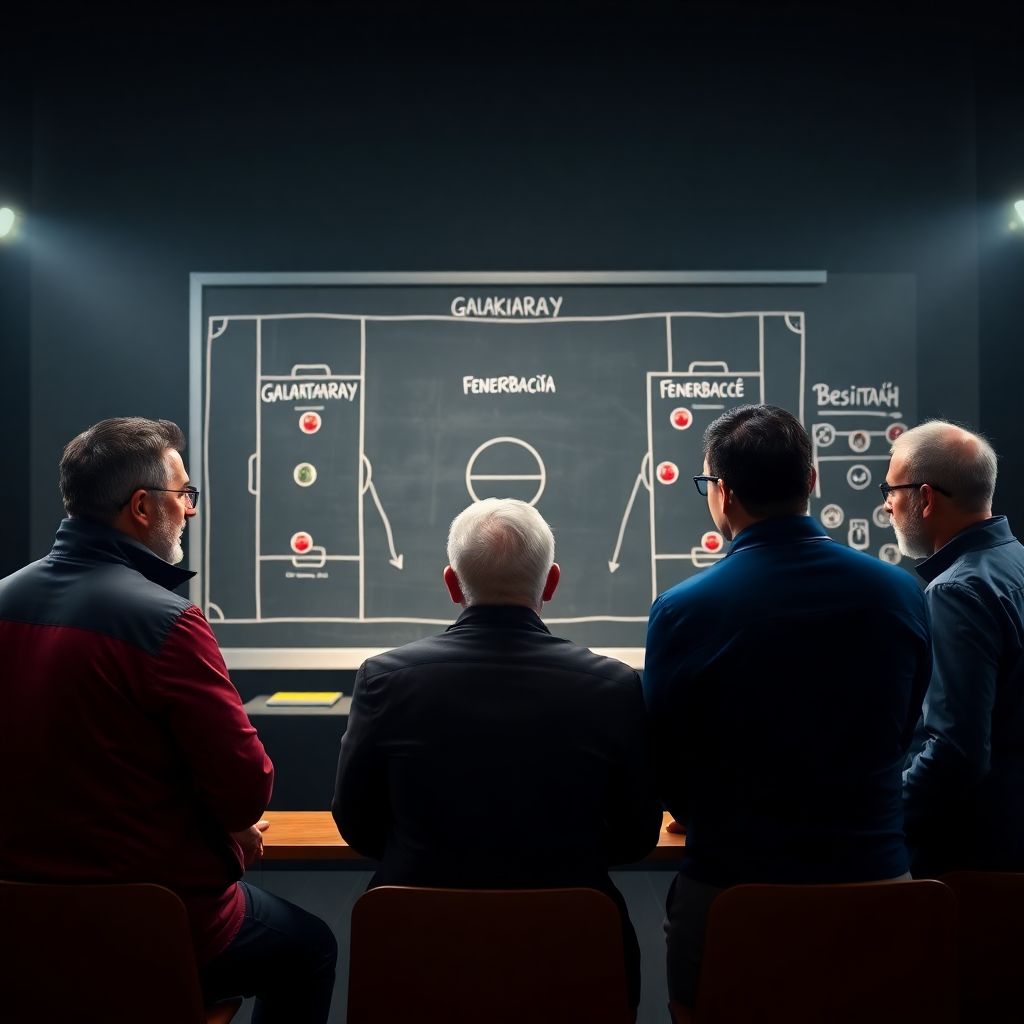
For choosing between Galatasaray, Fenerbahçe and Beşiktaş, match tactical identity to your squad and league context. Galatasaray favour structured possession and high tempo attacking, Fenerbahçe lean on width and aggressive midfield control, while Beşiktaş prioritise compact defensive organisation and direct counters. The “best” model is the one amplifying your existing strengths.
Tactical snapshot: core differences in one view
- Galatasaray: structured possession, flexible 4-2-3-1/4-1-4-1, strong half-space use, suited to technically secure squads and coaches wanting ball-dominance.
- Fenerbahçe: wide overloads, fast switches, crossing volume; ideal if you have powerful full-backs and aerial presence in the box.
- Beşiktaş: compact mid/low block, quick counters and vertical passes; works best with fast forwards and defensively disciplined midfielders.
- In a Galatasaray vs Fenerbahce vs Besiktas playing style comparison, the key differences lie in where they create superiority: zones, width, or transitions.
- Budget-limited squads usually adapt faster to Beşiktaş-style compactness; resource-rich squads can better execute Galatasaray-like positional play.
- For coaches seeking control and stability, Galatasaray’s structure helps; for emotional momentum and chaos, Fenerbahçe’s intensity is preferable.
Galatasaray’s tactical identity: structure, tempo and personnel
This section offers a Galatasaray tactical analysis under current coach profiles in a generic, evergreen way, focusing on repeatable principles instead of temporary line-up details.
Main criteria to decide if Galatasaray’s model fits your team:
- Technical floor of defenders: Centre-backs and the goalkeeper must be comfortable under pressure, capable of short passing and diagonal switches.
- Double pivot intelligence: At least one pivot should break lines with passes, the other screen transitions and cover full-backs.
- Half-space operators: Number 10 and inverted wingers must receive between lines, turn under pressure and play third-man combinations.
- Full-back stamina and timing: Overlapping under high tempo, yet balanced enough to prevent counter-exposure when possession is lost.
- Pressing cohesion: Front four pressing triggers aligned with the back line, especially after backward passes or poor first touches.
- Tempo management: Ability to accelerate the game in the final third, but also to rest with the ball when protecting a lead.
- Set-piece structure: Multiple rehearsed routines, as a possession team will win many corners and wide free-kicks.
- Squad depth: High-intensity possession and pressing demand at least two players per position of similar tactical understanding.
Galatasaray in detail: build-up play, pressing triggers and transitional patterns
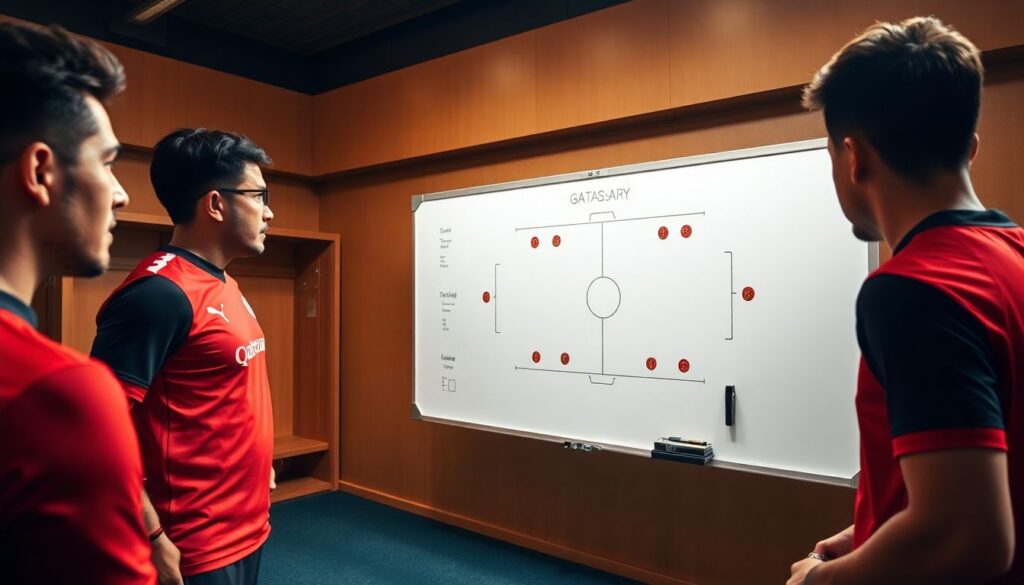
Below is a structured comparison of common Galatasaray-style configurations, helping you choose based on your players and league context.
| Variant | Best suited for | Pros | Cons | When to choose |
|---|---|---|---|---|
| 4-1-4-1 Positional Play Base | Teams with a single elite holding midfielder and technically strong centre-backs. | Stable rest-defence, clear structure, easy wide overloads, good for patient build-up. | Six can be overloaded; requires very smart 8s to link lines; slower central penetration. | Use when facing mid/low blocks and when your pivot is your best organiser. |
| 4-2-3-1 with Double Pivot | Squads with two reliable midfielders but only one creative 10. | Better protection in defensive transitions, easier pressing coverage, flexible rotations. | Can isolate striker, relies heavily on 10 to connect play, wings can become predictable. | Use against strong counter-attacking teams or when protecting central lanes is priority. |
| 3-2 Build-up (full-back inversion) | Teams whose full-backs are comfortable inside and centre-backs can defend wide. | Excellent central overloads, strong control of second balls, easier counter-pressing. | Wide channels can be exposed if wingers do not track; high learning curve. | Use when opponents press high man-to-man and you need central superiority. |
| 3-1-6 High Occupation of Last Line | Teams with many creative attackers, willing to live with more transition risk. | Constant pinning of defensive line, multiple runs in behind, continuous box presence. | Very vulnerable to quick counters if counter-press is late or broken. | Use when chasing a goal or when opponent’s back line is slow and deep. |
Typical pressing triggers for each shape are backward passes to full-backs, slow lateral switches across the back line, and poor first touches from opposition pivots. Transitional patterns prioritise quick vertical passes into the 10 or winger making inside runs, followed by wide support and late runs from 8s.
Fenerbahçe’s blueprint: formations, width and midfield control
This section functions as a concise Fenerbahce tactics and formation explained guide, with clear scenario-based advice, including budget-first and premium options.
- If your squad has powerful, hard-running full-backs, then adopt a 4-3-3/4-2-3-1 with wide overloads and frequent overlaps. Build patterns where the winger comes inside and the full-back attacks space outside, mirroring Fenerbahçe’s typical wing dynamics.
- If you lack creative central midfielders but have strong wingers, use direct switches and diagonal balls to flanks. Let the pivot stay deeper to protect rest-defence while 8s support wide combinations and late box entries.
- If your centre-forward is dominant in the air, structure your attack to generate repeated crossing situations. Rotate the far-side winger into the half-space so they can attack second balls and cut-backs from the byline.
- If your budget is limited and you cannot sign elite ball-playing defenders, keep the build-up simple: use longer passes to wide areas instead of forcing risky short build. This still reflects Fenerbahçe’s intensity and width without needing premium technicians.
- If you have a premium squad with high technical quality in all lines, you can blend Fenerbahçe’s width with more Galatasaray-like central combinations: midfield triangles, inverted full-backs and short combinations before switching to the far side.
- If opponents park a deep block, overload one side with full-back, winger and 8, then switch quickly to the opposite flank for a 1v1 or 2v1, maintaining high crossing volume and occupying both posts and edge of the box.
- If you face strong pressing teams, instruct goalkeeper and centre-backs to play into wide zones early. Use wall passes to escape pressure, then attack quickly down the line before the opposition can reset centrally.
Fenerbahçe in detail: overloads, crossing strategy and set-piece design
Use this quick checklist as a practical algorithm when shaping your Fenerbahçe-inspired attacking scheme.
- Define primary wing: decide left or right as the main overload zone based on your stronger full-back-winger pair.
- Fix roles for wide trio: full-back for depth, winger for 1v1, near-side 8 for support and half-space occupation.
- Standardise crossing zones: early crosses from zone 2-3, cut-backs from byline, floated deliveries only when your striker is clearly superior in the air.
- Assign box attack lanes: striker attacks front or central zone, far winger attacks far post, one 8 attacks edge of box for second balls.
- Codify second-ball reactions: if cross is cleared, nearest 8 presses immediately, pivot covers behind, full-backs recover to restrain counters.
- Design 2-3 simple corner routines: one near-post flick, one crowding goalkeeper, one short option to drag markers and create better crossing angle.
- Review with low-resource tools: after each match, clip 6-8 wide attacks and set-pieces, tag outcomes in coach notes, and adjust triggers and roles.
Beşiktaş’s approach: defensive organisation, counters and risk calibration
This Beşiktaş tactical style and strategy breakdown focuses on typical mistakes coaches make when copying a compact, counter-based model.
- Block set too deep without pressure on the ball: Sitting very low but allowing easy opposition crosses or shots from distance, because nobody steps out to press the ball carrier.
- Distances between lines too big: Back line drops early, midfield does not; the result is free pockets in front of defence where opponents can turn and combine.
- Counter roles unclear: Fast forwards do not know whether to run channels or feet; ball-winner does not have obvious first passing option, killing transitions.
- Over-aggressive pressing after losing shape: Wingers chase full-backs blindly, breaking compactness and opening half-spaces for through balls.
- Full-backs jumping too high on wide presses: When full-backs press wide without cover, a single wall pass breaks the line and exposes centre-backs in big spaces.
- Ignoring rest-defence when attacking: During rare long possessions, both full-backs push high and pivots join attacks, leaving counters unprotected.
- No clear trigger to step up the block: Team stays passive even when the ball travels slowly or is played backwards, missing chances to compress space and regain momentum.
- Poor risk calibration based on opponent level: Using the same deep block against weaker teams, instead of stepping higher and pressing to regain the ball earlier.
- Underusing simple video review: Not clipping conceded transitions or failed counters means players repeat positional errors without seeing them.
- Lack of structured communication: No agreed language for “step”, “drop”, “press line”, so defensive adjustments happen late or inconsistently.
Side-by-side metrics table: possession, PPDA, pass length and chance sources
Below is a qualitative comparison of the big three, reflecting a broad, evergreen comparison of Turkish Super Lig big three tactics Galatasaray Fenerbahce Besiktas, not tied to a single season.
| Club | Typical possession level | Pressing intensity (PPDA-style) | Average pass length tendency | Primary chance creation zones |
|---|---|---|---|---|
| Galatasaray | Higher possession, aim to control phases | High and coordinated, especially after turnovers | Short to medium, focused on combinations | Half-spaces, central overloads, structured wide attacks |
| Fenerbahçe | Moderate to higher, with fast vertical shifts | High intensity, often aggressive pressing in wide zones | Medium, with frequent switches and diagonal passes | Flanks, crossing zones, second balls around the box |
| Beşiktaş | Moderate to lower, depending on opponent | Medium, focused on compactness over constant pressing | Medium to long, prioritising directness | Transition corridors, channels behind full-backs |
For control-focused coaches, Galatasaray’s model usually fits best; for high-emotion, wide-heavy football, Fenerbahçe is preferable; for underdog or budget-conscious squads relying on compact blocks and counters, Beşiktaş’s template is often the most realistic choice.
Coaching clarifications and short tactical answers
How do I choose between Galatasaray, Fenerbahçe and Beşiktaş styles for a mid-table Super Lig team?
Start from your squad’s strengths: technical defenders and creative 8s point toward Galatasaray; physical wingers and strong striker toward Fenerbahçe; fast forwards and disciplined pivots toward Beşiktaş. Then test one or two principles at a time in training and friendly matches.
Can a lower-budget club realistically copy Galatasaray’s tactical model?
You can copy principles but not the full complexity. Focus on two or three key ideas: stable build-up shape, clear half-space occupation and one or two pressing triggers. Avoid overloading players with too many rotations if their technical level is limited.
What is the main risk when adopting a Fenerbahçe-style wide, crossing game?
The big risk is becoming predictable and cross-heavy without box occupation. If only the striker attacks the area, opponents will clear easily. Define at least three consistent box runners and rehearse second-ball reactions after crosses.
How do I train Beşiktaş-like counters with amateur or semi-pro players?
Use small, repeatable transition games: 6v4 or 5v3 starting from a regain, with a time limit to finish. Emphasise first pass forward, wide runs and one central support option. Video 5-10 actions per week and review positioning briefly.
Is it possible to mix elements from all three clubs into a hybrid style?
Yes, but prioritise hierarchy: choose one primary identity and add two or three complementary elements. For example, Galatasaray-style possession with Fenerbahçe-style wing overloads, or Beşiktaş compact block plus selected Galatasaray pressing triggers.
How does data like PPDA or pass length help in this comparison?
PPDA gives a proxy for pressing intensity; pass length profiles show how direct or combinative a team is. Even simple event-data snapshots help you see if your idea of your team’s style matches reality and where you differ from the big three.
What is the fastest way to start a Galatasaray vs Fenerbahce vs Besiktas playing style comparison for my own team?
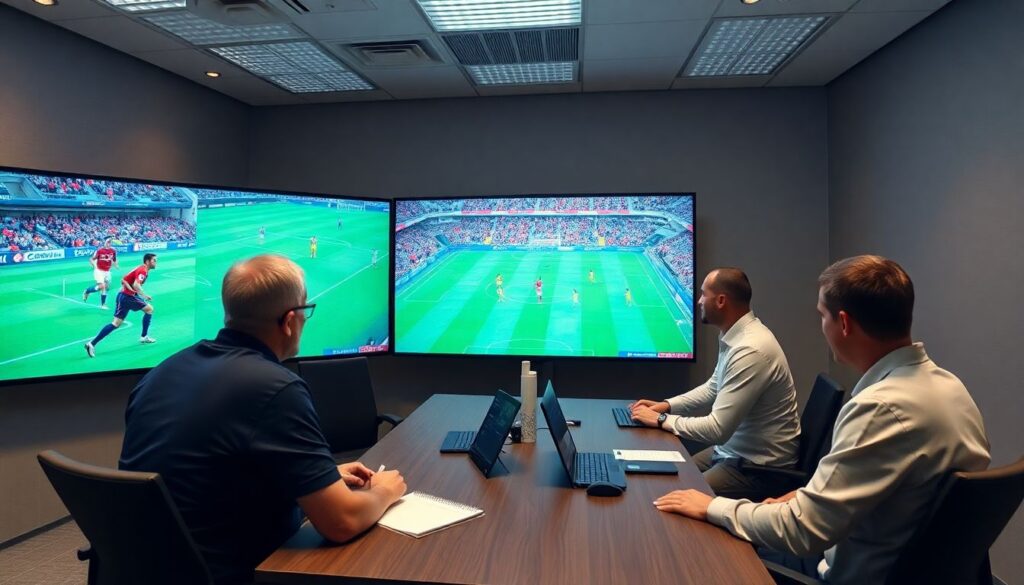
Collect three short video clips per phase (build-up, chance creation, pressing, transitions) for your team, then compare with TV or online clips of each club. Note where your behaviours most closely resemble each model and adjust training priorities accordingly.